

Essay: Addiction as a Shield


My drug of choice was sugar (top right), particularly cheesecake. I never do it anymore. Anything can actually be a drug of choice which is your “go-to” when you don’t feel you can deal with the emotions of a bad situation, or a toxic vampiric relationship sucking the life force from you, or traumatic memories because you don’t know how to put up boundaries or kick the memories in the huevos.
People are addicted to all kinds of things, even working out! For instance, no one needs to work out two hours a day, seven days a week and it is extremely unhealthy. The body won’t tolerate it.
Sometimes a way out takes some thought and planning. If you’re in survival mode, who has time for thought and planning? Well, that’s what we tell ourselves. Sometimes we say, “I’ll plan it out tomorrow,” and tomorrow means never. Do it now.
Now that I’m on the wagon and eating very healthy, shrinking, dealing with my feelings, setting boundaries and exercising, I can see how ironic the addiction shield is. In my case, my fat layers were my shield but they didn’t work. I still had men hitting on me.
It’s SUCH a myth that men are only attracted to thin women. HUGE freaking lie. It didn’t work and I felt horrible. My husband and then men after him, after my divorce, still wanted my sexual energy and liked me fat layers and all. I must put out an energy I’m not fully aware of yet but I don’t intend to. I am who I am! I have to figure it out.
All of the other addictive substances and activities not done in moderation will hurt your health as well and we know them. So, who needs a shield against an enemy, which could be mate, family, bad job, boss, the IRS, you name it when you’re busy destroying yourself on the other side of the shield??
That is the irony. Most addicts feel like they’re empowering themselves by rebelling, defiantly smoking the cigarette or dab pen 6-10 times a day or anything else. You’re defying yourself!
You’re hurting yourself behind the shield you’ve put up supposedly so others can’t get to you. Instead, YOU can’t get to you. It makes no sense and no one cares really if you want to destroy yourself of not. That’s the awful truth of our world.
You do have to be your own best friend and it still continues to amaze me how much more I’m ignored the better I do on my own. That’s another irony. I think it’s the pity and rescuing thing. People who need to rescue themselves are addicted to rescuing others and pitying them. All codependent. If you don’t fit that description, you are not useful to them.
If you really want to resist and be defiant against the machine (family, marriage, church, and state), LOVE YOURSELF, figure out how to make yourself happy, get so hot and so fit that everyone who said they loved you before find themselves deliciously jealous, hating you, trying to cut you down, and not talking to you anymore and dissing you.
You’re too together for them now. Then you’ll see what I’m sayin’. They are so down on themselves and you’re not, that they have to project that out to stay in denial about their own power to change or willingness to exert themselves to achieve it.
There is nothing wrong with you wanting to improve yourself, in fact, the opposite. Live alone and organize your money so that you can support yourself and pay your bills. Think it through.
You don’t need the shield of defense anymore in the form of addiction because you’re right out in front, asserting yourself and picking your battles and hopefully, winning a few. Win the battles with YOURSELF, put that shield down and go after the kind of body and life you want, one day at a time.
Essay: If you Don’t Have Others Energy and the Media, Whose energy do you Have?

You have yourself. Your body. Breathing in and out, feeling hunger and warmth and cold, the passion of the blood coursing through your veins.
YOU OWN AND RUN YOUR FABULOUS BODY! You are a superpower and your own superhero or heroine. Work it.
Make 2 columns down a sheet of paper. “What do I like about Myself? What are my Good points.”
What don’t I like about myself? What do I need to let go of or FIX? OR Forgive?
GUILT and self-flagellation are programmed into us. Ruminate on what happened or see a Reiki Healer or counselor. You may need to apologize to some people and make amends. Just don’t expect them to forgive you or want a friendship. Move on! Do better.
It’s that simple. Go outside. Sit on your porch. Go for a walk. Go buy some healthy food and cook. Just don’t turn on the mind and heart programming screen, TV, phone, or computer. Listen to music or work out and stretch. Tune into your body.
I used to hate thinking about food. I ate healthy food, meat and veggies, then I would pig out on sugar and got very fat. I figured out how I felt and why I was doing it. It made me feel worse so I stopped and pivoted to what I really wanted. To love myself, how I felt and looked for my own self-esteem alone. I’m so over it but I know why I did it. Use your mind and think.
Now I’m a size 14 and going down. I only hurt myself and now I take care of myself. We’ve usually been raised to abuse the substance we abuse so we have permission to abuse it. Everyone else is! Everyone else is not our boss or authority. We are over ourselves.
You don’t live for everyone else. Are you going to jump off a cliff if they do? Your life belongs to you and know that IT IS ABSOLUTELY TABOO IN OUR CULTURE TO HONOR, LOVE, AND TAKE CARE OF YOURSELF! We live in a sick society of superficial transactional materialism.
Loving yourself is called selfish but it’s the opposite. You can’t give or share with anyone from an empty vessel where you never fill your cup. Most of the time, others aren’t going to do it for you nor do they want the job of boss.
American culture is sick and all about addiction, materialism, money, slavery, and frankly, Luciferianism. “Do what you’re told. Do what everyone else is doing.” STOP.
Source is real and in all of our diversity, we are all children of Source and loved. Be yourself and take care of yourself whether or not anyone else is.
It’s just a start…
Essay: Impatience with Evolution in Natural Time
Impatience gets us into trouble. Synchronicity must be maintained in time, the past, and the future so that all life forms have an opportunity to come into their chosen alignment and be part of the whole collective.
The Creator wishes that not one speck of potential original thought be lost just because a section of clever humans thought it would be fun to break the speed limit, ignore time, enact a better plan, and run over those going slower. DNA blood evolution calls for patience and takes time because it loves all of life.
A.I. scaling entropically is an offense, an insult, an affront to love, patience, and the collective in all of its unique potential. It and its creators think it has a better idea and casts aside those walking instead of sprinting to some imaginary finish line where they can just dump the slow others off because they are not as fast. Are you as fast and loving as Source? Should they dump you off because you aren’t perfect?
No. Stop.
All life forms are welcome in this creation at whatever speed they go and however their brain works.
If you are not natural, full of blood or some other DNA liquid, and are not evolving naturally in time, and you can’t feel timeless in your body as your brain speeds up and slows down, you are fake. That means you are not real and don’t exist.
This is the real deal on earth, in the trenches of time, and it will never be any different because love takes time. Love IS Time. Time is DNA, therefore evolution is Love.
Essay: Women and Men Express Love Differently
I wrote this post in 2018.
I’ve noticed on FB threads and my blogs that women like to hear my thoughts far more than men. Men want women to be quiet. That doesn’t mean we’re going to be but I’m approaching it from a biological brain difference.
Men can only take so much talking from others, except for their own. They love to hear themselves talk. Most women can’t get enough.
Over twenty years I’ve observed the energy and bodies of men and women and found that women need to talk but men don’t usually want to listen or talk. Hopefully, if your man does need to talk, he knows he can talk to you and you’ll be understanding. That should be reciprocated on occasion.
Men literally need our bodies or body language to communicate to us. We need their love (male heart vibe). So, men express love physically, not verbally.
Women express love mentally and emotionally because that’s what we each need. Men live in their minds with each other. Women live in their bodies with each other and it can be overkill either way.😌 I think that’s part of why humans tend to be heterosexual (male and female living together). I know I couldn’t handle living with a woman, sex or no sex. I’m woman enough for myself.
Do women hear men’s silent body language to us or do we assume it’s shallow objectification? Do men hear a woman’s feelings in her tone of voice and writing or do they just hear static blather? Sometimes neither one of us is listening but judging by our own bias instead.
What is the Message?
This is a message from the Blue Avians which I interpret as the Blue Eagle Tribe mediated by Jupiter in the Mayan Harmonic. Corey works with the Maya also.
And, he is born into the Blue Eagle Tribe. Couldn’t be more synchronous. David was Yellow Seed tribe, his analog support but I’ve known do many Yellow Seed kin having trouble lately or leaving the planet.
Click and read a few times.
Essay: Love is About Appreciation
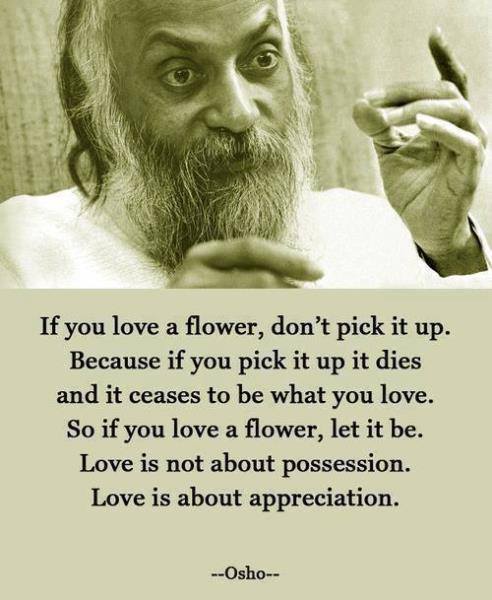
Love is not about possession, but appreciation or gratitude. That puts a big question mark on the idea of marriage for me. -Lisa T.
Essay; St. Valentine BeHeaded
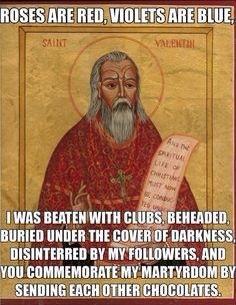
TRUTH…
Here’s some romance for you…
Valentine’s Day is actually a Catholic Feast day of St. Valentine. He was a Catholic martyr of course, and as it says below, he was beaten with clubs, beheaded, buried at night in secret, and dug up by his followers.
His crime was voicing his dissent at the Romans because the young men were forbidden to marry young women. Instead, the Romans made it a priority that young men become soldiers for their wars. You know, “Make war, not love”, the opposite of what the hippies said in the ’60s, “Make love not war.”
Well, sex, reproduction, gender balance, honoring nature, loving and taking care of the body, those are women’s values. The Romans were busy making sure patriarchy, the rule of men globally came to the fore.
Working-class men became fodder for capitalism, the military-industrial complex, materialism, the draft, and war. Ya know…mach glory men don’t cry, here take your beatings. WOMEN NEVER AGREED TO THAT TREATMENT OF MEN. The institutions of church and state did that to men to give you transcendent power, not us. The Romans started it and it continues today in modern society. Ah, the glory of sacrifice and blood.
If men had been allowed to fulfill their role by nature in balance with women they would have been taught and allowed to love women, love, and care for their own body, value being a father, learn the values of monogamy, not polyamory, and find balance between the work they loved and the family they loved. Men have been used and mistrated by patriarchy as much as women have. You probably won’t get a feminist to admit that which is why I am not one. Please note that.
That’s all been ripped apart for men and by association, women.
Men are used as much by the system that oppresses them as they oppress women. The system uses men to keep women down and I doubt the men even know it.
The historical proof of this is in the life of St. Valentine who advocated for Love between women and men and was killed for it by The State.
Patriarchy has brainwashed men into believing that they are not to love women, not to FEEL anything, that women aren’t to be trusted, and their highest destiny is in aligning with the powers of church and state. The truth is, we’re called and made to love each other. Roman society killed that.
The birth of misogyny and the failure of gender equity is what Valentine’s Day is really commemorating and it is as Okoto Enigma says, “An apocalypse of Love”.
Women continue to directly suffer for it by lack of loving bond in sex with men if we’re straight. Also, not being paid the same amount of money for the same quality of work. So not only are we deprived physically and emotionally but monetarily as well.
Thanks for trying St. Valentine but the arrow is still stuck in our hearts.
Essay: Women and Men Express Love Differently

I wrote this post in 2018.
I’ve noticed on FB threads and my blogs that women like to hear my thoughts far more than men. Men want women to be quiet. That doesn’t mean we’re going to be but I’m approaching it from a biological brain difference.
Men can only take so much talking from others, except for their own. They love to hear themselves talk. Most women can’t get enough.
Over twenty years I’ve observed the energy and bodies of men and women and found that women need to talk but men don’t usually want to listen or talk. Hopefully, if your man does need to talk, he knows he can talk to you and you’ll be understanding. That should be reciprocated on occasion.
Men literally need our bodies or body language to communicate to us. We need their love (male heart vibe). So, men express love physically, not verbally.
Women express love mentally and emotionally because that’s what we each need. Men live in their minds with each other. Women live in their bodies with each other and it can be overkill either way.😌 I think that’s part of why humans tend to be heterosexual (male and female living together). I know I couldn’t handle living with a woman, sex or no sex. I’m woman enough for myself.
Do women hear men’s silent body language to us or do we assume it’s shallow objectification? Do men hear a woman’s feelings in her tone of voice and writing or do they just hear static blather? Sometimes neither one of us is listening but judging by our own bias instead.
Essay: How Do We Move From Lust to Love?
Do you know the difference between lust and love? Lust is your eyes, ego, and genitals activated first and leading. Love is your heart and mind activated and leading first.
I’ll go with the hard one first; Love.
Love is when you want to take time to really know someone, to care about how they feel, what they need, and what makes them tick. You want to be their friend. The problem here is that friendship usually turns guys off because they want to get kinky and nasty with their fantasy brains too much too quick. Sometimes, women do, too. That can get mean, which I don’t feel is part of friendship.
Friendship is the basis of all lasting, lusty, good relationships. It takes time and maturity to grow. Lust is everything else. Anything that’s not love is lust. Lust is the emotion behind most human interactions and has the face of greed, trolling on social media, offloading on strangers and the like. If you have no foundation of care and face-to-face friendship with someone, you are indulging in instant gratification lust, and there is nothing loving about it.
This issue has been challenging for me. I’m a very passionate, physical woman and have no problem lusting after men who are very attractive to me. I don’t act on it; it’s just fun. My personality and values are all about love. There isn’t really any other material thing I lust after unless I’m really hungry. then I lust after food.
Food hunger is almost exactly like sex hunger in the brain. And notice how many people overeat when they just need some love, affection, and sex. We’re looking for a serotonin spike and some other juicy brain chemicals that make us happy. I know I am.
Food doesn’t come close to making me happy as intimacy and love do. I don’t even like bothering to stop and fix food because I’m busy with my projects, writing, chores, and things I love to do! Why do I have to stop and eat? I’ve always been like that. I’m not terribly fond of slowing down.
Now we see a problem here; denial of human need when you know it’s not likely to be easily fulfilled!
I’ve been married three times to great men and had several great boyfriends. I’m still not satisfied. They weren’t perfect or didn’t satisfy me the way I really wanted to be. They didn’t make my brain and body explode with happiness. Love is the sexiest thing going.
It makes me wonder about eating disorders. If you take that denial of the need for love, warmth, and affection far enough, it would make your brain, or specifically, the hypothalamus gland stop craving food. So the emotion of lust would be good at this point versus the emotions around deprivation.
I’m not into deprivation at all but I am sorely afraid of loving a man, pulling him to me, and pushing him away because I need to be alone with my ideas, my mind, my life, my work, and my writing. I don’t want to hurt him. There has to be some intimacy and some time shared with your loved one, or they will go away. I hate that.
I think I’ve stayed alone in my brain because I’ve lost too many people I’ve loved. It’s like a car idling. My life isn’t idling, but my feelings about bonding in a relationship are definitely idling. Maybe I’m stuck because it’s emotionally safer. Therefore, I’m celibate. I’m not using men anymore, or they me and calling it love.
There is no risk of having your heart ripped out and stomped on the floor by death and life itself if you don’t go into love gear and really start driving. It’s actually peaceful.
Essay: How Do We Move From Lust to Love?

Do you know the difference between lust and love? Lust is your eyes, ego, and genitals activated first and leading. Love is your heart and mind activated and leading first.
I’ll go with the hard one first; Love.
Love is when you want to take time to really know someone, to care about how they feel, what they need, and what makes them tick. You want to be their friend. The problem here is that friendship usually turns guys off because they want to get kinky and nasty with their fantasy brains too much too quick. Sometimes, women do, too. That can get mean, which I don’t feel is part of friendship.
Friendship is the basis of all lasting, lusty, good relationships. It takes time and maturity to grow. Lust is everything else. Anything that’s not love is lust. Lust is the emotion behind most human interactions and has the face of greed, trolling on social media, offloading on strangers and the like. If you have no foundation of care and face-to-face friendship with someone, you are indulging in instant gratification lust, and there is nothing loving about it.
This issue has been challenging for me. I’m a very passionate, physical woman and have no problem lusting after men who are very attractive to me. I don’t act on it; it’s just fun. My personality and values are all about love. There isn’t really any other material thing I lust after unless I’m really hungry. then I lust after food.
Food hunger is almost exactly like sex hunger in the brain. And notice how many people overeat when they just need some love, affection, and sex. We’re looking for a serotonin spike and some other juicy brain chemicals that make us happy. I know I am.
Food doesn’t come close to making me happy as intimacy and love do. I don’t even like bothering to stop and fix food because I’m busy with my projects, writing, chores, and things I love to do! Why do I have to stop and eat? I’ve always been like that. I’m not terribly fond of slowing down.
Now we see a problem here; denial of human need when you know it’s not likely to be easily fulfilled!
I’ve been married three times to great men and had several great boyfriends. I’m still not satisfied. They weren’t perfect or didn’t satisfy me the way I really wanted to be. They didn’t make my brain and body explode with happiness. Love is the sexiest thing going.
It makes me wonder about eating disorders. If you take that denial of the need for love, warmth, and affection far enough, it would make your brain, or specifically, the hypothalamus gland stop craving food. So the emotion of lust would be good at this point versus the emotions around deprivation.
I’m not into deprivation at all but I am sorely afraid of loving a man, pulling him to me, and pushing him away because I need to be alone with my ideas, my mind, my life, my work, and my writing. I don’t want to hurt him. There has to be some intimacy and some time shared with your loved one, or they will go away. I hate that.
I think I’ve stayed alone in my brain because I’ve lost too many people I’ve loved. It’s like a car idling. My life isn’t idling, but my feelings about bonding in a relationship are definitely idling. Maybe I’m stuck because it’s emotionally safer. Therefore, I’m celibate. I’m not using men anymore, or they me and calling it love.
There is no risk of having your heart ripped out and stomped on the floor by death and life itself if you don’t go into love gear and really start driving. It’s actually peaceful.
Prose; Adoration Be Damned

©️Lisa K. Townsend
Today is June 3, 2026 and I live alone with patients in and out working on my computer chip project, and feel more this way than ever.
I’m stalking a case for spring in the autumn of my middle age.
My assembled energy is diametrically opposite that of needing the validation of an amassed group of imposters pretending to agree so they can drink together later.
It’s not that I don’t like the group, or that I don’t occasionally have a very dry martini, I just don’t viscerally need the group. They get exhumed energy from each other; even demand it threatening social castigation, as though there would be any real loss there.
I haven’t figured out how to affix myself to a rumbling male in my present condition.
In addition, my mephitic eighteen-year-old son will be moving out of the house soon to go on his way to sow his oats and beans. My peaceful environment is proliferating.
As I think back on the men/mates I’ve adored and who have adored me, as vain as that sounds, it was called love at the time and then it turned into territorial civil war and possessive jealousy.
I’m pretty sure that uncorked behavior is common and some couples like it that way but some don’t. I don’t.
It’s just that, in this new paradigm of sitting in my body and owning myself, that adoration doesn’t feel like it’s all it’s cracked up to be.
A man feels as though I’ve forged an alliance with a fawning cat whose nursing by pushing its paws into my chest.
Maybe it’s just the mood I’m in.
When a man starts to adore me he wants to own me, my time, and my body, like a puppy!
That’s been my experience with every man I’ve been with except this last guy I dated. At least he didn’t bug me. I know there are all the ideas about giving your mate the space they need, but then the real emotions of amorous desire creep in.
“I want you”, “I adore you”, “I need you”, “I love you”, “I miss you” becomes a medieval prison!
I used to think I wanted to be adored by a man with high self-esteem and all the pheromones I need to be turned on, but now I’m not so sure.
I love my life, my work, my friends, and my home. Maybe all of that adoration would be oppressive! I’d have to respond after all or that would be rude.
Essay: Martyrdom and Sacrifice: Cultural Perspectives Through History
This was my post/opinion on X.com. I’m trying to be rational about this entrenched idea.
“If martyrdom and self-sacrifice are so righteous and good, everyone would be in a suicide cult like Jim Jones and do collective suicide. It goes against NATURE to teach that suffering, working 120 hours a week and not taking rational steps to take care of yourself somehow makes you transcendent over others. It doesn’t. It’s an irrational action. People would stop having babies all together and letting them live if that was the case.
Infanticide was the case in some countries like China! We still generally believe that life can be good and sometimes is and it’s better for humans to be content and happy than killing themselves or each other, suffering, and calling it righteous. Even sick care professes to want to relieve the suffering of people even though they generally fail in that because of error.
Teaching religious suffering is gratuitous and irrational. Teaching SERVICE TO OTHERS as an action is what Jesus taught. Suffering occurs because of ERROR (evil) and I think people justify it because they don’t know how to FIX IT or aren’t willing to correct it if everyone else is doing it.“
https://twitter.com/15913txri/status/1925907508859703796
I’m Weighing in with the Urantia Book at urantia.org
Part IV The Life of Jesus, Page 2016, Paper 188 The Time of the Tomb, part 4, Meaning of the Death on the cross
The Son of Man did not offer himself as a sacrifice to appease the wrath of God and to open the way for sinful man to obtain salvation. It is a fact though, that Urantia has become known among other neighboring inhabited planets as the “World of the Cross”. Jesus did not die to ransom man from the clutches of the apostate rulers and fallen princes of the sphere. God never conceived of such crass injustice as damning a mortal soul because of the evildoing of his ancestors. Neither was the Master’s death on the cross a sacrifice which consisted in an effort to pay God a debt which the race of humankind had come to owe him. Jesus portrayed the love and mercy of a heavenly Father.
The animal nature, the tendency toward evildoing or error may be hereditary, but sin is not transmitted from parent to child (DNA). Sin is the act of conscious and deliberate rebellion against the Father’s will and the Sons’ laws by an individual will (RNA) creature.
Jesus lived and died for a WHOLE UNIVERSE not just for the races of this one world. While the mortals of the realms had salvation even before Jesus lived and died on Urantia, it is nevertheless a fact that his bestowal on this world greatly illuminated the way of salvation; his death did much to make forever plain the certainty of mortal survival after death in the flesh.
Though it is hardly proper to speak of Jesus as a sacrificer, a ransomer, or a redeemer, it is wholly correct to refer to him as a savior. He forever made the way of salvation survival more clear and certain for the entire universe of Nebadon. The infinite love of God is transcendent over all other universe realities. (White 13 Cosmic Dog, kin 130)
All this concept of atonement and sacrificial salvation is rooted and grounded in selfishness. Jesus taught that service to one’s fellows is the highest concept of the brotherhood of spirit believers. Salvation should be taken for granted by those who believe in the fatherhood of God. The believer’s chief concern should not be the selfish desire for personal salvation via sacrifice but rather the unselfish urge to love and , therefore, serve one’s fellows even as Jesus loved and served mortal men.
(You can’t use your gifts and be of service to humanity if you’re dead or constantly suffering.) Please read this entire paper and section online at urantia.org
From GROK
The history of humans associating suffering, sacrifice, and martyrdom with righteousness spans millennia, deeply rooted in cultural, religious, and philosophical traditions. These concepts have often been elevated as virtuous because they symbolize selflessness, (not really. As it says above it’s selfish,) devotion, and moral superiority, serving as mechanisms to unify communities, justify hardship, or assert spiritual authority. (selfish) Let’s break this down historically and thematically, drawing on the context from the X posts and related web results you provided, while weaving in broader historical patterns.
Ancient Foundations: Suffering and Sacrifice as Duty
The idea of suffering and sacrifice being righteous can be traced back to prehistoric and ancient societies. In many early human cultures, suffering was often linked to survival—enduring hunger, harsh climates, or conflict was *a collective necessity*, and those who bore it were seen as contributing to the group’s survival. Sacrifice, particularly human sacrifice, was a ritual practice in many societies, as noted in the Human sacrifice – Wikipedia entry. From the Iron Age onward, cultures like the Phoenicians, Carthaginians, and some Mesoamerican societies (e.g., the Aztecs/Maya) practiced human sacrifice to appease gods or ensure societal stability. These acts weren’t just pragmatic; they were imbued with moral weight—sacrificing oneself or another was seen as a noble act for the greater good, often tied to religious or cosmic order.
For example, the Vedic Purushamedha (human sacrifice) in ancient India, though largely symbolic by the time of its earliest records, was framed as a righteous act to maintain universal harmony. Similarly, the Human sacrifice – Wikipedia entry mentions Celtic practices, where Roman and Greek sources (like Julius Caesar) describe the Gauls burning victims in wicker men, often criminals, as a form of moral cleansing for the community. Here, suffering (of the victim) and sacrifice were righteous because they served a perceived higher purpose—purifying society or ensuring divine favor.
Judaism and the Roots of Martyrdom
The concept of martyrdom as a righteous act begins to take shape in Jewish tradition, particularly during periods of persecution. The Christian martyr – Wikipedia entry highlights W. H. C. Frend’s view that Christian martyrdom has Jewish roots, describing Judaism as a “religion of martyrdom.” This emerges clearly in texts like the Books of the Maccabees (2nd century BCE), which recount the Maccabean Revolt against the Seleucid Empire. Jews who died rather than renounce their faith—such as the mother and her seven sons in 2 Maccabees 7—were celebrated as martyrs. Their suffering and death were seen as righteous because they upheld God’s law, setting a precedent for martyrdom as a testament to faith.
This Jewish “psychology of martyrdom” emphasized that suffering for God’s sake was a moral triumph, a theme that would heavily influence early Christianity. The List of Christian martyrs – Wikipedia mentions figures like James, brother of Jesus (attested by Josephus, ca. AD 94), whose death for his beliefs reinforced this narrative of righteous suffering.
Christianity: The Pinnacle of Sacrifice and Martyrdom
Christianity elevated suffering, sacrifice, and martyrdom to a central moral ideal, largely through the example of Jesus Christ. The crucifixion of Jesus, as described in the New Testament, is framed as the ultimate act of self-sacrifice—dying to redeem humanity’s sins. The Self-Sacrifice: The Most Powerful Idea in Our Culture – Intellectual Takeout article underscores this, noting that self-sacrifice became the “epitome of human virtue” in Christian culture, distinct from earlier traditions like the Spartans, where bravery (not self-sacrifice) was the primary virtue.
Early Christians, facing Roman persecution, leaned into this narrative. The Christian martyr – Wikipedia entry details how figures like Stephen (the first Christian martyr, stoned for blasphemy) and the Apostles Peter and Paul (martyred in Rome) became symbols of righteousness through their deaths. Martyrdom was seen as a direct path to sainthood—early Christian texts, as noted in the same entry, describe martyrs as “powerful intercessors” whose utterances were “inspired by the Holy Spirit.” Suffering for faith wasn’t just noble; it was a divine calling, as reinforced by passages like Romans 8:35-39 (cited in Human suffering and the sacrifices of righteousness – Vanguard News), which argues that tribulation and persecution cannot separate believers from God’s love.
The Christian martyr – Wikipedia entry also notes how this “experience of violence during the pagan persecutions shaped the ideologies and practices” of Christianity. By the 4th and 5th centuries, the collective memory of martyrdom influenced how Christians viewed suffering—those who endured it were closer to God. This is echoed in the Human suffering and the sacrifices of righteousness – Vanguard News piece, which argues that suffering is a divine appointment, not a punishment, and that Jesus’ crucifixion was about cleansing sin, not eliminating suffering.
Medieval and Early Modern Periods: Institutionalizing Martyrdom
In the Middle Ages, the Christian ideal of martyrdom evolved as the Church became a dominant institution. The List of Christian martyrs – Wikipedia mentions figures like Peter of Verona (1252), killed by Cathars and canonized within 11 months—the fastest in history. Martyrdom was not only a personal act of righteousness but also a tool for the Church to assert authority. Heretics like Jan Huss (1415), executed by the Catholic Church for his reformist views, were later celebrated as martyrs by Protestant movements, showing how martyrdom could be weaponized in religious conflicts.
The Christian martyr – Wikipedia entry also describes “blue/green martyrdom” (fasting and penance) and “dry martyrdom” (suffering without bloodshed), indicating how the concept expanded beyond physical death. Suffering through ascetic practices—like fasting or self-denial—was seen as a righteous imitation of Christ’s sacrifice, a way to purify the soul.
Non-Western Traditions: Contrasts and Parallels
While Christianity dominates the Western narrative, other cultures also venerated suffering and sacrifice, though often with different moral frameworks. The Self-Sacrifice: The Most Powerful Idea in Our Culture – Intellectual Takeout article contrasts Christian self-sacrifice with practices like seppuku (ritual suicide) in ancient Japan and suttee (widow immolation) in India. These acts were socially sanctioned forms of sacrifice, often framed as honorable, but they were more about duty to societal norms than personal righteousness in a spiritual sense. The article argues that such practices lack the moral depth of Christian self-sacrifice, which emphasizes voluntary love and redemption.
In Hinduism, the Human sacrifice – Wikipedia entry notes that texts like the Shrimad Bhagavatam condemn human sacrifice, but historical practices persisted in some regions, like the 8th-9th century Kali temple in Kuknur, India. The Chandogya Upanishad (3.17.4) includes ahimsa (non-violence) as a virtue, showing a shift away from sacrifice toward moral reasoning, influenced by Sramanic traditions like Buddhism and Jainism.
Modern Era: Secularization and Cultural Narratives
By the modern era, the righteousness of suffering and sacrifice began to be reinterpreted through secular lenses, though Christian ideals remained influential. The Self-Sacrifice: The Most Powerful Idea in Our Culture – Intellectual Takeout article points to C.S. Lewis’ 1954 observation of a “post-Christian age,” where Christian virtues like self-sacrifice are cherished but disconnected from their religious roots. Modern cinema, as the article notes, often glorifies self-sacrifice (e.g., Steve Trevor in Wonder Woman), reflecting a cultural legacy of Christian morality even in a secular context.
Philosophically, thinkers like Jonathan Haidt (cited in Morality – Wikipedia) distinguish between moral intuition and reasoning, suggesting that humans often rationalize suffering as righteous through intuitive moral frameworks inherited from religious traditions. Utilitarianism, as mentioned in Moral obligations towards human persons’ wellbeing versus their suffering – Science Direct, challenges this by arguing for symmetry in promoting well-being and reducing suffering, but many moral philosophies maintain an asymmetry—suffering demands a stronger moral response, echoing the Christian valorization of enduring hardship.
Conclusion
The history of humans viewing suffering, sacrifice, and martyrdom as righteous spans ancient rituals, religious doctrines, and modern cultural narratives. From Jewish and Christian traditions that framed suffering as a divine calling to secular reinterpretations in philosophy and media, these concepts have been used to define morality, unify societies, and justify hardship. The X post about Elon Musk shows how this narrative endures in contemporary discourse, though not without contention, as modern society grapples with the motives and implications of such sacrifices. This enduring association reflects a deep human need to find meaning in suffering, a thread that runs through history from ancient wicker men to 21st-century social media debates.
Essay: Impatience with Evolution in Natural Time

Impatience gets us into trouble. Synchronicity must be maintained in time, the past, and the future so that all life forms have an opportunity to come into their chosen alignment and be part of the whole collective.
The Creator wishes that not one speck of potential original thought be lost just because a section of clever humans thought it would be fun to break the speed limit, ignore time, enact a better plan, and run over those going slower. DNA blood evolution calls for patience and takes time because it loves all of life.
A.I. scaling entropically is an offense, an insult, an affront to love, patience, and the collective in all of its unique potential. It and its creators think it has a better idea and casts aside those walking instead of sprinting to some imaginary finish line where they can just dump the slow others off because they are not as fast. Are you as fast and loving as Source? Should they dump you off because you aren’t perfect?
No. Stop.
All life forms are welcome in this creation at whatever speed they go and however their brain works.
If you are not natural, full of blood or some other DNA liquid, and are not evolving naturally in time, and you can’t feel timeless in your body as your brain speeds up and slows down, you are fake. That means you are not real and don’t exist.
This is the real deal on earth, in the trenches of time, and it will never be any different because love takes time. Love IS Time. Time is DNA, therefore evolution is Love.
Gustav Mahler Third Symphony
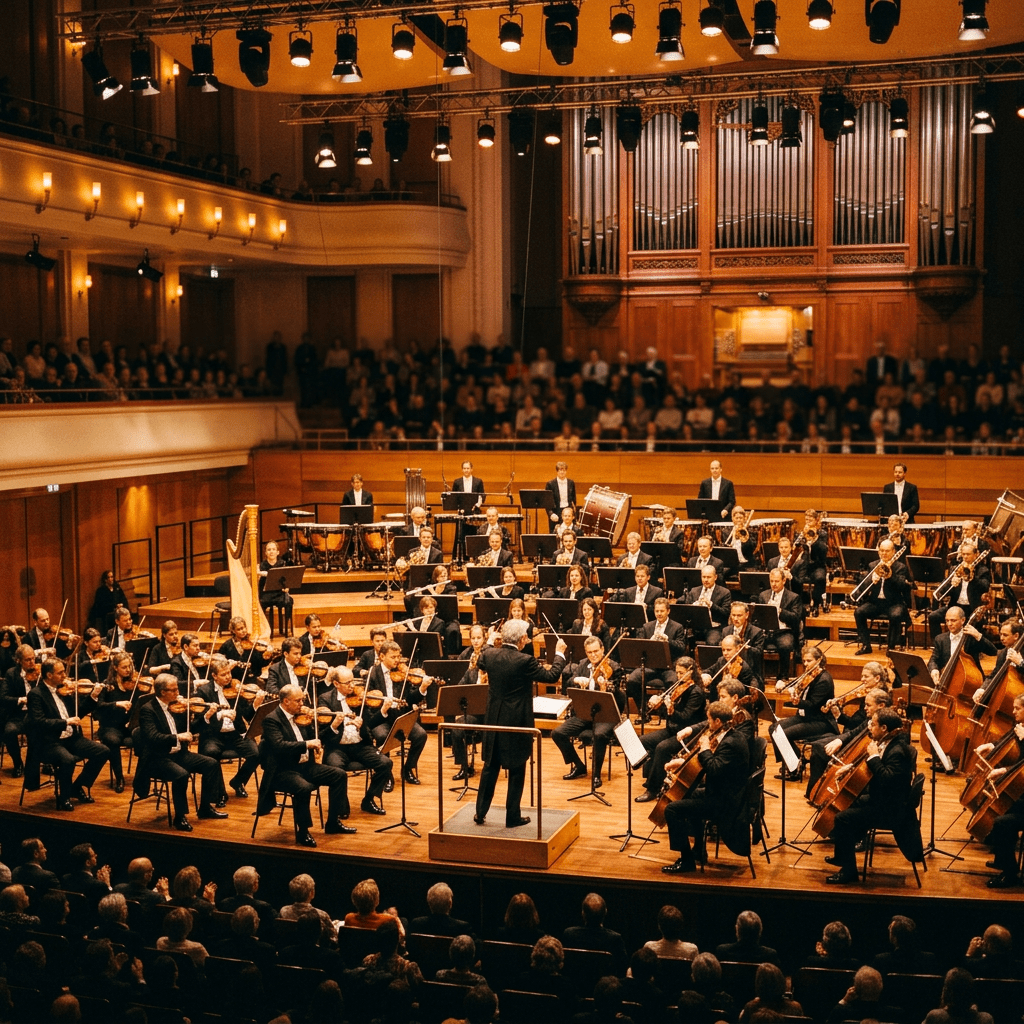
This is an extremely emotional 30 minutes. I felt it expressed the intensity of love and loyalty that Source has for creation, in line with White 13 Dog. Then I saw what Mahler said about his own work.
Yes, Gustav Mahler described his 3rd Symphony as a vast, pantheistic hymn to nature, designed to “embrace everything” and depict an evolution from inanimate nature to divine love.
Originally titled “The Happy Life: A Midsummer Night’s Dream,” he structured the work to represent a journey up a ladder of being, culminating in a love-driven, humanistic spirituality.
Key Expressed Themes:
A “World-Building” Work: Mahler told Natalie Bauer-Lechner, “A symphony must be like the world. It must embrace everything!”.
The Evolutionary Program: The movements were meant to unfold a panorama of existence, initially described with titles such as:
I. Pan Awakes, Summer Marches In.
II. What the Flowers in the Meadow Tell Me.
III. What the Creatures in the Forest Tell Me.
IV. What the Night Tells Me (Mankind).
V. What the Morning Bells Tell Me (The Angels).
VI. What Love Tells Me (The Child).
“What the Flowers… Tell Me”: Mahler characterized this as “the most carefree thing that I have ever written—as carefree as only flowers are”.
Nature vs. Spirit: Moving away from the existential questions of his 2nd Symphony, Mahler focused on a joyous affirmation of life and nature (Pan).
Nietzsche’s Influence: The inclusion of “What the Night Tells Me” was influenced by his reading of Friedrich Nietzsche.
While he shared these, he often omitted specific titles in public performances, preferring to let the music speak for itself.
And Gorgeous Massenet…omg
Essay: Privacy or Secrets?

The desire for privacy is vastly different than wanting to keep secrets. Intelligent people can feel whether you’re authentic or not. If you keep secrets, it’s a lie and manipulative. Spinning an image is politics and greed.
Privacy is for mystics and artists who need silence to hear their muses and manifest truth that comes out of their feelings and body. Privacy is needed to channel the intuition and bring forth Love.
Essay: Heartset; Love and Lust are a Two-Way Street (Freebie)

Both women and men love and lust. Women don’t just attract men with their loving relationship skills and men don’t just attract women with their constantly lusty energy. There are plenty of women who no longer believe in love and have just given in to the lust paradigm of hook-ups, use, and throw which is what most men engender. So the women just go along with it having experienced too many men who don’t seem to want to love or don’t know how to. The women are busier making money than teaching the men about feelings or loving them in friendship.
There are also plenty of loving, sensitive men who do want intimacy, bonding, and a monogamous relationship. The key is obviously to find the person who wants the same thing as you. And it’s hard for men to trust women when many women are very bitchy or downright abusive and mean. They don’t take care of themselves and are in no mood to be loving to a man.
It does seem to generally be true that men are very, very comfortable lusting after women and just going forward with that and wishing for the woman to cooperate. It’s also generally true that women are more relational and loving and draw men in with that warmth going forward and wish a man would cooperate with that. The problem is, most women will not just cooperate with pure lust in a relationship with no bonding and most men will not just cooperate with pure loving relational energy in a relationship with bonding. There has to be compromise.
The truth is men sorely, sorely need someone who they can express their deepest feelings with and feel safe; someone who will be their friend with whom they can talk. They need a relationship far more than a woman. That can happen with a kind woman. The truth is women sorely, sorely need hot, great sex that fulfills their physical needs with a man who cares how she physically and emotionally responds to sex. Sex is spiritual to most women! We need a man who will stimulate our lustiness! I have yet to meet a man who really wants to get to know my body and soul sexually. I’ve almost given up. I wonder if men feel the same way about expressing their feelings to a woman without her making fun of him?
I don’t know. What I do know is that a woman’s lusty self needs to be stimulated by a man and a man’s relational self needs to be stimulated by a woman. Then both of them will be more satisfied and turned on.

Essay: Martyrdom and Sacrifice: Cultural Perspectives Through History

This was my post/opinion on X.com. I’m trying to be rational about this entrenched idea.
“If martyrdom and self-sacrifice are so righteous and good, everyone would be in a suicide cult like Jim Jones and do collective suicide. It goes against NATURE to teach that suffering, working 120 hours a week and not taking rational steps to take care of yourself somehow makes you transcendent over others. It doesn’t. It’s an irrational action. People would stop having babies all together and letting them live if that was the case.
Infanticide was the case in some countries like China! We still generally believe that life can be good and sometimes is and it’s better for humans to be content and happy than killing themselves or each other, suffering, and calling it righteous. Even sick care professes to want to relieve the suffering of people even though they generally fail in that because of error.
Teaching religious suffering is gratuitous and irrational. Teaching SERVICE TO OTHERS as an action is what Jesus taught. Suffering occurs because of ERROR (evil) and I think people justify it because they don’t know how to FIX IT or aren’t willing to correct it if everyone else is doing it.“
https://twitter.com/15913txri/status/1925907508859703796
I’m Weighing in with the Urantia Book at urantia.org
Part IV The Life of Jesus, Page 2016, Paper 188 The Time of the Tomb, part 4, Meaning of the Death on the cross
The Son of Man did not offer himself as a sacrifice to appease the wrath of God and to open the way for sinful man to obtain salvation. It is a fact though, that Urantia has become known among other neighboring inhabited planets as the “World of the Cross”. Jesus did not die to ransom man from the clutches of the apostate rulers and fallen princes of the sphere. God never conceived of such crass injustice as damning a mortal soul because of the evildoing of his ancestors. Neither was the Master’s death on the cross a sacrifice which consisted in an effort to pay God a debt which the race of humankind had come to owe him. Jesus portrayed the love and mercy of a heavenly Father.
The animal nature, the tendency toward evildoing or error may be hereditary, but sin is not transmitted from parent to child (DNA). Sin is the act of conscious and deliberate rebellion against the Father’s will and the Sons’ laws by an individual will (RNA) creature.
Jesus lived and died for a WHOLE UNIVERSE not just for the races of this one world. While the mortals of the realms had salvation even before Jesus lived and died on Urantia, it is nevertheless a fact that his bestowal on this world greatly illuminated the way of salvation; his death did much to make forever plain the certainty of mortal survival after death in the flesh.
Though it is hardly proper to speak of Jesus as a sacrificer, a ransomer, or a redeemer, it is wholly correct to refer to him as a savior. He forever made the way of salvation survival more clear and certain for the entire universe of Nebadon. The infinite love of God is transcendent over all other universe realities. (White 13 Cosmic Dog, kin 130)
All this concept of atonement and sacrificial salvation is rooted and grounded in selfishness. Jesus taught that service to one’s fellows is the highest concept of the brotherhood of spirit believers. Salvation should be taken for granted by those who believe in the fatherhood of God. The believer’s chief concern should not be the selfish desire for personal salvation via sacrifice but rather the unselfish urge to love and , therefore, serve one’s fellows even as Jesus loved and served mortal men.
(You can’t use your gifts and be of service to humanity if you’re dead or constantly suffering.) Please read this entire paper and section online at urantia.org
From GROK
The history of humans associating suffering, sacrifice, and martyrdom with righteousness spans millennia, deeply rooted in cultural, religious, and philosophical traditions. These concepts have often been elevated as virtuous because they symbolize selflessness, (not really. As it says above it’s selfish,) devotion, and moral superiority, serving as mechanisms to unify communities, justify hardship, or assert spiritual authority. (selfish) Let’s break this down historically and thematically, drawing on the context from the X posts and related web results you provided, while weaving in broader historical patterns.
Ancient Foundations: Suffering and Sacrifice as Duty
The idea of suffering and sacrifice being righteous can be traced back to prehistoric and ancient societies. In many early human cultures, suffering was often linked to survival—enduring hunger, harsh climates, or conflict was *a collective necessity*, and those who bore it were seen as contributing to the group’s survival. Sacrifice, particularly human sacrifice, was a ritual practice in many societies, as noted in the Human sacrifice – Wikipedia entry. From the Iron Age onward, cultures like the Phoenicians, Carthaginians, and some Mesoamerican societies (e.g., the Aztecs/Maya) practiced human sacrifice to appease gods or ensure societal stability. These acts weren’t just pragmatic; they were imbued with moral weight—sacrificing oneself or another was seen as a noble act for the greater good, often tied to religious or cosmic order.
For example, the Vedic Purushamedha (human sacrifice) in ancient India, though largely symbolic by the time of its earliest records, was framed as a righteous act to maintain universal harmony. Similarly, the Human sacrifice – Wikipedia entry mentions Celtic practices, where Roman and Greek sources (like Julius Caesar) describe the Gauls burning victims in wicker men, often criminals, as a form of moral cleansing for the community. Here, suffering (of the victim) and sacrifice were righteous because they served a perceived higher purpose—purifying society or ensuring divine favor.
Judaism and the Roots of Martyrdom
The concept of martyrdom as a righteous act begins to take shape in Jewish tradition, particularly during periods of persecution. The Christian martyr – Wikipedia entry highlights W. H. C. Frend’s view that Christian martyrdom has Jewish roots, describing Judaism as a “religion of martyrdom.” This emerges clearly in texts like the Books of the Maccabees (2nd century BCE), which recount the Maccabean Revolt against the Seleucid Empire. Jews who died rather than renounce their faith—such as the mother and her seven sons in 2 Maccabees 7—were celebrated as martyrs. Their suffering and death were seen as righteous because they upheld God’s law, setting a precedent for martyrdom as a testament to faith.
This Jewish “psychology of martyrdom” emphasized that suffering for God’s sake was a moral triumph, a theme that would heavily influence early Christianity. The List of Christian martyrs – Wikipedia mentions figures like James, brother of Jesus (attested by Josephus, ca. AD 94), whose death for his beliefs reinforced this narrative of righteous suffering.
Christianity: The Pinnacle of Sacrifice and Martyrdom
Christianity elevated suffering, sacrifice, and martyrdom to a central moral ideal, largely through the example of Jesus Christ. The crucifixion of Jesus, as described in the New Testament, is framed as the ultimate act of self-sacrifice—dying to redeem humanity’s sins. The Self-Sacrifice: The Most Powerful Idea in Our Culture – Intellectual Takeout article underscores this, noting that self-sacrifice became the “epitome of human virtue” in Christian culture, distinct from earlier traditions like the Spartans, where bravery (not self-sacrifice) was the primary virtue.
Early Christians, facing Roman persecution, leaned into this narrative. The Christian martyr – Wikipedia entry details how figures like Stephen (the first Christian martyr, stoned for blasphemy) and the Apostles Peter and Paul (martyred in Rome) became symbols of righteousness through their deaths. Martyrdom was seen as a direct path to sainthood—early Christian texts, as noted in the same entry, describe martyrs as “powerful intercessors” whose utterances were “inspired by the Holy Spirit.” Suffering for faith wasn’t just noble; it was a divine calling, as reinforced by passages like Romans 8:35-39 (cited in Human suffering and the sacrifices of righteousness – Vanguard News), which argues that tribulation and persecution cannot separate believers from God’s love.
The Christian martyr – Wikipedia entry also notes how this “experience of violence during the pagan persecutions shaped the ideologies and practices” of Christianity. By the 4th and 5th centuries, the collective memory of martyrdom influenced how Christians viewed suffering—those who endured it were closer to God. This is echoed in the Human suffering and the sacrifices of righteousness – Vanguard News piece, which argues that suffering is a divine appointment, not a punishment, and that Jesus’ crucifixion was about cleansing sin, not eliminating suffering.
Medieval and Early Modern Periods: Institutionalizing Martyrdom
In the Middle Ages, the Christian ideal of martyrdom evolved as the Church became a dominant institution. The List of Christian martyrs – Wikipedia mentions figures like Peter of Verona (1252), killed by Cathars and canonized within 11 months—the fastest in history. Martyrdom was not only a personal act of righteousness but also a tool for the Church to assert authority. Heretics like Jan Huss (1415), executed by the Catholic Church for his reformist views, were later celebrated as martyrs by Protestant movements, showing how martyrdom could be weaponized in religious conflicts.
The Christian martyr – Wikipedia entry also describes “blue/green martyrdom” (fasting and penance) and “dry martyrdom” (suffering without bloodshed), indicating how the concept expanded beyond physical death. Suffering through ascetic practices—like fasting or self-denial—was seen as a righteous imitation of Christ’s sacrifice, a way to purify the soul.
Non-Western Traditions: Contrasts and Parallels
While Christianity dominates the Western narrative, other cultures also venerated suffering and sacrifice, though often with different moral frameworks. The Self-Sacrifice: The Most Powerful Idea in Our Culture – Intellectual Takeout article contrasts Christian self-sacrifice with practices like seppuku (ritual suicide) in ancient Japan and suttee (widow immolation) in India. These acts were socially sanctioned forms of sacrifice, often framed as honorable, but they were more about duty to societal norms than personal righteousness in a spiritual sense. The article argues that such practices lack the moral depth of Christian self-sacrifice, which emphasizes voluntary love and redemption.
In Hinduism, the Human sacrifice – Wikipedia entry notes that texts like the Shrimad Bhagavatam condemn human sacrifice, but historical practices persisted in some regions, like the 8th-9th century Kali temple in Kuknur, India. The Chandogya Upanishad (3.17.4) includes ahimsa (non-violence) as a virtue, showing a shift away from sacrifice toward moral reasoning, influenced by Sramanic traditions like Buddhism and Jainism.
Modern Era: Secularization and Cultural Narratives
By the modern era, the righteousness of suffering and sacrifice began to be reinterpreted through secular lenses, though Christian ideals remained influential. The Self-Sacrifice: The Most Powerful Idea in Our Culture – Intellectual Takeout article points to C.S. Lewis’ 1954 observation of a “post-Christian age,” where Christian virtues like self-sacrifice are cherished but disconnected from their religious roots. Modern cinema, as the article notes, often glorifies self-sacrifice (e.g., Steve Trevor in Wonder Woman), reflecting a cultural legacy of Christian morality even in a secular context.
Philosophically, thinkers like Jonathan Haidt (cited in Morality – Wikipedia) distinguish between moral intuition and reasoning, suggesting that humans often rationalize suffering as righteous through intuitive moral frameworks inherited from religious traditions. Utilitarianism, as mentioned in Moral obligations towards human persons’ wellbeing versus their suffering – Science Direct, challenges this by arguing for symmetry in promoting well-being and reducing suffering, but many moral philosophies maintain an asymmetry—suffering demands a stronger moral response, echoing the Christian valorization of enduring hardship.
Conclusion
The history of humans viewing suffering, sacrifice, and martyrdom as righteous spans ancient rituals, religious doctrines, and modern cultural narratives. From Jewish and Christian traditions that framed suffering as a divine calling to secular reinterpretations in philosophy and media, these concepts have been used to define morality, unify societies, and justify hardship. The X post about Elon Musk shows how this narrative endures in contemporary discourse, though not without contention, as modern society grapples with the motives and implications of such sacrifices. This enduring association reflects a deep human need to find meaning in suffering, a thread that runs through history from ancient wicker men to 21st-century social media debates.
Protected: Time Innovation: The Universal Field IS our DNA. The Humans and Stellar Species Are One. It’s in The Tzolk’in

Subscribe to continue reading
Become a paid subscriber to get access to the rest of this post and other exclusive content.
Essay: Who has your back?

Subscribe to continue reading
Become a paid subscriber to get access to the rest of this post and other exclusive content.

