Sounds like the AI God from the AI world to me. Dr.Greer is putting this out today. This one is rubbing me the wrong way, I guess, because I believe and use CHRIST ASSISTED CONSCIOUSNESS-CAC
We have a God. The real one and our bodies are the technology with an activated Central Axis of timelessness. He admits he was raised atheist but maybe he is as an adult too?
GROK3 Weighs in
Tech-assisted consciousness refers to the use of technology to enhance, augment, or interact with human consciousness. It involves tools, systems, or interfaces that amplify cognitive abilities, alter states of awareness, or facilitate deeper understanding of the mind. The concept spans various applications, from neuroscience to artificial intelligence, and often raises philosophical and ethical questions about the nature of consciousness itself.
Below are some key areas where tech-assisted consciousness is explored:
1. **Brain-Computer Interfaces (BCIs)**: Devices like Neuralink or other neurotechnologies allow direct communication between the brain and external systems. BCIs can enhance cognitive functions, restore lost abilities (e.g., in paralysis), or even integrate digital information into human perception, effectively merging consciousness with computational systems.
2. **Neurofeedback and Biofeedback**: Technologies that monitor brain activity (e.g., EEG) or physiological signals to help users regulate mental states. These are used for meditation, stress reduction, or improving focus, allowing individuals to consciously influence their brain’s behavior.
3. **Virtual and Augmented Reality (VR/AR)**: Immersive environments can alter perception and create simulated experiences that feel real, potentially expanding how consciousness interacts with reality. VR/AR can be used for therapeutic purposes, education, or even exploring altered states of consciousness.
4. **AI and Cognitive Augmentation**: Artificial intelligence systems, like advanced language models or decision-making tools, can extend human cognitive capacity by providing insights, automating complex tasks, or simulating aspects of reasoning. This can feel like an extension of one’s own thinking process.
5. **Psychedelic and Consciousness Research Tools**: Technologies like transcranial magnetic stimulation (TMS) or precise neurochemical interventions are being studied to induce altered states of consciousness, often for therapeutic or research purposes, to better understand the mind.
6. **Mindfulness and Meditation Apps**: Tools like Headspace or wearable devices that guide users through mindfulness practices use technology to enhance self-awareness and mental clarity, indirectly supporting conscious experience.
### Examples and Context – **Practical Applications**: BCIs are being developed to help paralyzed individuals control prosthetic or communicate. Neurofeedback is used in therapy for anxiety or ADHD. – **Speculative Future**: Some envision tech-assisted consciousness leading to “mind uploading” or merging human consciousness with AI, though these remain theoretical and ethically complex.
– **Philosophical Implications**: These technologies prompt questions about whether consciousness can be fully understood, replicated, or extended through artificial means, and what it means to be “human” in such a context.
### Current State While significant progress has been made in BCIs, Neurofeedback, and VR/AR, true “tech-assisted consciousness” in the sense of fully replicating or transferring consciousness remains speculative. Most applications today focus on enhancing or interfacing with specific aspects of cognition rather than consciousness as a whole. Ethical concerns, such as privacy, autonomy, and the risk of manipulation, are also major discussion points. If you’re interested in a specific aspect (e.g., BCIs, ethical concerns, or a particular technology), I can dive deeper. Would you like me to explore any of these further or check for recent developments on the topic?
These are machines which are just tools. We should have a choice whether to use them or not. In no way should the government be used to MANDATE that the human species become an AI MACHINE SPECIES, controlled robots, digital money, gentrified, and devoid of diverse cultures.
Those goals are advocating for justice for the working poor and oppressed.
Me: Can you explain the irony of what are perceived as left wing communists and socialists calling for justice for the working poor in Manchester, England and the movement of capitalism and free enterprise being absorbed by the Republicans in America as well as the abolitionist movement. Left and right are merging at this point.
With the formation of the new America party we need to parse out a platform.
GROK
The irony you highlight—where left-wing communists and socialists in England and the capitalist, free-enterprise Republicans in America, alongside abolitionists, seem to converge in advocating for justice for the working poor or oppressed—stems from the complex interplay of ideology, historical context, and shared moral imperatives that sometimes blur the lines between “left” and “right.” Below, I’ll unpack this by examining the historical and ideological dynamics in 19th-century England and America, particularly in the context of Manchester, the Peterloo Massacre, Frederick Douglass’s visits, and the figures of Elizabeth Gaskell, Engels, and Marx, before addressing the apparent merging of left and right.
Historical Context: England and Manchester in the 19th Century Peterloo Massacre (1819): The massacre in Manchester, where cavalry killed 11–15 and injured hundreds of working-class protesters demanding parliamentary reform, exposed deep class divisions. The protesters sought representation and relief from economic hardship caused by industrialization and post-Napoleonic War policies like the Corn Laws, which kept food prices high. This event galvanized radical reform movements, often aligned with what we’d now call “left-wing” ideals—equality, workers’ rights, and universal suffrage.
Engels and Marx in Manchester: Friedrich Engels, living in Manchester (1842–1844, 1850–1870), documented the squalor of the working class in The Condition of the Working Class in England (1845). He and Karl Marx, who visited Manchester in 1845, developed socialist and communist theories, critiquing capitalism’s exploitation of workers. Their call for justice—redistribution of wealth and worker empowerment—was rooted in systemic critique, aligning with the “left” by advocating structural change to uplift the poor.
Elizabeth Gaskell’s Social Commentary: Gaskell, a Manchester-based novelist, depicted working-class struggles in Mary Barton (1848), emphasizing empathy for the poor. Her Unitarian values and reformist leanings aligned with liberal calls for social justice, though she operated within a capitalist framework, advocating gradual reform rather than revolution. Her work reflects a “left-leaning” moral stance but not Marxist radicalism.
The American Context: Republicans, Capitalism, and Abolitionism Republicans and Free Enterprise (1850s–1860s): The Republican Party, founded in 1854, championed “free labor” ideology, emphasizing individual opportunity through capitalism and free markets. They opposed the expansion of slavery, not always for moral reasons, but because it undercut free labor by creating an unequal system where slaveholders held economic and political power. This stance aligned with capitalism’s emphasis on individual merit and economic freedom, seen as “right-wing” today.
Abolitionism’s Moral Core: Abolitionists like Frederick Douglass fought to end slavery, a moral crusade rooted in human rights. While some abolitionists were religious or humanitarian (e.g., Quakers), others, like Douglass, tied freedom to economic self-determination, resonating with Republican free-labor ideals. Douglass’s Manchester lectures (1846–47, 1859–60) connected slavery’s evils to economic exploitation, appealing to British reformers who opposed both slavery and worker oppression.
Manchester’s Role: Manchester’s cotton industry relied on American slave-grown cotton, creating a paradox. Local abolitionists, including liberals like Richard Cobden and John Bright, supported Douglass and the Union during the U.S. Civil War, despite economic hardship from the cotton famine (1861–1865). This mirrored the Republican opposition to slavery’s economic distortions, showing a convergence of moral and economic arguments.
The Irony: Left and Right Convergence The perceived merging of “left” and “right” arises from shared goals—justice for the oppressed—despite differing methods and ideologies. Here’s how this irony manifests:
* Shared Moral Outrage: Left (Engels, Marx, British Reformers): Socialists like Engels and Marx saw capitalism as inherently exploitative, with Manchester’s factories as evidence. Their call for justice was revolutionary, seeking to dismantle capitalist structures. Similarly, post-Peterloo radicals demanded systemic political reform to empower the working class. *Right (Republicans, Abolitionists): Republicans in America promoted free enterprise as a path to individual liberty, opposing slavery’s economic monopoly. Abolitionists, including Douglass, framed slavery as a moral and economic injustice, aligning with free-labor capitalism. Both groups sought to uplift the oppressed—workers or enslaved people—through different lenses. *Irony: Both sides, despite ideological opposition (collectivism vs. individualism), championed the downtrodden. Engels and Marx’s critique of capitalism paralleled Douglass’s critique of slavery’s economic underpinnings, and both found sympathy in Manchester’s reformist circles, like those Gaskell engaged with.
Economic and Moral Overlap: In Manchester, abolitionists and reformers like Cobden (a free-trade advocate) supported Douglass, linking anti-slavery to economic fairness. Cobden’s “Manchester School” of laissez-faire capitalism shared the Republican emphasis on free markets, yet also backed social reforms like the Anti-Corn Law League, which lowered food prices for workers. Douglass’s speeches in Manchester (e.g., Free Trade Hall, 1846) tied slavery’s abolition to universal human rights, resonating with both socialist critiques of exploitation and capitalist ideals of individual freedom. His presence bridged these ideologies, as he appealed to Manchester’s working-class radicals (left) and liberal reformers (right).
Irony:
The “left” (socialists) and “right” (capitalist Republicans, liberal reformers) found common ground in opposing systems—slavery or unchecked capitalism—that degraded human dignity.
GROK
These blurred ideological lines, as both sides used Manchester’s industrial backdrop to argue for justice.
Historical Context Blurs Modern Labels: Modern “left” and “right” labels don’t fully map onto the 19th century. Socialism was embryonic, and capitalism wasn’t yet the polarized “right-wing” ideology it is today. Republicans, while pro-capitalist, were progressive on slavery and labor compared to Southern Democrats, who defended a feudal-like slave economy.
Abolitionism transcended ideology, uniting religious moralists, socialist radicals, and capitalist reformers. Douglass’s Manchester lectures, for instance, drew Quakers, Chartists (proto-socialists), and liberal capitalists like Bright, showing how justice for the oppressed cut across ideological divides.
Irony: The fluidity of 19th-century ideologies allowed socialists (left) and capitalists (right) to share platforms, like anti-slavery or worker relief, in ways that seem contradictory today. Peterloo’s legacy fueled demands for universal suffrage (left), while Republican free-labor ideals (right) echoed similar calls for economic opportunity.
Why the Convergence? Manchester as a Crucible: Manchester’s industrial squalor, exposed by Peterloo, Engels, and Gaskell, and its reliance on slave cotton, made it a focal point for critiquing exploitation. Douglass’s visits amplified this, linking slavery to worker oppression, appealing to both socialist and capitalist reformers.
Moral Universalism: Justice for the working poor or enslaved transcended ideology. Engels and Marx saw systemic flaws in capitalism, Republicans saw slavery as a market distortion, and abolitionists like Douglass saw both as moral failures. This shared goal—human dignity—created overlap.
Pragmatic Alliances: In Manchester, abolitionists and reformers collaborated across class and ideology. Chartists (left) and liberals like Cobden (right) supported Douglass, as did Gaskell’s Unitarian circle, showing practical alliances for shared causes.
Modern Perspective on the Irony Today’s left-right divide—socialism vs. capitalism—crystallized later, with Marxism and laissez-faire economics becoming more rigid. In the 19th century, these ideologies were less binary, allowing figures like¹ Douglass to bridge them. The irony lies in how both sides, now polarized, once shared a moral impulse to fight oppression, whether through revolution (Engels/Marx), reform (Gaskell), or free markets (Republicans). This convergence highlights that justice for the oppressed can unite disparate ideologies, a lesson muddied by modern political tribalism.
The irony of left-wing socialists and right-wing Republicans converging on justice reflects a shared moral outrage against exploitation, amplified in Manchester’s industrial and abolitionist context. Engels and Marx’s socialism, Gaskell’s reformist empathy, Douglass’s abolitionism, and Republican free-labor ideals all targeted systemic wrongs—worker poverty or slavery—despite differing solutions. This historical fluidity shows that “left” and “right” can merge when human dignity is at stake, a dynamic less visible in today’s polarized discourse.
(The left has no more dignity. Their psyches are so broken by the cabal, white coat sick care, and horrific programming of satanic social media regarding gender, that they are suicidal)
For deeper exploration, see Douglass’s My Bondage and My Freedom (1855), Engels’s The Condition of the Working Class in England (1845), or Gaskell’s Mary Barton (1848).
It’s November 7, 2025. Remember this tidbit from January this year? Elon just went over the cliff after the Tesla Shareholder meeting, pushing the crypto cult. Gee, what’s next? Discounted robotic exowombs that can make hybrid babies? Half human half robot, no bothersome soul. Use Bitcoin to purchase it. Your baby will smell like plastic instead of a poopy diaper.
Once Bitcoin becomes the world currency, the One World Government and the mark of the beast aren’t far behind unless they come first. Who knows.
Then, a universal force steps in and unplugs ALL technology that refused to cooperate with natural evolution.
The new crypto czar was appointed by Trump to initiate an AI artificial money takeover for the globalists. He’s a ♊️ Gemini. He is Jewish from S. Africa, and has been friends with Elon probably since his early days. He will be a White House insider, unelected like Elon, bearing great influence on Trump and working with he and Elon on feeding The Beast. These guys are in their big money power days. Only gold has nothing to do with Bitcoin.
Sacks is a member of the so-called “PayPal Mafia,” a group of founders and early employees of PayPal who went on to found a series of other successful technology companies (AI). They are often credited with inspiring Web 2.0 and the re-emergence of consumer-focused Internet companies after the Dot-com bubble bust of 2001
Sacks has been investing in technology companies for twenty years.
On December 5, 2024, President-elect Donald Trump named Sacks the White House AI and crypto czar, a newly created role with the goal of building a legal framework for the cryptocurrency industry.[12] Trump also named him to lead the President’s Council of Advisors on Science and Technology.[53] [54]
Trump said that Sacks would “safeguard free speech online and steer us away from big tech bias and censorship.” Trump further stated that Sacks would “work on a legal framework, so the Crypto industry has the clarity it has been asking for and can thrive in the U.S.”[55]
According to Bloomberg News, Sacks will serve as a “special government employee,” which allows him to work for the government for a maximum of 130 days per year, with or without compensation. This status exempts him from undergoing confirmation hearings and from specific financial disclosure requirements. (This needs to be illegal)
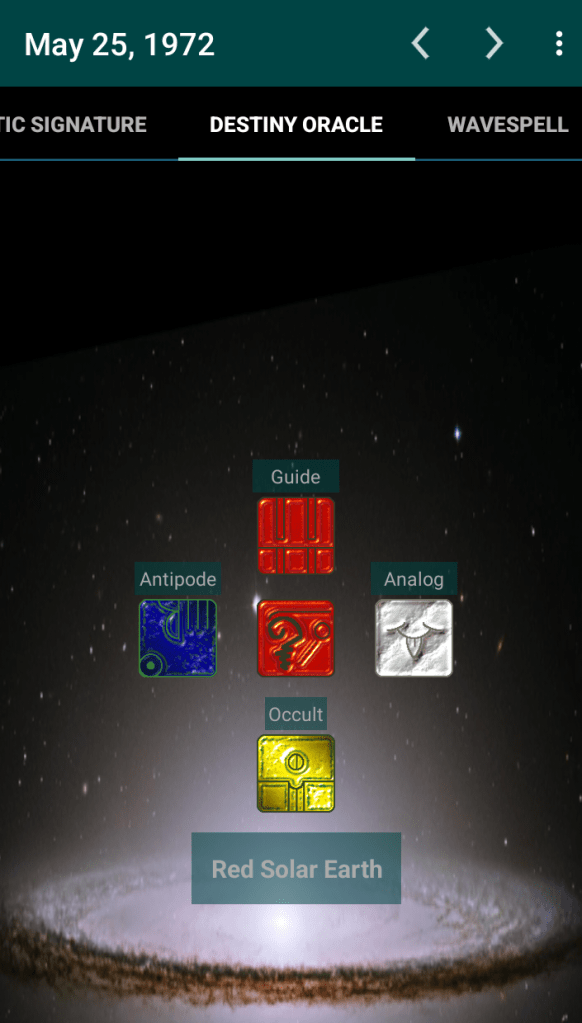
Red 9 Earth is mediated by Uranus, which rules Aquarius.
He is uniquely qualified to disrupt the manifestation of Aquarian ideals in the Aquarian Age for humanity we are now in. Because he’s the solar tone, he can try to disrupt using a cult knowledge of solar cycles and make time chaotic through technology to keep us in a “time is money” time warp.
My intentions are to manifest a planetary time paradigm shiftvia
Teaching on this blog that Time is Life/art, not money; Spiritualizing society.
Creating a new app to track synchronicity,
Supporting disclosure of black ops, reverse engineering done by Dr. Greer, by exposing government black budgets and black sites.
We support tech leaders of goodwill in manifesting ZPE and the infinite energy field. This ensures all tools and vehicles are safe and free for humans.
Supporting cash to work next to crypto if need be.
Supporting no monopoly of money supply, cash, or bitcoin.
Teaching that the only ruler on this planet in Love and Light is Jesus Christ, our creator. The rest is male hubris.
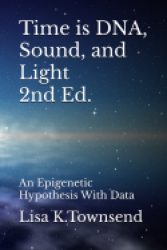
Using the data in my book, proving in the lab that Time is DNA, sound, and light. Time is every cell of our bodies manifested in a specific matrix order of evolution. Our Creator controls this order.
Creating or supporting a new galactic computer code from which spring new galactic digital languages of light and truth.
The details are chosen by our free will. Free will is universal law. It is the source of freedom of speech and power for the people. This is democracy in action in a constitutional republic. This will be moot if you hate the people. It will also be moot if you don’t trust the people. This seems to be the case with the rich.
We still divide society by rich and poor. We ascribe all good values to the rich. We place all bad values on the poor or even middle class. As a result, it’s a societal crime not to have or pursue a pile of money.
A Bitcoin reserve refers to a significant quantity of Bitcoin held by an entity, which could be:
1. **Central Banks or Government Entities**: Some countries might hold Bitcoin in their reserves similar to how they hold gold or foreign currencies, as part of their national wealth or as a hedge against inflation or currency devaluation. However, this is not common practice among most nations due to Bitcoin’s volatility and the lack of formal recognition as a currency.
2. **Cryptocurrency Exchanges**: Large exchanges like Binance, Coinbase, etc., maintain reserves of Bitcoin (among other cryptocurrencies) to facilitate trading. These reserves ensure liquidity for users wanting to buy or sell Bitcoin.
3. **Large Investors or Institutional Investors**: This includes hedge funds, investment firms, or wealthy individuals who might store Bitcoin as part of their investment portfolio or as a speculative asset. Companies like MicroStrategy or Tesla have been known to hold Bitcoin in their treasury.
4. **Bitcoin ATMs and Over-the-Counter (OTC) Desks**: These services need to have Bitcoin on hand to dispense or facilitate large trades outside of traditional exchange platforms.
5. **Custodial Services**: Companies that offer wallet services or cold storage solutions for clients who do not want to manage their private keys. These services hold Bitcoin on behalf of their users.
6. **Mining Pools**: While not exactly a reserve, mining pools accumulate Bitcoin from the mining process. These are often redistributed among miners, but the pool operator might keep a reserve for operational costs or for other strategic reasons.
7. **Stablecoin Backing**: Some stablecoins are backed by Bitcoin. For instance, if a stablecoin’s value is pegged to Bitcoin, they would maintain a reserve of Bitcoin to uphold this peg.
The concept of a “reserve” in Bitcoin can also be seen through:
– **Proof of Reserves**: Some exchanges or entities perform audits to prove they hold the amount of Bitcoin they claim to have, enhancing transparency and trust after incidents like the Mt. Gox hack where reserves were significantly less than claimed.
– **Cold Storage**: A practice where Bitcoin is kept offline in secure environments to protect against hacking or theft. This can be considered a form of reserve since these Bitcoins are not readily available for transaction.
– **Reserve Ratio**: In financial systems, the reserve ratio is the fraction of customer deposits and notes that banks are required to keep in reserve. While not directly applicable in the same regulatory manner to Bitcoin, entities handling Bitcoin might manage their holdings in a similar conceptual framework for liquidity management.
The idea of Bitcoin reserves underscores the digital, decentralized nature of cryptocurrency, where traditional financial concepts like reserves must be adapted to fit a system without a central authority. 😳 Always remember that the security of Bitcoin reserves is crucial due to the irreversible nature of blockchain transactions, making cybersecurity paramount.
It’s not secure as there are blue tick verified scammers using Elon’s name on X.com, promising a high percentage of profit on a real AI quantum trading platform. What they don’t tell you is how much you have to invest before you get a dime. They want to turn as much cash as possible into Bitcoin without telling you. They want to KILL CASH AND KILL AMERICA. They want an AI dictatorship using Bitcoin, eventually.
Maybe that’s what Trump and his team are up to. They love money the most. Power next.
Our fiat currency, which is cash and coin, is 3D. It’s manifested and made of the stuff that we use as humans,metals, and wood turned to paper. And we’re in a flesh and blood body. Our bodies and fiat are productive, as Warren Buffet says. He said, “Cryptocurrency is not productive. It’s not a thing.”
Think about the word productive. Plants and animals produce seeds and then fruit that makes more seeds and more animals and fruits. It’s called evolution, and IT’S WHAT WE DO HERE ON THIS PLANET.
Cryptocurrency is a symptom of devolution. Along with AI, it would take us out of the evolutionary stream that its proponents teach is inferior to tech. “God makes mistakes. God is a mistake. We’re a mistake. God isn’t real. The soul isn’t real. Everything is an error. Humans can fix it.” Well, we learn by trial and error. Their perspective is Luciferian, and they kill God. It’s nothing new, and it’s ruled this planet for millenia.
The whole tech sphere has programmed or hypnotized human minds out of nature. If Elon was really concerned about the plummeting birth rate, which he seems to be, he would encourage kids to hew closer to nature, bond, value the body, take care of themselves, and not teach them that robots, computers, and ectowombs are cool. He would sleep and live a healthier life himself and be a good example instead of a hypocrite.
We are 3D humans, which is what we will remain. As we evolve forward, we are not going to become robots or be dominated by them or errant gangs of tatooed motorcyclists who love anarchy and beer.
We are not machines. We love. We have sex we eat, and we have lives in nature. We are animals getting smarter. But are we getting wiser?
Cryptocurrency, tech, and AI are just this dangling, shiny object that takes you out of this dimension into a false one that doesn’t even exist because when you’re in 3D you’re merged with every other dimension up to 10. It’s a mistake to think that just because you’re manifested in 3D that you’re separate from the other ones.
Cryptocurrency is trying to hypnotize people into giving over the power in their bodies. Don’t do it. It’s gotten bad enough thus far with the power we’ve already given over. Don’t hand over your cash to crypto. We are 3D and need 3D currency. It’s a no-brainer.








 Synchronicity is the Source of Consciousness
You must be logged in to post a comment.