From The Pulse. New Archeological findings on the human species
From Lisa-According to the Urantia Book, human beings, at our current general evolution level, developing on earth, are 1 million years old. This new finding sets us at half a million. Almost every plant and animal species on earth got here or developed here before we did. We have everything to learn from nature.
As you know from the Maya teaching, our DNA patterns are ancient, and we are progeny of our ET ancestors, thank God. Tiamat was a tragic setback, but its legacy is about to be over. If I have my way, humans will have a leap forward. But, I cooperate and work for the universe, not myself. We’ll see.
Here is the article
It is believed that homo sapiens entered the evolutionary picture about 350,000 years ago.
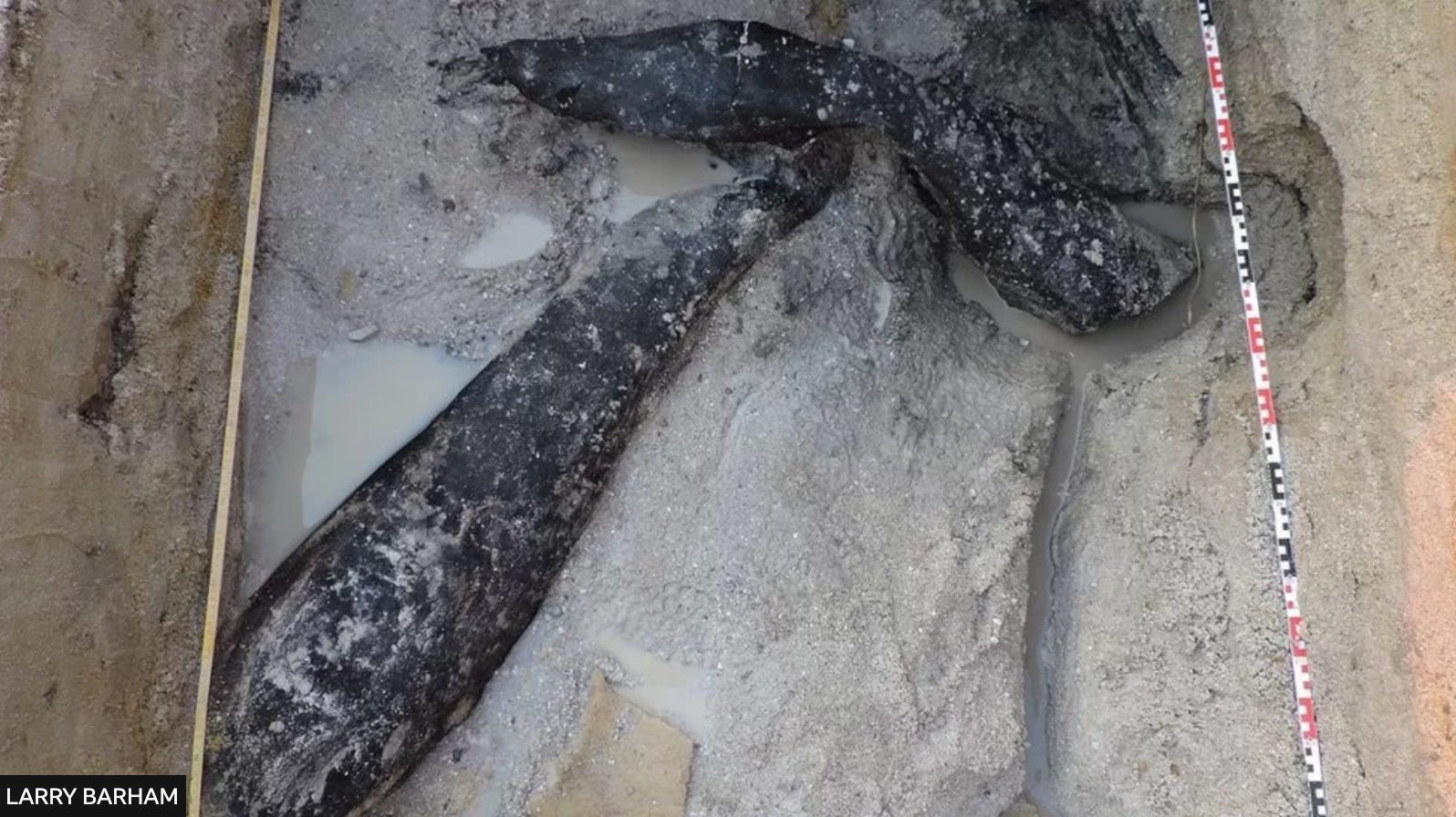
The 1.4-meter wooden remains were discovered at Kalambo Falls in the central African nation. The area is a hot spot for archaeological discoveries, with evidence of human life all the way from the early Stone Age to modern times.
Professor Larry Barham of the University of Liverpool’s Department of Archaeology, Classics and Egyptology led the team that studied the remains.
His team published a paper in the journal Nature discussing their findings. They noted that a high water table was one of the primary reasons why the remains were able to stay intact and in good enough condition to notice details like purposefully cut notches to interlock the wood.
Further, the paper posits that the dense forest cover at Kalambo and the high water table likely created frequent flooding, which would spark local habitants to construct “a raised platform, walkway or foundation for dwellings” giving us a motive.
These details indicate humans, or some other intelligent being, used tools to build whatever these wooden objects were used for. Specifically, they noted the likely use of a broad, cleaver-like edge to shape the wood.
“We interpret this object as a portion of tree trunk cut to size, indicating capacity to work wood at a large scale.”
Barham’s writes in the paper:
“Waterlogged deposits … preserved two interlocking logs joined transversely by an intentionally cut notch,[…]This construction has no known parallels in the African or Eurasian Palaeolithic.”
“We also recovered four wood tools from [390,000 to 324,000 years ago] including a wedge, digging stick, cut log and notched branch. The finds show an unexpected early diversity of forms and the capacity to shape tree trunks into large combined structures. These new data not only extend the age range of woodworking in Africa but expand our understanding of the technical cognition of early hominins, forcing re-examination of the use of trees in the history of technology.”
Beyond our understanding of the cognition of humans at the time, these remains predate homo sapiens by thousands of years. Were we off in our understanding of humanity’s timeline? Perhaps.
The paper concludes:
“Exceptional conditions of preservation give us this glimpse of a capacity to create a built environment by hominins hitherto perceived as mobile foragers with limited technological diversity.”
Given the suggestions of this paper, it will certainly spark other scientists to check the findings and perhaps challenge them. But for now, an invitation to be curious about what we truly know of our past remains open.
Every time a new development emerges that shakes up our understanding of history my curiosity about our origins is re-engaged. For most of my life, I’ve been enthralled by ancient civilizations, human origins, extraterrestrials, the paranormal, and many more of life’s mysteries.
The standard explanations for things like ‘who built the pyramids’ or ‘how did humans end up here?’ never sufficed for me. Something deep inside has always pushed me to look further and keep an open mind and heart.
This new finding reminded me of a podcast episode I did with Bruce Fenton in 2021 called Exogenesis – Were Humans Made By ETs?While it doesn’t relate to the type of findings in this discovery, it looks at other bits of archeological evidence I find much more intriguing.

 Synchronicity is the Source of Consciousness