Polar Stratospheric Clouds
Stratosphere. The stratosphere extends from from 4 -12 miles (6-20 km) above the Earth’s surface to around 31 miles (50 km). This layer holds 19 percent of the atmosphere’s gases but very little water vapor.-May 11, 2023
The magnetosphere or Psi Bank, where the ScR is measured, is 40,000 miles above the earth. Hypothetically, this is where the Tones of Creation pulse.
What does that mean in Tzolkics or Time Science?
In the binary triplet configuration that is the foundation of true time, it is the expression of exponential time in the northern most polar zone in the upper stratosphere of the earth holon.⁰
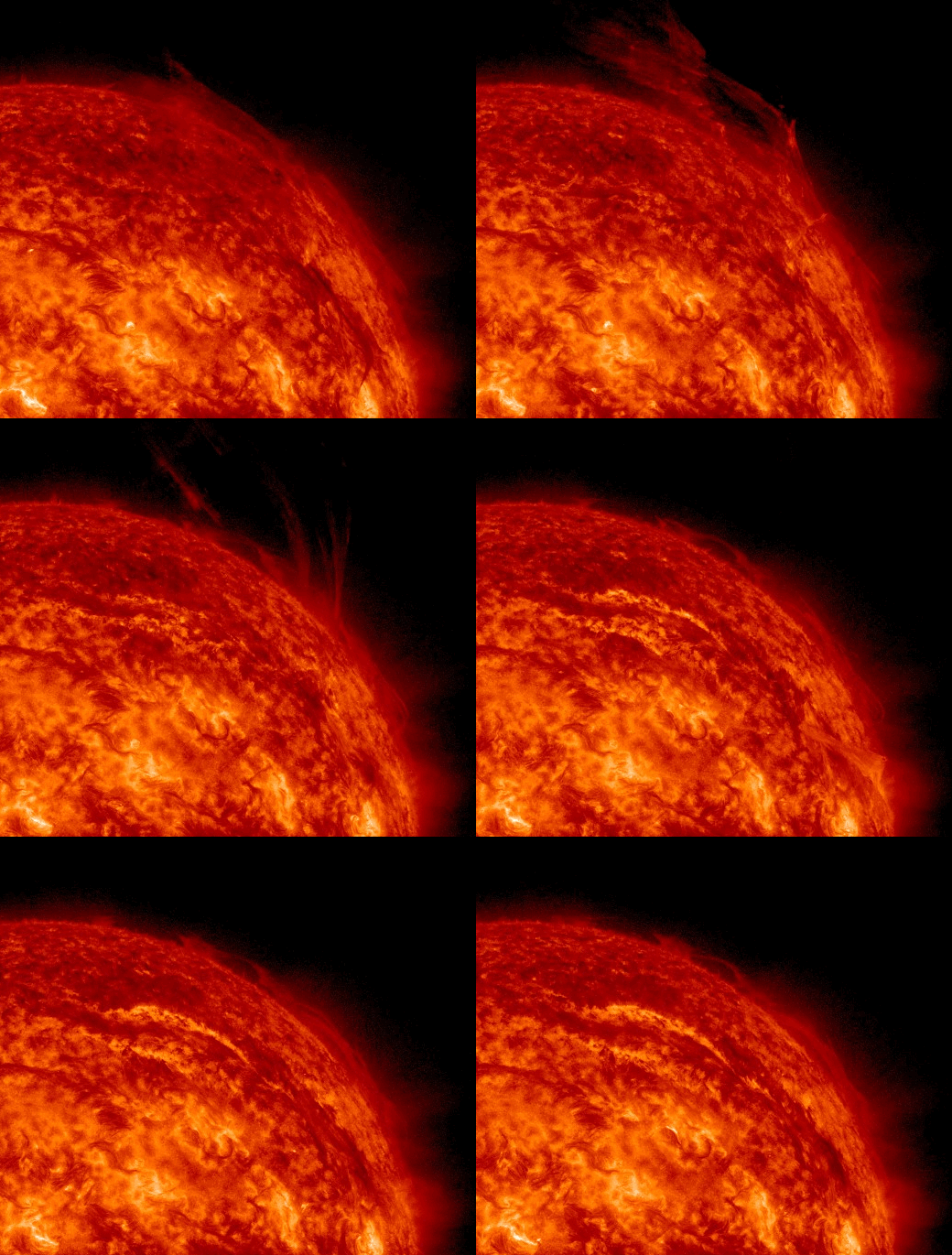
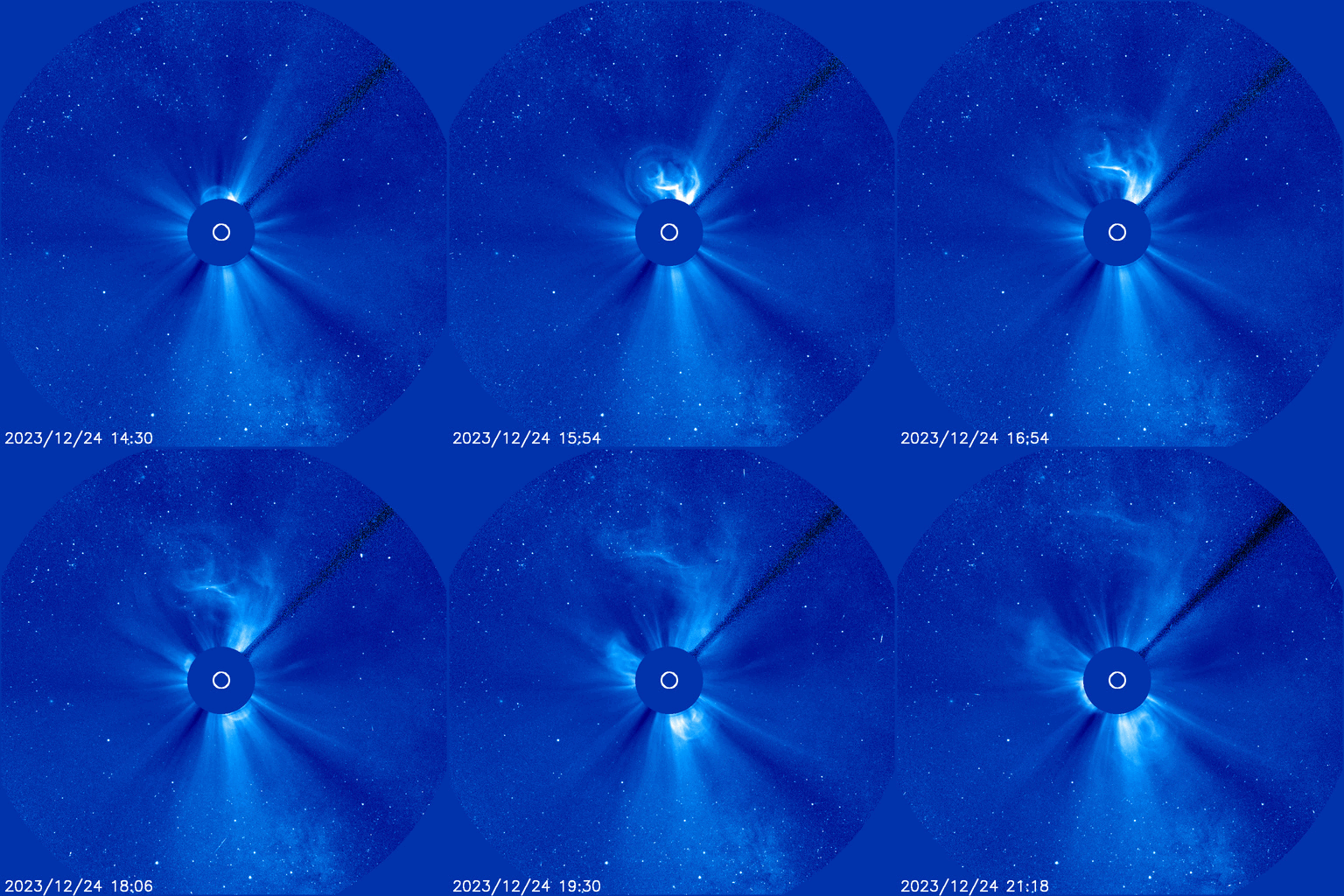
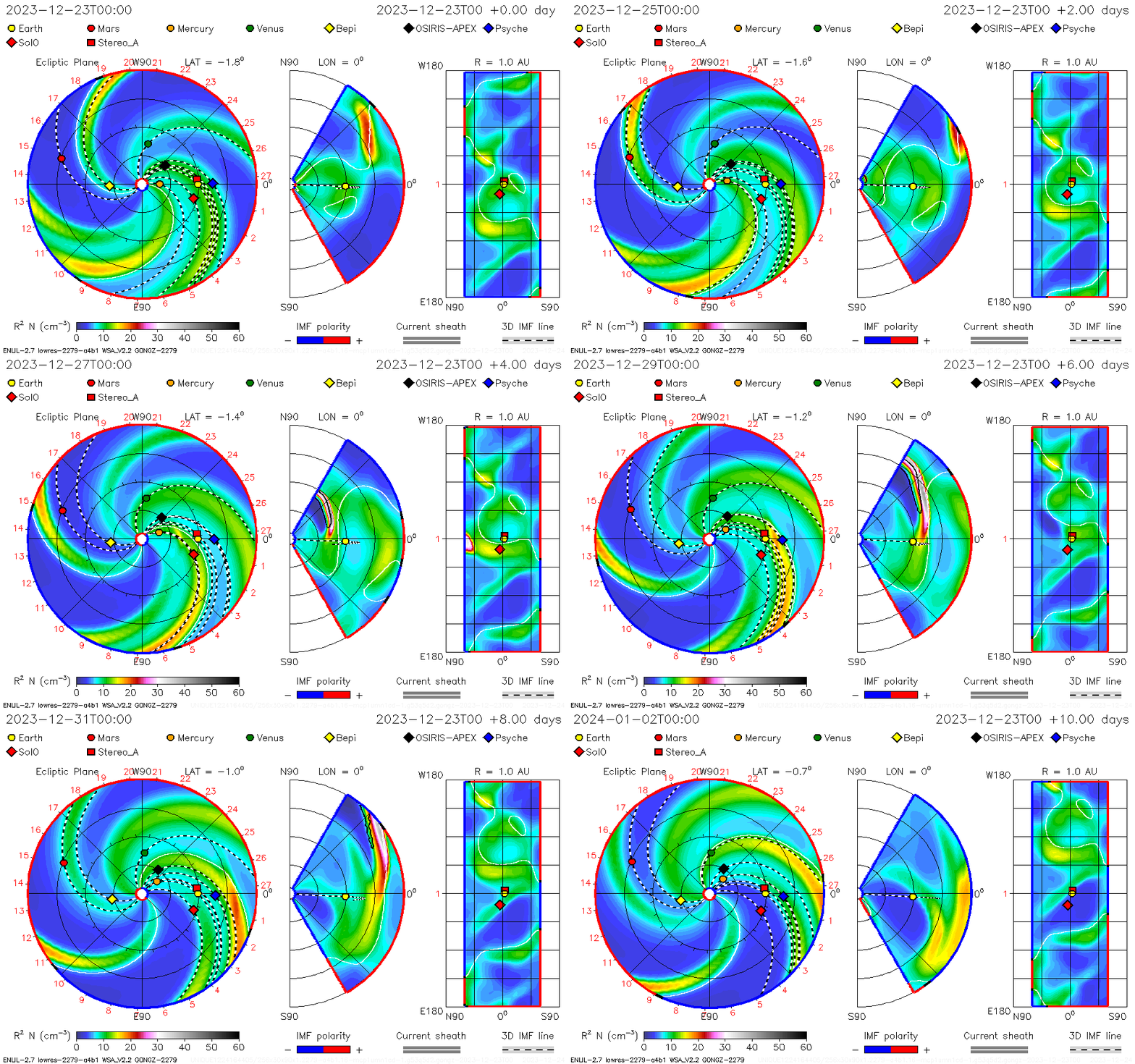
A CME IS COMING: Yesterday, Dec. 24th, a magnificant filament of magnetism erupted from the sun’s northern hemisphere, hurling a CME into space. Most of the CME is expected to pass north of our planet–most, but not all. NASA models suggest a glancing blow on Dec. 27th. Minor G1-class geomagnetic storms are possible on that date. CME impact alerts: SMS Text
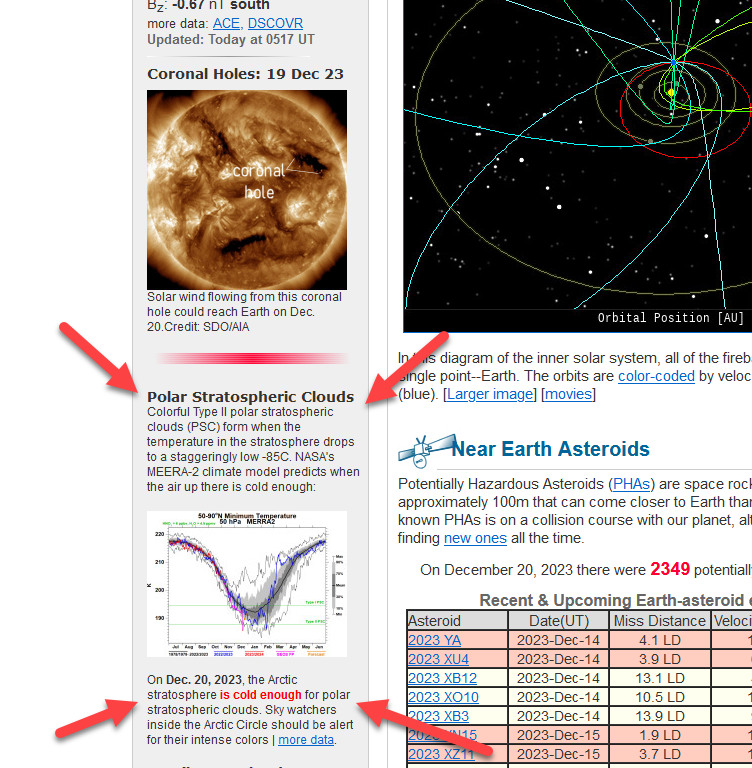
RECORD-COLD WEATHER IN THE STRATOSPHERE: Now we know why polar stratospheric clouds (PSCs) have suddenly exploded. According to NASA’s MERRA-2 climate model, temperatures in the Arctic stratosphere just hit a 40-year record low for the month of December:
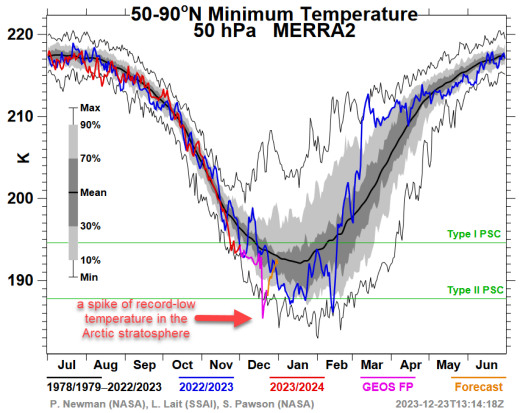
Cold air in the stratosphere is exactly what PSCs require. Normally, the stratosphere has no clouds at all. But when the temperature drops to a staggeringly-low -85 C, widely-spaced water molecules coalesce into ice crystals and PSCs begin to form. Their aurora-like colors make them the most beautiful clouds on Earth.
PSCs are normally confined to the Arctic where the stratosphere is coldest. During this week’s extreme cold wave, the clouds descended all the way to mid-latitudes. Here they are over Locarno,Switzerland (+46N): (This is the Yellow Sun Tribe portal area, 60°N-15°W.)
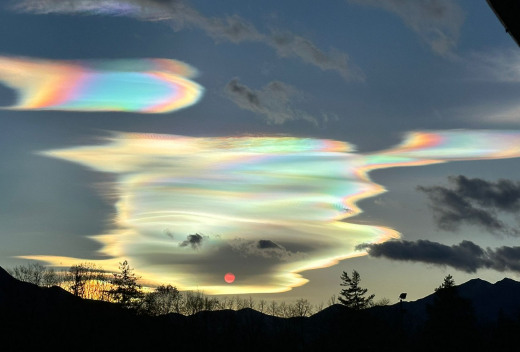
“I saw these clouds for the first time on Dec. 22nd,” says photographer Branca Cristina. “The colors were amazing!” (We were on Yellow Sun tribe on Dec. 19th)
At the same time, the clouds were sighted in Torun, Italy (+45N); the next morning they appeared again in Lausanne, Switzerland (+47N). These are extraordinary excursions from normal PSC habitat.
The season for PSCs usually starts in January. The current cold wave has given the season an early start, and could herald many more PSCs in the weeks ahead. To help sky watchers catch these rare clouds, we will henceforth publish daily predictions of temperatures in the Arctic stratosphere. When the air temperature drops below the “Type II PSC” green line, it’s time to look for PSCs. Check out the forecast here.
 Synchronicity is the Source of Consciousness