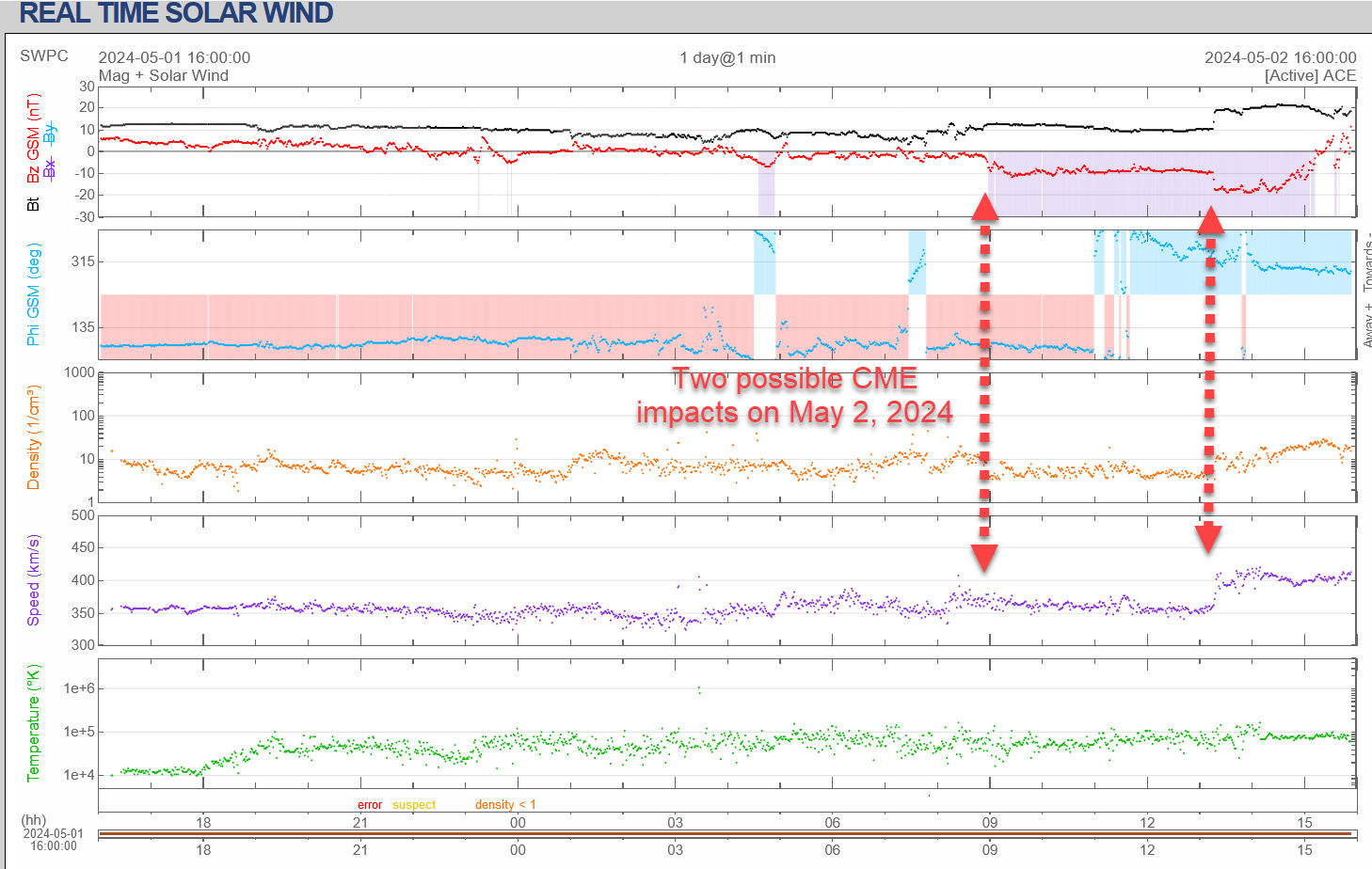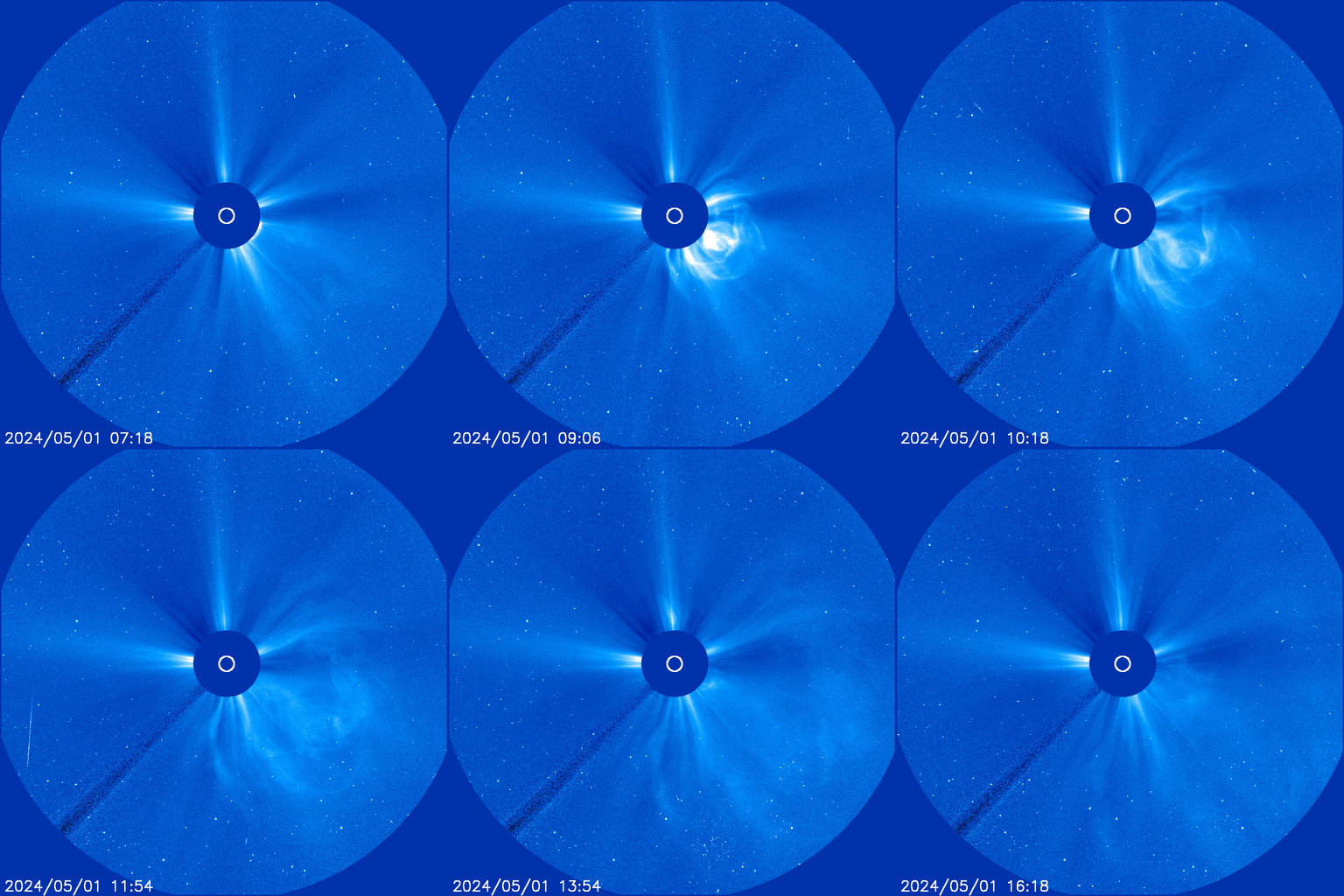
DOUBLE CME STRIKE (UPDATED): Two CMEs struck Earth’s magnetic field on May 2nd. Individually, the impacts were minor, but together they sparked a strong G3-class geomagnetic storm with auroras as far south as Washington in the USA. Another CME is expected to sideswipe Earth’s magnetic field on May 4th. Aurora alerts: SMS Text
COMET 12P/PONS-BROOKS AND THE SOLAR WIND: “Solar wind” is a relatively new idea. The first scientist to think of it may have been Sir. Arthur Eddington who, in 1910, suggested that Comet Morehouse might be shaped by some unseen gaseous outflow from the sun. Astronomers didn’t think much of his suggestion. It might have been an easier sell if they had seen this picture of Comet 12P/Pons-Brooks:
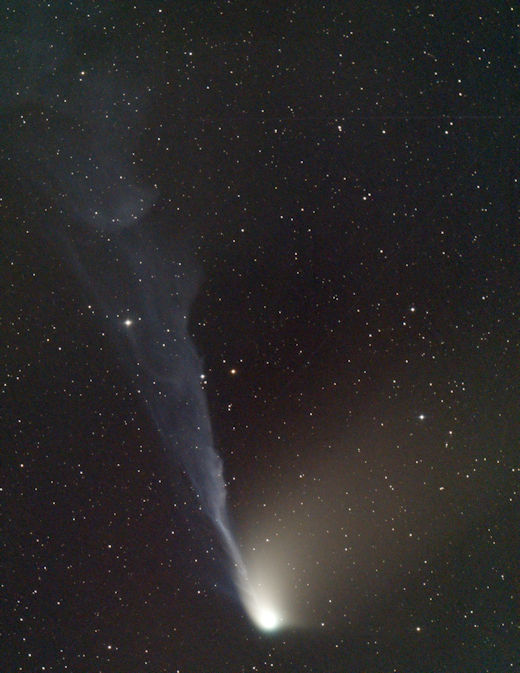
Michael Mattiazzo photographed the comet on April 30th from Swan Hill, Victoria, Australia. “The comet’s tail is incredibly active,” he says.
Most of the ripples, curls, and streamers captured so beautifully in Mattiazzo’s photo are caused by the buffeting of solar wind. Not only that, the comet’s tail is pointing directly away from the sun–another sign that Eddington’s “outflow” really exists.
Eventually, Eddington’s idea started to catch on among other researchers, although it was a slow process with widespread acceptance taking almost 50 years. American astrophysicist Eugene Parker coined the term “solar wind” around 1957. In January 1959, the Soviet spacecraft Luna 1 directly observed the solar wind and measured its strength for the first time.
This month, amateur astronomers in the southern hemisphere can behold the effects of solar wind with their own eyes. Comet 12P/Pons-Brooks is emerging from an April close encounter with the sun (perihelion), and its wind-sculpted tail is a beautiful sight through backyard telescopes. Point your optics here.
more images: from Mike White of Twizel, New Zealand
Realtime Space Weather Photo Gallery
Free: Spaceweather.com Newsletter
All Sky Fireball Network  Every night, a network of NASA all-sky cameras scans the skies above the United States for meteoritic fireballs. Automated software maintained by NASA’s Meteoroid Environment Office calculates their orbits, velocity, penetration depth in Earth’s atmosphere and many other characteristics. Daily results are presented here on Spaceweather.com.
On May 02, 2024, the network reported 13 fireballs.
(7 eta Aquarid, 6 sporadics)
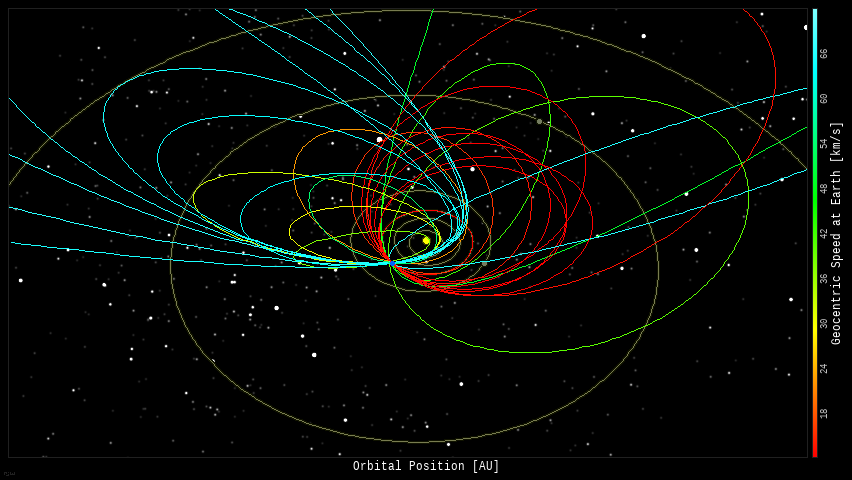
In this diagram of the inner solar system, all of the fireball orbits intersect at a single point–Earth. The orbits are color-coded by velocity, from slow (red) to fast (blue). [Larger image] [movies]
 Synchronicity is the Source of Consciousness