X, Mars, seeing red. Maybe NOAA and NASA do talk to each other and keep SpaceX in mind. The ginormous coronal mass ejection is headed for Mars Mr. X.
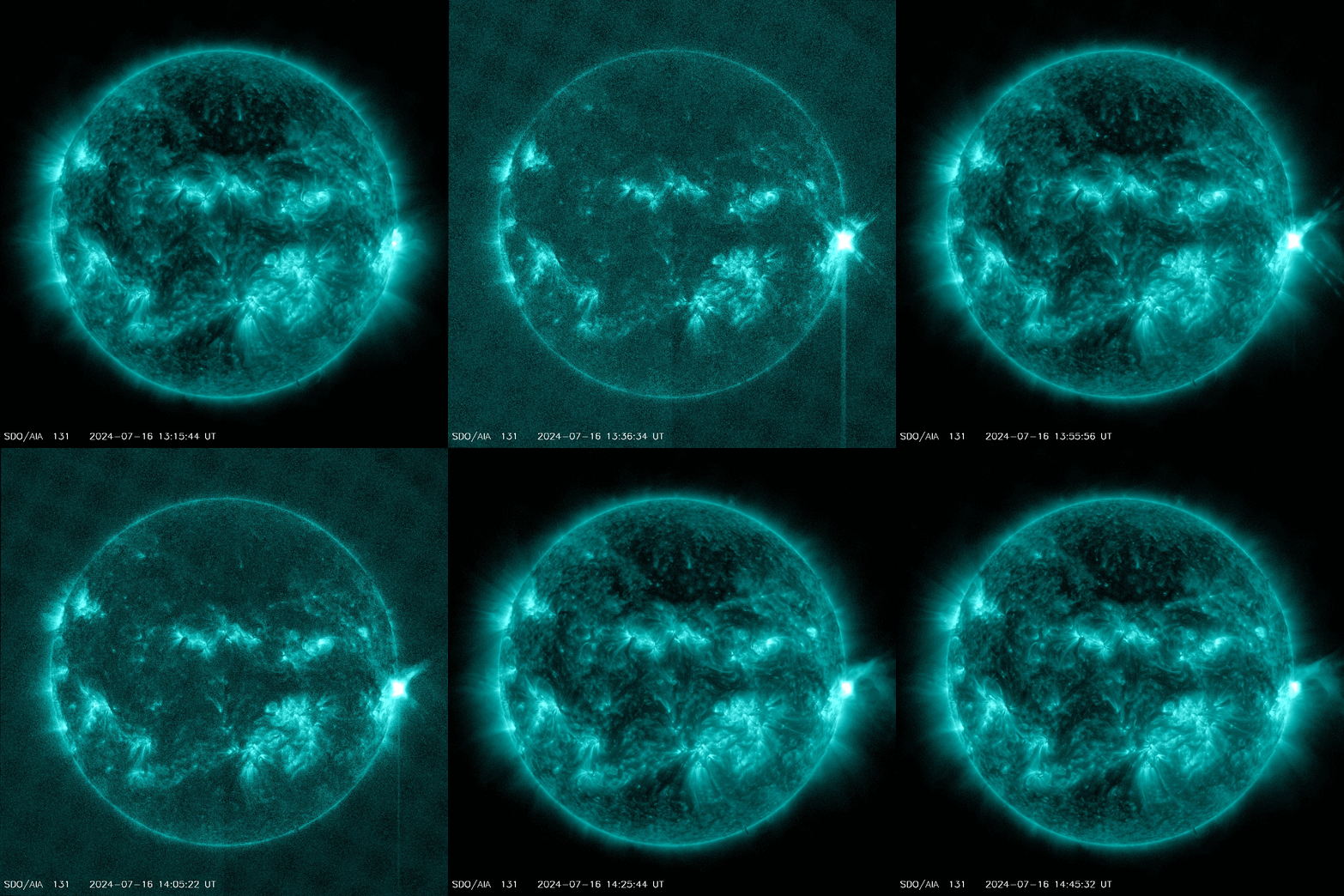
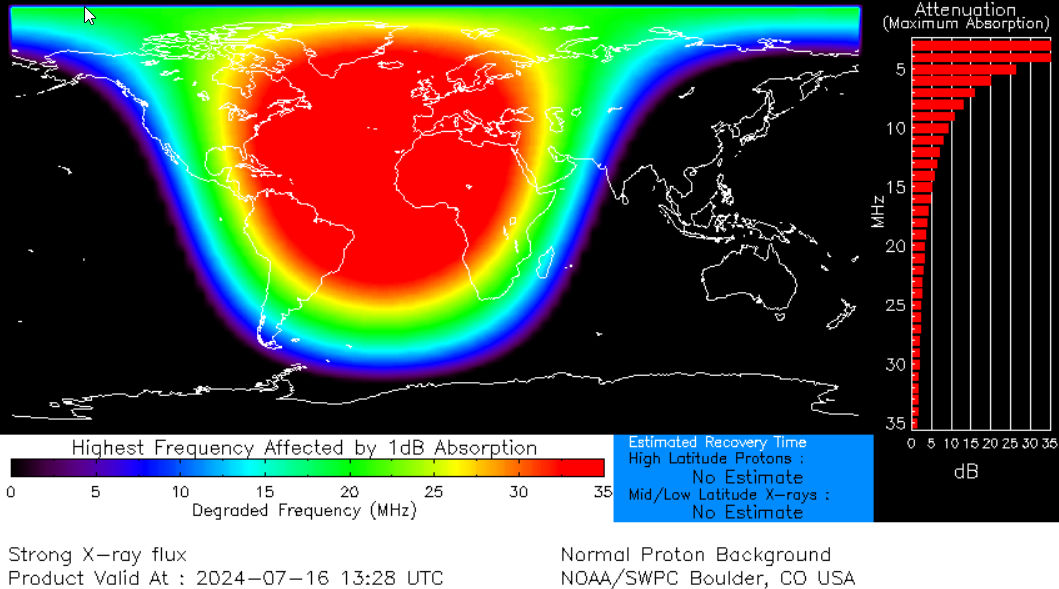
Yesterday, Sunspot AR3738 produced a strong X1.9-class solar flare with a shortwave radio blackout over the Atlantic Ocean (map). The explosion hurled a CME into space, but it won’t hit Earth. Instead, the CME is heading for Mars. The impact on July 20th could spark global auroras and erode a small amount of the Red Planet’s atmosphere. Solar flare alerts: SMS Text
A RARE TRANSIT OF TITAN: This doesn’t happen very often. On July 16th, Philip Smith of Manorville, New York, watched a rare transit of Titan across the disk of Saturn:
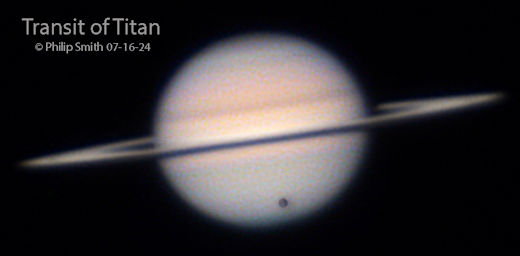
“The time was 4:38 am EST,” says Smith. “It was very hot and uncomfortably muggy with some light clouds at times in the path of Saturn. I was not going to let that stop me from viewing this unusual event!”
Titan transits are rare because they can only be seen when Earth is crossing Saturn’s ring plane. This happens approximately once every 15 years. The latest ring crossing is beginning now and will continue into 2025. During that time, multiple rare transits will be observable by amateur astronomers around the world.
Realtime Space Weather Photo Gallery
Free: Spaceweather.com Newsletter
(Remember when I said we were leaving the 52-day green spectrum of light and moving I the 52-day red spectrum of light? It was before Red 1 Dragon, the day we started a new 260-day cycle 10 days ago. It’s the Light of the Tzolkin, the matrix of time showing us it’s there.-L.T.)
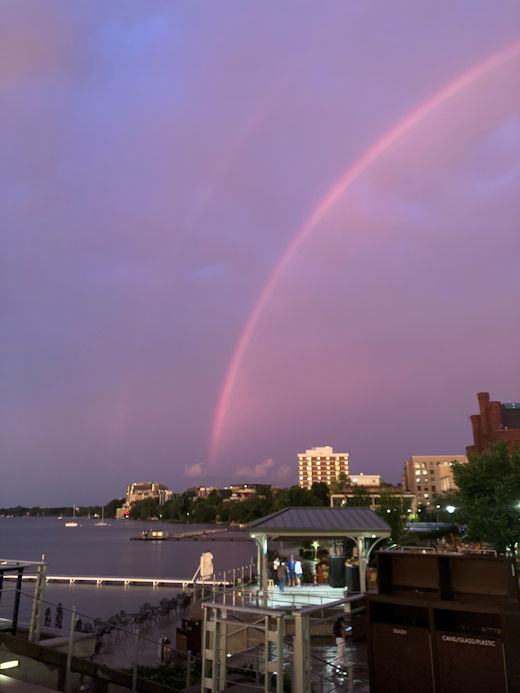
RED RAINBOW: Rainbows are normally red, yellow, green and blue–in short, all the colors of a rainbow. But the rainbow Gustavo Meneses photographed from Madison, Wisconsin, on July 15th was simply red:
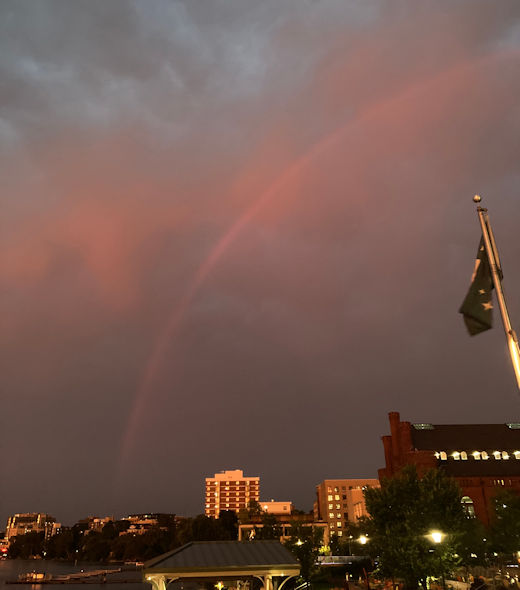
“A thunderstorm with extensive bolts of lightning rolled in at sunset,” says Meneses. “When it cleared up, this red rainbow appeared on the opposite side of Lake Mendotab.”
What made the rainbow red? It was the only color available. All of the other colors of the rainbow had been scattered away by air molecules and dust particles in front of the low-hanging sun.
A faint secondary rainbow is also visible in Meneses’ photo. While the bright primary ‘bow is caused by light reflected once inside raindrops, the second ‘bow is caused by light reflected twice. That makes this a double red rainbow.
 Synchronicity is the Source of Consciousness