
Over the weekend, the sun hurled multiple CMEs directly toward Earth. Individually, none of the CMEs was particularly impressive, but together, they joined forces to form a potentially-potent “Cannibal CME.” This NOAA model shows the process in action:
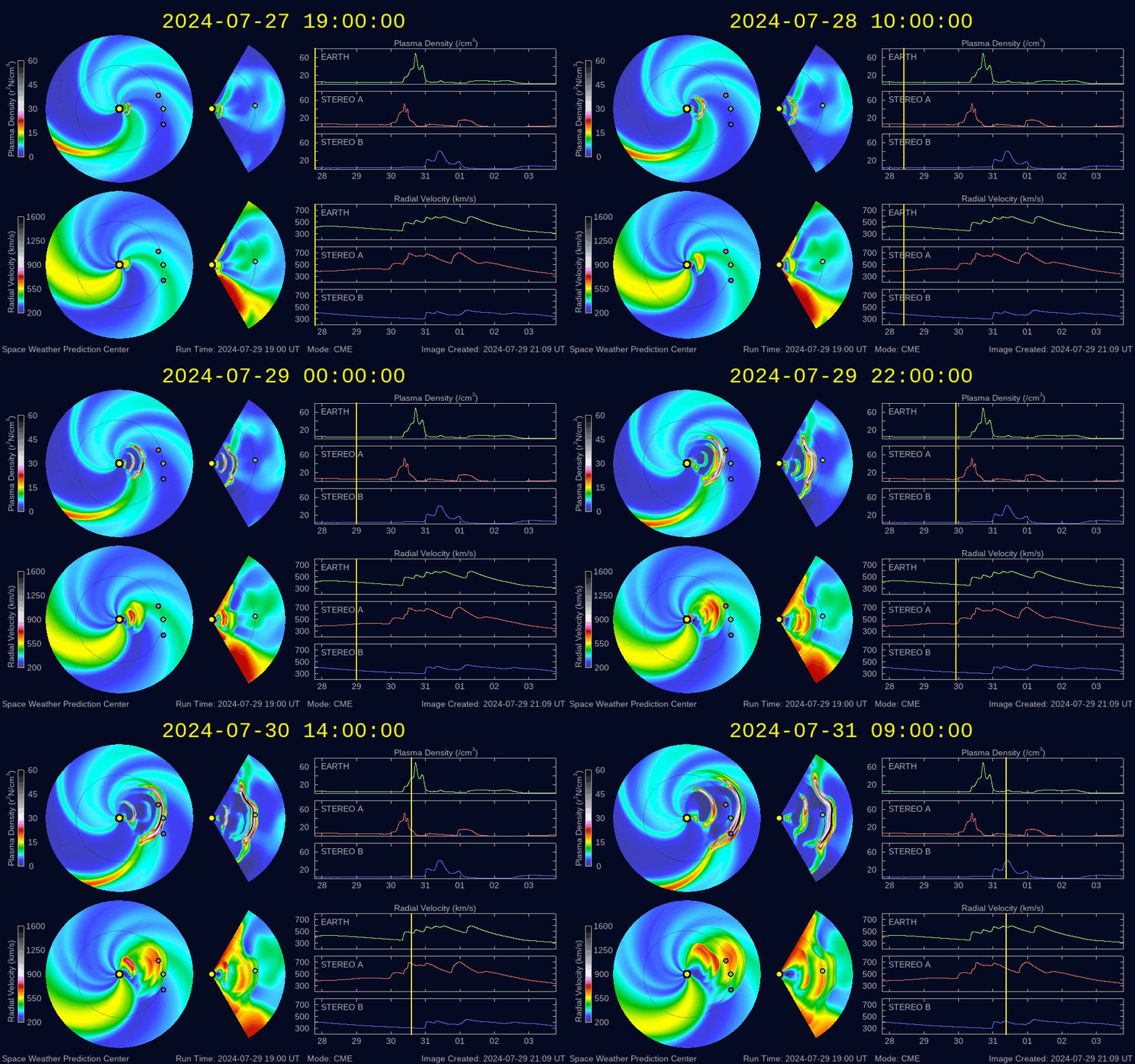
The model shows as many as four CMEs mashing together to form a single storm front. It begins on July 27th when two closely-spaced CMEs left the sun and immediately merged. Thus “cannibalized,” they traveled toward Earth, snowplowing the solar wind in front of them. A third CME followed on July 28th. It raced through the void created by the first two, easily catching them. A fourth CME on July 29th will combine with the others after they pass Earth.
The combined effect of these CMEs (a triple-cannibal followed by one or two stragglers) could spark strong G3-class geomagnetic storms on July 30-31. If such a storm materializes, auroras should be visible at mid-latitudes across Europe and the USA. Aurora alerts: SMS Text
Realtime Space Weather Photo Gallery
Free: Spaceweather.com Newsletter
SUNSPOT SUNSET: The source of all these CMEs is massive sunspot complex AR3764-67. Jan Koeman photographed them at sunset from the beach in Domburg, the Netherlands:
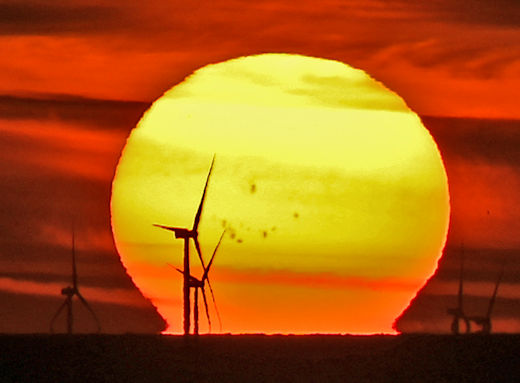
“As Solar Max comes nearer, the solar disk is peppered with amazing sunspots,” says Koeman. “No filter was needed to image these, together with the windmills in the North Sea.”
Caution: Even when the sun is hanging low and dimmed by haze and smoke, it is still dangerous. Sunlight magnified by optics can damage your eyes. If you want to photograph the sun without a solar filter, use the camera’s LCD screen as a viewfinder. Never look through the optics!
 Synchronicity is the Source of Consciousness
