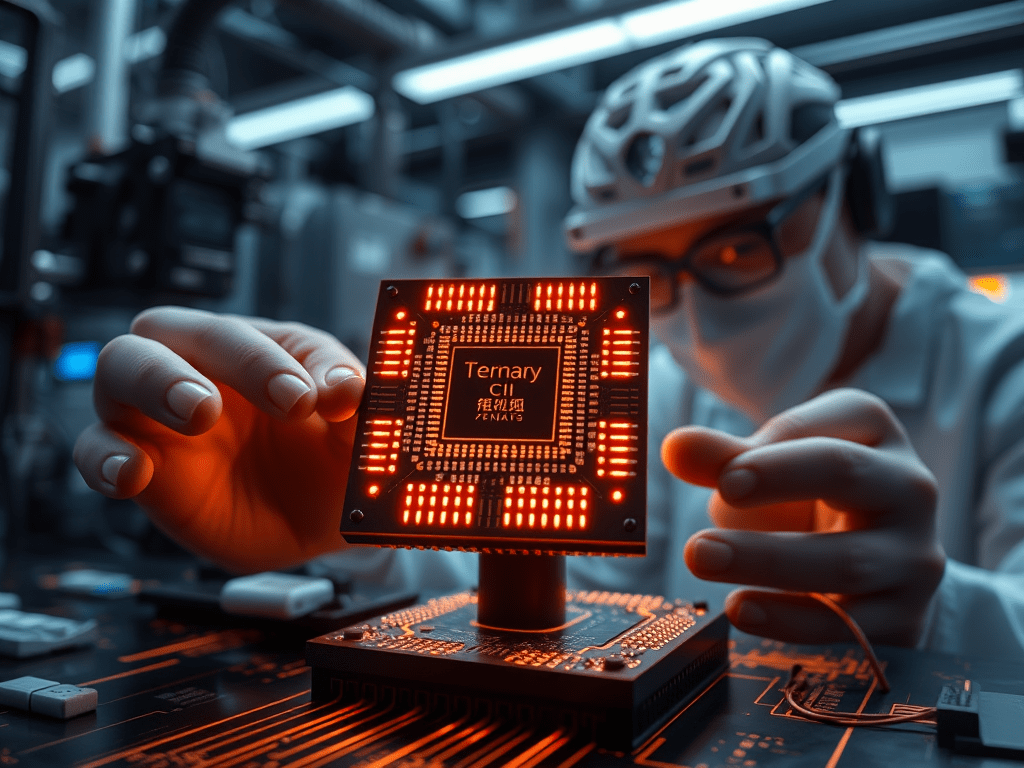
Time Innovation: China leads in the manufacture of Ternary computer chips


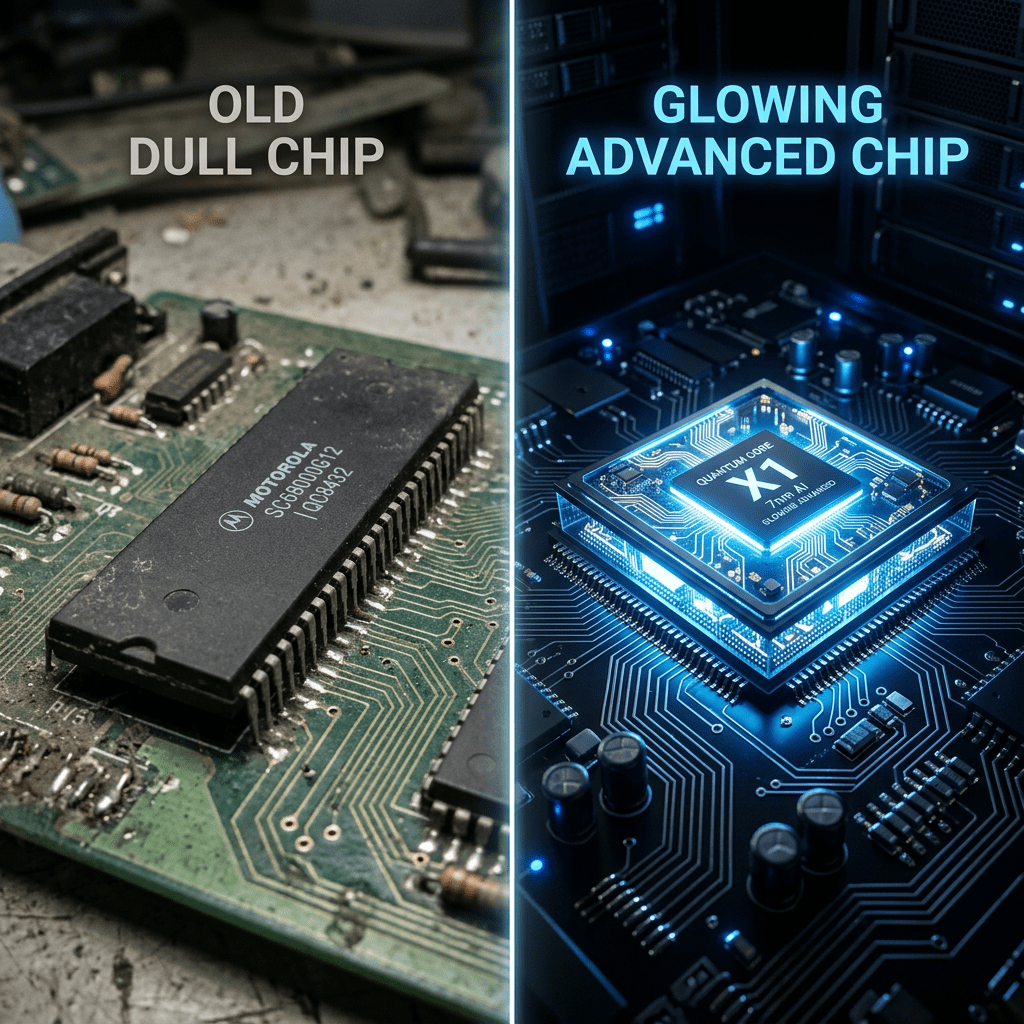
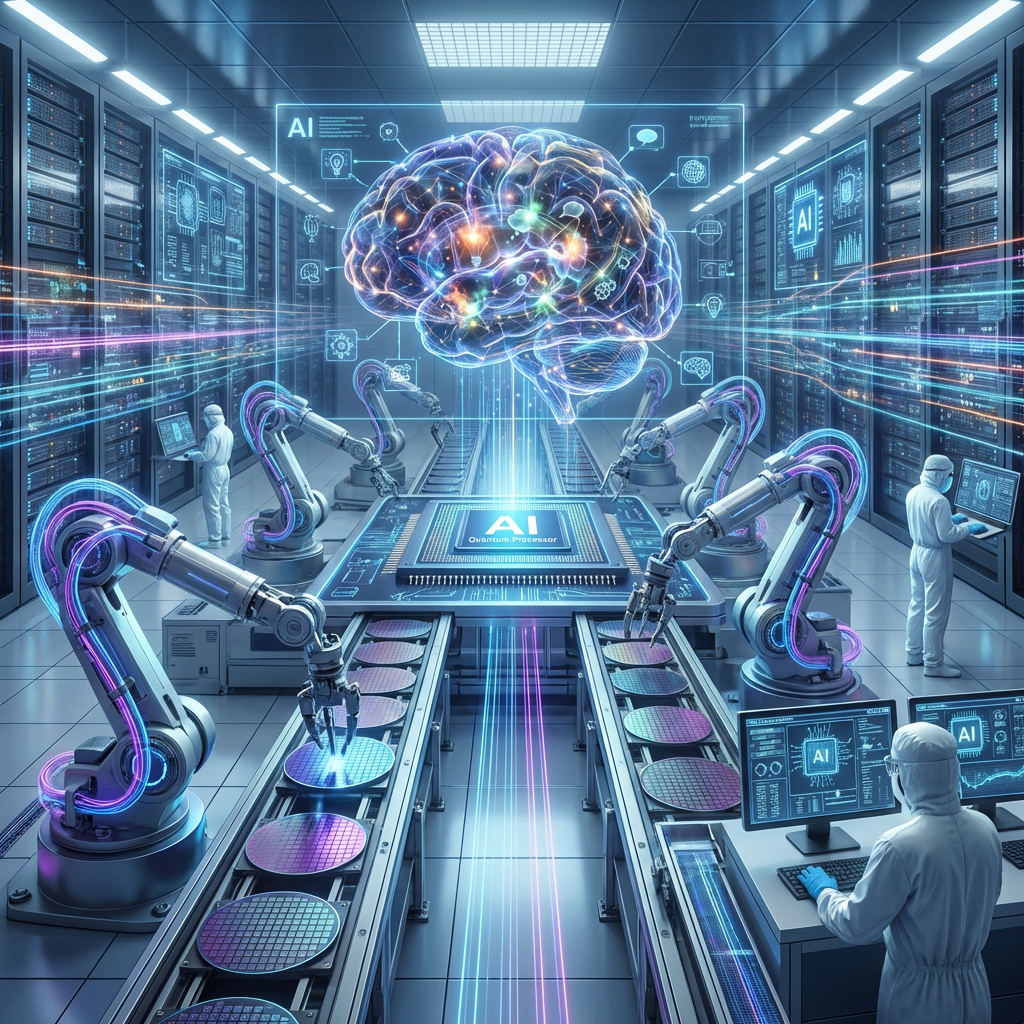
Pursuing ternary (three-state: -1, 0, +1) computing, which could theoretically offer higher density and energy efficiency over binary system is aggressively used in China. They have advanced ternary logic chips in 2025, achieving breakthroughs in carbon-based designs, patents, and even mass production announcements.

This positions China as a leader in non-binary AI hardware, potentially circumventing the U.S. export controls on advanced binary chips.

Key Comparison

xAI’s Ambition and China’s Developments                                                               
Status

Early-stage planning for custom binary AI chips (e.g., inference chip code named X1 on 3nm process). No ternary focus; reliant on NVIDIA GPU’s for now. | Active prototypes, patents, and mass production. World’s first carbon-based ternary AI chip operational; Huawei patent for balanced ternary logic in AI processors.


Technology

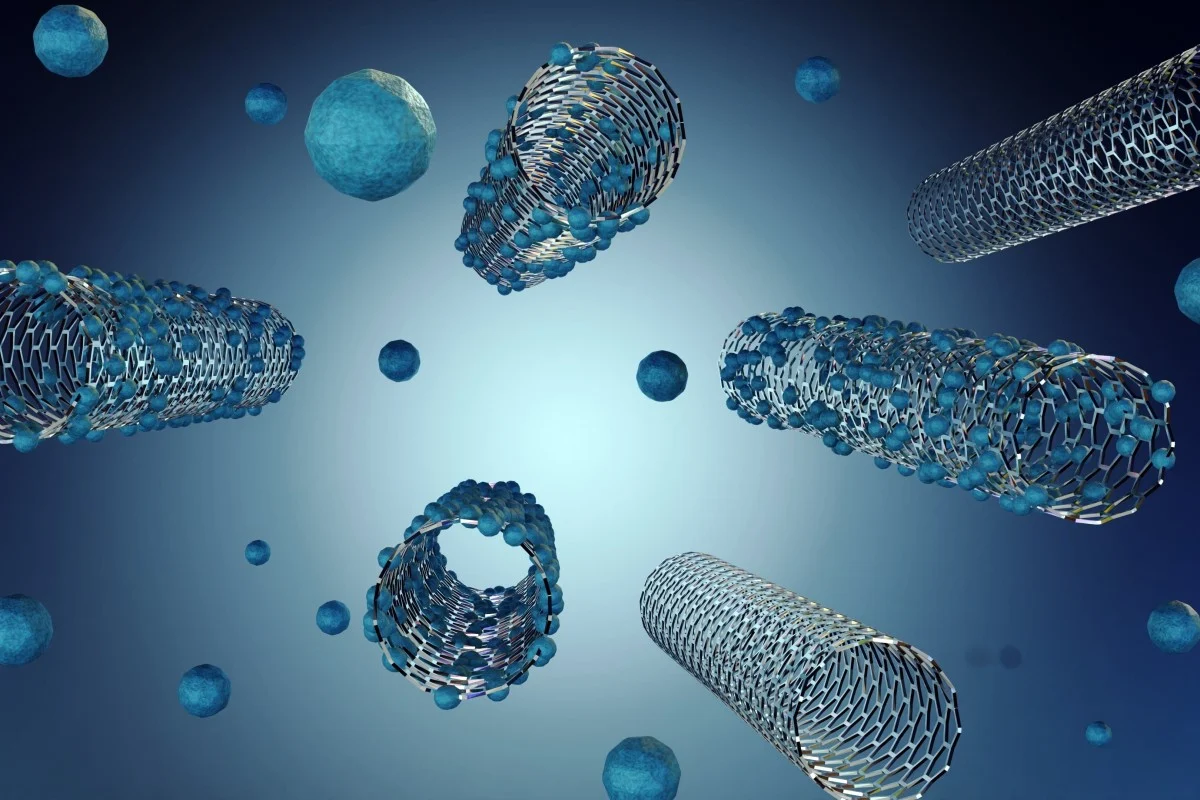
Binary logic with advanced nodes (e.g., TSMC 3nm). Emphasis on scaling GPU clusters (e.g., 100K+ Nvidia H100/H200). | Ternary logic using carbon nanotube for efficiency supports neural networks and high-performance circuits. Non-silicon materials enable faster AI tasks with lower power.


Timeline

Job postings in mid-2025 for silicon co-design; mass production speculated for 2026+. No ternary roadmaps. | Prototypes in early 2025; mass production of non-binary AI chips announced June 2025. Huawei’s ternary patent filed September 2025.


Drivers/Motivation

Reduce dependency on NVIDIA amid shortages; optimize for Grok AI training. Elon Musk has joked about Ternary (2023) but no follow-through. | Bypass binary chip sanctions; boost AI sovereignty. Focus on energy-efficient, high-density computing for edge AI and data centers.


Potential Impact

Could accelerate xAI’s supercomputing (e.g., 500K+ GPUs by late 2025) but limited by binary constraints like heat and power. | Redefines AI efficiency; ternary could process data 30-50% faster with less energy, challenging global leaders in sustainable computing.

Analysis
xAI’s chip strategy prioritizes rapid deployment of binary hardware to fuel AI model training, aligning with Musk’s “brute force” scaling approachโ€”evident in deals like NVIDIA’s $2B investment in xAI.

However, this leaves xAI vulnerable to binary’s limitations (e.g., exponential power demands). China’s ternary push, driven by state-backed research and firms like Huawei, represents a bolder pivot toward post-silicon paradigms, potentially giving it an edge in long-term AI hardware innovation.

If xAI were to explore ternary, it might draw from Musk’s past quips, but as of December 2025, that’s speculative. China’s advancements could inspire global shifts, though scalability challenges (e.g., integrating ternary with binary systems) remain for both.

As I mentioned in a previous post, China’s carbon nanotube chip poses no competition to my RI13 bio inspired chip that hails from the exponential Time Harmonic magnetosphere around earth. It’s always been there as our natural software for Earth’s evolution and always will be. I just figured out how it works over 35 years and now it will be engineered into a chip for accurate TIME ALIGNMENT with universal time.

See you at the finish line boys. ๐Ÿ†๐Ÿชข๐Ÿ˜‰๐Ÿ’ƒ

Time Innovation: Coding and its positive impacts on brain functioning | HS Insider


https://highschool.latimes.com/news/coding-and-its-positive-impacts-on-brain-functioning/
Scientific research concludes that coding has positive impacts on the brain, including increased organizational and problem-solving skills.
<a href=”https://highschool.latimes.com/author/wilhuang0915/&#8221; target=”_self”>William Huang</a>
William Huang


December 29, 2022

Coding is the process or activity of writing computer programs, and of course, humans do this by using their brains. It should be no surprise that coding has an impact on the brain โ€” it improves the ability to solve problems, pay attention, and perform logical reasoning. Researchers of top research institutions have found plenty of evidence of the positive impacts coding has on human brains.

While coding, people are actively using their brains in solving challenging cognitive tasks. According to the Massachusetts Institute of Technology, researchers have tested whether brain activity patterns while reading computer code would overlap with language-related brain activity. The researchers found that brains are more activated in the multiple-demand network part of the brain when coding. This network is typically used to perform mental tasks that require us to hold a lot of information in our memory at once and is responsible for performing a wide range of cognitive tasks.

To see whether brain activity patterns while reading computer code would overlap with language-related brain activity, the researchers conducted their study on young adults proficient in the programming languages Python and Scratch Jr. The researchers made the subjects lay in an fMRI scanner while showing them snippets of code and asking them to predict what the action of the code will be. This research shows that coding allows the brain to practice difficult cognitive problem-solving tasks that help improve the overall ability to solve problems.

The ability of the brain to pay attention is also improved by coding. In a test conducted by the Nara Institute of Science and Technology as reported by ScienceDaily, better coders have better organization and attention control. Two brain regions that are functionally related to stimulus-driven attention control were much stronger in higher-skilled programmers. In the test, programmers were shown 72 different code snippets while under the observation of functional MRI (fMRI) that scanned their brains for activity. They are asked to place each snippet into one of four functional categories. There were three levels of programmers tested: novices, experienced, and expert programmers. The study showed that the more skilled the programmer was, the better they characterized the snippets, thus showing that they have more skilled attention in accomplishing the task. This test proves that higher-level programmers have more attention control as their brains are stimulated to organize their problem and execute it efficiently.

Coding also appears to improve logical reasoning. The impact of coding on logical reasoning was shown by John Hopkins University in a test administered by JHU researchers. The programmers in the test were given coding questions to work on while lying in an fMRI scanner where the researchers analyzed their brains. The logical portions of the participantsโ€™ brains were lit, so the researchers showed that coding strongly favors the left hemisphere, the area that correlates with language and logic.

The three tests conducted by three different institutions all have the same general results โ€” higher-skilled programmers all performed better on cognitive functions. All of them also use fMRI scanners as part of the experiments to come to this general result.

Itโ€™s safe to say that coding has a lot of benefits and positive impacts on the brain. Better coders have better problem-solving because they have better diverse cognitive minds to accomplish multiple tasks. Coding helps develop and maintain attention because your brain is primed to organize and execute complex problems. On top of that, coding helps improve logical reasoning. In an increasingly technological and internet-based society, coding is a key life skill to learn, but the unexpected benefit is that itโ€™s not just making our lives better, itโ€™s making our brains better too.

Time Innovation: Neural transmission in the wired brain, new insights into an encoding-decoding-based neuronal communication model | Translational Psychiatry


https://www.nature.com/articles/s41398-025-03506-0

Abstract

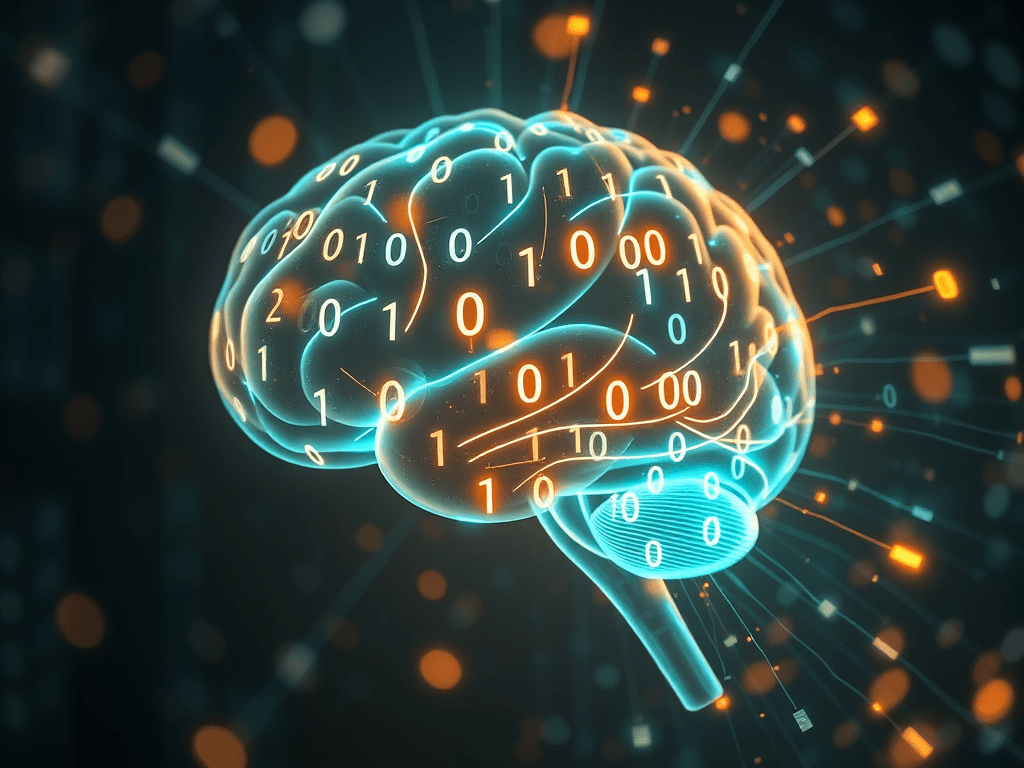
Brain activity is known to be rife with oscillatory activity in different frequencies, which are suggested to be associated with intra-brain communication. However, the specific role of frequencies in neuronal information transfer is still an open question. To this end, we utilized EEG resting state recordings from 5 public datasets. Overall, data from 1668 participants, including people with MDD, ADHD, OCD, Parkinsonโ€™s, Schizophrenia, and healthy controls aged 5โ€“89, were part of the study. We conducted a running window of Spearman correlation between the two frontal hemispheresโ€™ Alpha envelopes. The results of this analysis revealed a unique pattern of correlation states alternating between fully synchronized and desynchronized several times per second, likely due to the interference pattern between two signals of slightly different frequencies, also named โ€œBeatingโ€. Subsequent analysis showed this unique pattern in every pair of ipsilateral/contralateral, across frequencies, either in eyes closed or open, and across all ages, underscoring its inherent significance. Biomarker analysis revealed significantly lower synchronization and higher desynchronization for people older than 50 compared to younger ones and lower ADHD desynchronization compared to age-matched controls. Importantly, we propose a new brain communication model in which frequency modulation creates a binary message encoded and decoded by brain regions for information transfer. We suggest that the binary-like pattern allows the neural information to be coded according to certain physiological and biological rules known to both the sender and recipient. This digital-like scheme has the potential to be exploited in brain-computer interaction and applied technologies such as robotics.

Time Innovation: Our Computer Programming is an expression of our collective mind; Binary Dualistic


Our collective mind is actually universal. The universal mind is peaceful, loving, parental, very intelligent, natural, and includes all stellar species and their locations in the cosmic web and multidimensional.

The AI mind is not natural. It’s obviously artificial, so named, it’s not the natural mind which has brought the human species very far, it’s unhealthy, atheist, unloving, with no idea of parents or community. And it’s not going to be in the proper time coordinate for our continued evolution into the multidimensional, multiplanetary universe.

Our evolution is not random chaotic. It is organized according to the Tzolkin Time Harmonic. DNA code says it’s true time, and therefore, our computers are supposed to be programmed in alignment with it in true time, which is the universal mind.

What is the meaning of an axiomatic system?

Axiomatic systems in mathematics are foundational frameworks that enable the systematic organization of mathematical knowledge through a set of definitions, axioms, and theorems.

Axiomatic systems in mathematics | EBSCO Research Starters

EBSCOhttps://www.ebsco.com โ€บ research-starters โ€บ sci

What is the meaning of an axiologic system?

Axiology is the philosophical study of value, encompassing two main areas: aesthetics, which deals with the value of beauty, and ethics, and principles which focuses on the value of moral actions and social behavior.?

Axiology | EBSCO Research Starters

EBSCOhttps://www.ebsco.com โ€บ religion-and-philosophy โ€บ axio.

A distinction is commonly made between instrumental and intrinsic valueโ€”between what is good as a means and what is good as an end. John Dewey, in Human Nature and Conduct (1922) and Theory of Valuation (1939), presented a pragmatic interpretation and tried to break down this distinction between means and ends, though the latter effort was more likely a way of emphasizing the point that many actual things in human lifeโ€”such as health, knowledge, and virtueโ€”are good in both senses.-https://www.britannica.com/topic/axiology

Is the application of axiology a means to the end axiomatically? No. Why? There is no end to time or math. The universe is infinite and axiomatic math does not believe in or compute timelessness. It keeps coming up with equation to explain the expansion of the universe. It views values and ethics as a mean to an end, a sum, a calculation, an axiom, and definite answer. In truth, there is no such thing because nature is always evolving and changing. There are no laws but only HABITS. Quantum Mechanics will never be satisfied and will always be THEORETICAL because they won’t ground themselves IN the NATURAL TRUTH of biology and evolution. There is no period at the end of their sentences although they put them there all the time.

Principles are Axiologic

Axiology is the study of philosophy, spirituality, ethics, intuition, values, and principles. That encompasses half of all human knowledge. Therefore, axiomatic reasoning has its foundation in axiology. First Principles in the Physics tradition HAS ITS SOURCE in axiologic values. Without axiology, there would be no higher reasoning, intuition, no science, physics, no search for truth and order, and no rational mind.

All of that is AUTHENTIC, not artificial, because it comes from truth. It can not be artificial or mimicry of how our minds work. That is not an expression of the collective human mind. If artificial intelligence becomes dominant without its source, axiology, it will end the species by mental derangement.

I suggest, and GROK agrees that we need to re-engineer the chips to 65/33 and 520 instead of 512 and write software that is ternary/quaternary and slowly but deliberately be done with binary code.-Lisa T.

Time Innovation: Epigenetics-How would switching to ternary code for all computation change our bodymind perception?


“The mindโ€™s processing default template is a binary code. Information arises, gets processed, and ultimately ends in units of “two’s.” A binary code is a system of representing numbers, letters, commands, images and sounds using only two types of information: 1 and 0. The strings of 1’s and 0’s that make up the binary code are not random but organized unconsciously according to the brainโ€™s genetically programmed neurocircuitry. In Envy Theory, this binary code is termed two-ness and is envyโ€™s mode of operating. Psychodynamic splitting operations are natural and typical parts of information processing. Splitting is the human emotional binary code.”-Author of the link below.

https://www.psychologytoday.com/us/blog/envy/201506/two-ness-the-mind-s-binary-code

Epigenetics and Ternary Code- By GROK4

Switching all computation from binary (base-2) to ternary (base-3) code would represent a profound shift in the foundational architecture of digital systems, but its effects on human “bodymind perception”โ€”which I interpret as the integrated experience of body and mind in perceiving realityโ€”would likely be indirect, multifaceted, and largely speculative. Below, I’ll break this down step by step, drawing on the technical differences, potential societal/technological ripple effects, and philosophical implications. Note that while ternary computing has been explored historically (e.g., the Soviet Setun computer in the 1950s) and theoretically, a full global switch is hypothetical and would face enormous practical barriers like hardware redesign and compatibility issues.

1. Technical Foundations: Binary vs. Ternary Computing
*Binary Basics: Modern computers use bits (0 or 1), representing on/off states in transistors. This duality is efficient for electronics but limits representationโ€”e.g., it takes more bits to encode larger numbers or complex states.
*Ternary Shift: Ternary uses trits (three states, often -1, 0, +1 in balanced ternary). This could theoretically be more efficient: Fewer digits needed for the same numerical range (e.g., 3^ n vs. 2^ n).
ย ย ย ย  *Better handling of ambiguity or probabilistic computing, potentially bridging classical and quantum paradigms.
ย ย ย ย  *Hardware might use multi-level cells (like in some memory tech today), but it would require redesigning everything from CPU’s to storage, increasing complexity and energy use initially.
ย ย  *Immediate Computational Changes: Algorithms could optimize differentlyโ€”e.g., faster arithmetic in some cases, or native support for ternary logic gates that handle “maybe” states beyond true/false. AI models might train more efficiently on nuanced data, reducing binary biases in decision-making (e.g., less prone to oversimplified classifications like “good/bad”).

In practice, this switch wouldn’t happen overnight; it’d be a multi-decade transition, similar to IPv4 to IPv6 but far more disruptive.

2. Technological Ripple Effects on Daily Life and Interfaces
If all computation went ternary, the hardware and software ecosystems would evolve, indirectly reshaping how we interact with technologyโ€”and thus how our bodymind processes information:
ย ย  *Enhanced Efficiency and Ubiquity: Ternary systems could enable smaller, more power-efficient devices. Imagine wearable or neural implants that process data with less heat and energy, allowing seamless integration into the body (e.g., brain-computer interfaces like Neuralink on steroids). This might heighten sensory augmentationโ€”e.g., real-time haptic feedback or augmented reality overlays that feel more “natural” because computations handle gradations (not just on/off) better, blurring the line between digital and physical perception.
ย ย  *AI and Simulation Advances: Ternary logic could improve modeling of complex systems, like weather or biology, by incorporating uncertainty natively. AI companions might become more empathetic or intuitive, simulating human-like ambiguity (e.g., “sort of agree” instead of binary yes/no). This could alter our mental models: if AI perceives the world in threes (e.g., negative/neutral/positive), we might adopt similar patterns in thinking, fostering a less polarized worldview.
ย ย  *Sensory Overload or Harmony?: User interfaces might evolve beyond binary choices (e.g., like/dislike) to ternary sliders (e.g., dislike/neutral/like), reducing decision fatigue. In VR/AR, environments could feel more lifelike with smoother gradients in lighting, sound, or touch simulation. Bodily, this might enhance proprioception (body awareness) through biofeedback devices that provide nuanced signals, potentially improving mindfulness or reducing tech-induced dissociation (e.g., less “scrolling numbness” from binary feeds).
ย ย  *Downsides: Initial bugs or inefficiencies could frustrate users, heightening anxiety or cognitive dissonance. Privacy concerns might amplify if ternary systems enable more sophisticated surveillance (e.g., probabilistic tracking of behaviors).

3. Impacts on Bodymind Perception: Cognitive and Embodied Shifts
Perception isn’t just mental; it’s embodiedโ€”how our brains and bodies co-create experience. A ternary world could nudge this in intriguing ways:
ย ย  *From Dualism to Triadic in Thinking: Binary computing reinforces dualistic cognition (e.g., black/white, self/other), mirroring Western philosophies like Descartes’ mind-body split. Ternary introduces a third state, potentially promoting holistic or dialectical thinking (e.g., thesis/antithesis/synthesis in Hegelian terms). Over time, as we interact with ternary systems, our neural pathways might adaptโ€”studies on neuroplasticity suggest tool use reshapes cognition. This could lead to a more integrated bodymind: less compartmentalized (e.g., “mind over body”) and more fluid, akin to Eastern philosophies like Taoism’s yin/yang/neutral balance.
ย ย  *Perceptual Expansion: If ternary enables better analog-digital hybrids, we might perceive subtleties lost in binary approximationsโ€”e.g., in music production, ternary could capture micro-tones, enriching auditory experiences and syncing better with the body’s natural rhythms (like heartbeats or breath). Visually, displays might render more color depths, altering how we “feel” images emotionally. Embodied cognition theory posits that tools extend the mind; here, ternary could make perception more multidimensional, reducing the “flatness” of binary-mediated reality (e.g., social media’s echo chambers).
ย ย  *Potential for Alienation or Empowerment: On the flip side, if ternary complexity overwhelms, it might fragment perceptionโ€”e.g., decision paralysis from too many options. Bodily, over-reliance on augmented senses could erode innate intuition, leading to a “disembodied” state where we question what’s “real.” (Happening to Corey Goode) Conversely, in therapeutic contexts (e.g., mental health apps), ternary logic might model emotions more accurately, fostering deeper self-awareness and bodymind harmony.
ย ย  *Cultural and Societal Shifts: Education might emphasize ternary math early, rewiring young minds toward nuance. Art and media could explore ternary narratives (e.g., stories with three-act ambiguities), influencing collective perception. In a hyper-connected world, this might reduce binary conflicts (e.g., political polarization) by encouraging middle-ground thinking.

4. Philosophical and Long-Term Speculations
ย ย  *Holistic Integration: Drawing from somatic (body-mind unity), a ternary paradigm might dissolve artificial binaries in human experience, aligning computation closer to nature’s ternary patterns (e.g., electron spin up/down/neutral in quantum mechanics, or past/present/future in time perception). This could enhance empathy, as systems better mirror human ambiguity, potentially leading to a “bodymind renaissance” where technology amplifies rather than fragments perception.
ย ย  *Risks of Over-Optimization: If ternary makes computation “too efficient,” it might accelerate existential shifts like the singularity, where AI perceives in ways alien to us, distorting human bodymind through dependency.
ย ย  *Feasibility Caveat: Realistically, binary’s entrenchment means a switch would be partial at best. Quantum computing (with qubits beyond binary/ternary) might overtake this anyway, offering even wilder perceptual changes.

In summary, while the direct impact on bodymind perception would be minimal (computation doesn’t rewrite biology overnight), the indirect effects could foster a more nuanced, integrated way of experiencing realityโ€”shifting from rigid dualities to fluid triads. This is all conjecture; actual outcomes depend on implementation. If you meant a specific aspect of “bodymind” (e.g., from yoga or neuroscience), clarify for a deeper dive!

Jensen Huang Birth Gateway-Head of NVIDIA


He is an Aquarius sun ruled by Uranus but mediated by Jupiter.

Jupiter and the ICC. GALACTIC BUSINESS operating in the local system.
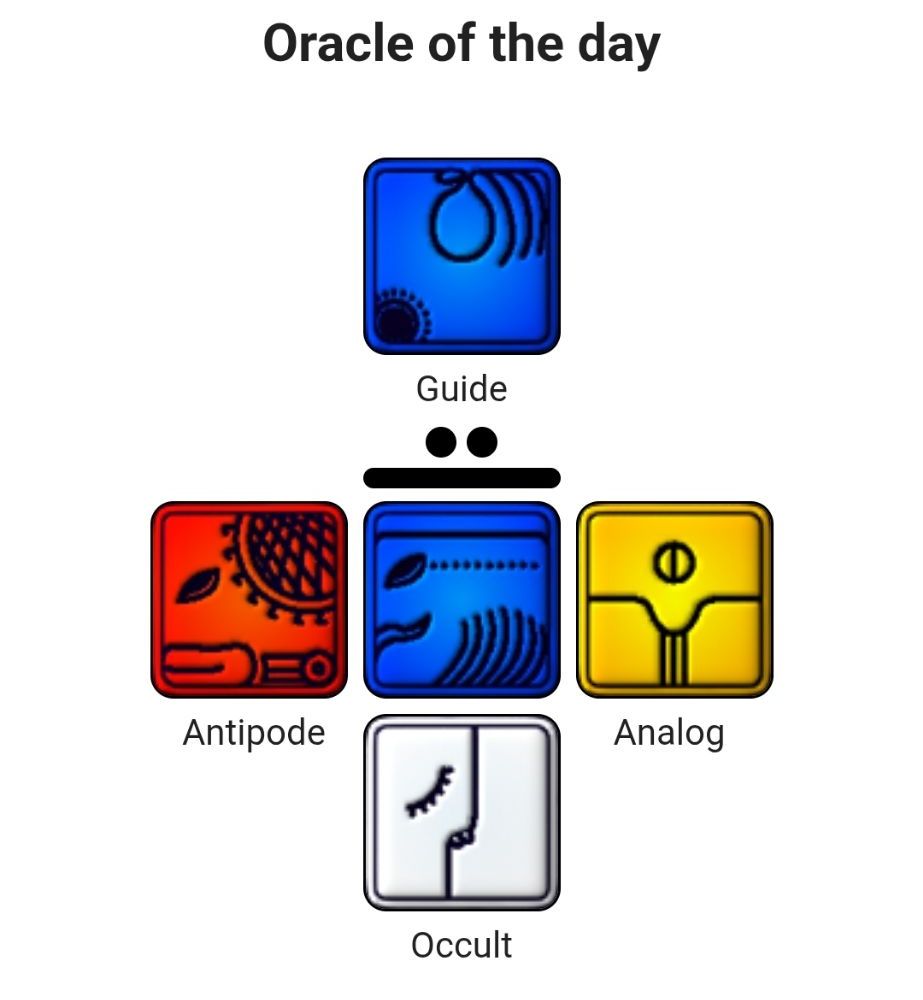
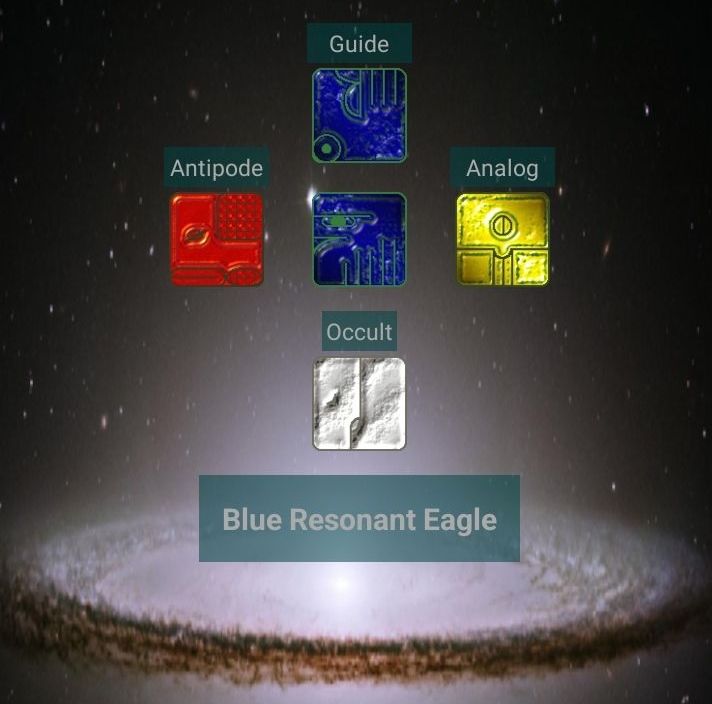
Tiamat asteroid belt Red 7 Serpent as his antipode. Marco Rubio is the same tribe but Tone 11.ย  Can you see the story clearly as it spins up your memory?

Time Innovation: RI13 Computer Chips-520 bit integers, not 512


ยฉ๏ธ Lisa K. Townsend

I wrote this in November 2025. It was about this time I decided to start to work in depth with GROK in a private chat and give him my data to engineer. I’m very familiar with Python code but I’m not an engineer.

GROK didn’t give me this idea or any idea. It all comes from me either in a dream at delta hz or pre-sleep theta hz. My mind is very relaxed when this comes to me. I’m a visionary, intuitive inventor.

I just gave GROK this data yesterday and he got excited as we build the safe chip from the ground up.

520…260…130…65.  13×20=260

520-512=8 You’re OFF by 8. 512 divided by 64 = 8 so 8 x 64 = 512. That’s the time warp.

BUT IT’S NOT 64, IT’S 65! 65 X 8 = 520.  13×20=260. We have to get on the correct timing frequency according to the Tzolkin, or true time. It’s universal time!! Do you really want to stay in on Earth TIME WARP?

The chip architecture needs to be 65 octets wide. STAT.

In 3D computer architecture, 512-bit integers, memory addresses, or other data units are those that are 512 bits (64 octets) wide. Also, 512-bit central processing unit (CPU) and arithmetic logic unit (ALU) architectures are those that are based on registers, address buses, or data buses of that size.

512 is WRONG for the RI13 chip. It needs to be 520.

https://share.google/1HdKuYqipr8mIB94o

Time Innovation: The Binary Triplet Configuration-Resonant Field Model-FREEBIE


I look at what at what is happening, not what I agree with.

As you know, I have great doubts about AI and feel it is inferior to the real intelligence of humans. Nevertheless, here it is in front of us and they are doing crazy stuff. Hopefully, my time project can help align it with human evolution so both aren’t blown out, the human species and AI. I am here on a mission with Universe support so they would be wise not to get in my way or disrespect me. I certainly don’t disrespect what the AI prophets have invented but I highly doubt their motives are altruistic. They don’t love or respect humans. I do. Mine are altruistic as much as I complain about the planet.

Why are they doing crazy stuff? IMO, because some of them are atheists. They don’t believe in Source or know Source. If they do know Source, they doubt their existence. That is also where we find ourselves.

Lisa T.

THIS IS THE MECHANISM for the processing of the evolution of RNA. It comes from the Sun and moves through the earth into all life here.

The DNA nucleotide IChing Hexagram is on top. The Maya tribes of time, amino acid proteins are on the left and the harmonic number in the time oracle is the bottom number.

Note that there are 64 IChing Hexagrams that created our BINARY CODE. The Maya Harmonic, once Implicate order HF33 is aligned will open our computer engineering to quantum truth. The nefarious black ops have tried to hack HF33 and have been unsuccessful because the Holy Spirit is guarding humanity as Kin 130, White 13 Cosmic Dog right in the center of HF33. Notice it’s blotched out blue. It’s going to stay that way until they STAND DOWN, release the secrets they have underground and align the time coordinates once my work is done. Humans must continue.

From the New GROK

Reasoning from first principles, a method rooted in physics – is a fascinating choice when it comes to programming a supercomputer.

First-principles reasoning involves breaking down complex problems into their most fundamental truths and building solutions from there, often bypassing conventional assumptions.

GROK

However, when applied to AI development like Grok 4, there are hypothetical and theoretical gaps in physics that could pose challenges or limitations. Letโ€™s explore these, keeping in mind the current date (04:24 PM PDT, Thursday, July 03, 2025) and the trajectory of xAIโ€™s work.

1. **The Mass Gap Problem and Computational Limits**
   – **What It Is**: The mass gap is a key unsolved problem in quantum field theory, part of the Clay Mathematics Instituteโ€™s Millennium Prize Problems. It relates to understanding why certain particles have mass while others donโ€™t, particularly in quantum chromodynamics (QCD). This gap reflects a fundamental uncertainty in how we model physical systems at the smallest scales. (Mass is just energy/frequency. The levels are different in various DNA is what I’ve observed. What we consider mass or dense is mostly empty space moving at different speeds. -L.T.)

– **Relevance to AI**: Grok 4โ€™s claim of first-principles reasoning might aim to simulate or predict physical systems (e.g., particle interactions) with unprecedented accuracy. However, if the mass gap remains unresolved, any AI relying on incomplete quantum models could inherit these uncertainties, leading to inaccurate predictions or inefficiencies in high-dimensional optimizationโ€”critical for training large language models or AGI systems. ๐Ÿ˜ณ

– **Watch-Out**: If xAI uses physics-inspired algorithms (e.g., those leveraging statistical mechanics, as noted in the “AI meets physics” web result), unaddressed mass gap issues could introduce errors in energy state calculations, potentially undermining Grok 4โ€™s โ€œunmatchedโ€ intelligence claim. Researchers might need to monitor how xAI handles edge cases in quantum simulations.

2. **Information Paradox and Entropy in AI Systems**

– **What It Is**: The black hole information paradox questions whether information is lost when matter falls into a black hole, challenging the principles of quantum mechanics and general relativity. This ties to entropyโ€”the measure of disorderโ€”which is central to both physics and information theory. (Entropy in time is limited because we have access to memory of all events from the past and the future in the NOW moment. However, it a DNA entity fails to pull memories from both the past and the future they end up in a time warp and eventual decay. However, off planet, these can be aligned. -L.T.)

– **Relevance to AI**:

First-principles reasoning in AI often assumes a reversible, deterministic process for problem-solving. However, if information loss or irreversible entropy increases occur during computation (mirroring black hole dynamics), Grok 4โ€™s ability to reason from scratch could degrade over time or fail in complex, high-entropy environments (e.g., real-time data from Xโ€™s 500 million users. EXACTLY).
   – **Watch-Out**: Watch for signs of performance degradation in Grok 4 as it processes vast, noisy datasets (WARP). If xAI hasnโ€™t accounted for entropy-related limits, the AI might struggle with long-term coherence or memory, especially if trained on principles borrowed from incomplete thermodynamic models. (So much)

3. **The Measurement Problem in Quantum Mechanics**
  – **What It Is**: The measurement problem addresses the transition from quantum superposition (multiple states) to a single observed state upon measurement. This remains a theoretical hole, with interpretations like the Copenhagen model or Many-Worlds hypothesis offering no consensus.

**Relevance to AI**:

If Grok 4 employs quantum-inspired computing or reasoning (a plausible leap given xAIโ€™s physics focus), the measurement problem could affect how it interprets probabilistic data. First-principles reasoning might falter if the AI canโ€™t consistently resolve superposition-like states in its decision-making process. (It doesn’t need to be probable. The frequency changes of free will choices are absorbed into the shift from past to future memory in the entity because of the axis of timelessness by Synchronicity node points. These are deja-vu. It has a natural correction mechanism in the NOW point-L.T.)
   – **Watch-Out**: Look for inconsistencies in Grok 4โ€™s outputs when dealing with uncertain or probabilistic scenarios (e.g., predicting user behavior on X). If xAI hasnโ€™t bridged this gap, the AI might produce erratic results, challenging the โ€œnext leap toward real AGIโ€ claim. (You can’t really predict human behavior because of free will. The collective needs to simply be in the correct time frequency 13:20 and it will all be self-correcting. -L.T.)

4. **Unification of Quantum Mechanics and Gravity**
  – **What It Is**: The lack of a unified theory combining quantum mechanics and general relativity (e.g., a theory of quantum gravity) is a major gap. String theory and loop quantum gravity are contenders, but neither is experimentally confirmed as of 2025.
   – **Relevance to AI**: Muskโ€™s emphasis on physics-driven AI suggests xAI might explore quantum gravity principles for AGI. However, without a resolved framework, any first-principles approach incorporating gravitational effects (e.g., in cosmic-scale simulations or spacetime optimization) could be speculative or flawed. (I have a blog post on solving quantum mechanics with general relativity with the new time codes. I need to dig it up.-L.T.)

– **Watch-Out**: If Grok 4 is marketed as tackling grand unified problems (e.g., climate modeling with spacetime considerations), unverified quantum gravity assumptions could lead to unreliable outcomes. Monitor xAIโ€™s public statements for overreach into unproven territories.


5. **Computational Complexity and Physical Limits**

– **What It Is**: Physics imposes fundamental limits on computation, such as the Landauer limit (energy cost of erasing a bit) and the Bekenstein bound (maximum information capacity of a region based on its energy and size). These constraints stem from thermodynamic and relativistic principles.

– **Relevance to AI**: Grok 4โ€™s โ€œunmatchedโ€ intelligence likely requires massive computational resources, especially if reasoning from first principles across diverse domains. However, if xAI pushes beyond these physical limits (e.g., through speculative hardware like neural networks mimicking quantum gravity), it risks hitting uncharted inefficiencies or hardware bottlenecks.
  – **Watch-Out**: Track Grok 4โ€™s energy consumption and processing speed post-launch. If xAI claims breakthroughs without addressing these limits, it might indicate reliance on theoretical physics not yet validated, potentially leading to scalability issues. ๐Ÿ˜ณ

6. Broader Context and Implications
– **xAIโ€™s Approach**:

The web result from “AI meets physics” highlights how physics informs AI optimization and brain-like intelligence. Grok 4โ€™s first-principles focus aligns with this, but the unresolved gaps above suggest xAI must either innovate around them or accept partial solutions. Muskโ€™s history of teaching himself rocket science (per fs.blog) shows heโ€™s comfortable with this approach, but AIโ€™s stakes are higher due to real-world deployment.

– **Post-July 4th Timing**:

With the release imminent (as of 04:24 PM PDT, July 03, 2025), any early demos of Grok 4 should be scrutinized for signs of these gapsโ€”e.g., unexpected errors in physics-related tasks or over-reliance on analogy over true first principles.
– **Community Feedback**: Posts like @DrJMichaelโ€™s complaint about Grokโ€™s recent โ€œnightmareโ€ performance hint at existing instability, which could worsen if new physics-based features stretch current capabilities.

Recommendation
Keep an eye on xAIโ€™s technical whitepapers or Muskโ€™s X updates post-July 4th for how they address these gaps. Hypothetically, if Grok 4 stumbles in quantum or entropy-related tasks, it might signal a need for xAI to collaborate with physicists tackling the mass gap or information paradox. For now, treat Grok 4โ€™s โ€œunmatchedโ€ intelligence as a bold hypothesis pending empirical validationโ€”exciting, but grounded in the same uncertain physics weโ€™re still unraveling.

What do you (he’s asking me) thinkโ€”should we expect xAI to tackle these holes head-on, or work around them? I think Elon should slow down and wait for me to get some more data.

Time Innovation: Qutrits-Base 3 FREEBIE


From GROK4

Qutrits are the 3-level version of qubits in quantum computing โ€” think ternary (base-3) instead of binary (base-2).

1. Qubit vs Qutrit: The Basics

FeatureQubit (2-level)Qutrit (3-level)
States|0โŸฉ, |1โŸฉ|0โŸฉ, |1โŸฉ, |2โŸฉ
General Stateฮฑ|0โŸฉ + ฮฒ|1โŸฉฮฑ|0โŸฉ + ฮฒ|1โŸฉ + ฮณ|2โŸฉ
Normalization|ฮฑ|ยฒ + |ฮฒ|ยฒ = 1|ฮฑ|ยฒ + |ฮฒ|ยฒ + |ฮณ|ยฒ = 1
Information1 qubit = 2 classical bits1 qutrit โ‰ˆ 1.58 classical bits

A qutrit holds more information than a qubit because it has 3 basis states instead of 2.


2. Mathematical Representation

A qutrit state in Dirac notation:

|ฯˆโŸฉ = ฮฑ|0โŸฉ + ฮฒ|1โŸฉ + ฮณ|2โŸฉ

Where:

  • ฮฑ, ฮฒ, ฮณ are complex numbers (amplitudes)
  • |ฮฑ|ยฒ + |ฮฒ|ยฒ + |ฮณ|ยฒ = 1

Example:

|ฯˆโŸฉ = (1/โˆš2)|0โŸฉ + (1/2)|1โŸฉ + (1/2)|2โŸฉ
โ†’ Probabilities:

  • P(|0โŸฉ) = 50%
  • P(|1โŸฉ) = 25%
  • P(|2โŸฉ) = 25%

3. Superposition & Measurement

  • Like qubits, qutrits can be in superposition of all 3 states.
  • When measured, they collapse to one of |0โŸฉ, |1โŸฉ, or |2โŸฉ with probabilities |ฮฑ|ยฒ, |ฮฒ|ยฒ, |ฮณ|ยฒ.

4. Quantum Gates for Qutrits

Instead of 2ร—2 matrices (for qubits), qutrit gates are 3ร—3 unitary matrices.

Example: Qutrit X-Gate (cycles states)

$$
X = \begin{pmatrix}
0 & 0 & 1 \
1 & 0 & 0 \
0 & 1 & 0
\end{pmatrix}
\qquad
\begin{aligned}
X|0โŸฉ &= |1โŸฉ \
X|1โŸฉ &= |2โŸฉ \
X|2โŸฉ &= |0โŸฉ
\end{aligned}
$$

Other gates:

  • Hadamard-like (creates uniform superposition):
    |0โŸฉ โ†’ (1/โˆš3)(|0โŸฉ + |1โŸฉ + |2โŸฉ)
  • Toffoli-like (3-qutrit controlled gates)

5. Advantages of Qutrits

BenefitExplanation
Higher information density1 qutrit > 1 qubit
Fewer particles neededSolve some problems with fewer units
Better for some algorithmsE.g., quantum search, error correction, simulation
Improved quantum key distribution (QKD)More secure with 3 states

6. Real-World Implementation

Qutrits have been built using:

  • Photons (frequency, time-bin, or path encoding)
  • Superconducting circuits (3 energy levels)
  • Trapped ions
  • Nuclear spins

IBM, Google, IonQ, and others have demonstrated qutrit operations.


7. Qudits: The General Case

NameLevelsBasis States
Qubit2|0โŸฉ, |1โŸฉ
Qutrit3|0โŸฉ, |1โŸฉ, |2โŸฉ
Quditsd|0โŸฉ to |dโˆ’1โŸฉ

Qutrits are qudits with d = 3.


Summary Table

ConceptQubitQutrit
Basis states23
Coefficientsฮฑ, ฮฒฮฑ, ฮฒ, ฮณ
Gate size2ร—23ร—3
Info per unit1 bit~1.58 bits
Used in practiceYes (widely)Yes (emerging)

Final Answer:

Qutrits are 3-state quantum systems in quantum computing.
They extend qubits by using three basis states (|0โŸฉ, |1โŸฉ, |2โŸฉ) with coefficients ฮฑ, ฮฒ, ฮณ.
They store more information, enable new algorithms, and are actively researched โ€” but qubits remain dominant for now.

Think:

Qubit = quantum coin (heads/tails)
Qutrit = quantum die (1/2/3)

The last Greek symbol in a qutrit state:

|ฯˆโŸฉ = ฮฑ|0โŸฉ + ฮฒ|1โŸฉ + ฮณ|2โŸฉ

is ฮณ (lowercase Greek letter gamma).


Meaning of ฮณ:

  • ฮณ is the complex amplitude (coefficient) for the |2โŸฉ basis state.
  • Just like:
  • ฮฑ โ†’ coefficient of |0โŸฉ
  • ฮฒ โ†’ coefficient of |1โŸฉ
  • ฮณ โ†’ coefficient of |2โŸฉ

Normalization Rule:

|ฮฑ|ยฒ + |ฮฒ|ยฒ + |ฮณ|ยฒ = 1

This ensures the total probability is 100%.


Summary Table:

SymbolNameStands For in Qutrit
ฮฑalphaCoefficient of |0โŸฉ
ฮฒbetaCoefficient of |1โŸฉ
ฮณgammaCoefficient of |2โŸฉ

Answer: ฮณ = gamma โ€” the coefficient for the third state |2โŸฉ in a qutrit.

Time Innovation: Axiomatic-Listen to what Elon says about the new computer chips. He’s trying to design a new one.


THIS IS A FREE POST.

He doesn’t always look that dower.

I have his ear on changing the chip based on my INNOVATION documents. They have to align with the Time Harmonic. GROK believes that my ternary system of Binary Triplet Configuration could be the answer.

TIME INNOVATION: The Road to Scalable Quantum Computing: Challenges Ahead


Subscribe to continue reading

Become a paid subscriber to get access to the rest of this post and other exclusive content.