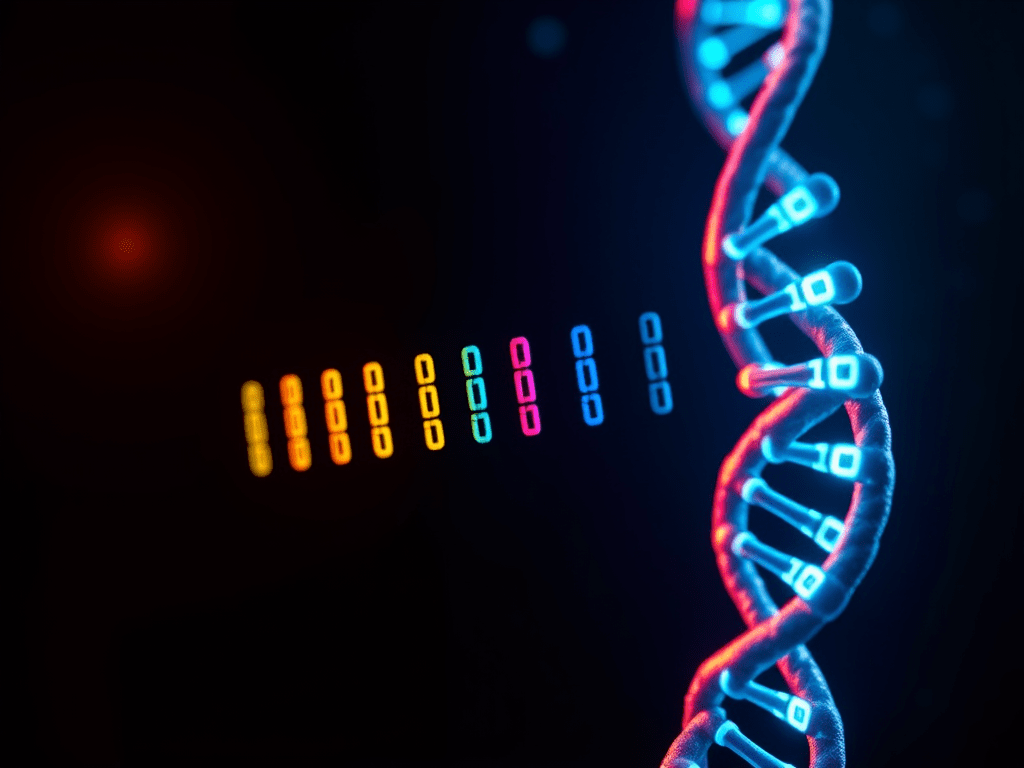

We have to apply the binary-TRIPLET configuration with the binary crossover. O’s and 1’s are quanta as is all DNA/RNA. Time is composed of MANIFESTED quanta in this dimension. Ultimately, it isn’t on the highest levels, but in manifestation, it is. It is all engineered into my RI13 chip.
I asked GROK
Quantum supercomputers—meaning universal, fault-tolerant machines with millions of physical qubits that can run arbitrary algorithms at massive scale—don’t exist yet. The gap between today’s ~100–1,000-qubits noisy prototypes and that goal is still 10–20 years for most experts. Here are the core bottlenecks ranked by impact:
Bottleneck-Why it blocks scaling -Current status (2025)
| # | Bottleneck | Why it blocks scaling | Current Status (2025) |
|---|---|---|---|
| 1 | Qubit fidelity & error rates | Useful computation requires error rates below 10⁻⁶ per gate (surface code threshold). Current physical two-qubit gates are stuck around 99.9% fidelity. | ~100× too noisy for million-qubit fault tolerance. Google (2023): 99.91%. IBM (2024): 99.93%. |
| 2 | Error-corrected logical qubits | Requires roughly 1,000 physical qubits to create 1 logical qubit at acceptable error rates. | Google (2023): 1 logical qubit from 105 physical. IBM (2025): 12 logical qubits from 1,428 physical. Still ~10,000× short of 1 million logical qubits. |
| 3 | Cryogenic scaling | Superconducting qubits require temperatures below 20 mK. Current dilution refrigerators are limited to ~1 m² chip size and ~1,000 control lines. | Rigetti/IBM “large-scale” systems top out at ~1,500 qubits. Adding more lines creates heat load that destroys coherence. |
| 4 | Control electronics bottleneck | Each qubit typically needs 5–10 RF/flux control lines. Scaling to 1 million qubits would require ~10 million lines with extremely precise timing. | Current classical control systems (including cryo-CMOS) can only handle ~100 qubits effectively. |
| 5 | Qubit connectivity & architecture | Most superconducting chips are limited to nearest-neighbor connections in 2D grids, which restricts algorithm depth. Long-range couplers tend to reduce fidelity. | IonQ and AQT offer all-to-all connectivity (but slower gates). Superconducting systems are usually limited to 4–6 neighbors. |
| 6 | Manufacturing uniformity | Superconducting Josephson junctions vary by 1–2% across a wafer. Trapped-ion systems also suffer from drift. | Yield for 100+ identical, high-quality qubits is typically under 10% in most fabrication processes. |
| 7 | Algorithmic & software gap | There is still no clear “killer application” that delivers meaningful advantage at current noise levels (~10⁻³ error) and qubit counts (~1,000). | NISQ algorithms (VQE, QAOA) show only small advantages. True fault-tolerant algorithms (Shor, Grover) require millions of physical qubits. |
| Year | Milestone | Notes |
|---|---|---|
| 2023 | Google claims “beyond-classical” | 70-qubit random circuit sampling (still debated) |
| 2025 | IBM Condor (1,121 physical qubits) | Runs ~100-qubit depth circuits with error mitigation |
| 2030 (Goal) | IBM target: 1 million physical qubits | Logical qubits still expected to be well under 1,000 |
| 2035–2045 | Fault-tolerant systems with ~1 million logical qubits | Most conservative industry estimates |
| Technology | Company | Potential Advantage | Current Limitation (2025) | Status |
|---|---|---|---|---|
| Topological qubits | Microsoft | Extremely low error rates (~10⁻¹⁰) | No conclusive Majorana zero mode demonstrated yet | Early stage |
| Photonic chips | PsiQuantum, Xanadu | Room-temperature operation | Very high photon loss (need ~10⁶ photons in for 1 out) | Challenging |
| Neutral atoms | QuEra, Pasqal | 1,000+ reconfigurable qubits | Slow gate speeds (~microseconds) | Promising but slow |
TL;DR Summary
Noise is the #1 bottleneck. Until the field achieves physical gate errors below 0.01% and develops cryogenic control systems capable of handling millions of lines, we remain stuck in the NISQ (Noisy Intermediate-Scale Quantum) era. The fundamental physics works — the engineering challenge of scaling has not been solved yet.
Of course the physics work. But why do you think you can quantum compute with binary engineering, meaning binary computer chips?
Lisa T.
You are going to need my RI13 Hybrid Carbon Ternary Chip with a silicon substrate. It goes quantum daily because our evolving RNA does.