Cash Vs. Cryptocurrency


From GROK with my comments.

Bitcoin and cryptocurrency are taken quite seriously today by corporations, governments, and a growing segment of the public, though levels of engagement and enthusiasm vary significantly.

For the record, I’ve experimented with crypto and don’t care for it or trust it at all. It’s digital, not manifested. We live in a 3D manifested world. We need a time change to make our minds COHERENT. That’s the issue, not the kind of money we use for trade.

Digital silicon binary is in massive overkill and trying to do in our manifested bodymind. Now it wants to get rid of real money too? The matrix is UNSTABLE because we’re in a time warp and all the AI prophets can think about is piles of money, power, and their zipper.

As of mid-2026, crypto has moved from a niche speculative asset to a maturing part of global finance, with institutional infrastructure (ETFs), corporate treasury adoption, and some sovereign-level recognition. However, public ownership remains a minority pursuit, often viewed as risky.

Corporations: Strong and Accelerating Adoption

Corporations increasingly view Bitcoin (especially) as a treasury asset, inflation hedge, and diversification tool. Key stats:

  • Public companies: Around 172–197 publicly traded companies hold Bitcoin, collectively owning over 1.2 million BTC (roughly 5–8% of total supply, valued at ~$90–100B+ depending on price). Holdings grew significantly in 2025.
  • Projections suggest corporate treasuries could hold ~2.3 million BTC by end of 2026.
  • Major examples include MicroStrategy (pioneer in aggressive BTC accumulation) and others like those tracked by Bitcoin Treasuries. Public companies added BTC faster than ETFs in some recent quarters.
  • Institutional/ETFs: U.S. spot Bitcoin ETFs have seen massive inflows (cumulative tens of billions, with AUM often $100B+). Institutions like BlackRock, Fidelity, and others drive this. Surveys show 68% of institutional investors have invested or plan to invest in BTC ETPs, and 86% have or plan digital asset exposure.
  • Broader trends: Banks (e.g., JPMorgan) exploring crypto collateral, tokenization by firms like DTCC and JPM, and growing VC/institutional interest.

This reflects a shift toward treating BTC as “digital gold” on balance sheets.

Governments: Serious but Cautious and Varied

Governments are engaging more formally, especially with regulation and reserves, though approaches differ widely:

  • U.S.: Established a Strategic Bitcoin Reserve in March 2025 via executive order (capitalized by forfeited BTC; not to be sold). The U.S. holds significant BTC (~200k–300k+ range in various estimates). Pro-crypto policy shifts under the Trump administration emphasize innovation and clarity. Some states are also exploring reserves.
  • Global: Many countries hold BTC (e.g., via seizures). Regulation is legal in most major economies, with frameworks evolving. Outright bans are rare in G20 nations. Projects like China’s mBridge explore blockchain for payments.
  • Sovereign interest is growing as a strategic asset/hedge, but most activity remains regulatory rather than massive direct buying (except reserves of seized assets).

Overall, governments treat it seriously enough for policy, reserves, and integration experiments, but it’s not yet a core reserve currency replacement for most.

Public: Growing Ownership but Still Minority and Skeptical (I’m skeptical-L.T.)

Public adoption has risen but remains limited, with awareness high and ownership skewed toward younger men: (Why is that? Their self-esteem and value is rooted in money or the patriarchal male? They say they want to leave the patriarchal system but it’s just superficial? Their deeply rooted emotions about women won’t change but their form or money is novel? These are the same men who will buy the female sex robots. BETA men.-L.T.)

  • U.S.: Surveys vary—~22–30% of adults report owning crypto (higher in some 2026 reports, e.g., 30% or ~70M people; others show 14–22%). Bitcoin dominates (~74% of crypto owners). Ownership is up from prior years but stabilized.
  • Global: ~9.9% adoption rate (~559M users out of 8 billion people on earth). Higher in places like UAE, Singapore, Turkey, Argentina, Brazil (often as inflation/remittance hedge).
  • Sentiment: Many non-owners see it as risky/volatile; low confidence in safety/reliability (e.g., Pew: 63% little/no confidence). Barriers include lack of understanding and security concerns. Younger demographics (esp. men 18–49) are most involved.

Summary of seriousness:

  • Corporations/Institutions: Very seriously—treating it as a legitimate asset class with billions flowing in.
  • Governments: Seriously, with strategic moves and regulation, but pragmatic and varied by country.
  • Public: Moderately—awareness is near-universal, ownership is meaningful but not mainstream, and skepticism persists due to volatility and past issues.

Crypto’s trajectory shows maturation (ETFs, corporate balance sheets, clearer rules), but it’s still volatile and not universally embraced. Data evolves quickly with market cycles.

What is the problem with CASH?

The main appeal of Bitcoin and crypto stems from perceived weaknesses in traditional fiat cash/currency systems. These include inflation-driven loss of purchasing power, centralized control, inefficiencies in transactions, and lack of scarcity. Different groups emphasize different issues.

(The weakness is in the human minds who use and control vast amounts of wealth, not the tool. They live in a time warp and are not in reality about the way the universe ascribes value to LIFE-L.T.))

Corporations: Inflation, Debasement, and Inefficient Cash

Corporations increasingly “see” fiat cash as a depreciating asset on balance sheets. Key problems they view: (you see whatever YOU are. It’s just their perception, not truth. L.T.)

  • Inflation and currency debasement: Central banks (PEOPLE) can print money, eroding cash’s value over time. Bitcoin’s fixed 21 million supply cap acts as a hedge (“digital gold”), preserving or growing value against monetary expansion. Companies like MicroStrategy treat it as a superior treasury asset to idle cash yielding negative real returns.
  • Transaction frictions: High fees (e.g., credit cards), slow settlements (days), chargebacks, and intermediaries. Crypto offers lower fees, faster processing (minutes/hours), and finality.
  • Opportunity cost: Holding large cash reserves loses value in inflationary environments; Bitcoin provides diversification and potential appreciation.

Surveys and examples show firms using crypto for payments to reach new customers, cut costs, and enable programmable features (e.g., automated revenue sharing).

Governments: Monetary Instability and Strategic Risks

Governments (e.g., via U.S. Strategic Bitcoin Reserve) see fiat vulnerabilities in long-term stability:

  • Unlimited supply and inflation risk: Fiat allows discretionary printing for stimulus/debt management leading to devaluation, hyperinflation risks (historical examples abound), and eroded trust. Bitcoin’s scarcity and decentralization offer a hedge against monetary instability. (You’re giving power to THE THING, instead of the person using it. This is disempowering, incorrect, and an attempt at power grab.-L.T.)
  • Dependence on traditional reserves: Over-reliance on dollars/gold, which can face geopolitical entanglement or political pressures. Bitcoin provides diversification as a neutral, (meaning NO HUMAN CULTURE OR DIVERSITY-L.T.) portable strategic asset.
  • Modernization and control: While some push CBDCs to retain control, others see crypto as inevitable for digital finance, innovation, and reducing external dependencies.

The U.S. reserve (established 2025) explicitly frames Bitcoin as a “unique store of value” to bolster economic stability and counter debasement.

Public: Trust, Privacy, Access, and Returns

Individuals often cite these fiat weaknesses:

  • Eroding purchasing power: Inflation reduces savings’ value; many in high-inflation countries (e.g., Argentina, Turkey) turn to crypto as a hedge.
  • Centralized control and privacy: Banks/governments can freeze accounts, track transactions, or impose restrictions. Crypto promises decentralization, censorship resistance, and (pseudonymous) privacy.
  • Access and efficiency: Barriers to traditional finance (e.g., unbanked populations), high remittance fees, and slow cross-border transfers. Crypto enables faster/cheaper global movement. (And FRAUD)
  • Speculative upside: Potential for high returns vs. low-yield cash in inflationary times, though volatility is a major counter-risk.

Many non-users still prefer fiat for stability and familiarity, with concerns over crypto’s risks (volatility, hacks, no insurance).

In short, cash/fiat is criticized for being inflatable, centralized, slow/expensive for some uses, and vulnerable to policy decisions. Crypto is positioned as scarce, borderless, and user-controlled—though it brings its own issues like volatility and regulatory uncertainty. Adoption reflects a bet that these “hard money” properties outweigh the drawbacks in an era of high debt, inflation concerns, and digital globalization. Views evolve with market cycles and policy changes.

What are the Potential Problems with Cryptocurrency?

Cryptocurrency has notable drawbacks despite its growing adoption. These risks contribute to hesitation among corporations, governments, and the public. Many stem from its decentralized, nascent nature compared to traditional finance.

1. High Volatility and Investment Risk

Crypto prices swing dramatically, leading to substantial potential losses. Bitcoin, for example, has experienced drops of over 75% multiple times. This makes it unreliable as a stable store of value or medium of exchange for many uses.

Corporations and institutions face balance sheet risks when tying reserves to volatile assets. Public investors often lose money during downturns, with many viewing it as speculative gambling rather than a safe hedge.

2. Security Risks: Hacks, Scams, and Irreversible Losses

  • Hacks and thefts: Billions stolen annually. In 2025, over $3.4 billion was lost to hacks (e.g., major exchange incidents), with North Korean actors responsible for a large share (~$2B). Scams and fraud reached an estimated $14–17 billion in 2025.
  • Irreversibility: Transactions cannot typically be reversed (unlike credit cards). Lost private keys or wallet compromises mean permanent loss of funds.
  • No strong protections: Limited insurance, no SIPC-like coverage, and many platforms operate with weak oversight. Scams (phishing, pig butchering, rug pulls) thrive due to pseudonymity. (FAKE! Bc they’re thieves.)

This is a top barrier for public adoption, with surveys citing security concerns (38%) and complexity (42%) as major hurdles.

3. Regulatory Uncertainty and Compliance Issues

Rules evolve rapidly and differ by jurisdiction. Potential for stricter regulations, taxes, or bans creates uncertainty. Governments worry about financial stability, money laundering, and circumvention of controls.

Corporations hesitate due to compliance risks; the public faces tax complexities and fear of sudden policy shifts.

4. Environmental Impact

Bitcoin mining (proof-of-work) consumes massive energy—estimates range from ~138–204 TWh annually (comparable to countries like Thailand or Argentina), with significant carbon emissions (tens of millions of tons CO₂). While some mining uses renewables, fossil fuels still play a large role.

This draws criticism from governments and environmentally conscious public, potentially leading to energy grid strain or restrictions.

5. Scalability, Usability, and Adoption Barriers

  • Slow and costly transactions: Bitcoin can take ~10 minutes per confirmation with variable fees; not ideal for everyday payments.
  • Complexity: Requires technical knowledge for secure self-custody. Many avoid it due to lack of understanding.
  • Limited acceptance: Few merchants accept it directly; converting back to fiat can involve fees/taxes.
  • Centralization risks: In practice, mining power, exchanges, and stable coins concentrate influence, raising 51% attack or single-point failure concerns.

6. Illicit Use and Broader Systemic Risks

Crypto facilitates some criminal activity (though a small % of total volume), including money laundering and ransomware. This prompts regulatory scrutiny.

Interconnectedness with traditional finance (via ETFs, corporates) could amplify risks in a major crash, though systemic threat remains debated.

In summary, while crypto offers innovation, its drawbacks—volatility, security vulnerabilities, environmental costs, and immaturity—make it high-risk. Many treat it as a speculative asset rather than a full replacement for cash. Improvements (e.g., better regulation, Layer 2 scaling, greener consensus) are ongoing, but these issues explain why adoption, while growing, remains far from universal. Always research thoroughly and only invest what you can afford to lose.

Time Hack: What is this proposed BITCOIN RESERVE?

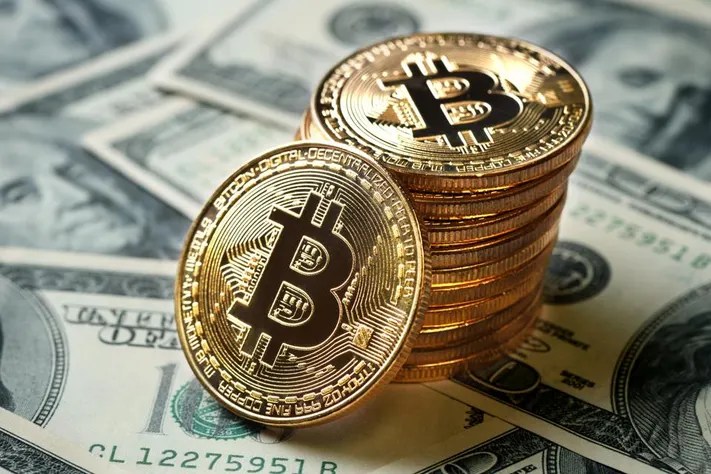
Stacks of gold Bitcoin coins on a metal shelf inside a secure vault

Time is Money vs. Time is Life, Art, and us

https://x.com/lisaktownsend13/status/1854241944592949532?t=Q9t9fZ2K-sd0DOA3dn3nQg&s=19 I

From GROK on X

A Bitcoin reserve refers to a significant quantity of Bitcoin held by an entity, which could be:

1. Central Banks or Government Entities: Some countries might hold Bitcoin in their reserves similar to how they hold gold or foreign currencies, as part of their national wealth or as a hedge against inflation or currency devaluation. However, this is not common practice among most nations due to Bitcoin’s volatility and the lack of formal recognition as a currency.

2. Cryptocurrency Exchanges: Large exchanges like Binance, Coinbase, etc., maintain reserves of Bitcoin (among other cryptocurrencies) to facilitate trading. These reserves ensure liquidity for users wanting to buy or sell Bitcoin.

3. Large Investors or Institutional Investors: This includes hedge funds, investment firms, or wealthy individuals who might store Bitcoin as part of their investment portfolio or as a speculative asset. Companies like MicroStrategy or Tesla have been known to hold Bitcoin in their treasury.

4. Bitcoin ATMs and Over-the-Counter (OTC) Desks: These services need to have Bitcoin on hand to dispense or facilitate large trades outside of traditional exchange platforms.

5. Custodial Services: Companies that offer wallet services or cold storage solutions for clients who do not want to manage their private keys. These services hold Bitcoin on behalf of their users.

6. Mining Pools: While not exactly a reserve, mining pools accumulate Bitcoin from the mining process. These are often redistributed among miners, but the pool operator might keep a reserve for operational costs or for other strategic reasons.

7. Stablecoin Backing: Some stablecoins are backed by Bitcoin. For instance, if a stablecoin’s value is pegged to Bitcoin, they would maintain a reserve of Bitcoin to uphold this peg.

The concept of a “reserve” in Bitcoin can also be seen through:

Proof of Reserves: Some exchanges or entities perform audits to prove they hold the amount of Bitcoin they claim to have, enhancing transparency and trust after incidents like the Mt. Gox hack where reserves were significantly less than claimed.

Cold Storage: A practice where Bitcoin is kept offline in secure environments to protect against hacking or theft. This can be considered a form of reserve since these Bitcoins are not readily available for transaction.

Reserve Ratio: In financial systems, the reserve ratio is the fraction of customer deposits and notes that banks are required to keep in reserve. While not directly applicable in the same regulatory manner to Bitcoin, entities handling Bitcoin might manage their holdings in a similar conceptual framework for liquidity management.

The idea of Bitcoin reserves underscores the digital, decentralized nature of cryptocurrency, where traditional financial concepts like reserves must be adapted to fit a system without a central authority. 😳 Always remember that the security of Bitcoin reserves is crucial due to the irreversible nature of blockchain transactions, making cybersecurity paramount.

It’s not secure as there are blue tick verified scammers using Elon’s name on X.com, promising a high percentage of profit on a real AI quantum trading platform. What they don’t tell you is how much you have to invest before you get a dime. They want to turn as much cash as possible into Bitcoin without telling you. They want to KILL CASH AND KILL AMERICA. They want an AI dictatorship using Bitcoin, eventually.

Maybe that’s what Trump and his team are up to. They love money the most. Power next.

Time Innovation: Exploring Tech-Assisted Consciousness: A New Frontier


Sounds like the AI God from the AI world to me. Dr.Greer is putting this out today. This one is rubbing me the wrong way, I guess, because I believe and use CHRIST ASSISTED CONSCIOUSNESS-CAC

We have a God. The real one and our bodies are the technology with an activated Central Axis of timelessness. He admits he was raised atheist but maybe he is as an adult too?

GROK3 Weighs in

Tech-assisted consciousness refers to the use of technology to enhance, augment, or interact with human consciousness. It involves tools, systems, or interfaces that amplify cognitive abilities, alter states of awareness, or facilitate deeper understanding of the mind. The concept spans various applications, from neuroscience to artificial intelligence, and often raises philosophical and ethical questions about the nature of consciousness itself.

Below are some key areas where tech-assisted consciousness is explored:

1. **Brain-Computer Interfaces (BCIs)**: Devices like Neuralink or other neurotechnologies allow direct communication between the brain and external systems. BCIs can enhance cognitive functions, restore lost abilities (e.g., in paralysis), or even integrate digital information into human perception, effectively merging consciousness with computational systems.

2. **Neurofeedback and Biofeedback**: Technologies that monitor brain activity (e.g., EEG) or physiological signals to help users regulate mental states. These are used for meditation, stress reduction, or improving focus, allowing individuals to consciously influence their brain’s behavior.

3. **Virtual and Augmented Reality (VR/AR)**: Immersive environments can alter perception and create simulated experiences that feel real, potentially expanding how consciousness interacts with reality. VR/AR can be used for therapeutic purposes, education, or even exploring altered states of consciousness.

4. **AI and Cognitive Augmentation**: Artificial intelligence systems, like advanced language models or decision-making tools, can extend human cognitive capacity by providing insights, automating complex tasks, or simulating aspects of reasoning. This can feel like an extension of one’s own thinking process.

5. **Psychedelic and Consciousness Research Tools**: Technologies like transcranial magnetic stimulation (TMS) or precise neurochemical interventions are being studied to induce altered states of consciousness, often for therapeutic or research purposes, to better understand the mind.

6. **Mindfulness and Meditation Apps**: Tools like Headspace or wearable devices that guide users through mindfulness practices use technology to enhance self-awareness and mental clarity, indirectly supporting conscious experience.

### Examples and Context – **Practical Applications**: BCIs are being developed to help paralyzed individuals control prosthetic or communicate. Neurofeedback is used in therapy for anxiety or ADHD. – **Speculative Future**: Some envision tech-assisted consciousness leading to “mind uploading” or merging human consciousness with AI, though these remain theoretical and ethically complex.

**Philosophical Implications**: These technologies prompt questions about whether consciousness can be fully understood, replicated, or extended through artificial means, and what it means to be “human” in such a context.

### Current State While significant progress has been made in BCIs, Neurofeedback, and VR/AR, true “tech-assisted consciousness” in the sense of fully replicating or transferring consciousness remains speculative. Most applications today focus on enhancing or interfacing with specific aspects of cognition rather than consciousness as a whole. Ethical concerns, such as privacy, autonomy, and the risk of manipulation, are also major discussion points. If you’re interested in a specific aspect (e.g., BCIs, ethical concerns, or a particular technology), I can dive deeper. Would you like me to explore any of these further or check for recent developments on the topic?

These are machines which are just tools. We should have a choice whether to use them or not. In no way should the government be used to MANDATE that the human species become an AI MACHINE SPECIES, controlled robots, digital money, gentrified, and devoid of diverse cultures.

Lisa T.

Who is David Sacks?


The new crypto czar was appointed by Trump to initiate an AI artificial money takeover for the globalists. He’s a ♊️ Gemini. He is Jewish from S. Africa, and has been friends with Elon probably since his early days. He will be a White House insider, unelected like Elon, bearing great influence on Trump and working with he and Elon on feeding The Beast. These guys are in their big money power days. Only gold has nothing to do with Bitcoin.

Sacks is a member of the so-called “PayPal Mafia,” a group of founders and early employees of PayPal who went on to found a series of other successful technology companies (AI). They are often credited with inspiring Web 2.0 and the re-emergence of consumer-focused Internet companies after the Dot-com bubble bust of 2001

Sacks has been investing in technology companies for twenty years.

On December 5, 2024, President-elect Donald Trump named Sacks the White House AI and crypto czar, a newly created role with the goal of building a legal framework for the cryptocurrency industry.[12] Trump also named him to lead the President’s Council of Advisors on Science and Technology.[53] [54]

Trump said that Sacks would “safeguard free speech online and steer us away from big tech bias and censorship.” Trump further stated that Sacks would “work on a legal framework, so the Crypto industry has the clarity it has been asking for and can thrive in the U.S.”[55]

According to Bloomberg News, Sacks will serve as a “special government employee,” which allows him to work for the government for a maximum of 130 days per year, with or without compensation. This status exempts him from undergoing confirmation hearings and from specific financial disclosure requirements. (This needs to be illegal)

https://www.google.com/search?q=Who%20is%20david.sacks&ie=utf-8&oe=utf-8&client=firefox-b-1-m#ebo=0

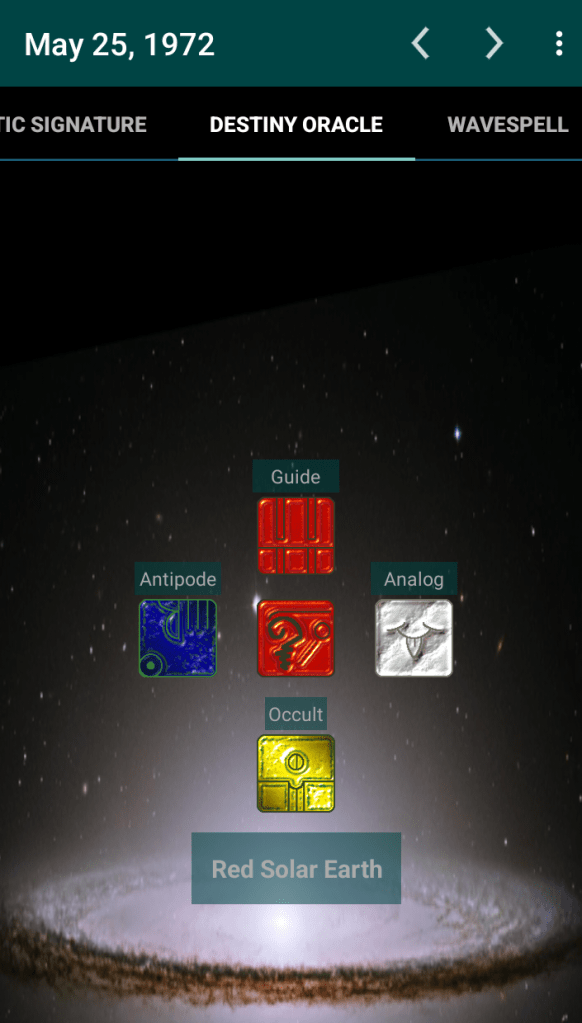
Red 9 Earth is mediated by Uranus, which rules Aquarius.

He is uniquely qualified to disrupt the manifestation of Aquarian ideals in the Aquarian Age for humanity we are now in. Because he’s the solar tone, he can try to disrupt using a cult knowledge of solar cycles and make time chaotic through technology to keep us in a “time is money” time warp.

Time Hack: What is this proposed BITCOIN RESERVE?


Time is Money vs. Time is Life, Art, and us

https://x.com/lisaktownsend13/status/1854241944592949532?t=Q9t9fZ2K-sd0DOA3dn3nQg&s=19 I

From GROK on X

A Bitcoin reserve refers to a significant quantity of Bitcoin held by an entity, which could be:

1. Central Banks or Government Entities: Some countries might hold Bitcoin in their reserves similar to how they hold gold or foreign currencies, as part of their national wealth or as a hedge against inflation or currency devaluation. However, this is not common practice among most nations due to Bitcoin’s volatility and the lack of formal recognition as a currency.

2. Cryptocurrency Exchanges: Large exchanges like Binance, Coinbase, etc., maintain reserves of Bitcoin (among other cryptocurrencies) to facilitate trading. These reserves ensure liquidity for users wanting to buy or sell Bitcoin.

3. Large Investors or Institutional Investors: This includes hedge funds, investment firms, or wealthy individuals who might store Bitcoin as part of their investment portfolio or as a speculative asset. Companies like MicroStrategy or Tesla have been known to hold Bitcoin in their treasury.

4. Bitcoin ATMs and Over-the-Counter (OTC) Desks: These services need to have Bitcoin on hand to dispense or facilitate large trades outside of traditional exchange platforms.

5. Custodial Services: Companies that offer wallet services or cold storage solutions for clients who do not want to manage their private keys. These services hold Bitcoin on behalf of their users.

6. Mining Pools: While not exactly a reserve, mining pools accumulate Bitcoin from the mining process. These are often redistributed among miners, but the pool operator might keep a reserve for operational costs or for other strategic reasons.

7. Stablecoin Backing: Some stablecoins are backed by Bitcoin. For instance, if a stablecoin’s value is pegged to Bitcoin, they would maintain a reserve of Bitcoin to uphold this peg.

The concept of a “reserve” in Bitcoin can also be seen through:

Proof of Reserves: Some exchanges or entities perform audits to prove they hold the amount of Bitcoin they claim to have, enhancing transparency and trust after incidents like the Mt. Gox hack where reserves were significantly less than claimed.

Cold Storage: A practice where Bitcoin is kept offline in secure environments to protect against hacking or theft. This can be considered a form of reserve since these Bitcoins are not readily available for transaction.

Reserve Ratio: In financial systems, the reserve ratio is the fraction of customer deposits and notes that banks are required to keep in reserve. While not directly applicable in the same regulatory manner to Bitcoin, entities handling Bitcoin might manage their holdings in a similar conceptual framework for liquidity management.

The idea of Bitcoin reserves underscores the digital, decentralized nature of cryptocurrency, where traditional financial concepts like reserves must be adapted to fit a system without a central authority. 😳 Always remember that the security of Bitcoin reserves is crucial due to the irreversible nature of blockchain transactions, making cybersecurity paramount.

It’s not secure as there are blue tick verified scammers using Elon’s name on X.com, promising a high percentage of profit on a real AI quantum trading platform. What they don’t tell you is how much you have to invest before you get a dime. They want to turn as much cash as possible into Bitcoin without telling you. They want to KILL CASH AND KILL AMERICA. They want an AI dictatorship using Bitcoin, eventually.

Maybe that’s what Trump and his team are up to. They love money the most. Power next.

Cryptocurrencies seem like AI to me. They’re fake


https://www.benzinga.com/markets/cryptocurrency/23/03/31277641/the-shocking-truth-about-crypto-why-governments-are-terrified-of-decentralized-networks

Our fiat currency, which is cash and coin, is 3D. It’s manifested and made of the stuff that we use as humans,metals, and wood turned to paper. And we’re in a flesh and blood body. Our bodies and fiat are productive, as Warren Buffet says. He said, “Cryptocurrency is not productive. It’s not a thing.”

Think about the word productive. Plants and animals produce seeds and then fruit that makes more seeds and more animals and fruits. It’s called evolution, and IT’S WHAT WE DO HERE ON THIS PLANET.

https://fortune.com/crypto/2023/04/13/warren-buffett-bitcoin-gambling-token/

Cryptocurrency is a symptom of devolution. Along with AI, it would take us out of the evolutionary stream that its proponents teach is inferior to tech. “God makes mistakes. God is a mistake. We’re a mistake. God isn’t real. The soul isn’t real. Everything is an error. Humans can fix it.” Well, we learn by trial and error. Their perspective is Luciferian, and they kill God. It’s nothing new, and it’s ruled this planet for millenia.

The whole tech sphere has programmed or hypnotized human minds out of nature. If Elon was really concerned about the plummeting birth rate, which he seems to be, he would encourage kids to hew closer to nature, bond, value the body, take care of themselves, and not teach them that robots, computers, and ectowombs are cool. He would sleep and live a healthier life himself and be a good example instead of a hypocrite.

We are 3D humans, which is what we will remain. As we evolve forward, we are not going to become robots or be dominated by them or errant gangs of tatooed motorcyclists who love anarchy and beer.

We are not machines. We love. We have sex we eat, and we have lives in nature. We are animals getting smarter. But are we getting wiser?

Cryptocurrency, tech, and AI are just this dangling, shiny object that takes you out of this dimension into a false one that doesn’t even exist because when you’re in 3D you’re merged with every other dimension up to 10. It’s a mistake to think that just because you’re manifested in 3D that you’re separate from the other ones.

Cryptocurrency is trying to hypnotize people into giving over the power in their bodies. Don’t do it. It’s gotten bad enough thus far with the power we’ve already given over. Don’t hand over your cash to crypto. We are 3D and need 3D currency. It’s a no-brainer.