Essay: The Role of Intuition in the Scientific Method


The Role of Intuition in the Scientific Method

I’ve published an interesting booklet that you can buy on my website by clicking on the far right tab. It’s not very long and I’ve included a nice glossary of physics terms for the novice (like me). I read a lot of physics and love it but I am not a physicist. I wish I was but I came to it kind of late. Dr. Smith is an advocate for acknowledging intuition after working on the Manhattan Project. That would kick believing in rationality alone right out of anyone. Nothing like two atomic bombs killing millions to ruin your ideals about humanity.
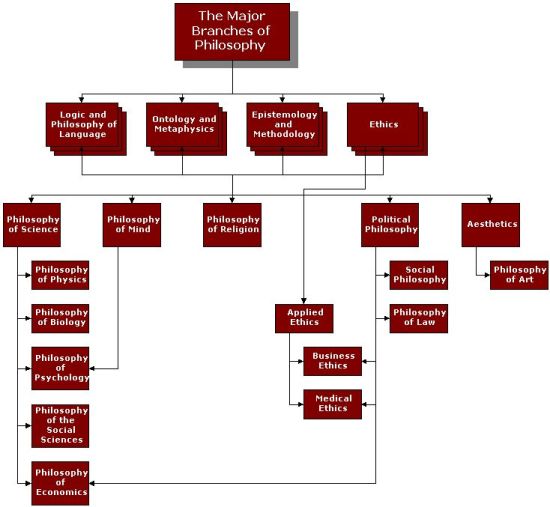


The major branches of philosophy


This is a “tree” that shows where intuition fits, historically, into the sciences and how the sciences are actually offspring or children of philosophy.

All intellectual disciplines start with Philosophy.  Ph.D. behind a person’s name means Doctor of Philosophy no matter what field their major is.  Its namesake is Philo of Alexandria who was a Hellenistic Jew who wanted to create harmony, maybe in a contrived fashion?, between Judaism and Greek Philosophy.

  1. Logic-the attempt to codify the rules of rational thought.  Here is where formal, informal, symbolic, and mathematical logic fits.
  2. Epistemology-the study of knowledge itself, which to me sounds like gazing at your navel.  Religionists, agnostics, and atheists exist on this spectrum. Here is where all the branches of religion fit.
  3. Metaphysics-the study of the nature of things. This one is my favorite, of course, being holistic. Branches are cosmology and ontology. Here is where all of the natural sciences fit under cosmology. The life sciences, physical science, physics, astronomy, chemistry, earth.  If these are subdivided, they are fields.
  4. Axiology is the philosophical study of value. It is either the collective term for ethics and aesthetics, philosophical fields that depend crucially on notions of worth, or the foundation for these fields and thus similar to value theory and meta-ethics. Ethics and Aesthetics are it’s two main branches.  On the chart, the box that says Ethics could say Axiology.  Here is where all law science, art, and aesthetics fit. 

Intuition comes under ontology and metaphysics, then down to the philosophy of mind, then down to the philosophy of psychology.  You’ll see it sits right on the shelf with the philosophy of science equally. It then goes down that track and merges under the philosophy of science track with the science of psychology.  Psychology is a SCIENCE that comes from the philosophy of mind.  So, let’s have some respect here.  It’s not in a mushy bog.  It has to get through the rigors of the scientific method as well.

You’ll notice the five categories under the philosophy of science. There is a biased preponderance on this category, I believe due to Newtonian materialism. That is shifting now. The field of quantum physics is impressing on all the science categories now and shaking them up. In addition, that one field is also impacting the philosophy of mind, philosophy of religion, AND the parent field of Metaphysics. So give the quantum physicists all the ribbing you want. Those folks are on the leading edge. More power to them.

Essay:The Erroneous Line Drawn Between Science and Spirituality


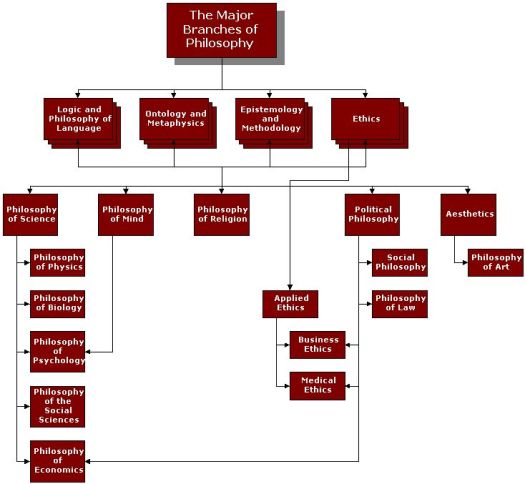
Remember this Philosophy Tree I posted a few posts ago? I love this thing. So let’s go back to the axiom at the top upon which all institutions of higher learning, all over the world, base their system of learning and degree-granting powers; Philosophy.

The major branches of philosophy

All subjects are philosophical. One of the great tenets of philosophy, established by the Greeks, is debate and discussion. It’s pretty anti-social to say, “I’m right, it’s been proven, no more discussion. Go sit down and be quiet.”

As objective as a physical scientist attempts to be with their scientific method, coming under the heading “Philosophy of Science”, they are subjective humans and can never be fully free from bias.

It’s proven by their emotional outburst of anger if someone wants to have a discussion with them after they make absolute statements and need everyone to agree with them because the philosophy of science is “the truth”.

“Playing well with others” learned in kindergarten is a good character attribute to have. I’m not saying I’m an expert at it being a high IQ woman, but I always start out being civil and it devolves from there adter I’m dogpiled by bottom feeders.

Gender bias is rampant in any STEM (Science, technology, engineering, and math) discussion where a woman needs to have a say.

It’s amazingly irrational, sort of proving my point above. I think it’s a good idea to qualify your work and be tolerant of dissent or a different perspective, otherwise, no matter how right you are, you lack integrity because you don’t care how you emotionally affect others.

So, look at that empty white space under “Philosophy of Religion” which comes from Ontology and Metaphysics”? Go over to the left and the Philosophy of Science branch is loaded. That is interesting, isn’t it?

Hardcore Newtonian Materialists would say, “That’s because we have hard evidence.” Yes, in your pants, which we women are happy for! But not when we have to earn money in the public workplace and you STILL have hard evidence.

I would say it’s because we live in a patriarchal society controlled by money and power in the hands of men in academic institutions who routinely denigrate the scientific method of females in psychology and religion which is spirituality. They are sciences too!

Now, look at “Philosophy of Mind”. It sort of waves the right hand over to “Philosophy of Psychology” saying, “Well, there’s this!” with a glass of wine in the left hand having a party with “Philosophy of Religion”. That’s sort of where we find ourselves in the year 2017.

We don’t have any boxes under Philosophy of Mind and Philosophy of Religion because we don’t have any money to do the experiments. There has been plenty of documentation and proof verifying that the study of Mind,

Religion (Theology), Psychology and Parapsychology are worthwhile endeavors, but you can’t see the material manifestation of feelings, thoughts, dreams, and intuitions as easily as you can see a ball rolling down a hill for a physics experiment.

Well, at the very least, our field is much more complicated. What can possibly be more complicated than studying how Mind manifests as feelings and physical being?

What is really changing now is proof from the quantum physicists that thoughts, feelings, and intuitions DO manifest in the body, literally, and cause illness or wellness, depending on how you align them. Everyone intuitively knows this. We don’t feel we need a double-blind study particularly, just some common sense.

Essay:The Erroneous Line Drawn Between Science and Spirituality


Remember this Philosophy Tree I posted a few posts ago? I love this thing. So let’s go back to the axiom at the top upon which all institutions of higher learning, all over the world, base their system of learning and degree-granting powers; Philosophy.

The major branches of philosophy

All subjects are philosophical. One of the great tenets of philosophy, established by the Greeks, is debate and discussion. It’s pretty anti-social to say, “I’m right, it’s been proven, no more discussion. Go sit down and be quiet.”

As objective as a physical scientist attempts to be with their scientific method, coming under the heading “Philosophy of Science”, they are subjective humans and can never be fully free from bias.

It’s proven by their emotional outburst of anger if someone wants to have a discussion with them after they make absolute statements and need everyone to agree with them because the philosophy of science is “the truth”.

“Playing well with others” learned in kindergarten is a good character attribute to have. I’m not saying I’m an expert at it being a high IQ woman, but I always start out being civil and it devolves from there adter I’m dogpiled by bottom feeders.

Gender bias is rampant in any STEM (Science, technology, engineering, and math) discussion where a woman needs to have a say.

It’s amazingly irrational, sort of proving my point above. I think it’s a good idea to qualify your work and be tolerant of dissent or a different perspective, otherwise, no matter how right you are, you lack integrity because you don’t care how you emotionally affect others.

So, look at that empty white space under “Philosophy of Religion” which comes from Ontology and Metaphysics”? Go over to the left and the Philosophy of Science branch is loaded. That is interesting, isn’t it?

Hardcore Newtonian Materialists would say, “That’s because we have hard evidence.” Yes, in your pants, which we women are happy for! But not when we have to earn money in the public workplace and you STILL have hard evidence.

I would say it’s because we live in a patriarchal society controlled by money and power in the hands of men in academic institutions who routinely denigrate the scientific method of females in psychology and religion which is spirituality. They are sciences too!

Now, look at “Philosophy of Mind”. It sort of waves the right hand over to “Philosophy of Psychology” saying, “Well, there’s this!” with a glass of wine in the left hand having a party with “Philosophy of Religion”. That’s sort of where we find ourselves in the year 2017.

We don’t have any boxes under Philosophy of Mind and Philosophy of Religion because we don’t have any money to do the experiments. There has been plenty of documentation and proof verifying that the study of Mind,

Religion (Theology), Psychology and Parapsychology are worthwhile endeavors, but you can’t see the material manifestation of feelings, thoughts, dreams, and intuitions as easily as you can see a ball rolling down a hill for a physics experiment.

Well, at the very least, our field is much more complicated. What can possibly be more complicated than studying how Mind manifests as feelings and physical being?

What is really changing now is proof from the quantum physicists that thoughts, feelings, and intuitions DO manifest in the body, literally, and cause illness or wellness, depending on how you align them. Everyone intuitively knows this. We don’t feel we need a double-blind study particularly, just some common sense.

Essay: The Role of Intuition in the Scientific Method


The Role of Intuition in the Scientific Method

I’ve published an interesting booklet that you can buy on my website by clicking on the far right tab. It’s not very long and I’ve included a nice glossary of physics terms for the novice (like me). I read a lot of physics and love it but I am not a physicist. I wish I was but I came to it kind of late. Dr. Smith is an advocate for acknowledging intuition after working on the Manhattan Project. That would kick believing in rationality alone right out of anyone. Nothing like two atomic bombs killing millions to ruin your ideals about humanity.


The major branches of philosophy


This is a “tree” that shows where intuition fits, historically, into the sciences and how the sciences are actually offspring or children of philosophy.

All intellectual disciplines start with Philosophy.  Ph.D. behind a person’s name means Doctor of Philosophy no matter what field their major is.  Its namesake is Philo of Alexandria who was a Hellenistic Jew who wanted to create harmony, maybe in a contrived fashion?, between Judaism and Greek Philosophy.

  1. Logic-the attempt to codify the rules of rational thought.  Here is where formal, informal, symbolic, and mathematical logic fits.
  2. Epistemology-the study of knowledge itself, which to me sounds like gazing at your navel.  Religionists, agnostics, and atheists exist on this spectrum. Here is where all the branches of religion fit.
  3. Metaphysics-the study of the nature of things. This one is my favorite, of course, being holistic. Branches are cosmology and ontology. Here is where all of the natural sciences fit under cosmology. The life sciences, physical science, physics, astronomy, chemistry, earth.  If these are subdivided, they are fields.
  4. Axiology is the philosophical study of value. It is either the collective term for ethics and aesthetics, philosophical fields that depend crucially on notions of worth, or the foundation for these fields and thus similar to value theory and meta-ethics. Ethics and Aesthetics are it’s two main branches.  On the chart, the box that says Ethics could say Axiology.  Here is where all law science, art, and aesthetics fit. 

Intuition comes under ontology and metaphysics, then down to the philosophy of mind, then down to the philosophy of psychology.  You’ll see it sits right on the shelf with the philosophy of science equally. It then goes down that track and merges under the philosophy of science track with the science of psychology.  Psychology is a SCIENCE that comes from the philosophy of mind.  So, let’s have some respect here.  It’s not in a mushy bog.  It has to get through the rigors of the scientific method as well.

You’ll notice the five categories under the philosophy of science. There is a biased preponderance on this category, I believe due to Newtonian materialism. That is shifting now. The field of quantum physics is impressing on all the science categories now and shaking them up. In addition, that one field is also impacting the philosophy of mind, philosophy of religion, AND the parent field of Metaphysics. So give the quantum physicists all the ribbing you want. Those folks are on the leading edge. More power to them.