
The Psychology of Mimetic Contagion by Brownstone Institute
It’s groupthink virus that’s behind the blind following of scamdemic and other narratives shored up by 12:60 time coordinate.
“…under conditions of mass formation, people buy into a narrative not because it is true, but because it cements a social bond they desperately need.:
The article in the link below
“People buy into the narrative, even when it becomes absurd and out of touch with facts on the ground, not because they believe in the narrative, but precisely because it creates a social bond that they don’t want to relinquish. As in hypnosis, their field of vision becomes excessively narrowed, focused exclusively on the elements of the accepted narrative. They may be dimly aware of collateral damage or contradictory facts, but these have little to no cognitive or emotional impact—evidence simply ceases to matter.”
The article in the link below
How Old is Our Local Universe?
13.8 billion years, 13.8, 000,000,000 if you’re counting in 3D which is just a hologram. The universe is actually timeless.
The ancient Builder Race ruins are found all over the local universe and are billions of years old in our solar system. The pyramid shape was important for conducting energy, they were giants and looked very different than us.
Our local 50-star cluster outside of our solar system is connected by the cosmic web and all of the stars (suns) behave as a Unified Mind. Earth needs to get to that point just amongst ourselves to play nicely in the cosmic sandbox. Think, of unity amidst diversity. That doesn’t call for agreeing or liking one another. It calls for tolerance, patience, and listening instead of reacting and rejecting them.
The Maldek explosion brought down the grid 500, 000 years ago which isn’t very long. Then the outsiders rushed in, the Super Federation of Planets came 350,000 years ago with the Draco. Then the refugees from different areas came in.
By the 1930’s we had superluminal travel, before WWII, and it was used by the Nazis to colonize Mars into a slave planet the same way Earth has been. All of this is really due to the mistake made on Maldek from which most earthlings hail. I will be making audio podcasts on the history of Maldek in the days ahead.
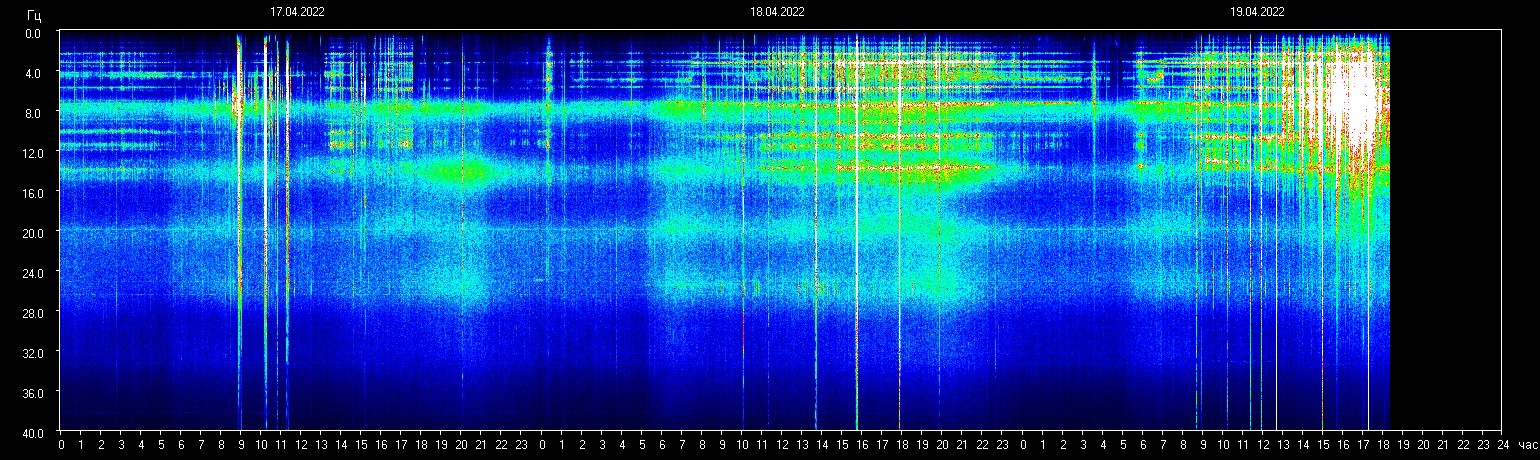
The ScR just plummeted down to 9
I could barely function with it at 60. I started to feel better so I checked it just now. I wish it would stay there for a few days.
Evidence of Superionic ice provides new insights into unusual magnetic fields of Uranus and Neptune
How a conductive form of ice is formed at several thousand degrees and millions of times atmospheric pressure. — ScienceDaily
https://www.sciencedaily.com/releases/2021/10/211014131203.htm
Does the Sun have any water?
As strange as it may seem, yes water has been detected on the Sun. Actually what was detected is ‘steam’ over a particularly cool sunspot where the temperatures were only about 1000 K or so.
Ask the Space Scientist All answers are provided by Dr. Sten Odenwald (Raytheon STX) for the
NASA IMAGE/POETRY Education and Public Outreach program
The sun is 92% hydrogen, the main ingredient in water, and 8% helium.
Uranus is made of water, methane, and ammonia fluids above a small rocky center. Its atmosphere is made of hydrogen and helium like Jupiter and Saturn, but it also has methane. The methane makes Uranus blue. Uranus also has faint rings. Aug 4, 2021
If Uranus is mostly hydrogen and helium then it’s mirroring the Sun. Maybe it will become a sun? Same for Jupiter and Saturn.
It’s clear to me that the 5 outer planets are more mature than the 5 little ones right next to the Sun. We’re newbs in the local system. The Sun isn’t going to force Mars, Earth, Venus, and Mercury to do anything except to keep changing and growing which is our destiny.
This is a 2-minute podcast on the Uranus Time Tunnels in the Cosmic Web
The Archaeology of Inequity
Aztec society, even with its horrific human sacrifices, was at the time of the Spanish conquest more egalitarian than Mexico 200 years later.
The article
https://thereader.mitpress.mit.edu/the-archaeology-of-inequality/
Just Before Our Sun Dies, Its Light Will Shatter The Asteroid Belt to Dust
https://www.sciencealert.com/just-before-our-sun-dies-its-light-will-pulverise-the-asteroid-belt#:~:text=%2FJPL%2DCaltech)-,Just%20Before%20Our%20Sun%20Dies%2C%20Its%20Light%20Will,The%20Asteroid%20Belt%20to%20Dust
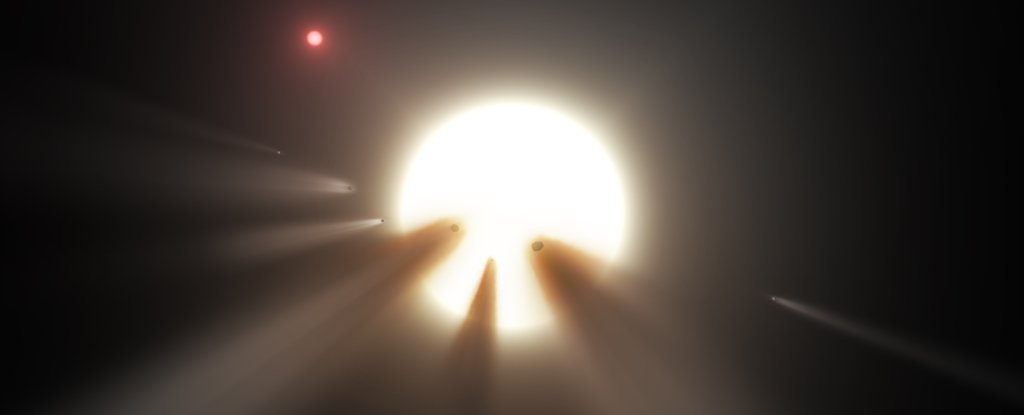
After the last post, a few minutes ago, I walked downstairs and I thought, “I bet the sun can turn the asteroid belt to dust.” It was just on my radar and I picked it up. I came upstairs and googled, “Can the sun turn the asteroid belt to dust?” Holy crap. Geez, my radar is freaky. Just to be clear, the coming solar flash is not our sun DYING. It is our Sun changing. It isn’t going to die for billions of years. However, my intuition says that the ELM energy from just the flash could turn our asteroid belt to dust. I could be wrong but a solar flash is super, super strong.
13 FEBRUARY 2020
The light of a dying star is so intense it can reduce asteroids to dust. A new study indicates this will happen to most of the stars currently burning in the Universe, including the Sun, which will shatter its asteroid belt down to boulders in about 5 to 6 billion years.
The sole agent of this mass destruction is electromagnetic radiation, according to modelling, and it has to do with the Yarkovsky-O’Keefe-Radzievskii-Paddack (YORP) effect, named after the four scientists who contributed to understanding it.
The YORP effect occurs when the heat of a star changes the rotation of a small Solar System object – an asteroid, for example.
Light energy from the Sun is absorbed by the asteroid, warming it up. The heat makes its way through the rock until it is emitted again in different directions as thermal radiation. This emission generates a tiny amount of thrust; over short time periods, this doesn’t really change much, but over longer periods, it can cause an asteroid to spin or wobble off-axis.
The phenomenon of tumbling asteroids is one way we can already observe this process today. But as the Sun evolves, the effect is going to become more pronounced.
When main sequence stars like the Sun reach their elderly stages, they enter something called the giant branch stage as they expand out, getting very big and very bright. That stage lasts just a few million years before – whoosh! – they eject their outer material and collapse down into a dense dead star called a white dwarf.
For the Sun, that process will take place in about 5 or 6 billion years (mark it in your calendar).
“When a typical star reaches the giant branch stage, its luminosity reaches a maximum of between 1,000 and 10,000 times the luminosity of our Sun,” explained astrophysicist Dimitri Veras of the University of Warwick.
“Then the star contracts down into an Earth-sized white dwarf very quickly, where its luminosity drops to levels below our Sun’s. Hence, the YORP effect is very important during the giant branch phase, but almost non-existent after the star has become a white dwarf.”
Because of the initially increased luminosity, the YORP effect would also increase. And most asteroids are not dense chunks of rocks; they’re more loosey-goosey, low-density conglomerations riddled with cavities, known as “rubble piles“.
According to the team’s computer modelling, the YORP effect would spin most asteroids larger than 200 metres across (about 660 feet) enough to cause them to fracture and disintegrate.
This disintegration wouldn’t happen to objects with higher structural integrity, such as dwarf planets (so Pluto is safe!). But an asteroid belt has a different fate.
“For one solar-mass giant branch stars – like what our Sun will become – even exo-asteroid belt analogues will be effectively destroyed,” Veras said.
“The YORP effect in these systems is very violent and acts quickly, on the order of a million years. Not only will our own asteroid belt be destroyed, but it will be done quickly and violently. And due solely to the light from our Sun.”
It’s not just computer modelling that shows evidence of this. Our observations of white dwarfs suggest this, too.
Over a quarter of white dwarf stars have evidence of metals from asteroid guts in their spectra. These asteroid signatures in white dwarf spectra are something of a mystery and are still debated.
The YORP effect could explain how the asteroid metals got there. As the asteroids crumble, they form a disc of asteroid dust around the white dwarf, some of which gets slurped down into the dead star.
“These results help locate debris fields in giant branch and white dwarf planetary systems, which is crucial to determining how white dwarfs are polluted,” Veras said.
“We need to know where the debris is by the time the star becomes a white dwarf to understand how discs are formed. So the YORP effect provides important context for determining where that debris would originate.”
The research has been published in the Monthly Notices of the Royal Astronomical Society.
Keep an Eye on the Our Solar System Planets and Use Your Intuition. It’s the HIGHER MIND Folks.
Interplanetary Holon Status
Watch “Solar System Shift | Which Planet Falls Next?” on YouTube
Pluto’s atmosphere started changing and thus its status, in 1989, 33 years ago. There is the number 33 as in HF33. In 33 years we’ve seen major changes in 5 planets. We have left, the asteroid belt, Mars, Earth, Venus and Mercury. Notice that the Moon is not a planet it’s a moon even though astrology gives much attention to it. Maybe it will be another 33 years until the solar flash.
I was going to post on the status of our solar system planets today also so he is helping me out here. I appreciate it. It’s snowing in Michigan and causing a major headache for us. Merry Christmas, I mean, Happy Easter.😜
Each of our solar system planets is unique and full of glycoprotein DNA as well as other types of amino acids, so they are evolving entities like Earth. Consider them siblings, all born out of our Sun and our Sun works in tandem with the Galactic Current Sheet or Galactic Center. We are ONE Cosmic family here. Trust me when I say there is an EXTENDED FAMILY OF SPECIES in the local and grand universe so this is just the beginning of Earth becoming part of the universal circuits. Intuition is normal in the galaxy. It’s only on this prison planet, patriarchal earth, where intuition is snubbed due to the subordination of women. I believe that legacy lies with the nanite-riddled Reptilians from the value system on Maldek. I have plenty of past life experience with Maldek. It’s a very cosmically anti-social position and in order to get along with other species, we need to uplift our limbic Reptilian brain. Meditation for activating the pineal gland will take care of it.
We should watch for changes at 19.5 latitudes for both the North Polar Zone of a planet and the South Polar Zone. There is a record of landmark changes at that point on the planets, and it seems to be a consistent location. The Tzolkin can presage those changes as well as other ancient systems.
Keep your Interplanetary Holon document handy so you can watch for NASA and Skywatchers for Planetary changes they report and look at it Tzolkonically which is holistic, not just scientifically. We know how to track upper-density movements, the 5gforce. For instance, today the 5gforce pulses from Mercury.
Looking at this image, we know Pluto, right at the top, was the first to lose its planetary status because it was disrupted. Now Neptune’s atmosphere is collapsing and Uranus has issues. Saturn’s rings are disappearing. You see we’re going straight down the list which is the Tzolkin and our bodies. Jupiter’s red storm is changing markedly. Maldek??? Oh my. What could possibly get worse here? That will be interesting.
So changes in the asteroid belt and Mars should be next in answer to Ben’s question, and I’ve barely analyzed it based on reductionist science which is the slow…..way. I wrote this post before I examined his table. Sure enough, Pluto, Neptune, Uranus, Saturn, and Jupiter lead with the changes on his table.


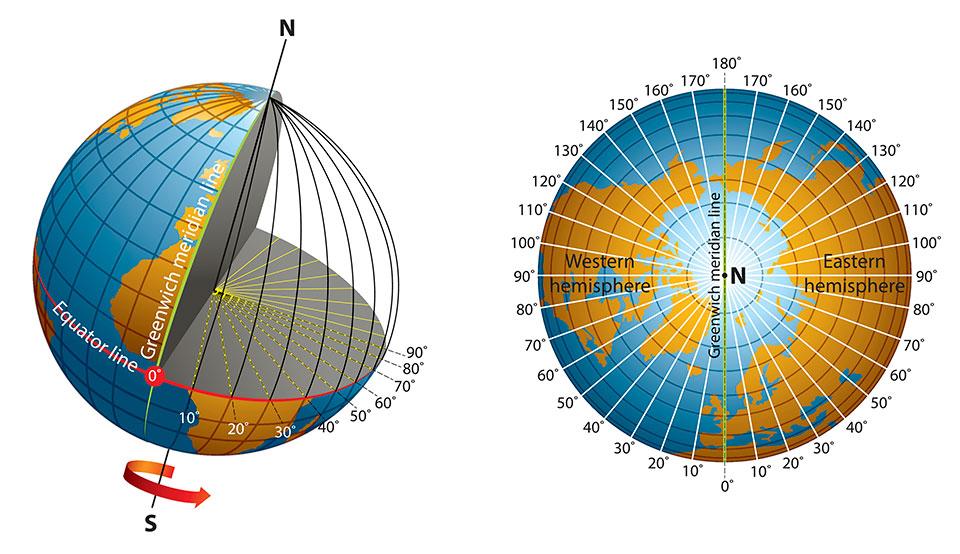
19.5 Degrees North & South Latitudes Throughout the Solar System
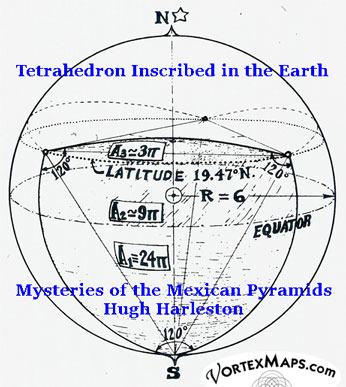
Nineteen point five (19.5) degrees north and south are the latitudes
where the apex points of a star tetrahedra within a sphere will contact that sphere’s surface when one apex is positioned at the north or south pole.
On the Sun: sunspot activity and the region of peak temperatures are limited to 19.5 degrees north and south.
On Venus: the presumably active major volcano complexes Alpha and Beta Regio are near 19.5 degrees.
On Earth:
- Mauna Loa, Hawaii (19 degrees 28 minutes N, 155 degrees 37 minutes W) The largest shield volcano is at 19.6 degrees north. This is Mauna Kea volcano on the island of Hawaii.
- Mexico City, Mexico (19 degrees 23 minutes N, 99 degrees 10 minutes W) The Pyramid of the Sun at Teotihuacan is 19.6 degrees north.
- Dzibalchen, (Yucatan), Mexico (19 degrees 28 minutes N, 89 degrees 46 minutes W)
- Georgetown, Grand Cayman Island (19 degrees 18 minutes N, 81 degrees 26 minutes W)
- Mount Emi Koussi, Chad, Africa (19 degrees 47 minutes N, 18 degrees 34 minutes E)
- Mount Kalsubai, (near Bombay), India (19 degrees 33 minutes N, 73 degrees 43 minutes E)
- Mountain near Xiangkhoang, Laos (19 degrees 17 minutes N, 103 degrees 17 minutes E)
- Mountain near Potosi, Bolivia (19 degrees 13 minutes S, 66 degrees 22 minutes W)
- Yasur Volcano, Tanna Island, Vanuatu (South Pacific Ocean) (19 degrees 31 minutes S, 169 degrees 25 minutes E)
- Mount Samuel, Northwest Territory, Australia (19 degrees 13 minutes S, 134 degrees 8 minutes E)
- Gweru, Zimbabwe, Africa (19 degrees 31 minutes S, 29 degrees 49 minutes E)
On Mars: the “vast” Olympus Mons shield cone volcano is at 19.5 degrees.
On Jupiter: the “red spot” which is an obvious vortex is at 19.5 degrees.
On Neptune: in 1986 Voyager II discovered a similar spot at 19.5 degrees north.
Based on Sedona: Beyond the Vortex, by Richard Dannelley. Get it on Amazon. and Bruce Rawles
Why ‘19.5 degrees’ is Significant
19.5 degrees is the angle that’s been found by researchers (Richard C. Hoagland, Stanley McDaniel, Erol Torun, Horace W. Crater, etc.) to be repeatedly encoded in the structures of Cydonia. It is viewed as a definite ‘signal in the noise’ – some kind of a ‘message’ left there by some intelligence. 19.5 is called t, the ‘tetrahedral constant’, because of its significance in tetrahedral geometry (a tetrahedron is a pyramid shape composed of four equilateral triangular sides): the apexes of a tetrahedron when placed within a circumscribing sphere, one of the tetrahedron’s apexes touching the north pole, the other three apexes touch the surface of the sphere at 19.5 degrees south latitude. Why this number would be important to the builders of the Martian structures is not clear (though Hoagland is theorizing that it has to do with what he calls “hyperdimensional physics”).
Nile Time-Map & tetrahedral geometry — 19.5 degrees
(retrieved from http://prophetic.simplenet.com/elysium/nile-timemap.htm; pre-2021, defunct.)
The emphasis on 19.5 degrees is not confined to the Martian structures. It has been found to be associated with various ancient structures here on earth – Giza pyramids, Avebury (the largest stone circle in the world, near Stonehenge), Pyramids of the Sun and Moon at Teotihuacan, etc. It is also worth noting that the Egyptian hieroglyph for Sirius, the brightest star in the sky which was extremely important to ancient Egyptians, is an equilateral triangle which can be viewed as a 2-dimensional representation of a tetrahedron; and in the Egyptian translation, it means a doorway… a sort of ‘stargate’.
Curiously, it has also been observed that 19.5 degrees is closely linked, for some reason, with the NASA space missions (for example, Mars Pathfinder landed at 19.5 degrees lat. of Mars on July 4, ’97).
In fact, not only did Pathfinder land at 19.5 N, the longitude of the landing site was approximately 33 W – which is the very number of the longitude of the apex of the Great Bend of the Nile (33 E)! Now, this strongly insists on the relevance of the Nile numbers, and someone behind the scenes is well aware of it.
As we move on, the number, 19.5, will also be very important in my Nile Time-map theory.
Perhaps, as the Nile-Mars connection bridged by ‘19.5’ appears to suggest, Mars was somehow involved during the ‘Prometheus / Pandora period’.
Download EarthStar Globe Geometry free e-book about Geometry and Mapping (.pdf)
Read the Supernatural Places and Visionary Maps book for much more related info.
Time might not exist, according to physicists and philosophers, but that’s okay
You need a helmet for this post.They call this science at phys.org
Omg…🙄 TGIF
Does time exist? The answer to this question may seem obvious: of course it does! Just look at a calendar or a clock.
The article at the link
The last sentence…absolute indolence. I can’t help it. Clocks and calendars are like McDonalds. “Food exists. Just look at McDonald’s!”
It barely passes for real food. It’s just a tool to keep you distracted from eating real food. Clocks and calendars keep you from owning your own time which is YOUR BODY AND MIND. They keep you distracted from Timelessness which IS real in the CNS, the central nervous system. Time is DNA and DNA can jump dimensions and densities which means we can jump densities.
Essay-Check this out on Amazon-Everyday Intuition by Lisa T.
My newest book is now available on Amazon in paperback or ebook.
Everyday Intuition and the Science Validating It
https://www.amazon.com/dp/B09WCMJJTX/ref=cm_sw_r_apan_i_Y1AE575AS3G4S042X7WE
NASA is Doing Hologram Projection Into Space
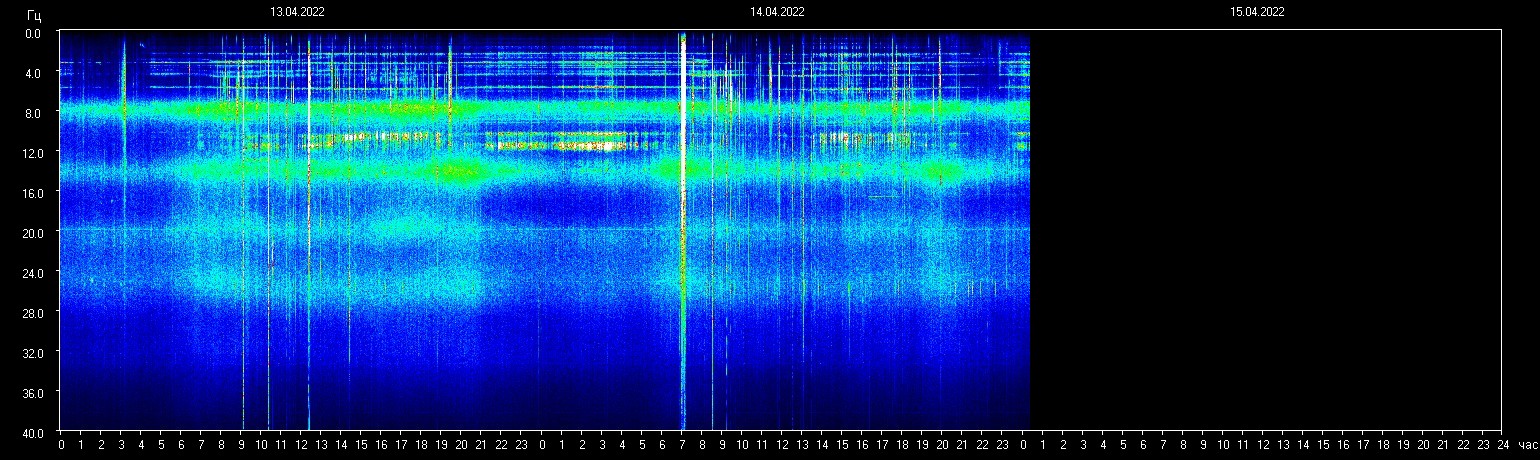
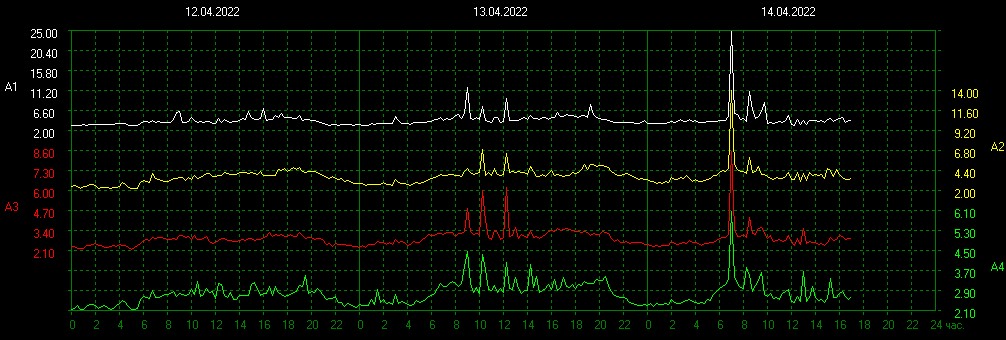
Here we go…S.R. is 25
I believe the evolution of the solar system planets start this and the Sun responds. This is an Intuitive hypothesis because the scientists don’t check the resonant frequencies from the other planets as we do on earth with the S.R. How would they know? We only observe the planets, and what we do know is that all of them are changing like the 🌎.
Just because the Sun is ginormous doesn’t mean it controls evolutionary cycles of DNA. It certainly contributes though.
Astronomers perplexed by plummeting temperatures in Neptune’s atmosphere | Live Science
I knew it was going to go up.
My body hurts. Red flag.
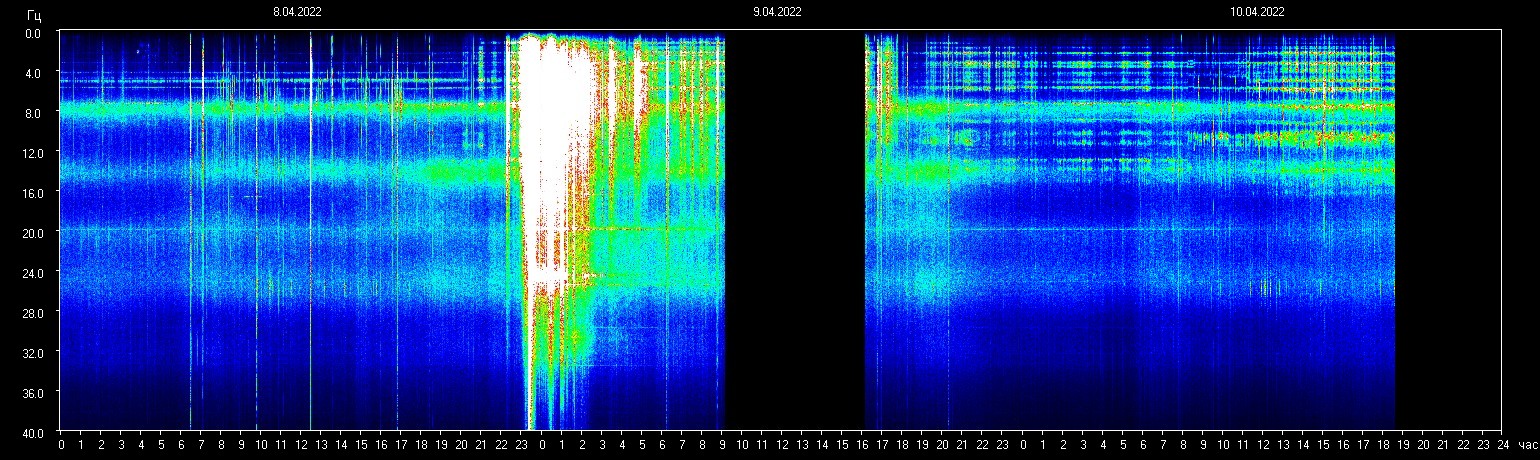
Peak frequency is 12. We are mediated by Blue 4 Eagle right now so people can get snippy and exacting with the S.R. going up. Tone 4 likes to be alone so if you have to be around people have coping coffee handy or what have you☕
Mystic Mama Speaks


| MYSTIC MAMMA PO BOX 262 TOPANGA, CA 90290 |
In Jupiter’s swirling Great Red Spot, NASA spacecraft finds hidden depths
November 9, 20215:45 AM ET Heard on Morning Edition

This new perspective of Jupiter from the south makes the Great Red Spot appear as though it is in northern territory. This view is unique to Juno.
NASA/JPL-Caltech/SwRI/MSSS/Gerald Eichstäd/Seán Doran © CC NC SA
Jupiter is well-known for being the biggest planet in our solar system, and it’s also home to the biggest storm. It’s called the Great Red Spot, an enormous vortex that has been swirling for centuries. It’s bigger than our own planet, and yet we don’t know much about it. Until now, scientists could only observe the spot from afar. But thanks to a NASA spacecraft launched a decade ago, we’re finally getting a look inside Jupiter’s storm.
The Great Red Spot is like a storm here on Earth, but supersized. “It’s basically clouds,” says Paul Byrne, a planetary scientist at Washington University in St. Louis. Really, “it’s not all that dissimilar to the kinds of things we know as cyclones or hurricanes or typhoons on Earth.”
At 10,000 miles across, the Great Red Spot is the largest storm in our solar system and has been continually observed for around 200 years, but it’s been around for much longer. (Compare that with big storms on Earth, which generally last a few days or weeks at most.)
“We believe this thing is really old,” says Scott Bolton, principal investigator of NASA’s Juno mission. “How it lasts that long is a mystery.”
Before Juno, scientists could only observe the storm from afar. Even from a distance, they noticed it was changing shape and actually shrinking.

NASA
NASA’s Juno mission launched from Cape Canaveral Space Force Station in Florida back in 2011 and arrived at Jupiter in 2016. In 2019, the spacecraft changed course slightly and passed over the Great Red Spot twice.
Bolton and his team used microwave sensors to slice into the depths of the storm, getting the first 3D model of the Great Red Spot. “It’s a pancake because it’s so wide at the top. But the depth of that pancake is much thicker than what we would have anticipated.”
SPACE
Astronomers want NASA to build a giant space telescope to peer at alien Earth
The microwave observations show these storms on Jupiter, called vortices, extend below the cloud deck of the planet. In the case of the Great Red Spot, it extends at least 200 miles into the clouds of Jupiter, beyond the depths of where clouds form and water condenses.
“That’s very different than the way we think Earth’s atmosphere works, which is largely driven by water, clouds, condensation, and sunlight,” says Bolton. “How that works is going to require new models and new ideas to explain.”
Measuring the Great Red Spot’s gravity
During its 2019 pass over the Great Red Spot, the Juno spacecraft buzzed the planet at a blistering 130,000 miles per hour. The storm is so massive that its gravity field actually jostled the spacecraft during its flyby.
“The local gravity tends to pull and push away the spacecraft as it flies over the vortex, and this creates a sort of bump in the road for Juno,” says Marzia Parisi, a Juno scientist from NASA’s Jet Propulsion Laboratory in Southern California and lead author of a paper in the journal Science on gravity overflights of the Great Red Spot.
Scientists here on Earth could see the effect of these gravitational “bumps.” That’s because every time they jostled Juno, they nudged the spacecraft closer to or farther from Earth. That changing distance caused the radio waves sent back to Earth some 400 million miles away to be subtly squeezed and stretched, a phenomenon known as a Doppler shift. Using this effect, the spacecraft could pick up tiny jostles as small as 0.01 millimeters per second.
“The precision required to get the Great Red Spot’s gravity during the July 2019 flyby is staggering,” says Parisi. The findings from the gravity observations complemented Bolton’s earlier microwave measures, concluding the storm penetrates some 300 miles into Jupiter’s atmosphere.
The shrinking spot
Observations of the Great Red Spot show that it’s shrinking. For nearly a century and a half, the iconic spot has been getting smaller and it’s unclear just how long it will last.
Juno is taking a closer look at this phenomenon. “What we’re doing is seeing up close what’s happening while that shrinking has happened,” says Bolton.
SPACE
If NASA greenlights this interstellar mission, it could last 100 years
The spacecraft is observing flecks of the storm getting caught up in neighboring clouds. The storm itself also appears to be trapped by powerful conveyor belts of wind on the planet that is stabilizing the storm.
“I don’t think the theory is very far advanced to the sense where we can connect all of that to the changes in the size,” said Bolton.
Data from Juno will help scientists predict what could possibly happen to the Great Red Spot.
“Understanding what’s happening with the storm now allows scientists to make much more sophisticated models to simulate what we see and then make predictions for what will happen in the future, including up to perhaps when the Great Red Spot may eventually go away,” says planetary scientist Paul Byrne.
Understanding other Jupiter-like planets
The findings from the Juno spacecraft are shedding light on the early formation of giant planets like Saturn, Uranus, and Neptune — and even planets beyond our own solar system.
“When we get up close, and this is the first planet we’ve actually been able to open up and look inside, this is going to tell us a lot about how giant planets work throughout the galaxy,” says Bolton.

The JunoCam imager aboard NASA’s Juno spacecraft captures a Jovian cyclone known as a barge type in a polar jet stream called “Jet N4.”
NASA/JPL-Caltech/SwRI/MSSS. Image processing: Gerald Eichstädt CC BY
To date, astronomers have identified thousands of exoplanets — planets that orbit a star other than our sun. These planets are far away, with the closest one around 10.5 light-years from Earth. That makes observing what’s happening on the surface difficult.
Around 1,400 of these exoplanet candidates are thought to be gas giants, much like Jupiter. Understanding what happens on Jupiter can help scientists get a better sense of what’s happening beyond our solar system.
“By understanding the physics and the processes that go into shaping Jupiter,” says Byrne, “we’ll get a better understanding of not just Jupiter, but of these kinds of worlds.”
Aurora Seen From Airplane After Strong Geomagnetic Storm Smashed Into Earth
Pyramids Found Beneath Antarctic Ice | The UnXplained (Season 3)
A perfect, gigantic pyramid that dwarfs the ones in Egypt. I’m pretty sure this was built by The Ancient Builder Race of E.T. If not them then some other ancient alien ancestors.
Here is something.
Scientists discover rumbling noise on Mars
I saw the word marsquake and it hit me that I’ve never thought of other planets as having a version of our earth…quake. We become so myopic on our own planet.
I wonder if scientists from the other local planets analyze us the way we do them? But we assume there are no other scientists in our system. That is also myopic ethnocentrism. 😋
https://nypost.com/2022/04/05/scientists-discover-rumbling-noise-on-mars/amp/
How the Smartest Minds Use Intuition and Emotional Intelligence to Make Better Decisions, Backed by Science | Inc.com
WOOHOO!!Another support for my new book on Amazon, “Everyday Intuition” See the article link at the bottom.
Everyday Intuition and the Science Validating It https://www.amazon.com/dp/B09WCMJJTX/ref=cm_sw_r_apan_i_0Z2K48JP6Y2AG9TE946C
 Synchronicity is the Source of Consciousness
You must be logged in to post a comment.