My Book: The Role of Intuition in the Scientific Method


This booklet is for sale on Amazon. Be sure to search on Lisa K. Townsend
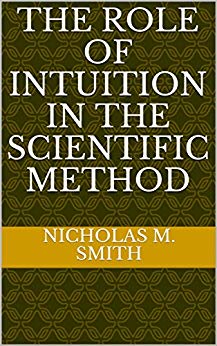
The Role of Intuition In The Scientific Method

I found this paper by Dr. Smith synchronistically, being a bit obsessed with the conviction that the scientific method was missing its other half; intuition. The physics nomenclature was not completely foreign to me given that I am an office chair (armchair) student of physics and other sciences myself.  So, I did have fun with the bulk of the contents and view it as a hike up a science hill for a student. Bring your water bottle. Your gray cells will get a workout and I recommend it. It is for that reason I put key terms in bold and key ideas in italics.

Upon reading Dr. Smith’s biography in this booklet, you’ll see that he was a heavyweight in his era, 1934-1979 would be his approximate working time, but not as notable as his colleagues Van Allen and Allison. James Van Allen discovered the radiation belts around the earth.

I am grateful for having found this little piece of gold, for as much as I enjoy and respect the scientific method, I cannot relate to it nearly as much as I do intuition, dreaming, and the vast ocean of information in the unconscious mind which I have been aware of and lived in my entire life. It’s like breathing for me. My personal proclivity will be toward Axiology and the Behavioral Sciences as I move forward with my career.

All I ask from readers of this booklet and others is to keep an open mind and acknowledge that everyone has different experiences with information. We all deserve to be heard out; people who are very controlled in their thinking and people who are very intuitional in their thinking. The fact is, no one is right one-hundred percent of the time and you’d be committing hubris if you asserted it.  Dr. Smith, with all of his education and experience, comes to the conclusion that intuition is far more important in the scientific method than previously noted. For that, I am very grateful.

Please note Table 1 on page twenty-six.  I view the unity of these approaches as a holistic scientific method and wish for nothing less as we move forward forming our models of the universe.

Lisa K. Townsend, B.A., LMT
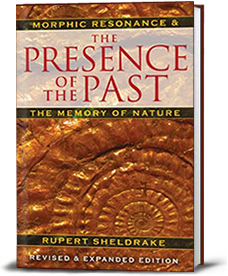
Time Innovation: Morphic Resonance; The Presence of The Past


Presence-of-the-Past

It took me months to finish this book because Sheldrake’s ideas are so epic. It is a very worthwhile read if you want to understand evolution, nature, biology, life, change, and memory.

When I was almost done, I stared at the title and realized he only mentioned the past, not the present or the future. Time is not the subject of the book but how morphic resonance and formative causation rely on the past to create a new future through habits of behavior and memory. Yet from my own studies of the Mayan Tzolkin and True Time, I believe we time travel backward and forward in the radial time matrix to create synchronicity. Sheldrake, on the other hand, talks about probability structures as morphic fields. He’s got a point but that casts life as a guessing game, possible serendipity, luck, chance, or an accident.

Tzolkin Cosmology teaches that by understanding the real nature of True Time we can observe synchronicity all around us and even predict what’s coming next. There are no accidents. Everything happens for a reason. I can’t predict what’s coming next by rational means but I have a friend who thinks he can. I “see” what’s coming next through my prescience and intuition in night dreams and waking dreams. It’s quicker and usually more accurate. All of this is a spiral; not linear. Sheldrake does seem to be on a linear timeline.

Morphic resonance is an ambitious and tantalizing theory that brings into question the dogma of natural laws and instead presents a convincing hypothesis that nature is habitual but its probability structures are flexible. He’s close…very close.

I’d like to see his hypothesis merge with quantum field theory, time science, Tzolkin Cosmology, and quantum physics so we can finally get the time right instead of being stuck in a third-dimensional explicate time warp. We all have dreams.


Essay: The Role of Intuition in the Scientific Method


The Role of Intuition in the Scientific Method

I’ve published an interesting booklet that you can buy on my website by clicking on the far right tab. It’s not very long and I’ve included a nice glossary of physics terms for the novice (like me). I read a lot of physics and love it but I am not a physicist. I wish I was but I came to it kind of late. Dr. Smith is an advocate for acknowledging intuition after working on the Manhattan Project. That would kick believing in rationality alone right out of anyone. Nothing like two atomic bombs killing millions to ruin your ideals about humanity.


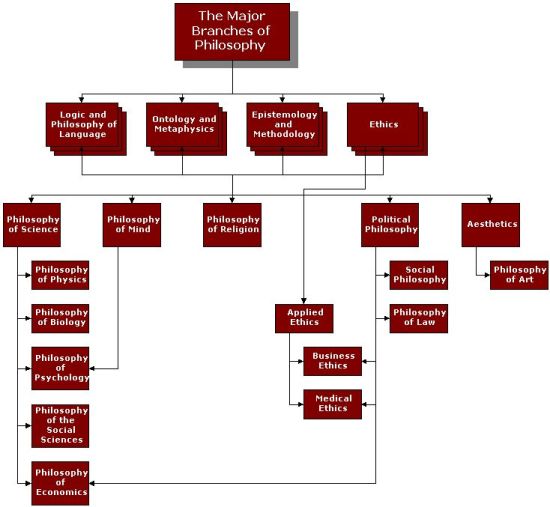
The major branches of philosophy


This is a “tree” that shows where intuition fits, historically, into the sciences and how the sciences are actually offspring or children of philosophy.

All intellectual disciplines start with Philosophy.  Ph.D. behind a person’s name means Doctor of Philosophy no matter what field their major is.  Its namesake is Philo of Alexandria who was a Hellenistic Jew who wanted to create harmony, maybe in a contrived fashion?, between Judaism and Greek Philosophy.

  1. Logic-the attempt to codify the rules of rational thought.  Here is where formal, informal, symbolic, and mathematical logic fits.
  2. Epistemology-the study of knowledge itself, which to me sounds like gazing at your navel.  Religionists, agnostics, and atheists exist on this spectrum. Here is where all the branches of religion fit.
  3. Metaphysics-the study of the nature of things. This one is my favorite, of course, being holistic. Branches are cosmology and ontology. Here is where all of the natural sciences fit under cosmology. The life sciences, physical science, physics, astronomy, chemistry, earth.  If these are subdivided, they are fields.
  4. Axiology is the philosophical study of value. It is either the collective term for ethics and aesthetics, philosophical fields that depend crucially on notions of worth, or the foundation for these fields and thus similar to value theory and meta-ethics. Ethics and Aesthetics are it’s two main branches.  On the chart, the box that says Ethics could say Axiology.  Here is where all law science, art, and aesthetics fit. 

Intuition comes under ontology and metaphysics, then down to the philosophy of mind, then down to the philosophy of psychology.  You’ll see it sits right on the shelf with the philosophy of science equally. It then goes down that track and merges under the philosophy of science track with the science of psychology.  Psychology is a SCIENCE that comes from the philosophy of mind.  So, let’s have some respect here.  It’s not in a mushy bog.  It has to get through the rigors of the scientific method as well.

You’ll notice the five categories under the philosophy of science. There is a biased preponderance on this category, I believe due to Newtonian materialism. That is shifting now. The field of quantum physics is impressing on all the science categories now and shaking them up. In addition, that one field is also impacting the philosophy of mind, philosophy of religion, AND the parent field of Metaphysics. So give the quantum physicists all the ribbing you want. Those folks are on the leading edge. More power to them.