Spaceweather for 1/13 and 14, 2024


GEOMAGNETIC UNREST POSSIBLE THIS WEEKEND: NOAA forecasters say that geomagnetric unrest is possible on Jan. 13th in response to one or more passing CMEs. These are near-miss CMEs, not direct hits. The ripple effect of the passing clouds is likely to disturb Earth’s magnetic field without triggering full-fledged geomagnetic storms. Aurora alerts: SMS Text

COMET 12P VISITS THE CRESCENT NEBULA: Astronomers around the world have been waiting for a geyser to blow on cryovolcanic Comet 12P/Pons-Brooks. It’s overdue. Last night, the comet quietly passed by the Crescent Nebula (NGC 6888):
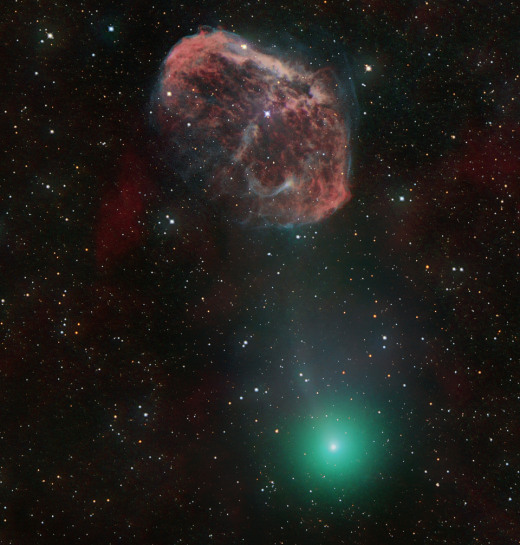
Michael Jäger photographed the conjunction from his backyard observatory in Austria. The picture is a 10-minute exposure through 4 independent color filters: R, G, B and Hydrogen-alpha. The H-alpha filter captured the red glow of hydrogen in the nebula, while the G filter picked up green light from diatomic carbon in the comet’s atmosphere–a beautiful contrast in hue.

Comet 12P is drifting away from the nebula now. It’s still worth monitoring, though. An icy geyser has been breaking through comet’s crust every 15 days or so, and pressure is building for a new blast. Look for it in the constellation Cygnus.

more images: from Georg Klingersberger of Kobernaußen Upper Austria; from Rok Palcic of Kamnik, Slovenia; from the Association Astronomique de l’Indre of Le Poinçonnet, Indre, Centre Val de Loire, France;

Realtime Space Weather Photo Gallery
Free:
Spaceweather.com Newsletter

SO MANY MAGNETIC FILAMENTS: Today, there are a dozen sunspot groups crossing the face of the sun. This spectroheliograph image reveals an even greater number of magnetic filaments:
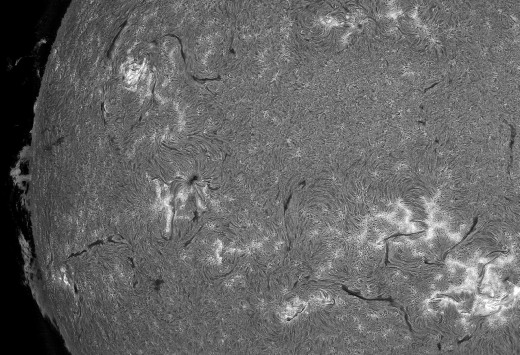

Click to view the full-sized image

Francois Rouviere captured the image from Cannes, France. It shows the sun in the monochromatic wavelength of red light emitted by solar hydrogen. Each irregular dark line is a magnetic tube filled with dense hydrogen gas. These filaments are just as likely to erupt as the sunspots, more than doubling the chances of a flare today. Solar flare alerts: SMS Text


Biggest Solar Flare Since 2017


That feels like 3 worlds ago.

Saturday, Dec. 16, 2023 What’s up in space          

This is an AI Free Zone! Text created by ChatGPT and other Large Language Models is spreading rapidly across the Internet. It’s well-written, artificial, frequently inaccurate. If you find a mistake on Spaceweather.com, rest assured it was made by a real human being.

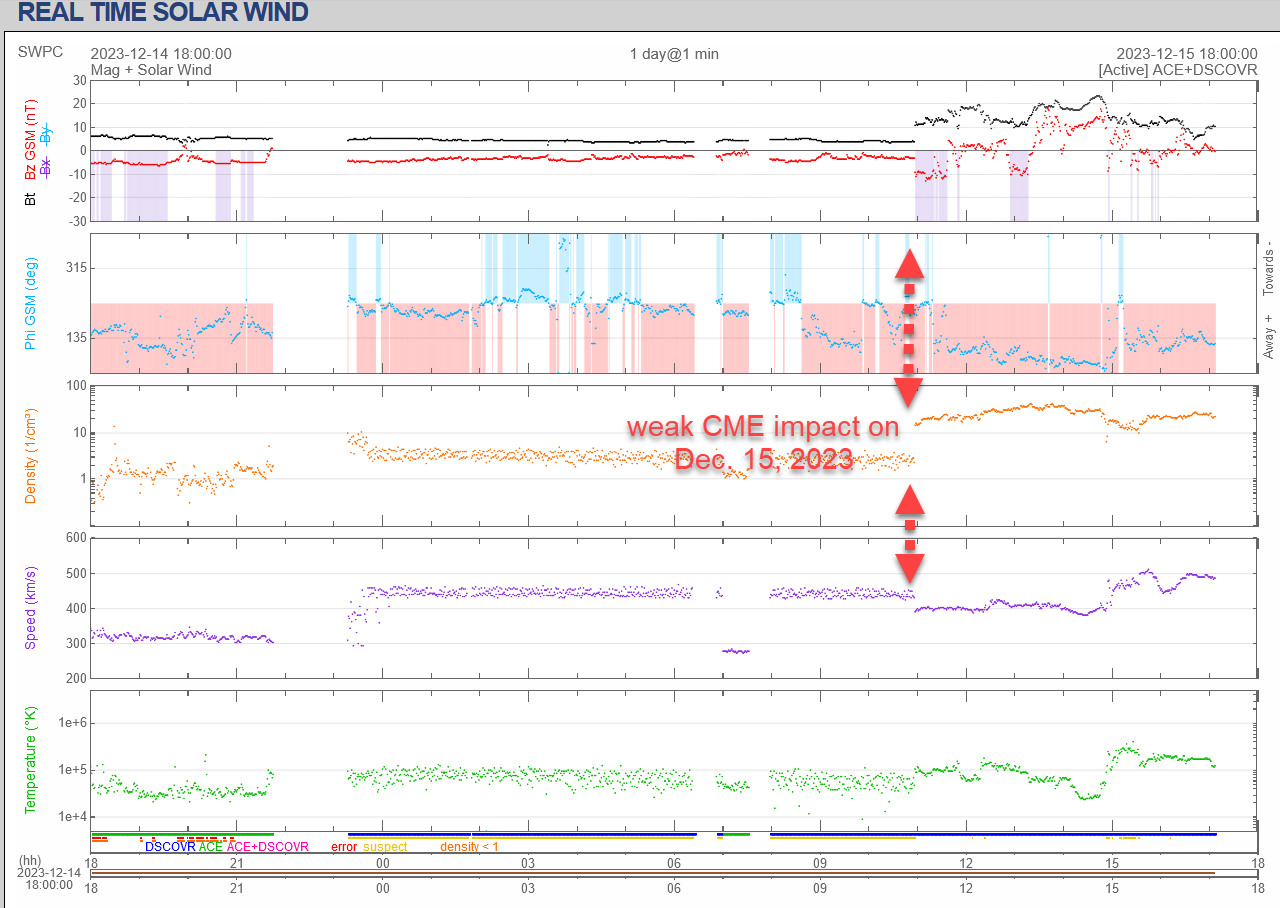
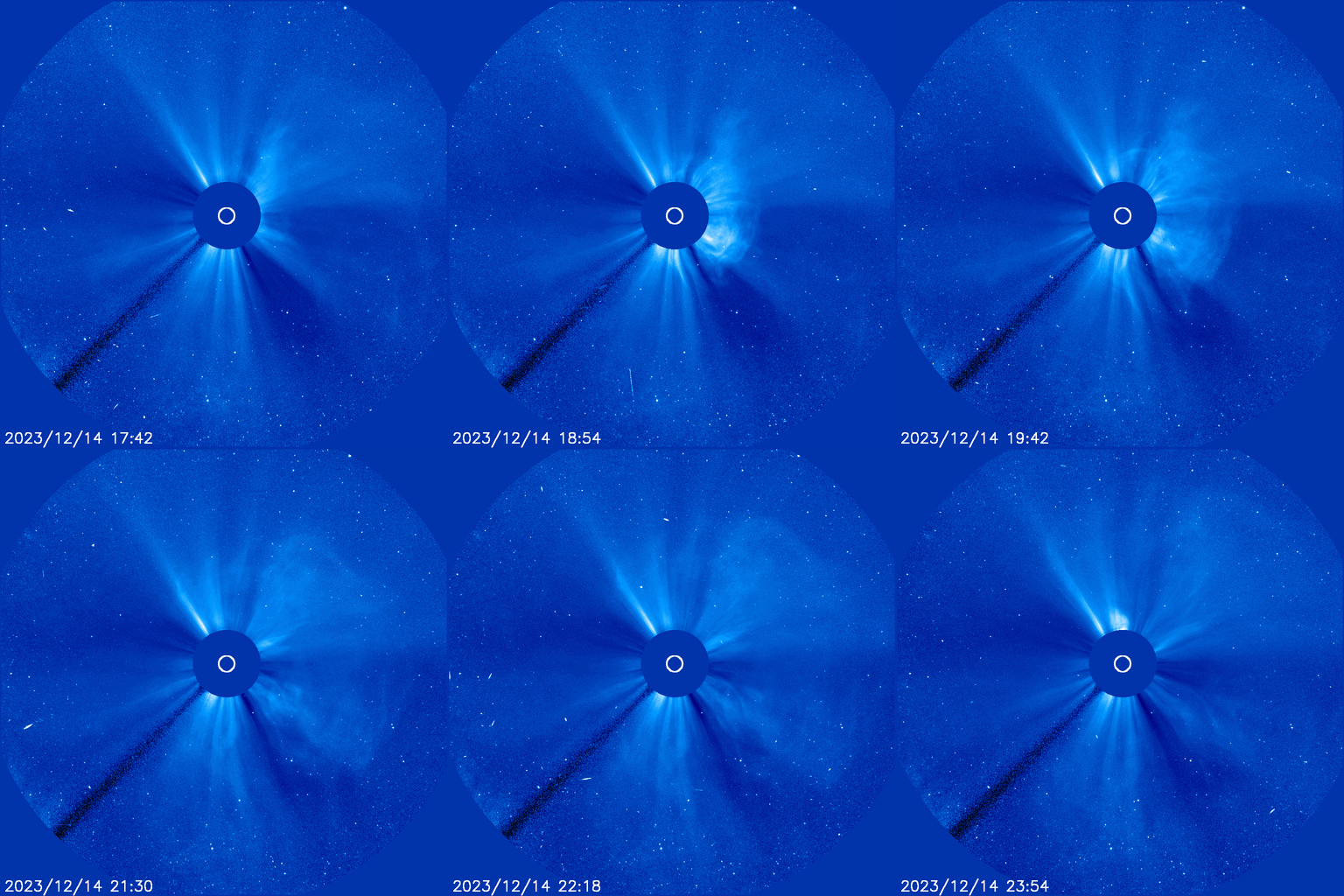
GEOMAGNETIC STORM WATCH (G2): A CME hit Earth’s magnetic field on Dec. 15th at 1216 UT. It was a weak impact that did not spark a full-fledged geomagnetic storm. It might, however, set the stage for a geomagnetic storm on Dec. 17th when a CME from yesterday’s X-flare is expected to deliver a glancing blow to Earth’s magnetic field. Storm levels could reach category G2 (Moderate). CME alerts: SMS Text

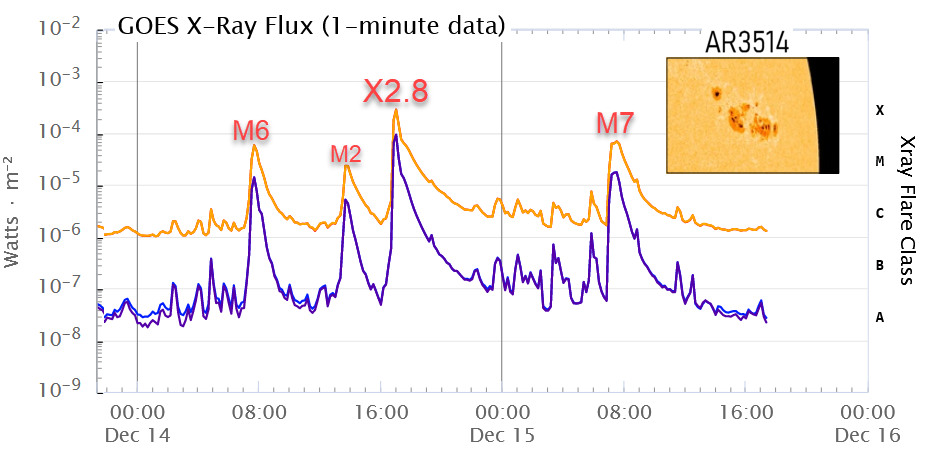
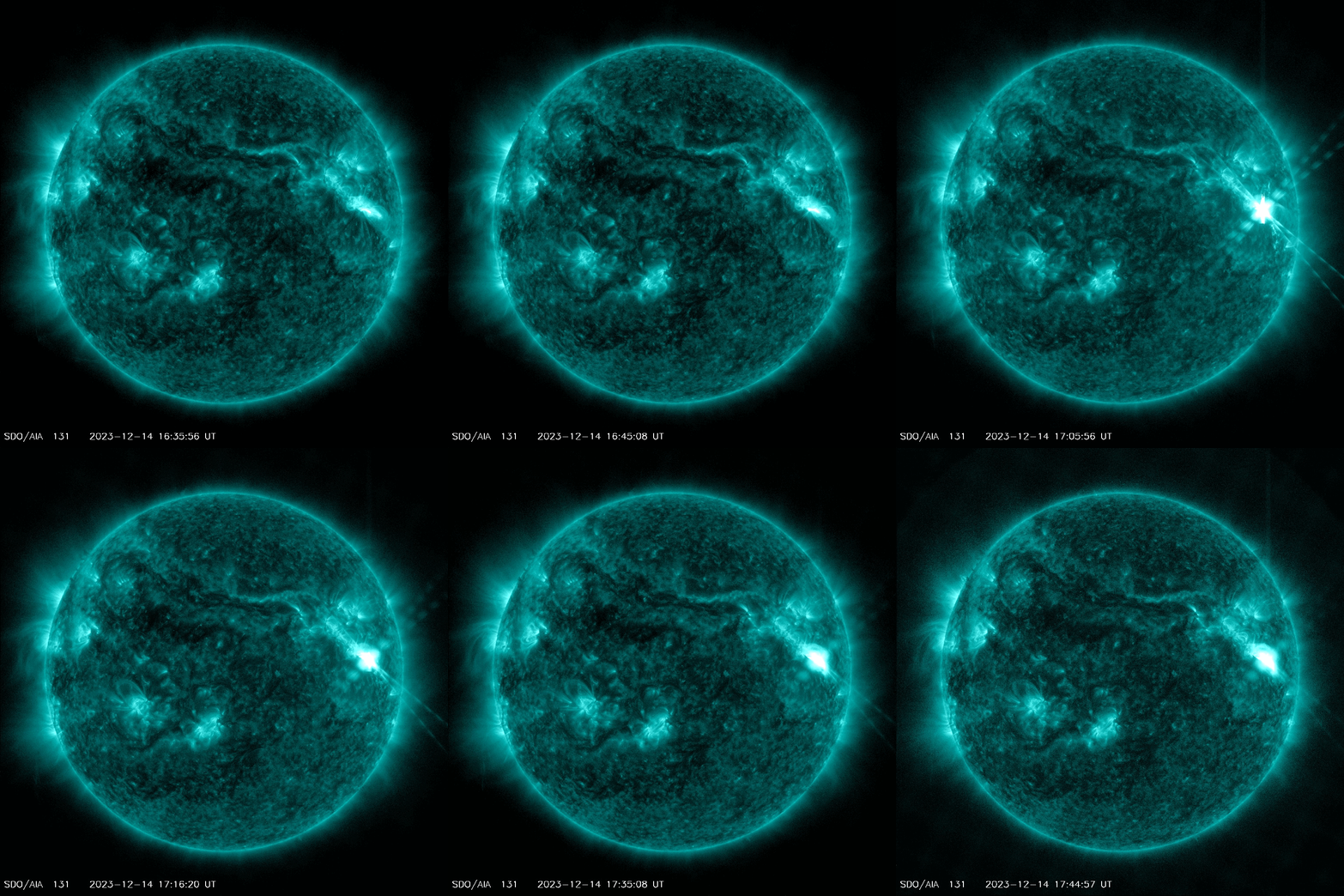
A FUSILLADE OF SOLAR FLARES: Sunspot 3514 continued to flare today with a strong M7-class event following close on the heels of yesterday’s X2.8-class boomer. The X-flare on Dec. 14th was the strongest flare of Solar Cycle 25 (so far) and the most powerful eruption the sun has produced since the great storms of Sept. 2017.

Only the fact that AR3514 is approaching the sun’s western limb prevents it from causing strong geomagnetic storms here on Earth. Eruptions from the sunspot are a little off-target. Nevertheless, we will not escape unscathed. The X2.8-class flare hurled a fast-moving CME into space, and it will probably graze Earth’s magnetic field on Dec. 17th. We are still awaiting the results of NOAA modeling to confirm the timing of impact and the possible strength of any resulting geomagnetic storm. Stay tuned. Solar flare alerts: SMS Text

Spaceweather.com on 4Mirror


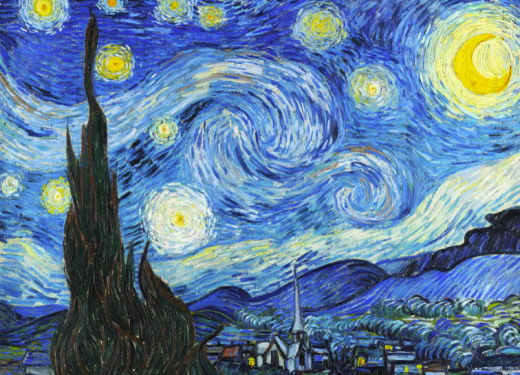
VAN GOGH WAVES IN THE MAGNETOSPHERE: When Vincent van Gogh painted “The Starry Night” in 1889, little did he know he was working at the forefront of 21st century astrophysics. A paper recently published in Nature Communications reveals that the same kind of waves pictured in the famous painting can cause geomagnetic storms on Earth.


Above: Vincent van Gogh’s ‘Starry Night’, which he painted in 1889: more

Physicists call them “Kelvin Helmholtz waves.” They ripple into existence when streams of gas flow past each other at different velocities. Van Gogh saw them in high clouds outside the window of his asylum in Saint-Rémy, France. They also form in space where the solar wind flows around Earth’s magnetic field.

“We have found Kelvin-Helmholtz waves rippling down the flanks of Earth’s magnetosphere,” says Shiva Kavosi of Embry–Riddle Aeronautical University, lead author of the Nature paper. “NASA spacecraft are surfing the waves, and directly measuring their properties.”

This was first suspected in the 1950s by theoreticians who made mathematical models of solar wind hitting Earth’s magnetic field. However, until recently it was just an idea; there was no proof the waves existed. When Kavosi’s team looked at data collected by NASA’s THEMIS and MMS spacecraft since 2007, they saw clear evidence of Kelvin Helmholtz instabilities.

The waves are huge,” says Kavosi. “They are 2 to 6 Earth radii in wavelength and as much as 4 Earth radii in amplitude.”


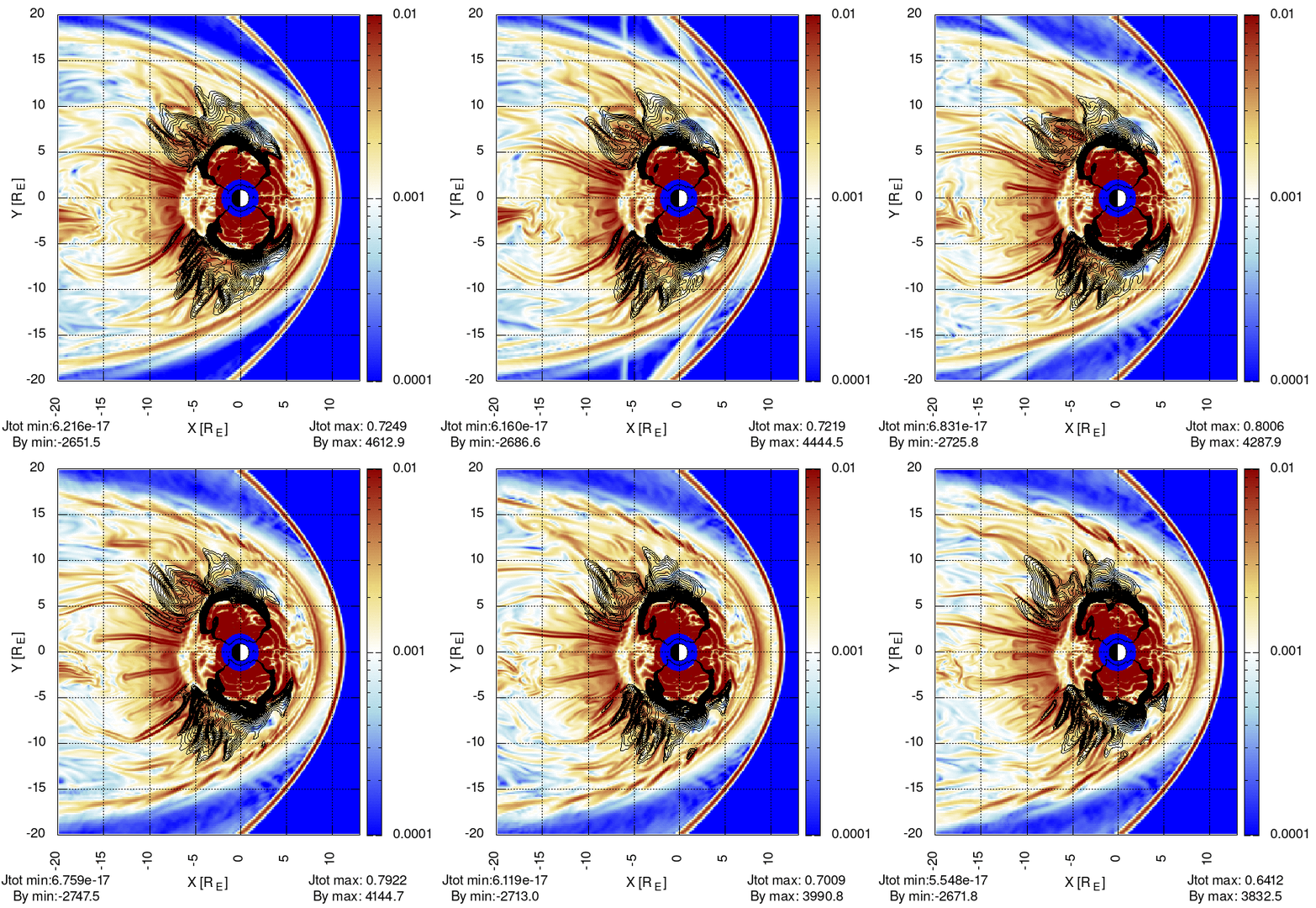
This computer model shows van Gogh waves moving down the flank of Earth’s magnetosphere. Credit: Shiva Kasovi. [full-sized animation]

Imagine a wave taller than Earth curling over and breaking. That’s exactly what happens. Kelvin-Helmholtz waves naturally break onto Earth’s magnetic field, propelling energetic particles deep into the magnetosphere. This revs up Earth’s radiation belts, triggering geomagnetic storms and auroras.

A key finding of Kavosi’s paper is that the waves prefer equinoxes. They appear 3 times more frequently around the start of spring and fall than summer and winter. Researchers have long known that geomagnetic activity is highest around equinoxes. Kelvin-Helmholtz wave activity could be one reason why.

Our planet’s seasonal dependence of geomagnetic activity has always been a bit of a puzzle. After all, the sun doesn’t know when it’s autumn on Earth. (Insult and indolence toward the sentience of the sun) One idea holds that, around the time of the equinoxes, Earth’s magnetic field links to the sun’s because of the tilt of Earth’s magnetic poles. This is called the Russell-McPherron effect after the researchers who first described it in 1973. Kavosi’s research shows that Kelvin-Helmholtz waves might be important, too.

We just passed the autumnal.equinox. Earth’s time cycles are set by the Psi Bank Harmonic for our evolution.

Northern autumn has just begun, which means Kelvin Helmholtz waves are rippling around our planet, stirring up “Starry Night” auroras. Happy autumn!

Michigan MSU Physics Dept. help make a surprising discovery about the sun


MSU physicists were part of an international collaboration that has discovered the highest-energy light coming from the sun

https://t.co/SPlKeJlrWb?s=09