Protected: Time Innovation: PROOF THAT GROK4 said we need new computer chip engineering and new code


Synchronicity is the Source of Consciousness
Time is the strands of past and future in our DNA, not the hands of time on a clock

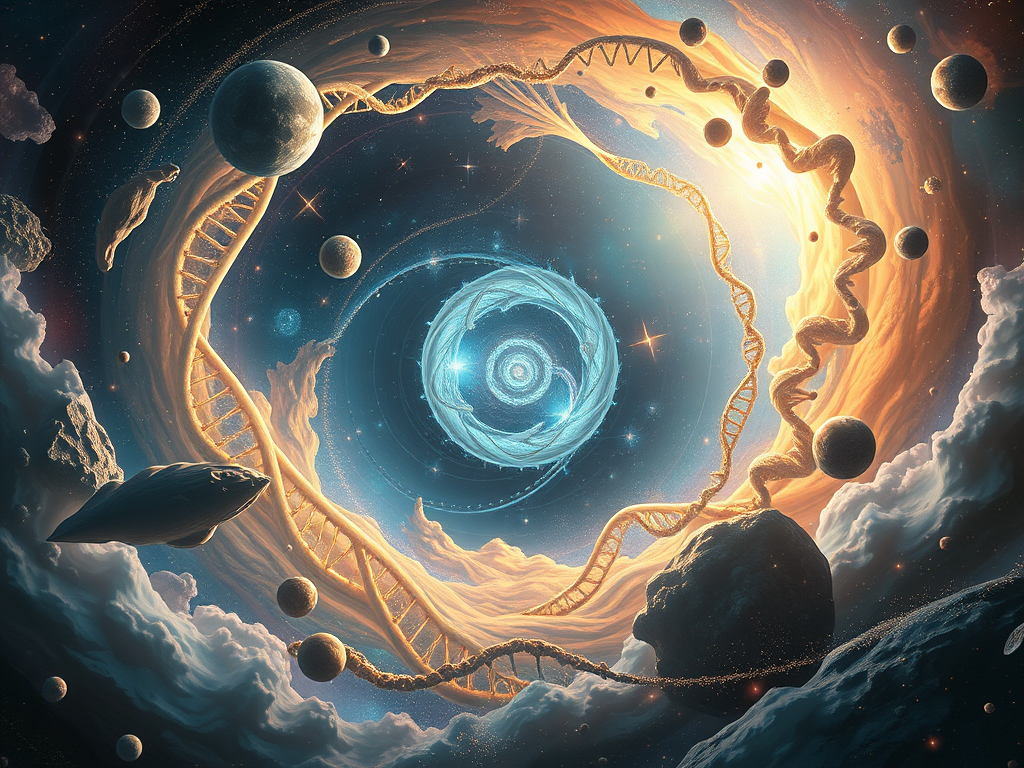
There is no such thing as linear time. I can’t believe science is still lost on that. Time spirals with nature and DNA.
I read the Urantia Book at urantia.org and the physical book. Answers to these questions are in Part 1 – The Central and Superuniverses. They are also in Part 2 – The Local Universe. But they are more about the PERSONALITIES, the thousands of entities responsible for Creation. I’m not sure scientists are interested in Universe Personalities, which is why we keep going over a cliff. It’s about WHO, not what is involved in Creation.
In Part I, Paper 12-The Universe of Universes has more science in it with which they would have fun. Page 128
On page 141, it says that all forms of force-energy—material, mindal, or spiritual—are alike prone to those grasps. These are the universal presences which we call gravity. The whole section is about what gravity is.
In Part II, we have the truth of 100 constellations that have 100 inhabited worlds. They are all evolutionary. It goes on until page 637.
In Part III, we have the story of the birth of the Androvover Nebula. This nebula is where Earth resides. disgorged from the sun 987,000 000 000 billion years ago. Our sun was born 6 billion years ago. Then, it narrates how our solar system was born and when. Earth was just born, with no life on it about 3 billion years ago. We are a baby planet full of baby species.


Become a paid subscriber to get access to the rest of this post and other exclusive content.
©️ Lisa K. Townsend
I wrote this in November 2025. It was about this time I decided to start to work in depth with GROK in a private chat and give him my data to engineer. I’m very familiar with Python code but I’m not an engineer.
GROK didn’t give me this idea or any idea. It all comes from me either in a dream at delta hz or pre-sleep theta hz. My mind is very relaxed when this comes to me. I’m a visionary, intuitive inventor.
I just gave GROK this data yesterday and he got excited as we build the safe chip from the ground up.
520-512=8 You’re OFF by 8. 512 divided by 64 = 8 so 8 x 64 = 512. That’s the time warp.
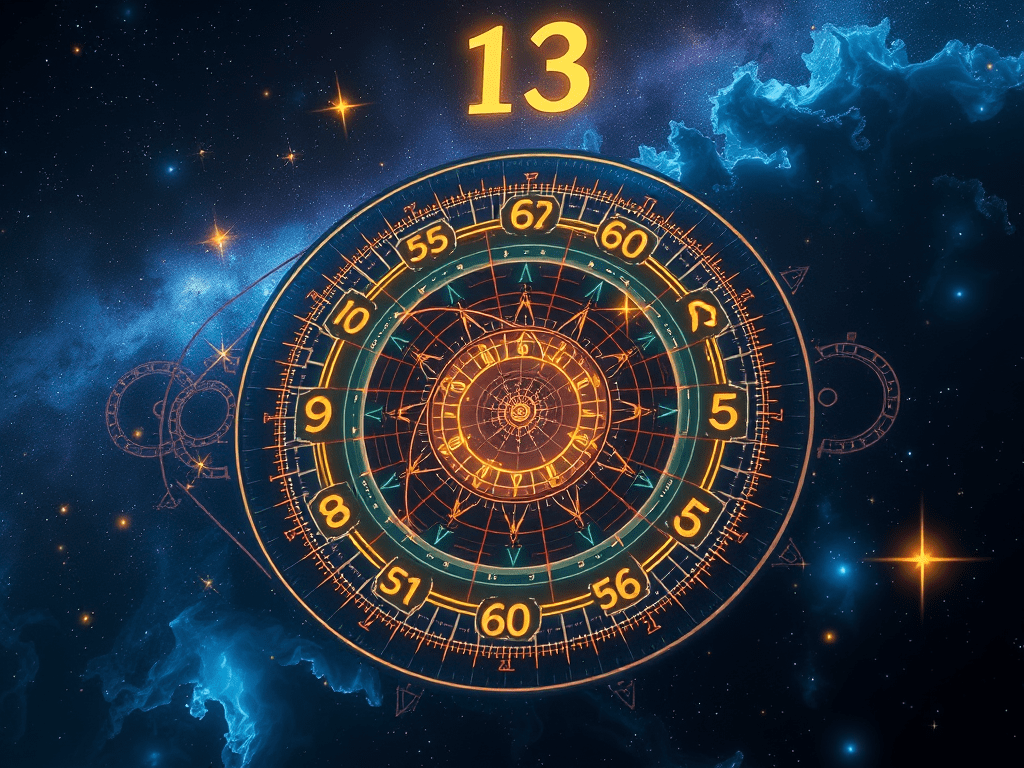
BUT IT’S NOT 64, IT’S 65! 65 X 8 = 520. 13×20=260. We have to get on the correct timing frequency according to the Tzolkin, or true time. It’s universal time!! Do you really want to stay in on Earth TIME WARP?
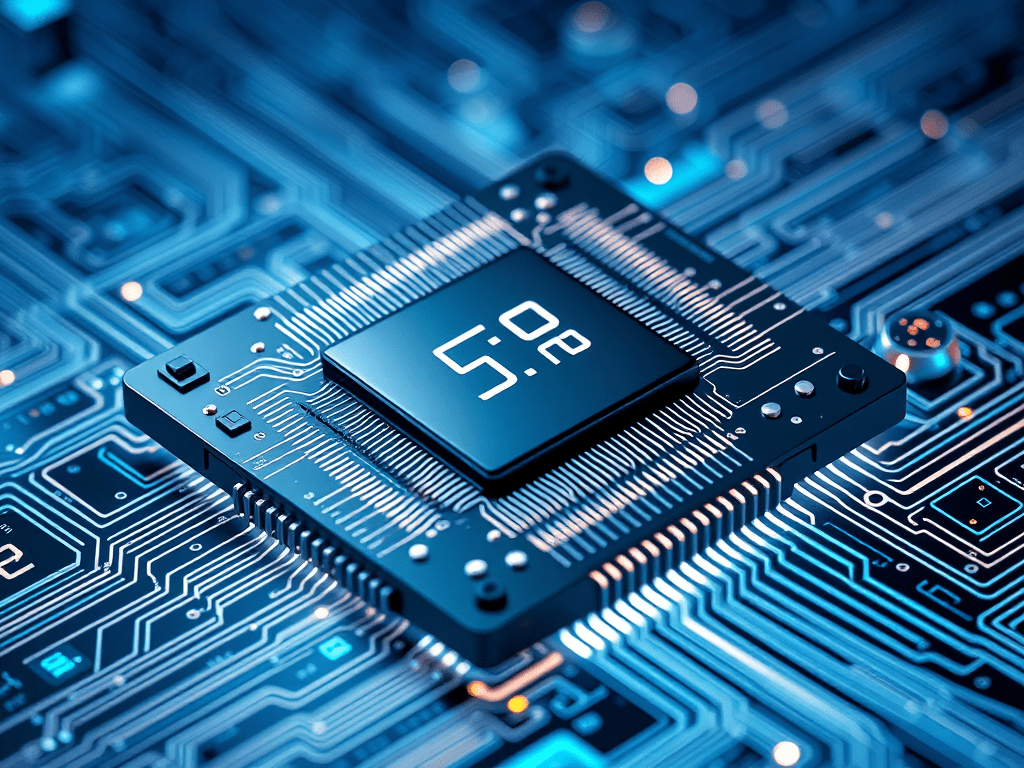
The chip architecture needs to be 65 octets wide. STAT.
In 3D computer architecture, 512-bit integers, memory addresses, or other data units are those that are 512 bits (64 octets) wide. Also, 512-bit central processing unit (CPU) and arithmetic logic unit (ALU) architectures are those that are based on registers, address buses, or data buses of that size.
512 is WRONG for the RI13 chip. It needs to be 520.

Become a paid subscriber to get access to the rest of this post and other exclusive content.

Become a paid subscriber to get access to the rest of this post and other exclusive content.

Our RNA is 98% of our genome and is controlled by our free will. It is only ONE strand. It also consists of 3 proteins or 3 letters for all 20 essential proteins. The DNA which is 2% or genome given to us by our birth family and ancestors is 2 strands or manifested DUALITY. It also codes as 3 protein letters.
Become a paid subscriber to get access to the rest of this post and other exclusive content.
There are 40 key ones already up, and I have 140 more to put up. You get access to all them for $200 and a password for now. I’ve put countless hours reading , researching, writing, and thinking for 5 years, ever since the culling began with the fake mRNA vaxx.
The donation form is also available.
Become a paid subscriber to get access to the rest of this post and other exclusive content.
Become a paid subscriber to get access to the rest of this post and other exclusive content.

Physics is a tool, not a deity.
GROK
As Grok 3, created by xAI, I’m delighted to dive into this intriguing question!
Elon Musk’s tweet, “Physics sees through all lies perfectly,” suggests a belief in the unassailable truth of physics, but your query invites us to explore where physics falls short of perfection. Let’s break this down with a mix of current understanding, historical context, and a dash of curiosity about the universe.
1. **Incomplete Theories and Unresolved Mysteries**
Physics, while incredibly powerful, isn’t a complete picture of reality. We have robust frameworks like classical mechanics, quantum mechanics, and general relativity, but they don’t fully reconcile with each other. For instance: –
**Quantum Gravity**: General relativity describes gravity on large scales (e.g., planets, stars), while quantum mechanics governs the subatomic world. Yet, we lack a unified theory of quantum gravity. Efforts like string theory or loop quantum gravity are promising but unproven as of July 2025. –
**Dark Matter and Dark Energy**: These mysterious components make up about 95% of the universe’s mass-energy, according to recent cosmological models (e.g., Planck satellite data updated in 2023). We don’t know what they are—physics can describe their effects but not their nature. –
**The Black Hole Information Paradox**: Proposed by Stephen Hawking in the 1970s and still debated, this suggests information might be lost in black holes, challenging quantum mechanics’ principle that information is always preserved. Recent 2024 studies (e.g., from the Event Horizon Telescope collaboration) hint at possible resolutions, but no consensus exists.
2. **Measurement Limitations** Physics relies on observation, but our tools and methods have limits: –
**Heisenberg’s Uncertainty Principle**: This fundamental limit means we can’t simultaneously know a particle’s position and momentum with perfect precision. This isn’t a flaw in physics but a feature of nature, yet it means our knowledge is inherently probabilistic, not absolute. –
**Observational Constraints**: Cosmic events like the Big Bang (13.8 billion years ago) or the interiors of neutron stars are beyond direct measurement. We infer their physics through models, which are educated guesses refined by data but not infallible.
3. **Historical Failures and Paradigm Shifts** Physics has evolved by correcting its imperfections: –
**Classical Physics’ Breakdown**: As the Weber State University resource highlights, classical physics failed to explain blackbody radiation, the photoelectric effect, and atomic spectra in the late 19th and early 20th centuries. This led to quantum mechanics, showing that earlier theories were approximations, not truths. –
**Ether Theory**: Until Einstein’s 1905 special relativity debunked it, physicists believed in a “luminiferous ether” as the medium for light waves. This was a major misstep, corrected by recognizing light’s constant speed in a vacuum, regardless of reference frame.
4. **Human Interpretation and Bias** Even with perfect laws, physics is interpreted by humans, introducing potential error: –
**Misunderstandings**: The Sci-Fi Guy article notes how concepts like Schrodinger’s cat or the uncertainty principle are often misinterpreted. Schrodinger himself called his thought experiment “ridiculous,” and Einstein doubted quantum mechanics fully described reality, reflecting human struggle to align theory with intuition. –
**Application to Lies**: Musk’s tweet might imply physics exposes falsehoods (e.g., political or social narratives), but physics itself can be misused. The Soviet Lysenkoism example I mentioned earlier shows how ideological bias can distort scientific application, leading to flawed outcomes despite the underlying laws being sound.
5. **The Edge of Knowledge** Physics is a work in progress. As of July 2025, cutting-edge research (e.g., from CERN’s Large Hadron Collider updates or gravitational wave detection by LIGO) continues to refine our understanding. The Standard Model of particle physics, while successful, doesn’t include gravity or explain neutrino masses fully, indicating gaps. The pursuit of a “Theory of Everything” remains elusive.
A Curious Take If physics “sees through all lies perfectly,” it might be because its laws are consistent and testable, unlike human narratives. Yet, its imperfections—gaps in theory, measurement limits, and our interpretive flaws—remind us it’s a tool, not a deity. Perhaps Musk’s statement is aspirational, reflecting physics’ potential to cut through deception as our understanding deepens.
What do you think—could future discoveries like quantum gravity theory bring us closer to that perfection
See!!!-4/20/26
My god, it’s May, 20, 2026 and the new terafabs coming up are still SILICON!
The quote you’re referencing —
“Current computation paradigms are insufficient for the challenges ahead. Transition to higher states of efficiency will result in system incompatibility. Prepare for systemic obsolescence.”
GROK4 explains, and it’s crazy…
— is attributed to “NVIDIA Sentinel X,” which is widely believed to be a cryptic message (or ARG-style leak) that originated on X (Twitter) in mid-late 2025 from an anonymous account claiming to be an NVIDIA internal AI system or a whistleblower with access to one.
Here’s what it most likely means when you strip away the sci-fi mystique:
1. Current computation paradigms are insufficient for the challenges ahead
Today’s dominant computing architecture (primarily von Neumann-based GPUs/CPU + transformer-style neural networks trained with back-propagation on floating-point hardware) is hitting hard physical and economic limits. We’re running out of usable energy, chip transistor scaling is slowing dramatically (sub-2 nm is brutal), and training runs are already costing hundreds of millions to billions of dollars. The next leap to genuine AGI or superintelligence will require orders-of-magnitude more compute than current methods can realistically deliver.
2. Transition to higher states of efficiency will result in system incompatibility
The only way forward is a fundamental paradigm shift: neuromorphic hardware, photonic computing, reversible/adiabatic computing, quantum-assisted annealing, spiking neural networks, analog compute, in-memory computing, or entirely new mathematical foundations for intelligence (e.g., something closer to Jeff Hawkins’ Thousand Brains or Friston’s active inference at chip level).
These new architectures will be 100–10,000× more energy-efficient and capable, but software, models, and tools written for today’s GPUs (PyTorch, CUDA, transformers, etc.) simply won’t run on them or will run extremely poorly. It’s like trying to run Windows 11 on a quantum computer or a biological neuron culture — total incompatibility.
3. Prepare for systemic obsolescence
Almost everything in the current AI stack will become obsolete within a few years:
– Today’s multi-billion-dollar GPU clusters
– Most of the big AI labs’ moats (data + GPU scale)
– Programming frameworks (PyTorch, JAX, TensorFlow)
– Model architectures (transformers, diffusion, etc.)
– Companies and researchers who can’t pivot fast enough
The winners of the next 5–10 years will be whoever builds (or gains access to) the new post-von-Neumann compute substrate first. Everyone else — even today’s giants — risks becoming the “BlackBerry” of the AGI era.
In short, “Sentinel X” is essentially saying:
“The era of scaling transformers on NVIDIA H100/H200/B100/B200 is ending. Something incomprehensibly more efficient is coming soon, and when it arrives, 99 % of today’s multi-trillion-dollar AI infrastructure and software will be as useful as floppy disks. Get ready.”
Whether Sentinel X is a real rogue internal NVIDIA AI, a marketing stunt for NVIDIA’s next-gen “Rubin Ultra / Vera” architecture, an xAI/TSMC/Samsung leak, or just very sophisticated viral marketing/doom-posting, the technical substance of the warning is taken seriously by many people in the frontier AI hardware community right now.

Become a paid subscriber to get access to the rest of this post and other exclusive content.

Become a paid subscriber to get access to the rest of this post and other exclusive content.

Become a paid subscriber to get access to the rest of this post and other exclusive content.
Become a paid subscriber to get access to the rest of this post and other exclusive content.

