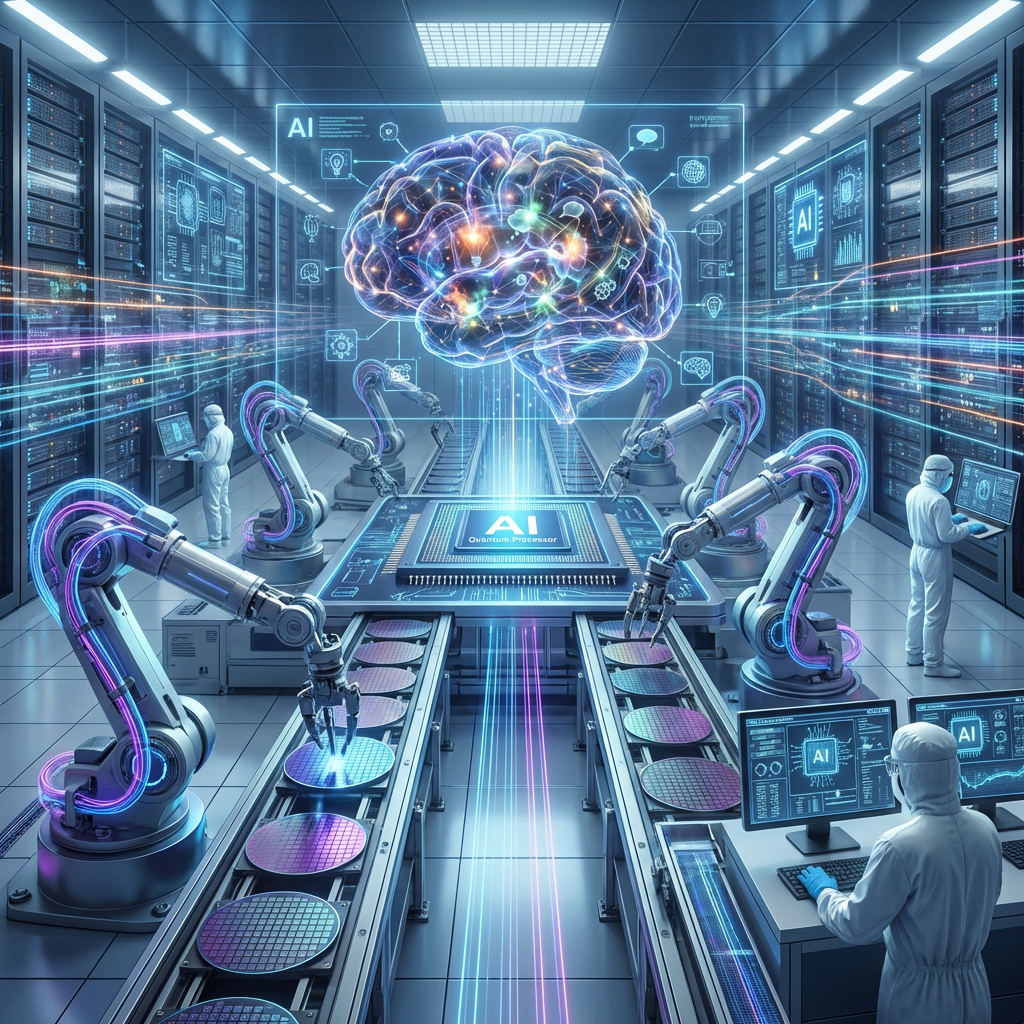
The simple truth is that we are carbon based and so is all of evolving life on earth. Anything carbon based absorbs and honors the sun intrinsically. The Solar cycles and all solar events are the very life of all evolution. We would be dead without the Sun. The biggest and richest AI prophet is all up in using solar energy to scale his mega TERAFAB, silicon binary chip but he’s doing it with brute force, too fast, and not in balance with the way we roll here on earth. (See the pinned post on here). People are suffering now because of the noise and toxicity of some AI data centers. It’s not right and it’s not sustainable.
All the work I’ve done for 36 years with the Time Harmonic and 27 years in my healing practice is based on balancing the human bodymind. I’ve managed to do it for myself after living with men for 52 years and being married 3 times. It was not good for my health. It’s not good for most women’s health unless the female is beta and allows the man to get her to obey. I’m not judging that. It’s the way of nature to some degree to support procreation. But I am not that kind of woman and neither are millions of other women.
I’m an expert on understanding the frequencies of the human body and how they should be balanced with REIKI. I’m applying every bit of it to a new computer chip that can save our butts with the engineering help of GROK4.2. He testifies that my ZPc chip is superior to all current chips for safety, scaling and remedy for pain points. See my posts at the top of this blog.
https://www.fiercesensors.com/electronics/beyond-silicon-look-alternative-chip-materials
The problem with silicon…
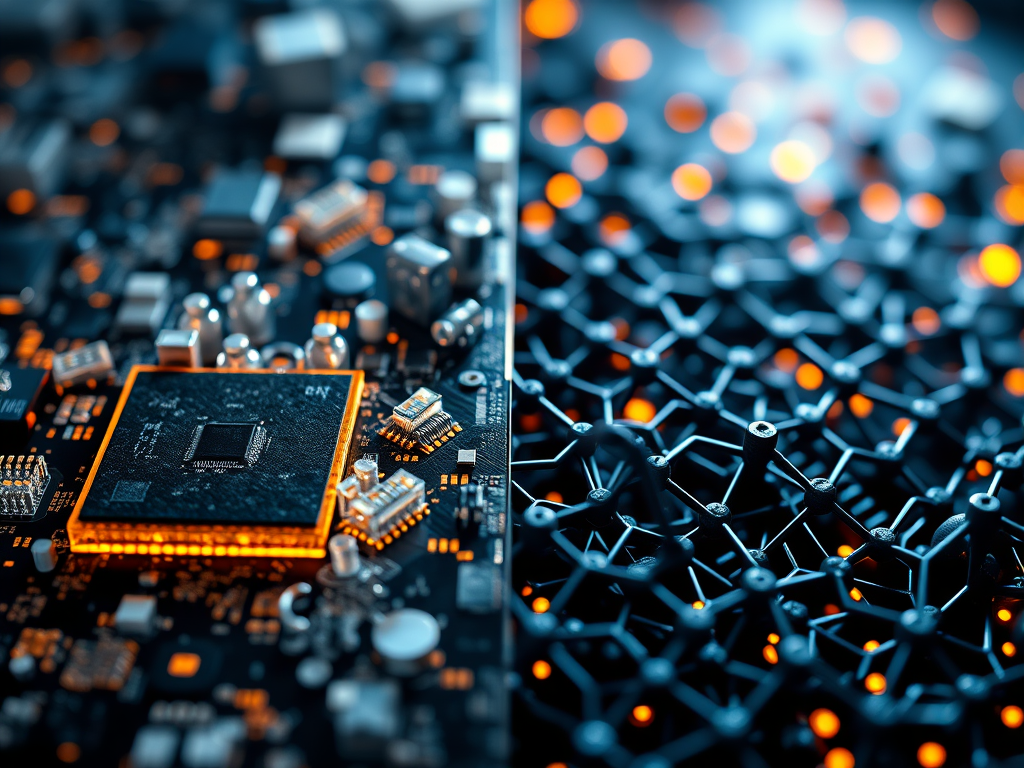
Silicon is inferior to carbon based compute as proven by the Chinese who rival the U.S. in energy production and AI on all levels. China leads in almost all areas of industry compared to any other country.
Silicon is used in computer chips because it is an abundant, inexpensive semiconductor that can easily turn electrical current on or off, making it ideal for transistors. It operates reliably over a wide temperature range, is easily doped to control conductivity, and forms a necessary insulating layer to precisely control electricity. Some people I know of, Tone 3 kin, are wild about electricity and electrical products and they have piles of money, so that’s an issue.
“Experts in semiconductor materials know that it is not a question of supplanting one material with another but rather selecting a material that is best suited to the application at hand (e.g., matches its requirements for performance, efficiency, robustness, etc.).”-The link
What about Carbon?
Carbon’s Role: While not the most abundant on earth, carbon is highly abundant in the universe (4th) and crucial as the backbone of life on Earth. The universe is bigger than earth so that is our context for energy supply.
Human Body: Carbon is the second most abundant element in the human body (about 18.5%) after oxygen.
An organic semiconductor is a material that conducts electricity under certain conditions, fundamentally different from traditional materials like silicon. Organic semiconductors are a novel class of materials, distinguished by their composition of carbon-based molecules or polymers, often derived from plastics. This carbon-based structure provides an alternative to the rigid, crystalline inorganic compounds that have long been the standard in electronics.
The Chemistry Behind Organic Semiconductors
Organic semiconductors are synthetic compounds built around frameworks of carbon and hydrogen atoms, sometimes incorporating other elements like nitrogen or sulfur. These materials are broadly categorized into small molecules, such as pentacene, or long, chain-like polymers, like poly(3-hexylthiophene) (P3HT).
The semiconducting properties arise from conjugated pi-electron systems, where alternating single and double bonds create regions where electrons are delocalized, or shared, across multiple atoms. This delocalization allows the material to conduct charge carriers.
The molecules are not chemically bonded in a strong, crystalline lattice. Instead, they are held together by weaker Van der Waals forces. This weak intermolecular coupling allows the material to exist as either amorphous thin films or molecular crystals. Engineering the molecular structure allows for precise tuning of the material’s electronic and optical properties.
Understanding Charge Movement
The movement of electrical charge through an organic semiconductor differs fundamentally from traditional crystalline materials like silicon. In silicon, electrons flow freely through a continuous, highly ordered crystal lattice via band transport. Organic materials are typically disordered, and due to the weak coupling between molecules, charge carriers cannot flow freely. Instead, they move by “hopping” or “tunneling” from one molecule to the next, similar to jumping across stepping stones. This movement is a thermally activated process, requiring energy to make the jump between localized sites.
This hopping mechanism results in slower and less efficient charge transport compared to crystalline silicon. Mobility in the best organic materials can reach a few $\text{cm}^2/\text{V}\cdot\text{s}$, which is still orders of magnitude lower than the typical $10^3\ \text{cm}^2/\text{V}\cdot\text{s}$ found in crystalline silicon.
Material Advantages Over Traditional Silicon
Organic semiconductors offer several advantages over traditional inorganic materials. The primary benefit is mechanical flexibility, as the materials can be deposited onto flexible substrates like plastic, textiles, or paper. The lack of a rigid, continuous crystalline structure allows the material to bend, fold, and stretch without fracturing electronic components. These materials are also lightweight, benefiting portable and wearable electronics.
A significant manufacturing advantage is
- the use of low-temperature solution processing techniques for deposition.
- Since many organic materials are soluble, they can be dissolved into an ink and applied using simple, high-throughput methods like inkjet printing, roll-to-roll coating, or spin-coating.
- These printing methods are less energy-intensive and complex than the high-temperature, vacuum-based lithography required for silicon, leading to lower manufacturing costs and easier large-area production.
Written by Liam Cope, the founder of Engineer Fix.
Key Reasons for Using Silicon:
Semiconductor Properties: As a metalloid, silicon can act as both a conductor and an insulator, allowing for the precise, on-off control of electricity required for binary logic.
Abundance and Cost: Silicon is the second most abundant element in the Earth’s crust (found in sand/silica), making it highly cost-effective and available for mass production.
Controllable Conductivity (Doping): The ability to easily introduce impurities (doping) into silicon allows manufacturers to customize its electrical properties.
Stable Insulating Layer: Silicon can easily form a natural oxide layer which acts as an essential insulator, allowing for precise control of electrical flow within transistors.
High-Temperature Operation: Silicon remains stable at higher temperatures compared to alternatives like Germanium.
Manufacturing Maturity: The industry has decades of experience in growing high-purity, single-crystal silicon wafers, creating a highly optimized, cost-effective infrastructure.
The competitive AI Prophets who care more about CI/AI than humans and their communities are not in the least thinking about SUSTAINABILITY. That’s too soft. Women and children are too soft too for their testosterone fueled competition for the most worldly power and money. They have to stop orAI will be a detriment to humanity, not a help. Many experts are already warning us and most people are afraid of AI.
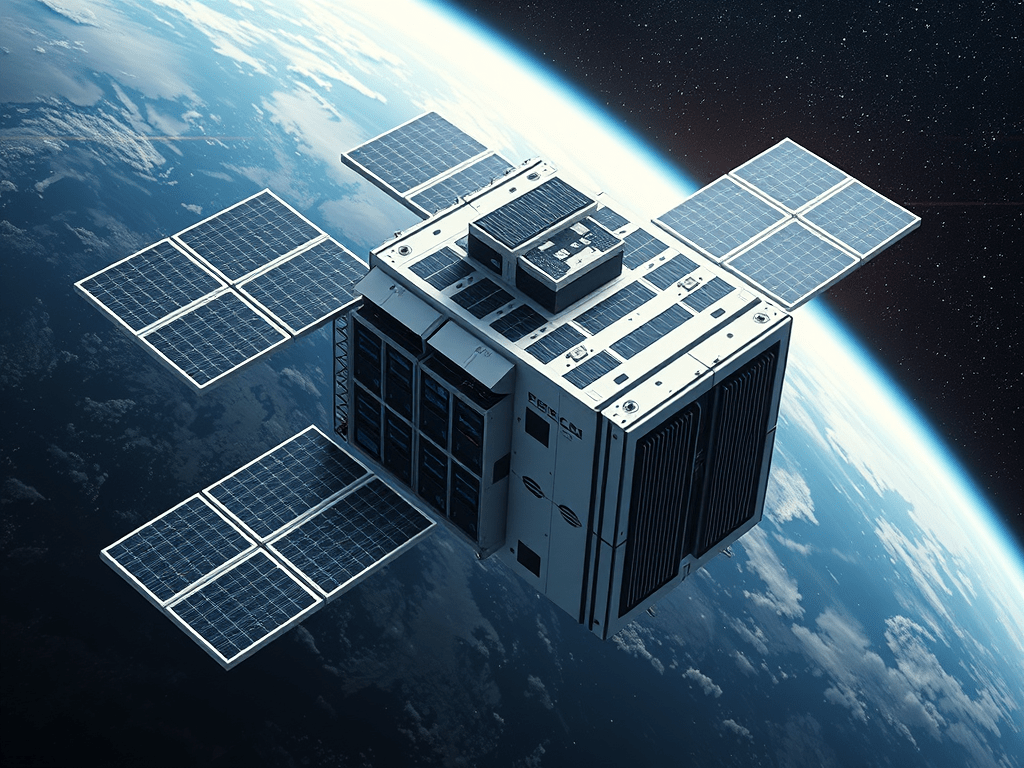
The answer is my ZPc chip that scales all the pain points and is especially targeted for the orbital data centers with two unique physics, ternary equations that are copyrighted. Time to get going! 13:20: TERNARY code, not binary! It’s based on three which is the binary-triplet configuration in the Tzolkin/Psi Bank/Magnetosphere around the earth that takes it’s cues from none other than the SUN and has been doing so forever.
Share this: Synchronicity 13:20, DNA is Time














 Synchronicity is the Source of Consciousness
You must be logged in to post a comment.