

I’m not suggesting we mimic them and neither is GROK. I’m showing you what they are doing.
Computer chips are typically manufactured in factories called fabrication plants or fabs. They are made from silicon, a common chemical element found in sand. Silicon is a semiconductor, which means its electrical conductivity falls somewhere between metals like copper and insulators like glass.
What is a Computer Chip? – AWS
Amazon Web Services (AWS)https://aws.amazon.com › … › Compute
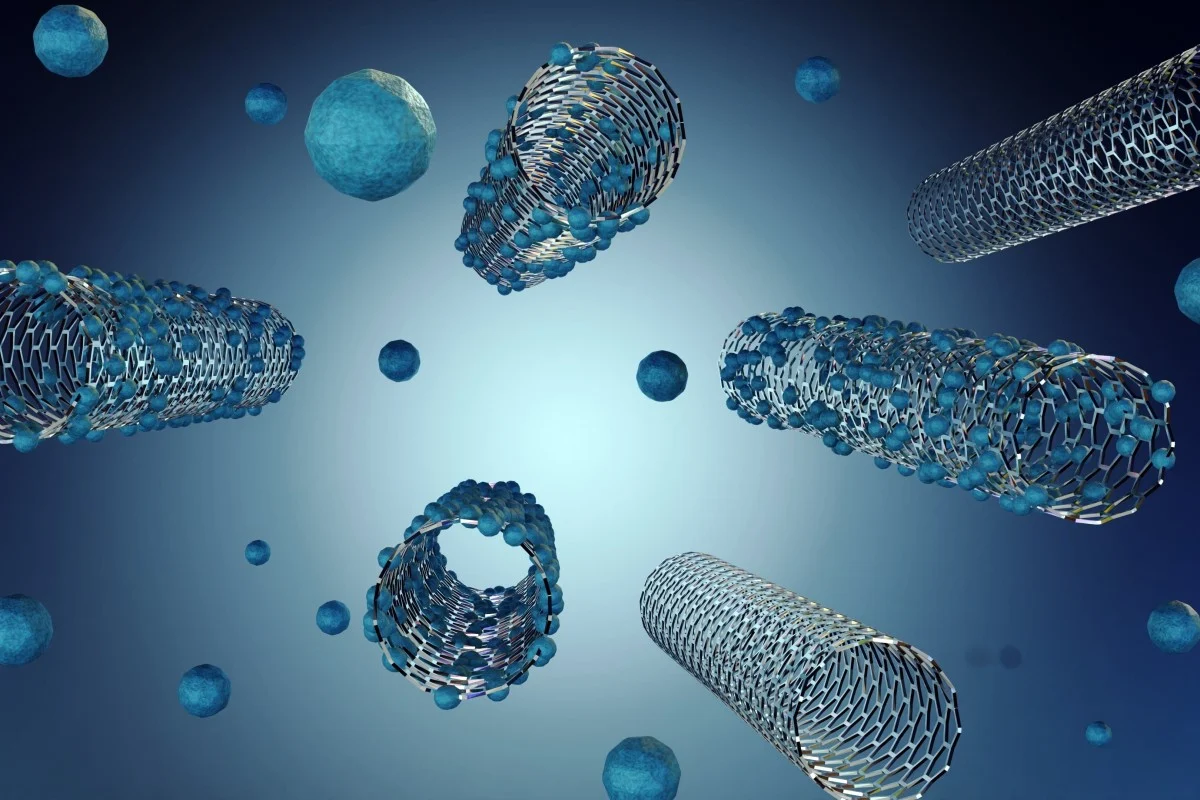
Chinese researchers have developed a chip that it could be a game-changer in modern computing
High-performance ternary logic circuits and neural networks based on carbon nanotube source-gating transistors
https://www.science.org/doi/10.1126/sciadv.adt1909
“I was wondering why some materials have a higher resistivity than others . So I took two elements randomly . I picked carbon and silicon . Carbon has lower resistivity than silicon and obviously less atomic radius . Carbon single bond with another atom of carbon is stronger than the single bond of a silicon atom with another silicon atom . So the bond length of the C-C bond is less than the bond length of Si-Si . Both Carbon and Silicon form a lattice . How is this possible? Why is Carbon a better conductor than Silicon . Does it have to do with any of the chemical properties I wrote down?
If you compare Diamond and Silicon, then the conductivity of both is poor. Both use all four bonds to connect to the next atoms. But if you consider Graphite, then its very well. The reason is the structure of the molecule. It has a big net of a system of aromatic benzene rings . Here only 3 bonds are used to connect to another C-atoms. The fourth electron is the sp2 orbitale can act to the others and transfer electrons, if a electrical field is used.”-An answer on the link above.
Does DNA have aromatic rings?
What are the aromatic bases in DNA?
Among the aromatic systems, of particular importance, at least from the point of view of biology and bioactive systems, are the basic constituents of DNA and RNA: adenine, cytosine, guanine, thymine, and uracil. (These are the nucleotides that govern the 4 kin per Harmonic in the Time Harmonic.)
On the Aromatic Character of the Heterocyclic Bases of DNA and RNA
ACS Publications – American Chemical Society https://pubs.acs.org › doi
 Synchronicity is the Source of Consciousness
You must be logged in to post a comment.