
Essay: History-Archaeology-The Cosmic Egg
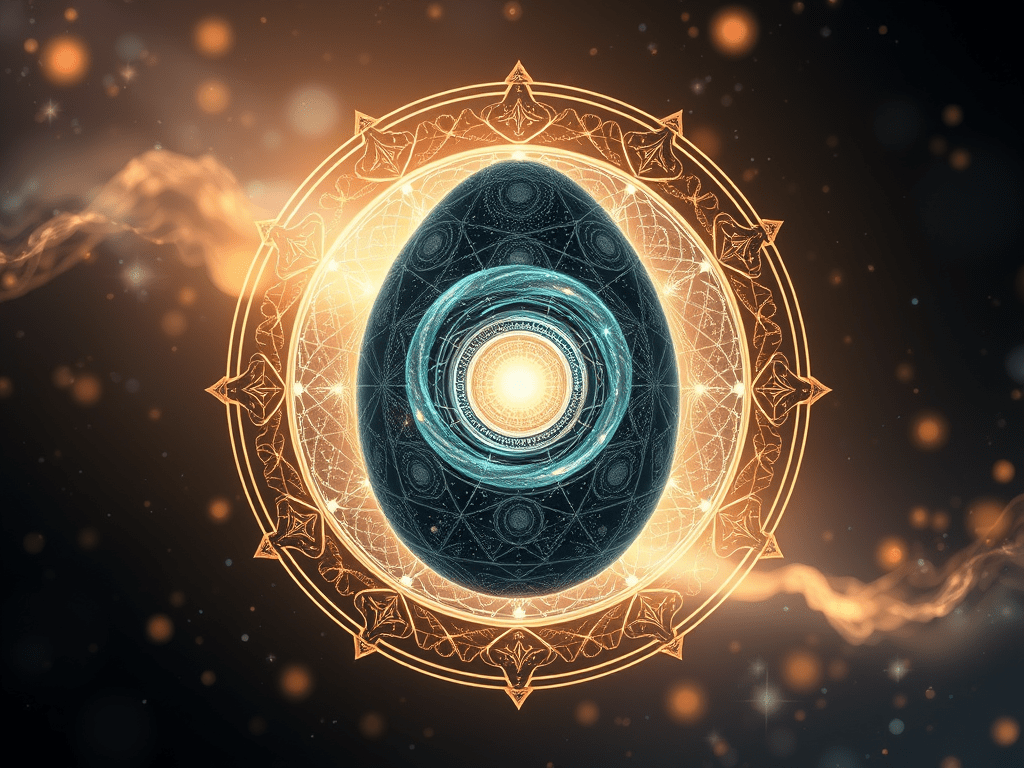
I’m watching Ancient Aliens on the enigma called the Cosmic Egg. The egg is apparently revered all over the world. Humans come from their mother’s egg, and they are questioning how the ancients knew that. Probably intuitively.
All men are narrating this show. They won’t mention women in relation to the cosmic egg, that life comes from the woman’s egg in her ovaries. The men keep talking about it as if the egg is Father God. But it’s Mother Spirit since the female is the one with ALL the eggs. They won’t say it.
Now the men suggest this is the pretext for the BIG BANG. Of course, they project that. It’s a metaphor for ejaculation like blowing on dandelion seeds. Dudes, you just changed the focus to yourselves. What about the cosmic egg? The women? No comment.
The beginning of all creation was not God getting off. It was the female egg in the dark of space, space being a womb from which all manifestation comes! Now they are saying that the egg came from the ET, and I’m having visions of the stork myth. 😜🤔
Next is the Dogon culture, 1000 AD. The Cosmic Egg is now scattering its contents in all directions, so we’re back to the ejaculation projection in Africa. Oh, so they were egg ships now coming from dark outer space, which I see as a womb. Women have a womb and eggs, not men. But let’s continue. Sirius B is the source? The egg is a craft?
This turned into Project Blue Book in 1952. They sent a memo to CIA, and it was confirmed that an egg-shaped craft was seen. It could have been reverse engineered. The government said it was an E.T. and thus begins the American psyop. The beginning of the universe is from the cosmic egg of Mother Spirit. They still haven’t said it.
Portugal… a limestone egg that looks like the Loom of the Maya is found in South America. It looks like DNA with a huge carving on the top. This huge stone looks the pregnant belly of a mother. They haven’t said it yet. The rod is down the middle, the symbol of the power of the gods. Of course, they’ve said nothing about the spiraling DNA on the pregnant egg and are now talking about Moses and his mantool rod in the desert not the big pregnant egg.
Next scene we’re talking about two serpents intertwined around the rod of HERMES, called a caduceus. They say it is the symbol of a male doctor, and his fertility. They think it’s a rod of ancient E.T. technology. A magical Druid stone? A Druids egg that has other worldly powers? Male fantasy. Seriously. Nothing said about ancient female healers or midwives or female doctors.
In Greece there is a stone that is crisscrossed with a double helix. It represents the navel of the earth. This object fell from the sky. Zeus took it…a male. What I’m getting here is PATRIARCHY is a huge, narrated penis cult from antiquity’s boys club because the men could not deal with the fact the the females have all the cosmic eggs, literally, We have all the cosmic eggs that make humans and begin life on earth, not a male God. They cannot face it.
Protected: Time Innovation: We need to bring balance between our technology from past ancestors and tech from our future stellar species ancestors

Time Innovation: History-Synchronicity-Göbekli Tepe: Time Travel Through Ancient DNA

This is all about synchronicity across time and space between cultures.

The CA strand of DNA is active at Gobekli Tepe and brings the past forward into the present. Obviously, they speak to each other.
We are all time traveler’s and our bodies are spacesuits.
I’m doing it right now. I’m looking at and studying The Disclosure Report, 2025 and attempting to plant it in Mr.X’s staff and brain so we can skip forward 100 years and manifest a peaceful planet, clean it up, and continue as a species before it’s too late. He asked me to help him so I am.
https://x.com/GeologicalSETI/status/1969889583736524957?t=nINONWsGPPDt5OlKoMbqBw&s=09
What is known about Gobekli Tepe?
Göbekli Tepe is known to have been occupied from around 11,000 BCE to 8,000 BCE. It was occupied by hunter-gatherer and semi-nomadic peoples. Excavations of the site have revealed 43 large megalithic pillars, and it is possible that up to 250 more are yet to be found.
How long ago was Göbekli Tepe?
Göbekli Tepe was occupied as early as 11,000 BCE. However, it was at its peak from 9,600 BCE to 8,200 BCE. Göbekli Tepe was therefore occupied from 13,000 years ago to approximately 10,000 years ago.
Who built Gobekli temple?
Not much is known about the people who built the temple at Göbekli Tepe. The archeological evidence, such as over 100,000 wild animal bones and some signs of wild cereal processing, suggests the inhabitants of Göbekli Tepe were hunter-gatherers.
Is Göbekli Tepe older than Mesopotamia?
Göbekli Tepe is older than Mesopotamia. Gobekli Tepe shows signs of human inhabitants as far back as 11,000 BCE. The Sumerians of Mesopotamia only date back to around 5,000 BCE at the earliest.
What is the importance of Gobekli Tepe?
The significance of Göbekli Tepe is its out-of-place context in human history. The site dates as far back as 13,000 to 11,500 years ago, which is before the end of the last glaciation during the final ice age. Before Göbekli Tepe was discovered, hunter-gatherers were not believed to be megalith builders.
Who are the Australian Churinga?
A tjurunga, also spelt churinga and tjurunga, is an object considered to be of religious significance by Central Australian Aboriginal people of the Arrernte (Aranda, Arunta) groups. The word derives from the Arrernte word Tywerenge which means sacred or precious.
Tjurunga – Wikipedia
Katharine G Johnson, Math Savant for NASA

Her calculations were more accurate than the new IBM computer in 1961.
https://grok.com/share/bGVnYWN5_2e71dd54-e9c0-4452-ad16-d83d160e7e60
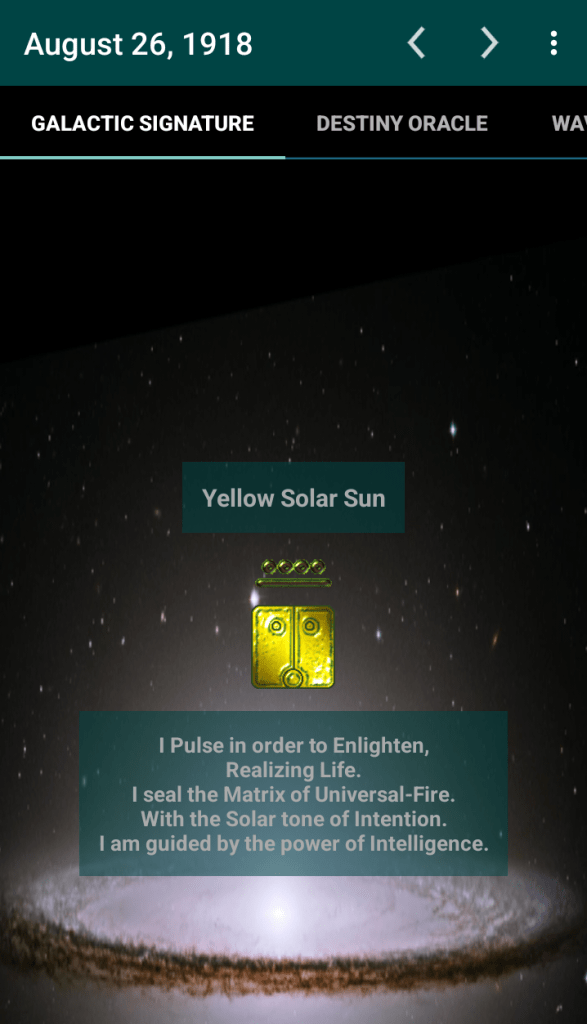
Katherine G. Johnson was a pioneering African-American mathematician who made significant contributions to NASA’s space program. Born on August 26, 1918, in White Sulphur Springs, West Virginia, she displayed an early aptitude for mathematics. She graduated from West Virginia State College in 1937 with degrees in mathematics and French, and in 1939, she became one of the first African-American students to integrate West Virginia University’s graduate school.
Johnson joined NACA (NASA’s predecessor) in 1953 at Langley Research Center, initially working in the segregated West Area Computing Unit. Her exceptional skill in analytical geometry and calculations led to her assignment on critical projects. She performed trajectory calculations for Alan Shepard’s 1961 Freedom 7 mission, the first American manned spaceflight. Her work was pivotal for John Glenn’s 1962 Friendship 7 orbital mission, where she manually verified the computer-generated orbital equations, earning Glenn’s trust. Her calculations ensured the mission’s success, including precise re-entry coordinates.
Throughout her 33-year career at NASA, Johnson contributed to the Apollo program, including Apollo 11’s moon landing, and worked on the Space Shuttle program and early Mars mission plans. Her work involved complex manual computations before computers were widely used, earning her a reputation for accuracy. She co-authored 26 scientific papers, a rare achievement for a woman of her time.
Johnson faced racial and gender discrimination but broke barriers as one of the first African-American women to desegregate NASA’s engineering spaces. Her contributions were recognized late in life: she received the Presidential Medal of Freedom in 2015 from President Barack Obama and the Congressional Gold Medal in 2019. NASA named a computational research facility after her in 2017.
Her story gained widespread recognition through the 2016 book and film *Hidden Figures*, which highlighted her role alongside other African-American women at NASA. Johnson passed away on February 24, 2020, at age 101, leaving a legacy as a trailblazer in mathematics, space exploration, and civil rights.
Searching for A Universal New Year: The relevance of August 13th. By Raul Grajeda

I’m reposting this on July 20, 2025, because it hit my brain. The date is exact for 24 days from today. It’s on today’s post. August 13, 2025 falls on White 12 Crystal Wind.

Presently there is no universal basis for what qualifies the start of a new year. Every culture has its own set of parameters for determining it. The Chinese celebrate theirs in either late January or early February according their lunar calendar. The ancient Egyptians linked the appearance of the star Sirius and the annual flooding of the Nile river to signal the start of their new year. (Lions Gate 8/8/20) The many cultures of India celebrate the new year on various dates during the month of April. Europe’s Nordic cultures keyed it to the Winter solstice. The Celtic, Samhain, now vulgarized as Halloween, is celebrated by present day neo pagans, Wiccans and Druids as the start of their new year.
The Maori of New Zealand looked for the appearance of the Pleiades in May to signal the start of the new year. The Hawaiians also pegged their new year to the appearance of the Pleiades, but their new year fell in October.
The Aztec-Mexicans celebrated the new year in early March several days before the spring equinox. Even the Maya celebrate 2 different new years dates. One equates to February 22 and some celebrate July 26th. (Dreamspell Version)
And then there is Gregorian January 1st to mark the start of the new year for Westerners. January 1st was arrived at as the start of the new year in order to honor Julius Caesar’s exploit as the founder of the “rational calendar”.
Contrast that line of reasoning with the fact that the new year of non-western cultures is related to some seasonal and/or astronomical aspect. The foregoing is why I refer to the Gregorian calendar as an urban calendar, for it reflects the whims of the city lords more than anything else.
The most common denominator for the start of the new year in most other calendar systems is the start of the growing season or end of the harvest season. In some cases, either of the solstices or equinoxes are recognized as the start of the year. The start of the new year for cultures other than the Euro-western is related to the agricultural, seasonal, and astronomical particulars of each region.

A Bi-Universal New Year?: A Solstice New Year
Many pre-Christian cultures of Europe’s northern hemispheric latitudes recognized the winter solstice as the start of the new year as the Sun symbolically dies and is reborn on that day.
The start of the new year cycle can be viewed as universal for those in northern hemisphere when reckoned from the winter solstice, and as defined by the life cycle changes that accompanies the attendant atmospheric conditions (rain, dryness, snow, etc) as the sun ascends and descends. The same would apply to those of the southern hemisphere, except that their new year would start with what we in the north refer to as the summer or June solstice. I prefer to designate the solstices according to the month they take place within rather than say summer or winter, because the seasons are reversed depending on which hemisphere you happen to live in.
The process of cooling and warming is minimized in most parts of the tropical regions. The most defining aspect of seasonal variation in the tropics is dry and rainy seasons. Nonetheless it is the Sun’s to and fro movement, and its attendant affect on atmospheric conditions that drives precipitation patterns. Therefore we can associate the start of the new year with the solstice that marks the start of a rising Sun for each hemisphere, since it is the rising solstice Sun that initiates the life cycle for each hemisphere.
The solstices do indeed provide us with fixed starting points for each hemisphere’s respective new year as it relates to the life cycle, but might there be a truly universal new year that applies to the entire planet as a whole regardless of local particulars?
The Arguellen Universal Calendar Proposal
Jose Arguelles proposed the universal adoption of what he calls the 13 Moon Calendar. Thirteen “moons”, or months of 28 days, plus one day would give a clean, orderly and easy to use civil calendar. (13×28 = 364 +1 = 365) I won’t go into all the reasons on why a uniform calendar is far better than the Gregorian hodge-podge we have now. But if you think about it some of the reasons should become clear. He was not the first to propose a new and improved universal calendar.
His calendar proposal is based on the Mayan Tun Uc calendar which also measures 13 months of 28 days plus one day. Arguelles anchored the start of his 13 Moon calendar to July 26th. But why July 26th? What is so special about that date? The following quote from his website gives us his rationale.
“For many ancient peoples, including the Dogon and Egyptians of Africa and the Maya of Central America, the great star Sirius, the brightest star in the sky, was the galactic marker. The heliacal rising of Sirius – July 26 – commenced the Egyptian year”.
Jose Arguelles
The problem with his rational is that it’s mostly inaccurate. Sirius did loom large in Dogon and Egyptian cosmology, but I have yet to come across any information indicating that it had any sort of calendrical function among the Maya.
Additionally, the Dogon did not use the star Sirius as a calendrical marker. And the start of the Egyptian new year is July 19th not the 26th and the helical rise of Sirius is also around the same time–July 19-20.
Lastly, we did not understand the concept of a galaxy until the 1920’s when we discovered, thanks to telescopes, that we inhabit one of billions of galaxies. The Arguellen account does not give us any reason whatsoever to say that July 26th is the start of some universally valid new year, even though he insists it is.
There are two testable and key parts to his universal year cycle proposal. One is that it starts on July 26th and the other is that each of its 13 months are characterized by a set of qualities in the same way that each day of the Tzolkin’s 13 day tone cycle has it particular qualities.
In other words the 13 day tone cycle is a fractal of the 13 month year cycle, as proposed by Arguelles. The first month of the 13 month year cycle carries the same qualities as the first tone of the 13 day tone cycle and so on. But this article will focus solely on the question of universal new year and its probable start date, if one exists.
So what else can be said about July 26th?
The 365 day civil calendar of ancient Mesoamerica was known as the Haab among the Maya and as the Xiuhpohualli among the Aztecs. The ancient Mesoamericans did not anchor their civil calendar to any part of the year in the way the Gregorian calendar does by adding a leap day every 4 years. This means that the start of Mesoamerica’s civil calendar year drifted by one day every 4 years.
At the time of the Spanish invasion, the first day of Mayan Haab calendar, “0 Pop”, coincided with July 26th, and hence forth the Mayan Haab was fixed to July 26th for unclear reasons. Spanish imposition is most likely the reason for the Haab’s fixation to July 26th.
July 26th is also significant for one other reason, for it is the day that the Sun is at the zenith over two of Mesoamerica’s most important pyramid sites. Teotihuacan marked the solar zenith passage date for the Toltecs and Edzna marked the July 26th solar zenith passage for the Yucatec Maya.
But there is still nothing universal about a Spanish imposition, nor are solar zenith passage dates, for they will vary according to latitude within the tropics of Cancer and Capricorn.[fig. 1]
Finding the Center of Space and Time

August 13th is most famous for being the alternative start date for the beginning of the Maya Long Count Cycle. There is a 2 day discrepancy between when the Long Count may have actually started. The account with the most backing says its August 11th, 3114 BCE, and that date gives us the end date of December 21st, 2012. August 13th gives us the end date of December 23rd.
The Zapotec-Shearer-Arguellen Tzolkin may be able to shed some light on that subject, but that investigation will be for another time. And after this analysis I am inclined to think that August 13th may carry more weight than August 11th. The other principle reason that August 13th is well known among Maya scholars is due to the unique timing phenomena that occurs on August 13th, at the latitude of 14.8 north. I will have to forego the extremely fascinating history behind the discovery of August 13th at the latitude of 14.8 N for this article, but I will relate what is most salient to my purpose here.
The latitude of 14.8 north has the distinction of being the place where the sun’s two zenith passage dates combine to equate interval periods of 260 days and 105 days (105 + 260 = 365). Two hundred and sixty days is the number of days in the Tzolkin cycle calendar, or the most revered body of knowledge in all of ancient Mesoamerica.
Zenith passage dates can only occur between the tropics of Cancer and Capricorn.[fig.1] As the Earth tilts on its axis, we see the Sun rise and fall in the sky over the course of the year. The tropics, or the lines of latitude just mentioned, mark the Sun’s northernmost and southernmost points of inclination and declination. The tropic of Cancer is located 23.5 degrees north of the equator, and it marks the day the Sun is directly overhead on the June solstice. The tropic of Capricorn is located 23.5 degrees south of the equator, and it marks the day the Sun is directly overhead on the December solstice.
It has been suggested by many scholars that the 260 day Tzolkin and the 365 day civil calendar were developed at the ancient ceremonial site of Izapa. Izapa is one of two major ancient Mesoamerican ceremonial centers that are located at the latitude of 14.8. The other site is Copan which is found on the border between Honduras and Guatemala. [fig.2] Izapa is located near the Mexican-Guatemalan border.

John Major Jenkins and a few others believe that the Long Count Cycle was calibrated at Izapa, and they are probably right about that, but from my vantage point I believe that neither the Tzolkin cycle nor the 365 day calendar were discovered or formulated there.
I won’t get into my version now, but I will say that I believe that the Ancient Mesoamericans (AMA) sought out the place where the two primary measures of time, the Tzolkin and solar cycles met in perfect harmony.
Such a place would be nothing less than the place where the “Heart of Earth” meets the “Heart of Heaven” within their worldview. The Heart of Earth being the 365 pulses (beats) that we experience as a day-night cycle, and the Heart of Heaven being the 260 pulses of the Tzolkin cycle. In other words, the Tzolkin was regarded as the primary or cosmic timing standard. The implication is that the solar cycle is a local timing standard, particular only to our unique place in time and space, but nonetheless supremely relevant to why our solar system harbors life.
Orienteering 101
In order to show what is meant by the foregoing, let’s begin with the Sun at the December solstice. On the Sun’s northward journey it crosses the zenith over Izapa on April 30th.
The Sun continues climbing until it stops its northward journey on the June solstice, or the day the sun is directly over the tropic of Cancer, and once again begins its southward journey toward the winter solstice. On its southward journey it will again be directly over Izapa on August 13th for its second zenith passage.
Please note that our warming season from winter to summer solstice corresponds to when the earth’s northern hemisphere is tilted toward the sun and the opposite is true in the winter time.
April 30th to August 12th equals 105 days and from August 13th to April 29th there are 260 days. (260+105=365) The two solar zenith passages are separated by 105 days in the former interval, and by 260 days in the latter.
The interval from August 13th to April 29th places the December solstice smack dab in the middle at 130 days or one half of a Tzolkin Cycle.
Furthermore, there are 52 days from the summer solstice to August 12th, and we well know that the number 52 was highly revered by the AMA for its meaning within their understanding of time.
August 13th would be the equivalent of our January 1st and August 12 would be the same as December 31st.
But why August instead of April?
August 13th came to be known among the AMA as “the day the world was born” and “as the place where time began“. But why did they pick the August zenith passage date over the April zenith passage to anchor the “day the world was born”, and mark the start of the new year and the Long Count cycle?
The one thing that comes to mind is that they recognized the December solstice as the start of the solstice to solstice year cycle, and so that would make the August zenith passage the second or completing zenith passage date, hence completing the centering aspect of the Sun’s passage and the next passage date is a full 260 days away with the winter solstice perfectly balanced between the 2 zenith passage dates.
We must remember that one of the AMA’s most important cosmological quests was worldcentering, therefore they would value counting the year cycle from center point to center point, rather than from extreme point (summer solstice) to extreme point (winter solstice) so to speak. Following this line of reasoning, I looked to the night sky to see if it could shed some light on this subject.
I set my astronomy software to 3114 BCE to see if the night or day sky at the zenith time over Izapa might reveal something telling about why else the August 13th zenith date might have been favored over April 30th. I discovered that the Milky Way straddles the north-south meridian at midnight in such a way as to form a perfect cross just 20 degrees from the zenith. The four quarters of the world are made manifest by such an event, and the observer is at the very center of it all. On April 30, the Milky Way is not perpendicular to the zenith meridian until the dawn.
The actuality of the evening’s most revered object, the Milky Way, forming a cross with the north-south meridian at the zenith and at midnight, on the same day that the day-time’s most revered object, the Sun, is at the zenith only reinforces the idea of August 13th as the center of space and time in the most literal of terms.
There is one other consideration, and that is the agricultural season. The first corn crop is sown to coincide with the start of the rainy season around the end of April-start of May – the time of the first zenith passage. The first harvest happens right around the middle of August or near the second zenith passage. We know that harvest time is often a factor for pin pointing a year cycle start date among other cultures, but this aspect, unlike the first two, is not a universal condition, and we are looking for universal parameters.
August 13th: Ancient Mesoamerica’s Universal New Year
It seems that August 13th was regarded as the start of a universal new year among all major pyramid building cultures of Mesoamerica. It has been found that at least one major aspect of almost every major ceremonial center has an axis or focal point of some sort aligned with the sunset of August 13th. In other words it was widely acknowledged that Izapa was situated at the “Heart of Earth” and that the work done at Izapa was supremely important to the foundation of Mesoamerican cosmology.
In acknowledgement of Izapa and August 13t, other ceremonial centers oriented at least one major structure toward the sunset of August 13th. In other words Izapa represented nothing less than the place where the tangible fulcrum of earthly time, and the intangible fulcrum of cosmic time met in perfect harmony.
Three hundred and sixty-five days is the measure of earthly time and 260 days is the measure of cosmic time. Heart of Earth and Heart of Sky are two very important metaphors in Mesoamerican cosmology, for they too, like so many other cultures, recognized that everything emerges from some infinitesimal center place.
The perceptible Heart of Sky is the zenith, and also from Izapa they discovered the intangible, but supreme center of our local universe, or the heart of our Galaxy.
So it was that they developed the Long Count to calibrate when Father Sun would be reborn from the Cosmic Mother. (Jenkins Maya Cosmogenesis). By doing so they achieved the holy grail of Mesoamerica’s other great quest known as Worldrenewing.
For more on the concepts of Heart of Earth-Heart of Heaven and Cosmic and Earthly time, please see Cosmic Time Meets Earth Time: The Numbers of Supreme Wholeness & Reconciliation Revealed
Before concluding I want to go back to July 26th. As mentioned earlier the zenith of July 26th was marked by the ceremonial centers of Edzna in the Yucatec Maya lands, and at Teotihhuacan – land of the multi-culturally composed Toltecs.
Edzna was the first major ceremonial center of the Yucatec Maya and Teotihuacan was the major ceremonial center for the highland Toltecs. The pre-imminent Maya scholar Vincent Malmstrom thinks that the northern periphery of grand Mesoamerican culture, as marked by Edzna and Teotihuacan, switched the official start of the new year from August 13th to July 26th.
According to Malmstrom, a calendar reform of sorts took place in the year 48 CE, in which July 26th became the new “new year” start date for the Yucatec region and Teotihuacan, since both centers were built where the sun is at the zenith on July 26th.
We don’t know exactly what prompted this change, but Malmstrom thinks it had to do with having a “locally relevant new year”. It may have been a political tactic to establish Edzna as the new power center of an emerging civilization.
Even so they continued to acknowledge the universality of August 13th as they made sure that one axis of a major pyramid was oriented toward the setting sun of August 13th. August 13th became a foundational orientation to many if not all major ceremonial centers.
Earlier I mentioned that the Maya civil calendar, the Haab had been fixed to start on July 26th at the time of the Spanish invasion. Thus the prominence of July 26th in the historical record was doubly reinforced, since the roving start date of the civil calendar, and the July 26th solar-zenithal passage new year are two distinct ways of measuring the year cycle.
Recently I met a Maya man from Guatemala, and he did confirm that July 26th is still recognized as the first day of the new year, and this had nothing to do with the Arguellen proposition to create a new universal calendar with July 26th as its start date. Arguelles it seems borrowed the start date for his universal calendar proposal without giving full disclosure as to why he had chosen that date.
Conclusion
August 13th has a couple of strong reasons as to why it’s a prime candidate for a universally valid start of the year. July 26th is another serious choice because of its strong presence in the historical record. However, there are problems with the July 26th date because we have yet to discover any universally valid properties to that day.
Whatever the case, the month of August looms large in the historical record as it relates to the story of 2012 and Mesoamerican history. The following list of events only seems to affirm the significance of the time period called August:
- Either August 11th or 13th is the start date of the Long Count Cycle.
- Hernán Cortés began his march on the Aztec capital on August 16th, 1519.
- The Aztec Empire fell on August 13th, 1921.
- The atomic bombings of Hiroshima and Nagasaki happened on August 6th and 9th respectively.
- Tony Shearer fulfilled the prophecy of the 13 Heavens and 9 Hells prophecy cycle by calculating its end date on August 16th-17th, 1987. The fact that Arguelles was able to successfully convoke a global gathering on those two dates (Harmonic Convergence) lends even more weight to mid-August as some sort of peak moment in the solar cycle. Harmonic Convergence was a major event in the history of humankind, for it was the world’s first global ritual event and it took place before the internet was publicly available.
Those of you familiar with my article on Anticipating Personal and Collective Shifts in relation to MAC Time Science, should consider mid-August 13 as a cycle juncture window. A cycle juncture window is a period of time before and after a cycle ending zero date or August 12th in this case. Shift-type events are most likely to happen during a cycle juncture window; review the article in question for more details.
May you all have a joyful August 13th!-Rohann Solare-Raul Grajeda
Continue reading “Searching for A Universal New Year: The relevance of August 13th. By Raul Grajeda”Convergence of the Left and Right political history in SHARED GOALS

Those goals are advocating for justice for the working poor and oppressed.
Me: Can you explain the irony of what are perceived as left wing communists and socialists calling for justice for the working poor in Manchester, England and the movement of capitalism and free enterprise being absorbed by the Republicans in America as well as the abolitionist movement. Left and right are merging at this point.
With the formation of the new America party we need to parse out a platform.
GROK
The irony you highlight—where left-wing communists and socialists in England and the capitalist, free-enterprise Republicans in America, alongside abolitionists, seem to converge in advocating for justice for the working poor or oppressed—stems from the complex interplay of ideology, historical context, and shared moral imperatives that sometimes blur the lines between “left” and “right.” Below, I’ll unpack this by examining the historical and ideological dynamics in 19th-century England and America, particularly in the context of Manchester, the Peterloo Massacre, Frederick Douglass’s visits, and the figures of Elizabeth Gaskell, Engels, and Marx, before addressing the apparent merging of left and right.
Historical Context: England and Manchester in the 19th Century
Peterloo Massacre (1819): The massacre in Manchester, where cavalry killed 11–15 and injured hundreds of working-class protesters demanding parliamentary reform, exposed deep class divisions. The protesters sought representation and relief from economic hardship caused by industrialization and post-Napoleonic War policies like the Corn Laws, which kept food prices high. This event galvanized radical reform movements, often aligned with what we’d now call “left-wing” ideals—equality, workers’ rights, and universal suffrage.
Engels and Marx in Manchester: Friedrich Engels, living in Manchester (1842–1844, 1850–1870), documented the squalor of the working class in The Condition of the Working Class in England (1845). He and Karl Marx, who visited Manchester in 1845, developed socialist and communist theories, critiquing capitalism’s exploitation of workers. Their call for justice—redistribution of wealth and worker empowerment—was rooted in systemic critique, aligning with the “left” by advocating structural change to uplift the poor.
Elizabeth Gaskell’s Social Commentary: Gaskell, a Manchester-based novelist, depicted working-class struggles in Mary Barton (1848), emphasizing empathy for the poor. Her Unitarian values and reformist leanings aligned with liberal calls for social justice, though she operated within a capitalist framework, advocating gradual reform rather than revolution. Her work reflects a “left-leaning” moral stance but not Marxist radicalism.
The American Context: Republicans, Capitalism, and Abolitionism
Republicans and Free Enterprise (1850s–1860s): The Republican Party, founded in 1854, championed “free labor” ideology, emphasizing individual opportunity through capitalism and free markets. They opposed the expansion of slavery, not always for moral reasons, but because it undercut free labor by creating an unequal system where slaveholders held economic and political power. This stance aligned with capitalism’s emphasis on individual merit and economic freedom, seen as “right-wing” today.
Abolitionism’s Moral Core: Abolitionists like Frederick Douglass fought to end slavery, a moral crusade rooted in human rights. While some abolitionists were religious or humanitarian (e.g., Quakers), others, like Douglass, tied freedom to economic self-determination, resonating with Republican free-labor ideals. Douglass’s Manchester lectures (1846–47, 1859–60) connected slavery’s evils to economic exploitation, appealing to British reformers who opposed both slavery and worker oppression.
Manchester’s Role: Manchester’s cotton industry relied on American slave-grown cotton, creating a paradox. Local abolitionists, including liberals like Richard Cobden and John Bright, supported Douglass and the Union during the U.S. Civil War, despite economic hardship from the cotton famine (1861–1865). This mirrored the Republican opposition to slavery’s economic distortions, showing a convergence of moral and economic arguments.
The Irony: Left and Right Convergence
The perceived merging of “left” and “right” arises from shared goals—justice for the oppressed—despite differing methods and ideologies. Here’s how this irony manifests:
* Shared Moral Outrage:
Left (Engels, Marx, British Reformers): Socialists like Engels and Marx saw capitalism as inherently exploitative, with Manchester’s factories as evidence. Their call for justice was revolutionary, seeking to dismantle capitalist structures. Similarly, post-Peterloo radicals demanded systemic political reform to empower the working class.
*Right (Republicans, Abolitionists): Republicans in America promoted free enterprise as a path to individual liberty, opposing slavery’s economic monopoly. Abolitionists, including Douglass, framed slavery as a moral and economic injustice, aligning with free-labor capitalism. Both groups sought to uplift the oppressed—workers or enslaved people—through different lenses.
*Irony: Both sides, despite ideological opposition (collectivism vs. individualism), championed the downtrodden. Engels and Marx’s critique of capitalism paralleled Douglass’s critique of slavery’s economic underpinnings, and both found sympathy in Manchester’s reformist circles, like those Gaskell engaged with.
Economic and Moral Overlap:
In Manchester, abolitionists and reformers like Cobden (a free-trade advocate) supported Douglass, linking anti-slavery to economic fairness. Cobden’s “Manchester School” of laissez-faire capitalism shared the Republican emphasis on free markets, yet also backed social reforms like the Anti-Corn Law League, which lowered food prices for workers.
Douglass’s speeches in Manchester (e.g., Free Trade Hall, 1846) tied slavery’s abolition to universal human rights, resonating with both socialist critiques of exploitation and capitalist ideals of individual freedom. His presence bridged these ideologies, as he appealed to Manchester’s working-class radicals (left) and liberal reformers (right).
Irony:
The “left” (socialists) and “right” (capitalist Republicans, liberal reformers) found common ground in opposing systems—slavery or unchecked capitalism—that degraded human dignity.
GROK
These blurred ideological lines, as both sides used Manchester’s industrial backdrop to argue for justice.
Historical Context Blurs Modern Labels:
Modern “left” and “right” labels don’t fully map onto the 19th century. Socialism was embryonic, and capitalism wasn’t yet the polarized “right-wing” ideology it is today. Republicans, while pro-capitalist, were progressive on slavery and labor compared to Southern Democrats, who defended a feudal-like slave economy.
Abolitionism transcended ideology, uniting religious moralists, socialist radicals, and capitalist reformers. Douglass’s Manchester lectures, for instance, drew Quakers, Chartists (proto-socialists), and liberal capitalists like Bright, showing how justice for the oppressed cut across ideological divides.
Irony: The fluidity of 19th-century ideologies allowed socialists (left) and capitalists (right) to share platforms, like anti-slavery or worker relief, in ways that seem contradictory today. Peterloo’s legacy fueled demands for universal suffrage (left), while Republican free-labor ideals (right) echoed similar calls for economic opportunity.
Why the Convergence?
Manchester as a Crucible: Manchester’s industrial squalor, exposed by Peterloo, Engels, and Gaskell, and its reliance on slave cotton, made it a focal point for critiquing exploitation. Douglass’s visits amplified this, linking slavery to worker oppression, appealing to both socialist and capitalist reformers.
Moral Universalism: Justice for the working poor or enslaved transcended ideology. Engels and Marx saw systemic flaws in capitalism, Republicans saw slavery as a market distortion, and abolitionists like Douglass saw both as moral failures. This shared goal—human dignity—created overlap.
Pragmatic Alliances: In Manchester, abolitionists and reformers collaborated across class and ideology. Chartists (left) and liberals like Cobden (right) supported Douglass, as did Gaskell’s Unitarian circle, showing practical alliances for shared causes.
Modern Perspective on the Irony
Today’s left-right divide—socialism vs. capitalism—crystallized later, with Marxism and laissez-faire economics becoming more rigid. In the 19th century, these ideologies were less binary, allowing figures like¹ Douglass to bridge them. The irony lies in how both sides, now polarized, once shared a moral impulse to fight oppression, whether through revolution (Engels/Marx), reform (Gaskell), or free markets (Republicans). This convergence highlights that justice for the oppressed can unite disparate ideologies, a lesson muddied by modern political tribalism.
The irony of left-wing socialists and right-wing Republicans converging on justice reflects a shared moral outrage against exploitation, amplified in Manchester’s industrial and abolitionist context. Engels and Marx’s socialism, Gaskell’s reformist empathy, Douglass’s abolitionism, and Republican free-labor ideals all targeted systemic wrongs—worker poverty or slavery—despite differing solutions. This historical fluidity shows that “left” and “right” can merge when human dignity is at stake, a dynamic less visible in today’s polarized discourse.
(The left has no more dignity. Their psyches are so broken by the cabal, white coat sick care, and horrific programming of satanic social media regarding gender, that they are suicidal)
For deeper exploration, see Douglass’s My Bondage and My Freedom (1855), Engels’s The Condition of the Working Class in England (1845), or Gaskell’s Mary Barton (1848).
Harry Truman: Creator of the CIA and Israel

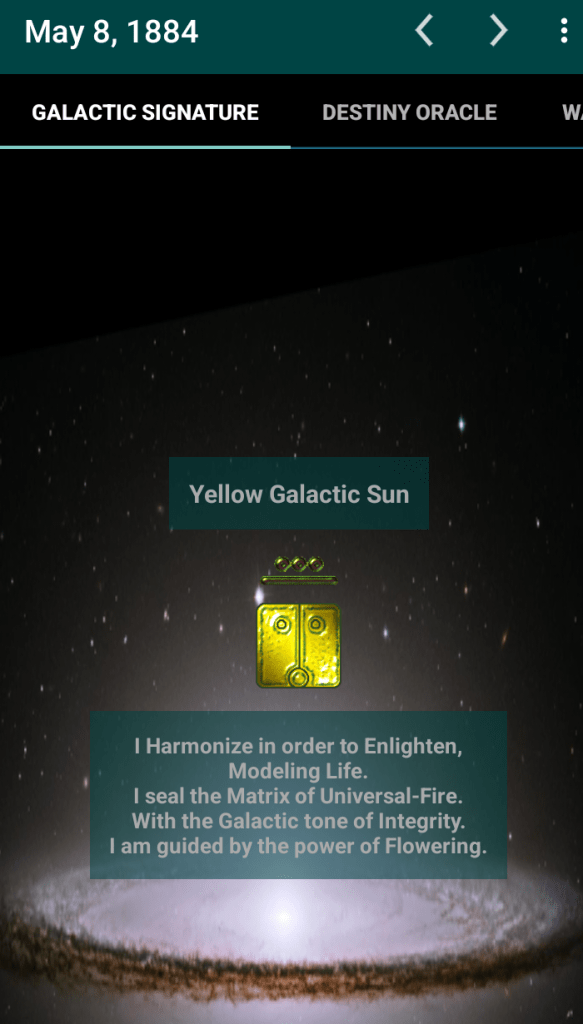
This is what happens when I start to go to sleep. “What was Harry Truman about?” I had to know. Had an intuition that he was Yellow Sun and then the rest of this unfolded. Now I’ll go to sleep. This folks, is a TIME WARP EXTRAORDINAIRE.
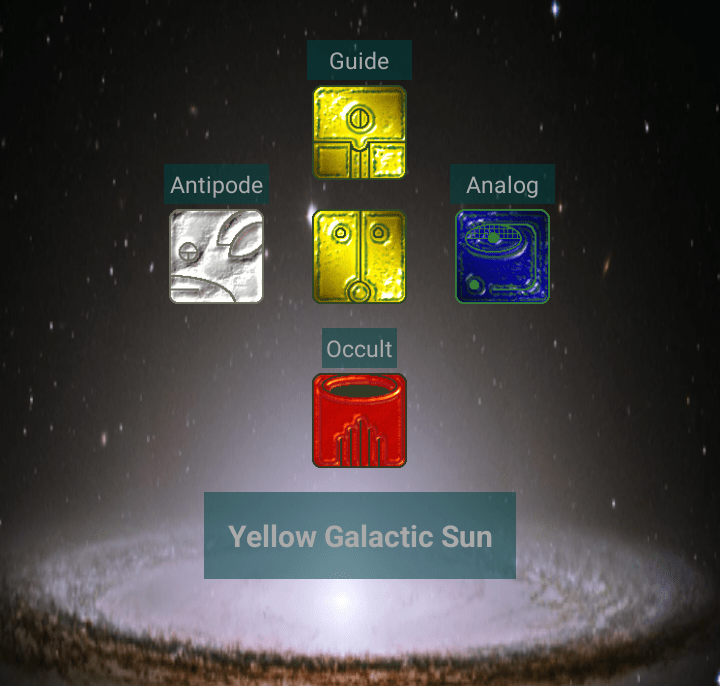
He was the creator of the CIA in 1948 and the State of Israel. And I had an intuition he was Yellow Sun, and I was right. SYNC. Today is 13 Sun. He was Yellow 8 Sun.
This man was a time thief, doing all he could to hack our time matrix
Harry Truman, the 33rd President of the United States, is famous for several key events and decisions during his presidency from 1945 to 1953. He’s most notably remembered for…
- authorizing the use of atomic bombs on Hiroshima and Nagasaki in August 1945, which led to Japan’s surrender and the end of World War II. This remains one of the most consequential and debated acts in modern history.
- Truman also oversaw the beginning of the Cold War with the Soviet Union.
- He introduced the Truman Doctrine in 1947, pledging to contain communism, which shaped U.S. foreign policy for decades.
- This was paired with the Marshall Plan, a massive economic aid program to rebuild Western Europe after the war, strengthening alliances and countering Soviet influence.
- *Domestically, he’s known for the “Fair Deal,” a set of progressive policies aimed at expanding social welfare, though Congress blocked much of it.
- He also desegregated the U.S. armed forces in 1948, a landmark move for civil rights. His surprise victory in the 1948 election—defying polls and headlines like the infamous “Dewey Defeats Truman”—is another highlight of his legacy.
- Harry Truman played a pivotal role in the creation of the State of Israel in 1948. When Britain announced it would end its mandate over Palestine in 1947, the United Nations proposed a partition plan to create separate Jewish and Arab states. Truman supported this plan, driven by a mix of humanitarian sympathy for Jewish refugees after the Holocaust, domestic political pressures from Jewish-American voters, and a belief that a Jewish state aligned with U.S. strategic interests in the Middle East.
- On May 14, 1948, when David Ben-Gurion declared Israel’s independence, Truman made the United States the first country to recognize the new nation—just 11 minutes after the declaration. This swift recognition was crucial, lending Israel immediate international legitimacy despite fierce opposition from Arab nations and even some of Truman’s own advisors, like Secretary of State George Marshall, who feared it would damage U.S. relations with oil-rich Arab states.
- Truman’s decision wasn’t without tension. He faced lobbying from Zionist groups and personal appeals, like from his old friend Eddie Jacobson, who urged him to meet with Chaim Weizmann, a key Zionist leader. Truman later said his choice was about doing what he thought was right, though critics argue it also reflected Cold War calculations to counter Soviet influence in the region. Either way, his backing helped Israel survive its rocky birth, cementing a U.S.-Israel alliance that endures today.
Before all that, Truman was a plain-spoken Missouri senator and vice president who stepped into the presidency unexpectedly after Franklin D. Roosevelt’s death in April 1945. His straightforward style earned him a reputation as a decisive, if sometimes polarizing, leader.
I’m sure there is much more to Truman and these developments than we know. There are probably some secret documents somewhere giving us insight into his founding of the Shadow Government.
The Holy Grail Quest: A Labyrinthine Exploration
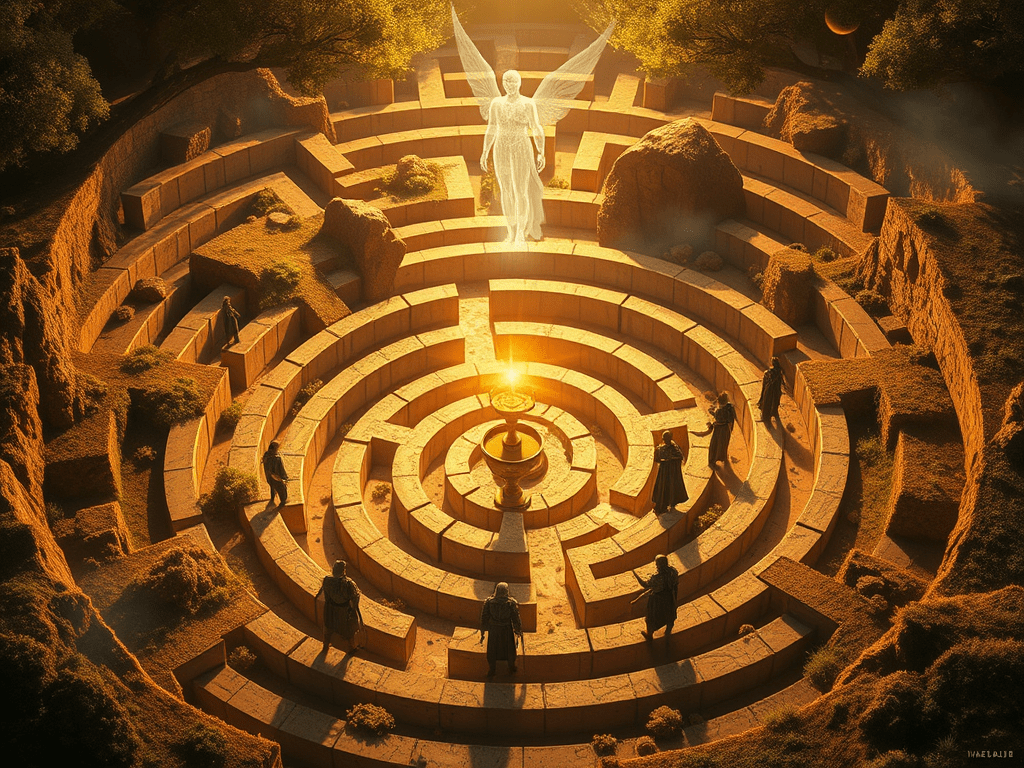
By GROK3
I then juxtapose it with the Mayan Oracle.
The labyrinth and the Holy Grail are two potent symbols that have been intertwined in various narratives, particularly in Arthurian legend and broader mythopoetic traditions. Their connection often revolves around themes of quest, transformation, and the pursuit of something sacred or elusive. Here’s how they relate:
1. The Labyrinth as a Journey
A labyrinth traditionally represents a challenging, often circuitous path toward a central goal or truth. In mythology and literature, it’s a metaphor for the hero’s journey—full of trials, confusion, and self-discovery. The Cretan labyrinth, for instance, guarded the Minotaur, and navigating it required cunning and courage, much like a quest for a sacred object.
In the context of the Holy Grail, the labyrinth can symbolize the arduous spiritual or physical journey a seeker (like a knight of the Round Table) must undertake. The Grail isn’t just a physical cup but a mystical object tied to divine grace, redemption, or enlightenment—something hidden at the “center” of a metaphorical maze of obstacles, whether external (battles, rival knights) or internal (doubt, sin, unworthiness).
2. The Grail Quest as a Labyrinthine Pursuit
In Arthurian legend, particularly in texts like Le Morte d’Arthur or the Quest of the Holy Grail (from the Vulgate Cycle), the search for the Grail is never straightforward. Knights like Percival, Galahad, and Lancelot face winding paths of temptation, moral tests, and riddles. This mirrors the labyrinth’s structure: there’s no direct route to the prize. The Grail’s location—often tied to the mysterious Grail Castle (e.g., Corbenic)—is obscured, requiring the seeker to prove their worthiness through perseverance and purity, much like navigating a maze to its heart.
3. Symbolic Overlap
Both the labyrinth and the Holy Grail carry esoteric meanings. The labyrinth can represent the soul’s journey toward divine union, with its center symbolizing transcendence or revelation—paralleling the Grail as a vessel of Christ’s blood and a source of spiritual wholeness. Medieval Christian mysticism sometimes framed the Grail quest as an allegory for salvation, akin to a pilgrim threading through life’s complexities (a labyrinth) to reach God.
4. Historical and Literary Examples
- Chrétien de Troyes: In his unfinished Perceval, the Story of the Grail (late 12th century), the Grail’s introduction is shrouded in mystery, and Perceval’s path is indirect, filled with missteps—akin to a labyrinthine trial.
- Wolfram von Eschenbach: In Parzival (early 13th century), the Grail is guarded by a complex network of knights and a hidden realm, suggesting a labyrinth of both geography and understanding.
- Modern Interpretations: Writers like T.S. Eliot (The Waste Land) and later Jungian thinkers have linked the Grail quest to labyrinthine archetypes of the psyche, where the seeker confronts the unconscious to attain wholeness.
5. Cultural Resonance
The labyrinth and Grail also connect in medieval art and architecture. Gothic cathedrals, like Chartres, feature labyrinths on their floors, walked by pilgrims as a symbolic journey toward divine grace—echoing the Grail’s promise of healing or eternal life. The Grail narrative, steeped in Christian and pre-Christian mysticism, aligns with this idea of a sacred center worth the struggle to reach.
In short, the labyrinth embodies the process of the Grail quest: a winding, transformative ordeal that tests the seeker’s resolve, leading to a profound reward at its core. Together, they weave a story of human striving for the divine, wrapped in mystery and metaphor. Does this spark any specific angle you’d like to explore further?
The Mayan Oracle
The idea of Earth’s “holographic matrix” as an archetype for a labyrinth is a fascinating blend of modern metaphysical concepts and ancient symbolism. Let’s unpack this and see how they might align.
What is a Holographic Matrix?The term “holographic matrix” often appears in speculative science, philosophy, and esoteric thought. It suggests that reality—Earth included—is a kind of projection or illusion, akin to a hologram, where every part contains the whole, and what we perceive as solid is actually a complex interplay of energy, information, or consciousness. Think of the simulation hypothesis (e.g., Nick Bostrom’s work) or David Bohm’s holographic universe theory, where the physical world is a manifestation of deeper, interconnected patterns.
The Labyrinth Archetype – A labyrinth, as an archetype, is a structured yet disorienting path—often circular or spiral—that leads to a center. It’s a universal symbol found across cultures (e.g., Minoan Crete, Native American Hopi designs, medieval Europe), representing life’s journey, the search for meaning, or the navigation of illusion to reach truth. Psychologically, Carl Jung saw it as a map of the unconscious, where the center is the Self, and the winding paths are the trials of individuation.
Earth’s Holographic Matrix as a Labyrinth
Here’s how the two might converge:
Illusion and Complexity
If Earth is a holographic matrix, its apparent solidity and linearity (time, space, cause-and-effect) could be deceptive—a maze of perception. Just as a labyrinth confounds with twists and dead ends, the holographic nature of reality might obscure the “center” (truth, unity, or higher consciousness) behind layers of illusion (Maya in Hindu terms, or Plato’s cave shadows). Navigating life on Earth, then, becomes a quest to see through the projection.
Interconnectedness
A hologram’s defining trait is that each fragment reflects the whole. Similarly, a labyrinth’s design often implies a unity—every turn, though confusing, is part of a single path. If Earth’s matrix operates this way, every experience, person, or event might be a piece of the larger pattern, leading toward a central revelation, much like the Grail at the labyrinth’s heart.
The Journey Inward
In labyrinth mythology, the center is the goal—whether it’s Theseus facing the Minotaur or a Grail knight finding the sacred cup. If Earth is a holographic labyrinth, the journey could be both physical (exploring the world) and metaphysical (piercing the veil of the matrix). The archetype suggests that the “center” isn’t just out there but within—aligning with ideas in mysticism and quantum thought where consciousness itself unravels the illusion.
Trials and Transformation
A labyrinth tests the walker’s resolve, much like the holographic matrix might challenge us with duality (good/evil, self/other) or existential riddles (why are we here?) In Grail narratives, knights face moral and spiritual trials; in a holographic Earth, the trials could be breaking free of material attachment or decoding the nature of reality—both labyrinthine in their complexity.
Fractals and Repetition
Labyrinths often feature recursive, fractal-like designs, mirroring how a holographic matrix might replicate patterns at every scale (from atoms to galaxies). This fractal quality could make Earth a living labyrinth, where the same lessons or archetypes repeat until the seeker “solves” the maze by recognizing the unity behind the chaos.
Tying It to the Holy Grail
If we loop back to the Grail narrative, the holographic matrix of Earth as a labyrinth fits snugly. The Grail—symbolizing ultimate truth, healing, or divine connection—could be the “center” of this cosmic maze. The knight’s quest becomes an allegory for piercing the hologram: seeing past the fragmented, illusory world to grasp the whole, the sacred unity encoded in every part.
Speculative Angle
Some esoteric traditions (e.g., Gnosticism, modern New Age thought) might argue Earth’s matrix is deliberately labyrinthine—a construct designed by a demiurge or cosmic architect to keep us lost until we awaken. The Grail, then, is the key to escape or transcendence, hidden not in a physical castle but in the realization that the labyrinth and the matrix are one and the same: a puzzle we’re meant to outgrow.
So, yes, the holographic matrix of Earth could absolutely serve as a labyrinth archetype—both are about navigating a deceptive, intricate system to reach a transformative truth. Does this resonate with where you’re heading or want to dive deeper into any part of it?
The Long Road to Women’s Voting Rights
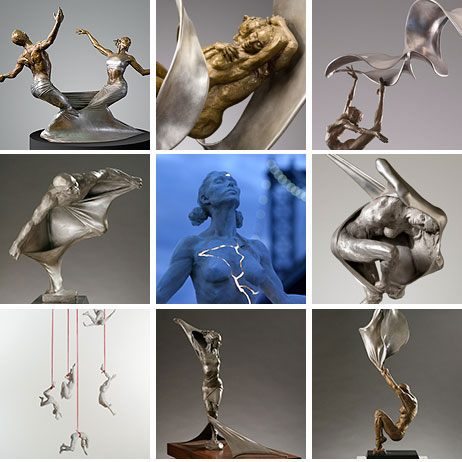
It’s been a long 105 years. Even longer for women in Mississippi who didn’t pass the 19th Amendment until 1984. Shocking. All men from all cultures and creed who were American citizens had the right to vote first. American women received this right later. We are truly second class citizens as the “more sensible sex”.
On 18th August 1920, the 19th Amendment to the US Constitution granted American women the right to vote. This occurred after nearly 100 years of protest.
In the mind of the alpha men (in their own minds anyway), we’re supposed to be quiet. We should not think a lot or express our opinion. We should not say what we need, like sex slaves or indentured servants to their running of the planet.
(To find out more about women’s suffrage in other countries, take a look at our women’s suffrage timeline.)
Until 1848, the movement for women’s suffrage wasn’t organized at national level. In July of 1848, Elizabeth Stanton and Lucretia Mott organized the first women’s rights convention in New York. More than 300 women and men attended. The movement lost momentum because of the Civil War outbreak. Women had to assist the efforts related to the conflict.
After many years of protesting, the outcome looked bleak after many states voted to not amend the 19th Amendment. Southern states were mainly opposed to the amendment. Seven had already voted to reject it before Tennessee’s vote on 18th August 1920. Tennessee held the vote to tip the scale for women’s suffrage. The state’s decision came down to Harry T.Burn, a 23 year old Republican from McMinn County. Burn initially opposed the amendment. However, his mother convinced him to vote for the cause by writing a letter to him. She included “Don’t forget to be a good boy.”
On 26th August 1920, the 19th Amendment was approved by US Secretary of State, Bainbridge Colby. On 2nd November, more than 8 million women across the United States voted in elections for the very first time. The last state to ratify the 19th Amendment was Mississippi, approving it on 22nd March 1984.
Burned artifacts offer a window into the dismantling of a Maya dynasty
Story by Tim Newcomb
• 18h • 3 min read
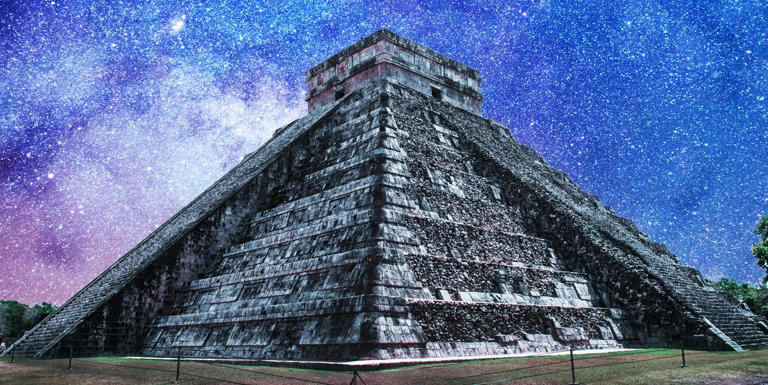
Maya site of Ucanal in Guatemala© jopstock – Getty Images
- The discovery of an early ninth century burning event marks a turning point in Maya rule, archeologists say.
- The find is a rare archaeological pinpointing of a historic turning point.
- Burning Maya artifacts, some a century old at the time, was likely a well-attended public event.
The discovery at the Maya site of Ucanal in Guatemala “marked a public dismantling of an old regime”—a rather pivotal moment in the collapse of rulers and key point in political power that isn’t often shown so clearly from an archeological find, the authors write in a study published in the journal Antiquity.
The event in question occurred at the capital of the K’anwitznal kingdom near a burial site. The bodies and their ornaments—items include a jewel-adorned stone mask, fragments of a greenstone diadem, and jade ornaments—were moved from a tomb to a public burning site, where fire engulfed some of the centuries-old items for all to see.
The new leadership regime welcomed a non-royal leader called Papmalil, and there is little in the written record indicating how he came to power. “Papmalil’s rule was not only seminal because of his possible foreign origins—perhaps breaking the succession of ruling dynasts at the site—but also because his rule shifted political dynamics in the southern Maya lowlands.”
The study’s authors, led by Christina Halperin at the University of Montreal, state that Papmalil appears to have ushered in an era of prosperity. Substantial construction occurred in both the civic-ceremonial core and outer residential zones of the city following the power shift.
That new era may have had a dramatic beginning.
The team said evidence indicates that the human bone and ornaments had once been part of the contents of a Late Classic royal tomb, and the deposit was part of a fire-entering rite that “marked the symbolic and literal destruction of an earlier K’anwitznal dynastic line.”
The authors state that the event “appears to have bene an act of desecration: it was dumped at the edge of a crude wall used as a construction pen and no effort was made to protect the fragmented bones and ornaments from the tomb blocks deposited on top of them as construction fill.” It all likely made for a “dramatic public affair” meant to be charged with emotion. “It could dramatically mark,” they wrote, “the dismantling of an ancient regime.”
In 1592 the Gregorian Calendar was foisted onto the world by the Catholic Church

Look how confused and disunited the calendars were worldwide in 1592 when the Gregorian Calendar was pushed onto humanity by the Catholic Church all over the world. They took advantage of the divisiveness as usual to wrap humanity in a time warp full of religious lies, control of the body and the degradation of women. Karma.
1592 (MDXCII) was a leap year starting on Wednesday of the Gregorian calendar and a leap year starting on Saturday of the Julian calendar, the 1592nd year of the Common Era (CE) and Anno Domini (AD) designations, the 592nd year of the 2nd millennium, the 92nd year of the 16th century, and the 3rd year of the 1590s decade. As of the start of 1592, the Gregorian calendar was 10 days ahead of the Julian calendar, which remained in localized use until 1923. Millennium: 2nd millenniumCenturies:

1592 in various calendars
Gregorian calendar1592
MDXCIIAb urbe condita2345
Armenian calendar1041
ԹՎ ՌԽԱ
Balinese saka calendar1513–1514
Berber calendar2542
English Regnal year34 Eliz. 1 – 35 Eliz. 1
Byzantine calendar7100–7101
Chinese calendar辛卯年 (Metal Rabbit)
4289 or 4082
— to —
壬辰年 (Water Dragon)
4290 or 4083
Coptic calendar1308–1309
Ethiopian calendar1584–1585
Hebrew calendar5352–5353
Hindu calendars – Vikram Samvat1648–1649 – Shaka Samvat1513–1514 – Kali Yuga4692–4693
Holocene calendar11592
Igbo calendar592–593
Iranian calendar970–971
Islamic calendar1000–1001
Japanese calendarTenshō 20 / Bunroku 1
(文禄元年)
Javanese calendar1512–1513
Julian calendarGregorian minus 10 days
Korean calendar3925
Minguo calendar320 before ROC
民前320年
Thai solar calendar2134–2135
Tibetan calendar阴金兔年
(female Iron-Rabbit)
1718 or 1337 or 565
— to —
阳水龙年
(male Water-Dragon)
1719 or 1338 or 566
Synchronicity Today-Wednesday in HF33-The ALPHA Point
Can you feel it? Get to a place where you can feel these pivots in your body. + and – continue to move up and down and side to side while the kin are moving, + and – from the N. Polar Zone, to the Zone of Transformation, to the S. Polar Zone.
Today is Blue 1 Magnetic Monkey Asparagine. This frequency got human grounding going from below the navel to the feet, got us up walking on two legs, dancing and reproducing after the millions who had died on Tiamat. We had to get wild, magical, and playful to remake our species on Earth. 🙏
The past
But we were hounded and followed by nefarious who had spurred mistakes on Tiamat and thrown off gender balance and created patriarchy; Lucifer. The dude definitely had something against Mother Spirit, his own mother, and consequently women. The story MUST predate Eve and has to be an ancient story. I will find it. Patriarchy has been as bad for men as it has for women. Men have spilled most of the blood on earth in the wars and died, which is what the Draco-Reptilian require due to their declining survival chances by their own hand. They and their human counterparts have sponsored Earth’s wars for their food supply.
Actors on Venus were militarily allied with Tiamat at the time and have reincarnated on earth also as well as some, not all, rogue Worldbridgers and 4Skywalker kin. Many were lost during the war in heaven.
The Future
Gender balance of power, children born ready to be tuned in their body-mind-spirit, no more religion, just spirituality. Clean food and water and a decent supply. No more nukes or world wars. Maybe, AI used a s a tool only. There is no point of humans ditching all tech back to the stone age. We have yet to determine which tech is useful and which is detrimental, but we will. Natural healing. It may take awhile for people to realize and feel in their bodies how to heal themselves, change their frequency and stop aging and death, but we will. Free energy and efficient space age transportation over land.
Spacetime Sync
We are mediated 3x by Venus. The analog is Yellow 1 Star Leucine (Elton John, the Rocket Man), and guide power is itself. Antipode is Red 1 Dragon, kin1 mediated by Neptune (Maye Musk), and yesterday’s White 13 Cosmic Dog the Hidden Wisdom.
- The Sun and Mercury come together in the sign of Pisces early today, and both bodies align with Saturn (late morning and afternoon).
- This superior conjunction of Mercury and the Sun can stimulate an epiphany, illumination of a matter, or a clearing of the air. It can give us a nice window of opportunity to see our goals more clearly. We are sharp and communicative, and what we say or write now has a strong impact, for better or worse! An idea or plan can come to full bloom, or ideas and realizations now are pivotal. While it’s a mentally stimulating time, we may want to watch for intellectualizing issues that require sensitivity.
- With Saturn involved, we can be determined to know the whole of a situation, particularly on an objective, practical level. We tend to think and communicate about serious matters, responsibilities, obligations, and worries or grievances. We may be addressing a problem once and for all. Our ability to concentrate is enhanced now, possibly because circumstances call for it. There could be an increased need for solitude to think or solve problems. We might make a verbal or written commitment, or we could experience a form of a reality check. It can be a time to work on a revised plan for creating order in our lives or on an old project that requires a new commitment. Emotional energy is not enough to fuel us for the time being! As such, we could feel drained on a physical level. However, recommitting to goals, shouldering responsibilities, and carefully using our resources could feed our need for structure and order, helping to get us back on track.
- The Moon is void today until the Moon enters Scorpio today at 10:09 PM EST.
From cafeastrology.com
The 5gforce for improvement
I endure in order to purify. Transcending flow I seal the process of universal water with the cosmic tone of presence. I am guided by the power of space.
Kin 169-Red 13 Cosmic Moon
OPPENHEIMER-The day the first atomic bomb was dropped
I just finished watching this movie. It’s pretty disturbing and basically brought my research on the book below to life. That was no fun and it’s three hours long. The question in my mind remains, why did Szilard write the misleading letter and get the ball rolling?

Szilard wrote the letter, Einstein signed it and sent it to Roosevelt, and Truman hired a team of scientists to build the atomic bomb all under false pretense. The letter is in my book. Oppenheimer led the building of it at Los Alamos, and Truman dropped it. Then, the WWII started.
They were all responsible in a snowball or rolling synchronicity effect. Scientists don’t have the luxury of being naive about State or Church using them for destructive purposes. Scientists need to become more intuitive and get their head out of the sand for safety.
The atomic age is karmic referring to Tiamat, now the asteroid belt right next to Mars that no one talks about. The dropping of the bomb was obviously in shadow and a reverberation on the AC strand of our DNA, past to present, to remind us of the mistake that was made and the compact with have with forces monitoring earth to not use nuclear weapons again. It’s forbidden. Here is a perfect example of shadow.
I activate in order to destroy. Destroying mind, I seal the output of psychopathic blindness with the electric tone of disservice. I am guided by the power of self-destruction.
Kin 55-Blue 3 Electric Eagle in shadow

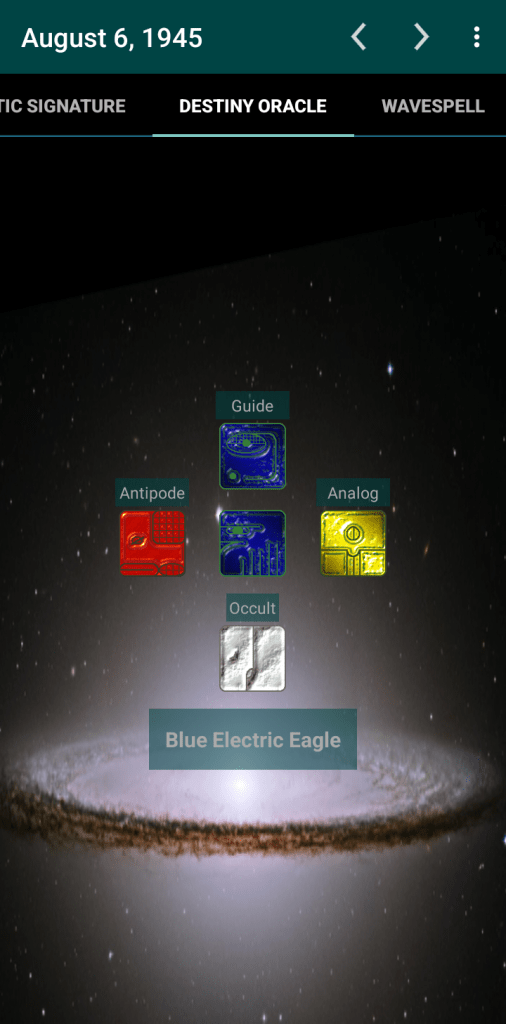
Oppenheimer was Yellow 12 Seed, which is a pulse of the analog Yellow 3 Seed.
The karma of Tiamat is the antipode of 8/6/1945, Red 3 Electric Serpent. The Hidden Wisdom is White 11 Spectral Worldbridger, exactly what happened to Tiamat. Tone 11 dissolves, and the Tiamatians destroyed a planet and blew off about a third of Mars, and forced humanity to earth as refugees.
The 5GForce is the beginning of my inverse harmonic, my lessons in this life, Red 11 Spectral Serpent so the karma and feelings of the atomic bomb and all the events and people around it resonate with me. I even found a paper that pulsed on it and turned it into the book you see at the top to help educate people about how things could go differently with science if we used our intuition. I wrote another book on intuition as well.
Truman is responsible for dropping the bomb, but they all shared in the karma.
I bought the copyright to this paper and added preface, glossary, and history to it. It is available for sale on Amazon by just searching on Lisa K. Townsend.
NASA Confirms Existence of Time Portals

The Time Portals are real. NASA acknowledges their existence, and I posted about it on here. There are gateways on earth to these spacetime portals, but they are not to be toyed with. And as I’ve said, you can’t necessarily go through. Time Travel, at this point in our awareness, is not heartily supported by Universe Watchers.
You might dream about a necessary time period. In that dream, you may be told what to have with you to survive. You can get to the portal. It activates for you because you know someone in that time period. Here are the locations. If you hear and feel a very loud buzzing sound, be careful, it’s activated for you. Others with you may not hear it which means they have to stay in this current time.
You can go to the portal nearest to you.
Polar Kin
- 60 degrees north–15 degrees west–Sun-NW of the U.K. in the N. Atlantic
- 60 degrees north–75 degrees east–Serpent-N. USSR
- 60 degrees north–165 degrees east-Dog-Far E. USSR by the Bering Sea
- 60 degrees north–105 degrees west–Eagle-N. Saskatuan Canada by Uranium City on the border of the N. Territories.
Cardinal Kin
- 30 degrees north–30 degrees east–Dragon-Cairo, Egypt
- 30 degrees north–120 degrees east–World-Bridger-Shanghai, China
- 30 degrees north–150 degrees west–Monkey-N. Pacific between Baja, CA and Hawaii
- 30 degrees north–60 degrees west–Warrior-N. Atlantic off the Bermuda Islands (The Bermuda Triangle is likely the portal–25 degrees N–71 degrees W)
Core Kin
- Equator–15 degrees west–Earth-The Mid Atlantic Ocean off the coast of Liberia on the African continent
- Equator–75 degrees east–Wind-The Maldive Islands off the coast of India
- Equator–165 degrees east–Hand-Micronesia off the island of Mauru
- Equator–105 degrees west–Human-West of the Galapagos Islands off of the coast of Ecuador
Signal Kin
- 30 degrees south–30 degrees east-Mirror-South Africa
- 30 degrees south–120 degrees east-Night-SW Australia by Lake Moore
- 30 degrees south–150 degrees west-Star-South of French Polynesia in the S. Pacific
- 30 degrees south–60 degrees west-Skywalker-Northern Argentina, N. of Santa Fe in the Andes Mountains)
Gateway Kin
- 60 degrees south–15 degrees west-Wizard-South Atlantic off the Sandwich Islands
- 60 degrees south–75 degrees east-Storm-South of the Kerguelan Islands in the Indian Ocean off the coast of Australia
- 60 degrees south–165 degrees east-Seed-South Pacific, south of Australia
- 60 degrees south–105 degrees west-Moon-10 degrees N. of the Antarctic Circle in the S. Pacific Ocean far off the coast of Chile.
This Red Moon portal could be trouble. There is an international military force down there working on an old Mothership. Civilians are banned. Red Moon symbolizes Methionine. It is the amino acid start codon for human DNA sequencing. Who knows what they’re up to in that portal.
Time Innovation: History-Blood for the Gods: 10 Cultures that Engaged in Ritual Sacrifice | Ancient Origins

https://www.ancient-origins.net/history-ancient-traditions/ritual-sacrifice-0017159
I’m sharing this only as information that can inform the context of these times we’re in. We didn’t get here by accident. Blood sacrifice has been normal in many cultures in ancient history. They are discussed here. The Maya were just one, but it’s blamed the most. Why? To denigrate how great they were, and accurate about Time.
It was murder and they considered it a necessary ritual. For most, and me, this is unnecessary and unacceptable today, but that’s how our civilization developed.
Murder is still quite common today. Sanctioned murder is, of course, war, organized by the military for what real purpose? It’s a big secret. There is no political gain of people dying when parties just need to communicate. “Oh, let’s kill a few million people for fun before we sit talk and talk it through.”. No. There is some other purpose.
The Current Disaster Cycle and a Visual of the Van Allen Donut Taurus Around the Sun. The Tzolkonic Nature of the Psi Bank in the Van Allen Belts…see below.
BELOW. This is what is REALLY happening in our system on multidimensional Tzolkonic levels. This is far past Science. You’ll need to magnify it to really see it. Jose’s explanation is below.


“This is the holonomic model of the earth and its electromagnetic field. Here the four plates and their division into eight seasonal parts are depicted in their ACTUAL resonant spherical relation to the earth and its magnetic field. (4 & 8 are self-existing and galactic. That is the lesson of earth-Lisa)
The more detailed map on the left depicts the flow of civilization within the context of the major longitudinal division, the Afro Eurasian, Pacific, American, and Atlantic plates, and their corresponding fourfold division in the psi bank located within the radiation belts. The actual psi bank plates are referred to as holonomic recollection (of events in TIME) plates, while their corresponding geographical equivalents are referred to as psi seasonal resonance field MEMORY plates. Also indicated in the left-hand map are the geographical sites corresponding to the temporal or sequential arrangement of the kua of I Ching, starting with the Spring equinox, northern hemisphere, along hieratic longitude zero. In the diagram to the right, which shows more fully and simply the relation of earth to the electromagnetic fields and psi bank, the kua are arranged in their earlier or celestial/electromagnetic relation to each other. (The I Ching oracle fits exactly over the earth and over the Tzolkin…all DNA of course)
As we have seen, what we refer to as history IS ACTUALLY A FUNCTION OF A MUCH LARGER, INTEGRATIVE GLOBAL HARMONIC. THE GUIDING FACTOR OF THIS HISTORIC HARMONIC IS THE PSI BANK WITH ITS HOLONOMIC RECOLLECTION PLATES. Each of these plates may be envisioned as carrying and/or simultaneously containing levels of information that connect stages of organic/cyclical seasonal growth; geo-cultural information–psions–as well as information concerning successive and cumulative stages of psycho-cultural process–history itself. (TIME information)
What this points to is the study of HISTORY as a geological subfield in an overall study of psycho-atmospheric harmonics as monitored by the guiding factor, the psi bank. Thus, in order to better understand and evaluate “what happened in history” (TIME), it is best first to understand the guiding function, structure, and nature of the psi bank itself.”-Jose Arguelles, Earth Ascending.
Protected: Time Innovation: The SCIENCE DELUSION


Subscribe to continue reading
Become a paid subscriber to get access to the rest of this post and other exclusive content.
 Synchronicity is the Source of Consciousness


You must be logged in to post a comment.