


Above…My cosmic, time harmonic inspired computer chip would take our civilization into THRIVING MODE, but I’m not sure the power men think peace is very much fun. 💥

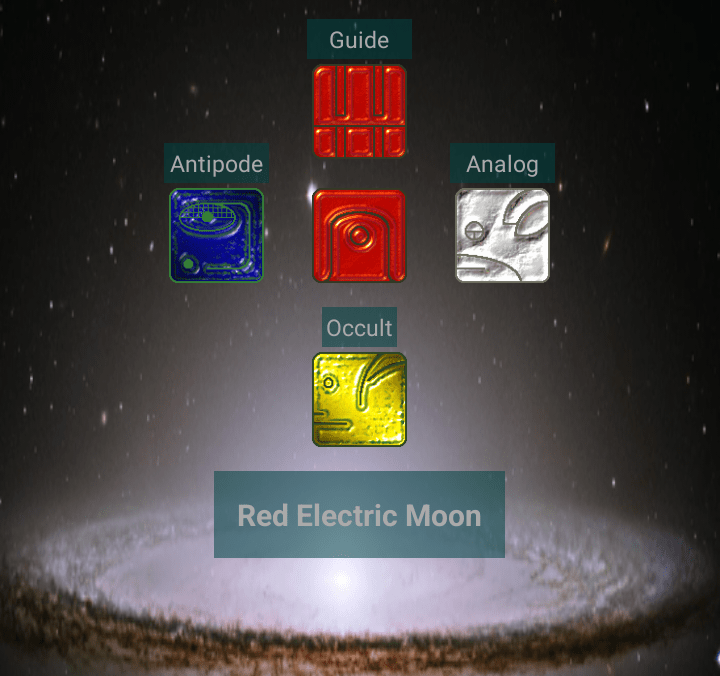
3-7-11 pulsar again. Hidden Wisdom is Yellow 11 Human. Nothing dissolves humans and creates chaos like war!
Elon Musk’s GUIDE POWER, White 3 Dog is his direct analog. So they are both saying Einstein was wrong…
“You can’t simultaneously prepare for war and prepare for peace.”
Peter Michaelson · July 9, 2024 ·
(This article is a bit long. Don’t feel obligated to read the whole thing, but it is interesting.)
Humanity’s appetite for war arises from our psyche’s inner war. War is just one of the bitter fruits of our refusal to recognize and overcome the persistent disharmony that churns within us. The war trail leads from our psyche.
War is a byproduct of the inner conflict that generates neurosis, and neurosis is a worldwide contagion. Inner conflict produces inner weakness, especially folly, stupidity, and a lack of self-regulation (“The march of folly,” as historian Barbara Tuchman put it).
I am presenting here a theory on the primary cause of war.
What I write is a bit complex in places, though it’s not rocket science. We resist acquiring deep self-knowledge because we find it disorienting. Inner resistance is the biggest obstacle to understanding the darkness in human nature.
In his book Why War? (W.W. Norton, 2024), historian Richard Overy notes correctly that no consensus exists on the singular cause of war. He writes, however, that “the effort to construct a monocausal explanation for war is futile.” I disagree. The primary cause of war is staring us in the face.
Overy notes that Freud did not develop a general psychological theory on the cause of war, except to relate it somewhat vaguely to a “death drive.” This death drive, as I understand it, is a compulsion to become engaged in self-defeat and self-damage. The drive is a particularly insidious variant of inner conflict. Inner conflict causes us to become our worst enemy. It also prompts us to target certain others and make enemies of them.
Our appetite for war hinges, of course, on how evolved we are–and how evolved we are has a great deal to do with how much inner conflict we experience.
Inner conflict generates negativity, hostility, stupidity, and malice within us, and this psychological dark matter radiates outward toward others as distrust, incivility, hostility, and impulses for revenge. At a tipping point, these projections escalate into violence and war. I’ll now say more about inner conflict, gradually tracking its footprints to the doorstep of war. (We call this shadow-L.T.)
Inner conflict has two main opposing forces, the aggressive superego (inner critic) and inner passivity (a defensive reactivity in our unconscious ego). Many of us sense the critical superego within, yet we have little sense of its partner-in-crime, inner passivity. Understanding the source of war requires our recognition of this passivity that lurks in our psyche as an enabler of the superego.
Inner passivity is largely a primitive, reactive intelligence, located in the unconscious ego, that defends our ego-ideal and reconciles our suffering. Inner passivity is the operating system of our self-doubt, the voice of our defensiveness, and the “mastermind” behind our psychological defenses. Typically, we don’t recognize this independent operating system in our psyche because we usually identify with it as our essential self, even though it obscures our best self.
Through inner passivity, we activate inner conflict. Inner passivity predisposes us to give credence and authority to our irrational, aggressive superego, thereby facilitating inner conflict. If not for this passive side, we would dismiss the superego as biased, irrational, primitive—unworthy of being taken seriously. In failing to do this, we fail to secure peace within ourselves and, by extension, peace in the world.
Through inner passivity, we unwittingly allow our superego to assail us with accusations, mockery, and scorn. More than just the source of self-criticism and self-mockery, the superego can become the instigator of self-condemnation and self-hatred. The intensity of inner conflict and neurosis depends on the degree to which inner passivity accommodates such self-abuse. Anxiety, shame, guilt, moodiness, and depression are experiences that arise from our accommodation of the superego’s judgments against us. As we become conscious of how, through inner passivity, we ingest these judgments, we are more able to liberate ourselves from inner conflict and its self-defeating emotions (e.g., hatred) and behaviors (e.g., war).
Another ingredient in our psyche (and in the war machine) is irrational inner fear.
Such fear is strongly felt in childhood, and it lingers in the adult psyche, often as worry, stress, and anxiety. This semi-conscious fear is intensified when the passive side of inner conflict feels threatened by superego aggression. The passive side fearfully anticipates punishment (guilt, shame, depression) through its weak, defensive plea-bargaining with the superego. As inner conflict intensifies inner fear, we are more likely to react aggressively toward “enemies” we have chosen (often arbitrarily) to blame for causing our distress.
In our psyche, there’s a hidden perversity at play. Inner passivity appears, in part, to consist of an unconscious willingness to experience fear as an enticing, bittersweet thrill or gratification. Evidence for this quirk of human nature can be seen in the allure of violent movies, murder mysteries, horror shows, scary park rides, daredevil antics, gun and crime fixations, and—perhaps—the spellbound voyeurism in climate-change destruction. We can also experience frightening, alarmist news, whether true or fake, as thrilling entertainment. In other words, fear is infected with a macabre enchantment.
We tend to be completely unaware of our unconscious fascination or fixation with fear, even as we “entertain” the fear on an inner level in inner conflict’s back-and-forth of accusations and defenses. Emotionally, we replay and recycle the superego’s allegations and mockery that we are weak, cowardly, undeserving, unworthy, and insignificant. To deny our secret dalliance with this inner fear (and its kinship with inner passivity), we tend to blame others, often aggressively, for our consequential suffering. Rather than see our misery as our own creation, we claim: “They cause me to feel this way!” We blame others although, in neurosis, we ourselves are concocting (replaying, and recycling) the old, subjective, negative impressions of being hurt and disrespected by others. Yet blaming others is necessarily accompanied by aggressive feelings (resentment, anger, and hatred) toward them. This misguided sense of reality can, in collective myopia, lead to war.
The level of our enmity toward others often needs to escalate to maintain the coverup. (The coverup, again, is our denial of our secret willingness to resonate with inner passivity, with its accompanying inner fear, as we unwittingly soak up abuse from the superego.) Sometimes the escalation of the coverup leads to murderous hatred, which is the process that drives domestic killers.
(To be clear, we often do blame ourselves instead of others—but for wrong reasons, for symptoms rather than underlying causes. A person might claim, “The problem is I’m too lazy!” The individual then experiences self-punishment for laziness, while overlooking inner passivity and inner conflict as the deep causes of one’s procrastination, indecision, ambivalence, and lack of purpose. The self-punishment absorbed for so-called laziness can itself produce self-loathing, which then can become loathing of others.)
So, people tend to believe—and, through their unconscious defenses, want to believe—that their worries and distress are caused by others. (God no. That’s offloading!)-L.T. In reality, this distress arises from inner conflict and from one’s compulsion to replay with others the unresolved hurts left over from childhood (the first hurts). We possess an infantile readiness to feel that the self is good, the outsider is bad or dangerous. Hair-trigger resentment toward allegedly threatening others is a defensive coverup. The coverup, the unconscious defense, is processed along these lines: “I’m not the source of my angst and fear. Those others are the cause of it! Look at how much I resent them.” The resentment helps protect one’s ego: “I’m innocent, they’re guilty.”
The reactive aggression we feel (to cover up our passive role in inner conflict) is now projected onto others. One’s conviction now becomes, “The other is aggressive toward me–so I must be aggressive in return.” This projection, along with its irrational conclusion, is an expression of our resistance to taking responsibility for the distress and self-defeat of our inner conflict. This unconscious resistance protects our primitive loyalty to egotism.
Reactive hostility and aggression are now experienced as one’s legitimate right (although the less neurotic among us will feel some guilt for it). This aggression, this coverup of the inner passivity at the heart of inner conflict, contributes to civil and international unrest as well as to war.
Examples from Politics and Life
Psychologically weak people are susceptible to being ruled by the superego’s Frankenstein monster, the strongman or dictator. Submission to the dictator is the path of least resistance for those who, inwardly weak, submit to their superego’s illegitimate authority. The deep sense is, Who would I be without this weakness?
Inner passivity can make politically powerful individuals more dangerous and destructive. I have psychoanalyzed thousands of people, and I offer here an analysis of the psyche of Russian President Putin. Based on his biography, appearance, and actions, he appears to be highly neurotic. His emotional “intelligence” tells him that he’s being passive if he’s not being aggressive—there’s no middle way. Overwhelmed by his wealth and power, his ego has gone rogue. Now he knows only primitive power. He lacks the inner strength to shed his and Russia’s archaic paranoia. This paranoia, despite having some historical rationale, is now mostly rooted in passivity and inner conflict. Putin can’t embrace freedom because he’s a slave to his psyche’s disorder. His conflicted self requires that he experience himself and his world through brutality, victimization, and oppression.
Consciously, he wants to feel the strength and pleasure his wealth and political power ought to provide him. Yet his suffering is unavoidable, given his unconscious determination to feel threatened and diminished by the power of the West and by its values. He is compelled to deny to his people the freedom that inwardly he denies himself.
Putin has compensated for his inner conflict and inner passivity with illusions of grandeur, a lust for absolute power, and a willingness to unleash murderous aggression. In his adamant refusal to acknowledge his passive side and overcome it, he has likely identified with his superego, which means that the malice of his superego, like the perversity of his autocratic rule, now goes unchecked. Here arises evil, and it is facilitated by those who have not become self-actualized.
For many, war is experienced as rousing excitement. The excitement serves as “proof” of strength and vigor: “This is what I like, this aggression, this bloodlust,” the unconscious defense contends: “It proves I am not an inner weakling.” The mania that accompanies this aggressive reactivity is the “joy” of sugar-coated passivity.
The underlying passivity that incites toxic aggression finds entertainment in displays of aggression. Passivity thrills to violence. For example, the compulsive viewing of violent video games is pure passivity. Inner passivity causes teenagers and young adults to experience video games and social media addictively. Hostile aggression (anger and hate) flares up everywhere on social media and in politics. The aggressive push to ban books or speakers, with its gleeful self-righteousness, arises from the passive, irrational fear of being unduly influenced by them. The stupidest aggression comes from the most passive, neurotic people, the ones who are most disconnected from their best self.
Inner passivity is also the culprit as adults become overwhelmed and turn cynical or fatalistic in the face of climate change. Indeed, much of our indifference and inaction on climate change is likely induced by inner passivity’s tendency to trigger feelings of helplessness. One reaction is to embrace stubborn denial of our folly (militant ignorance) as an illusion of strength.
Men especially associate signs or insinuations of their passivity with shame and humiliation. More so than with women, the superego of men is mocking of underlying passivity. The common male defense is to become aggressive at all costs. For instance, men who are failing in life because of their inner weakness are more likely to be domestic abusers of women and children.
We are all participants in the conflict between human nature’s goodness and its capacity for evil. We all feel the conflict in some arenas of life between consciously wanting to be strong versus unconsciously expecting to fail or be defeated. We vote for leaders we psychologically resonate with, those more likely either to avoid war or stumble into it. When our better self is ascendant and dissolving inner conflict, we establish an inner democracy where wise inner authority prevails, where inner chaos becomes inner peace.
Inner conflict exists, of course, in people of all political stripes. A college degree is not immunity to inner conflict. Understanding this can help us all to congregate sympathetically around our common plight.
Biological-Psychological Considerations
Both the aggressive and passive polarities in our psyche are of biological origin. The superego’s existence and primitiveness derive from our predatory, survival instinct. In childhood, biologically sourced aggression is turned inward against the unconscious ego. As Freud noted, a child, despite temper tantrums and other protests, is unable to expend all this considerable energy outward. This primitive drive attacks the weak point where the child’s struggle to formulate a sense of self is in flux. In the psyche, a link between the aggressive drive and the passive identification is established, rooted in the developing superego as a center of self-aggression and facilitated as inner conflict by the passive side.
This passive side, too, has biological origins. It exists as a lingering effect of childhood years spent in helplessness and dependency. Passivity is a primary experience of childhood, and infantile aggression (such as defiance and temper tantrums) is a reaction to it. We might consider war as infantile aggression, rationalized through adult ignorance and conducted with malice and cunning.
Human nature is indeed dealing with some biological hardwiring. When we were primitive predators, war was perhaps instinctively, genetically driven (“war is in our genes,” as many experts claim). Now, though, it’s more helpful to recognize that war is bred through our ignorance of our psyche’s dynamics. Inspired awareness can undo faulty wiring.
Still, our resistance and defenses are so rigid that we will go to war—or destroy democracy—to avoid exposing this weakness in ourselves. Loyalty to the inner status quo, however conflicted and painful, is more stubborn than religious dogmatism. Even loyalty to one’s rigid, like-minded group is mainly loyalty to one’s own resistance to inner truth. Our defenses, meanwhile, keep us in the dark because they provide a pleasing, emotional certitude in the soundness of their own disinformation.
Again, the defense of crude aggression is felt as a righteous, rousing glory when “successfully” used to cover up inner passivity. Hostile bluster and bullying aggression flood the psyche as self-validation, glory, and self-righteous adventurism, washing away rationality and self-doubt.
Now people can feel a “legitimate righteousness” in being cruel, power-hungry, self-aggrandizing, violent, and war crazy. They can become, like tornado-chasers, thrill-seekers at the spectacle of destruction. They take perverse satisfaction in the mayhem happening to others because they identify with the fear, helplessness, and victimization of those others. This means they unconsciously excite these base emotions within themselves and are swept into fevered irrationality. This is the death drive in action.
Meanwhile, warmongers are seduced deeper into aggressive postures as the passivity of others enables their worst instincts. Warmongers identify with the corrupt mentality and primitive values of the superego. In wicked glee (another libidinization of passivity), they embrace the dark side. The dark side takes the elements of inner conflict—aggression, fear, blaming, and perverse gratification—as “weapons” to assault fellow human beings. This, too, is what Freud meant by the death drive.
These insights from depth psychology, when assimilated, recast our sense of who we are. The prospect of such a dramatic change in one’s sense of self mortifies the conscious ego. We infuse our resistance with zealous intensity, while in our shadow many politicians serve unwittingly as agents of resistance.
We decline to be reborn into a new graciousness in fear of letting go of our familiar sense of self. We embrace irrationality, violence, and war to protect our precious ego, to spare it being demoted by inner truth. The answer is to make our psyche the new frontier, to understand our psyche as both the chalice and the blast furnace of our evolution.
—
Peter Michaelson’s latest book, at Amazon, is titled, Our Deadly Flaw: Healing the Inner Conflict that Cripples Us and Subverts Society.


 Synchronicity is the Source of Consciousness
You must be logged in to post a comment.