
NASA is talking like me on this one. Actually it’s the magnetosphere that affects people’s bodies first.
NASA: Uranus and Neptune Are Raining Diamonds
Uranus mediates Red Earth~White Wind
Neptune mediates Red Dragon~White Mirror
The ScR Did Not Go Up With the Solar Storm
I just posted NASA’s warning about the solar Storm hitting earth yesterday. If the sun controlled the Schumann Resonance it would have shot up. S.R. did not shoot up.
The S.R. shoots up in response to the collective mind on earth, the Tzolkin Harmonic effect on the magnetosphere which is the Van Allen belts or the Psi Bank and then all DNA’s mental response to the harmonic. We’re all spinning up the frequency collectively.
The Tzolkin Harmonic is the premier natural force from Galactic Center creating the synchronicity and thus evolution of RNA into DNA on all 10 planets. It is my belief that the other 10 local planets in our system are as sentient as GAIA and obviously communicate within the Interplanetary Holon which I post everyday.
The Interplanetary holon, Earth holon, and us, our body holon, are in Morphic Resonance with each other and in fact ONE with the Cosmic Web or the web of life.
Who is included in the Web of Life EQUALLY? Women, men, children, all animals, the oceans, the planet Terra, all rocks, all humanoid and E.T. species on earth, and anything or anyone else I missed. We are the rainbow nation, all cultures, all kin and all creeds.
GAIA nor us are controlled by the military, governments, the Cabal, the Deep State, the patriarchy, the narrative , MSM, the elite, NASA, clever men or the Sun. Selah. Amen.
Namaste 🙏
NASA is Doing Hologram Projection Into Space
In Jupiter’s swirling Great Red Spot, NASA spacecraft finds hidden depths
November 9, 20215:45 AM ET Heard on Morning Edition

This new perspective of Jupiter from the south makes the Great Red Spot appear as though it is in northern territory. This view is unique to Juno.
NASA/JPL-Caltech/SwRI/MSSS/Gerald Eichstäd/Seán Doran © CC NC SA
Jupiter is well-known for being the biggest planet in our solar system, and it’s also home to the biggest storm. It’s called the Great Red Spot, an enormous vortex that has been swirling for centuries. It’s bigger than our own planet, and yet we don’t know much about it. Until now, scientists could only observe the spot from afar. But thanks to a NASA spacecraft launched a decade ago, we’re finally getting a look inside Jupiter’s storm.
The Great Red Spot is like a storm here on Earth, but supersized. “It’s basically clouds,” says Paul Byrne, a planetary scientist at Washington University in St. Louis. Really, “it’s not all that dissimilar to the kinds of things we know as cyclones or hurricanes or typhoons on Earth.”
At 10,000 miles across, the Great Red Spot is the largest storm in our solar system and has been continually observed for around 200 years, but it’s been around for much longer. (Compare that with big storms on Earth, which generally last a few days or weeks at most.)
“We believe this thing is really old,” says Scott Bolton, principal investigator of NASA’s Juno mission. “How it lasts that long is a mystery.”
Before Juno, scientists could only observe the storm from afar. Even from a distance, they noticed it was changing shape and actually shrinking.

NASA
NASA’s Juno mission launched from Cape Canaveral Space Force Station in Florida back in 2011 and arrived at Jupiter in 2016. In 2019, the spacecraft changed course slightly and passed over the Great Red Spot twice.
Bolton and his team used microwave sensors to slice into the depths of the storm, getting the first 3D model of the Great Red Spot. “It’s a pancake because it’s so wide at the top. But the depth of that pancake is much thicker than what we would have anticipated.”
SPACE
Astronomers want NASA to build a giant space telescope to peer at alien Earth
The microwave observations show these storms on Jupiter, called vortices, extend below the cloud deck of the planet. In the case of the Great Red Spot, it extends at least 200 miles into the clouds of Jupiter, beyond the depths of where clouds form and water condenses.
“That’s very different than the way we think Earth’s atmosphere works, which is largely driven by water, clouds, condensation, and sunlight,” says Bolton. “How that works is going to require new models and new ideas to explain.”
Measuring the Great Red Spot’s gravity
During its 2019 pass over the Great Red Spot, the Juno spacecraft buzzed the planet at a blistering 130,000 miles per hour. The storm is so massive that its gravity field actually jostled the spacecraft during its flyby.
“The local gravity tends to pull and push away the spacecraft as it flies over the vortex, and this creates a sort of bump in the road for Juno,” says Marzia Parisi, a Juno scientist from NASA’s Jet Propulsion Laboratory in Southern California and lead author of a paper in the journal Science on gravity overflights of the Great Red Spot.
Scientists here on Earth could see the effect of these gravitational “bumps.” That’s because every time they jostled Juno, they nudged the spacecraft closer to or farther from Earth. That changing distance caused the radio waves sent back to Earth some 400 million miles away to be subtly squeezed and stretched, a phenomenon known as a Doppler shift. Using this effect, the spacecraft could pick up tiny jostles as small as 0.01 millimeters per second.
“The precision required to get the Great Red Spot’s gravity during the July 2019 flyby is staggering,” says Parisi. The findings from the gravity observations complemented Bolton’s earlier microwave measures, concluding the storm penetrates some 300 miles into Jupiter’s atmosphere.
The shrinking spot
Observations of the Great Red Spot show that it’s shrinking. For nearly a century and a half, the iconic spot has been getting smaller and it’s unclear just how long it will last.
Juno is taking a closer look at this phenomenon. “What we’re doing is seeing up close what’s happening while that shrinking has happened,” says Bolton.
SPACE
If NASA greenlights this interstellar mission, it could last 100 years
The spacecraft is observing flecks of the storm getting caught up in neighboring clouds. The storm itself also appears to be trapped by powerful conveyor belts of wind on the planet that is stabilizing the storm.
“I don’t think the theory is very far advanced to the sense where we can connect all of that to the changes in the size,” said Bolton.
Data from Juno will help scientists predict what could possibly happen to the Great Red Spot.
“Understanding what’s happening with the storm now allows scientists to make much more sophisticated models to simulate what we see and then make predictions for what will happen in the future, including up to perhaps when the Great Red Spot may eventually go away,” says planetary scientist Paul Byrne.
Understanding other Jupiter-like planets
The findings from the Juno spacecraft are shedding light on the early formation of giant planets like Saturn, Uranus, and Neptune — and even planets beyond our own solar system.
“When we get up close, and this is the first planet we’ve actually been able to open up and look inside, this is going to tell us a lot about how giant planets work throughout the galaxy,” says Bolton.

The JunoCam imager aboard NASA’s Juno spacecraft captures a Jovian cyclone known as a barge type in a polar jet stream called “Jet N4.”
NASA/JPL-Caltech/SwRI/MSSS. Image processing: Gerald Eichstädt CC BY
To date, astronomers have identified thousands of exoplanets — planets that orbit a star other than our sun. These planets are far away, with the closest one around 10.5 light-years from Earth. That makes observing what’s happening on the surface difficult.
Around 1,400 of these exoplanet candidates are thought to be gas giants, much like Jupiter. Understanding what happens on Jupiter can help scientists get a better sense of what’s happening beyond our solar system.
“By understanding the physics and the processes that go into shaping Jupiter,” says Byrne, “we’ll get a better understanding of not just Jupiter, but of these kinds of worlds.”
The Other Planets Also have a Psi Bank (an ionosphere)
Since the main ionization source is solar EUV, every planet and moon with an atmosphere also possesses an ionosphere. (a Psi Bank) At IRF-Uppsala we study ionospheres of Earth, Mars, Saturn’s moons Titan and Enceladus.Feb 1, 2021
https://www.physics.uu.se/research/astronomy-and-space-physics/research/planets/ionospheres/#:~:text=Since%20the%20main%20ionization%20source,Saturn’s%20moons%20Titan%20and%20Enceladus.
When Ben legitimately posts what is happening on the Sun and he says, “The CME is pointing away from the earth and won’t affect us much if at all.”, it is hitting one of the other nine planets because the Sun is reacting to them also. It would be narcissistic to think our Sun was just for us or just reacting to or picking on us. That is not the case at all. In fact, the Sun is keenly tied into the entire cosmic web grand universe-wide so its function in our local system, serving our local system, is by no means trying to DESTROY US.
Why does no one talk about this? Because they are selfish and have an agenda that might not be the most positive for humans. Anyone who cooperates with NASA I question. I’m not saying NASA is always wrong but they work for the Federal c+_)(. They have to shore up the official narrative in a big way just as the sick-care does.
NASA issues imminent solar storm warning
🤔
Oh, it’s so cool!🤩😎🥳 Sarcasm. Just tap the screen. Don’t swipe.
I think this is Hollywood cheese ball. They’re using really simple animation and basic facts to hold a shiny object in front of people.
The solar Storm wasn’t that big. They’re trying to steal thunder from the various astronomy YouTube videos that teach real Information. But go ahead. I was going to delete it.
NASA Scientist Releases Plan for Encasing Entirety of Venus in Giant Shell
Good grief. The person I know who is familiar with Venus says it is habitable already and awesome. So this may be a NASA tactic to get money for something else. The government agencies are so used to lying to us it doesn’t even phase them.
https://futurism.com/the-byte/nasa-plan-encasing-venus-shell
A Section From “The Tones of Creation”; The Psi Bank
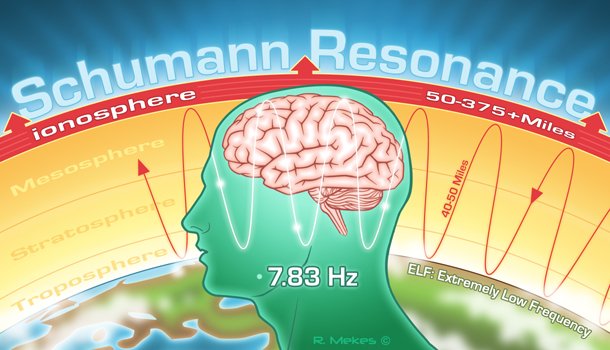
This is my questioning of the transcendence of Solar Forcing as the hypothesis regarding the cause of climate change is due to NASA’s study of the Van Allen Belts. I had to search diligently for this information. It’s not widely known, thus the folks who blame humans for climate change which is politically motivated; scapegoating, and those who support the idea of solar forcing are the squeakiest wheels and get the oil. My hypothesis is below.
TSR-Explicate Movement on the van Allen radiation belts (Psi Bank) due to solar storms causing the visual phenom of the Aurora borealis effect.
.Hypothesis: The Van Allen belts around the earth are the source of the Tzolkin Harmonic information. The aurora borealis effect is caused by the intelligence of the Tzolkin from the Galactic Core moving through our sun that creates this effect around the earth. There is a possible one-to-one correspondence with the Tzolkin proven by continual synchronicities manifesting in 4D. – Lisa T.
Or…
The mind and will of all DNA creation on earth are creating the changes in the VanAllen Belts also causing synchronicity. -Lisa T.
Essay and Photo Credit: NASA GODDARD/DUBERSTEIN
On February 28, 2013, a third radiation belt, consisting of high-energy ultra-relativistic charged particles, (relative to what?) was reported to be discovered. In a news conference by NASA’s Van Allen Probe team, it was stated that this third belt is a product of CMEs from the Sun. It has been represented as a separate creation that splits the Outer Belt like a knife on its outer side and exists separately as a storage container of particles for a months’ time, before merging once again with the Outer Belt.
The unusual stability of this third, transient belt has been explained as a ‘trapping’ by the Earth’s magnetic field of ultra-relativistic particles whose speed is close to the speed of light c., as they are lost from the second, traditional outer belt. While the outer zone, which forms and disappears over a day, is highly variable due to interactions with the atmosphere, the ultra-relativistic particles of the third belt are thought to not scatter into the atmosphere, as they are too energetic to interact with atmospheric waves at low latitudes. This absence of scattering and trapping allows them to persist for a long time, finally only being destroyed by an unusual event, such as the shock wave from the Sun.
Source: https://en.wikipedia.org/wiki/Van_Allen_radiation_belt
The date of this discovery was Yellow Electric 3 Warrior, Kin 16 in the Tzolkin: electric intelligence.
“It was a lucky decision,” NASA said in February 2013, noting that a solar storm had already caused the radiation belts to swell as soon as the instrument was turned on.
“Then something happened no one had ever seen before: the particles settled into a new configuration, showing an extra, third belt extending out into space,” the agency added. “Within mere days of launch, the Van Allen Probes showed scientists something that would require rewriting textbooks.”
Protective shield
Data gathered by the probes also showed that the radiation belts shield Earth from high-energy particles. “The barrier for the ultrafast electrons is a remarkable feature of the belts,” study lead author Dan Baker, of the University of Colorado in Boulder, said in a statement. “We’re able to study it for the first time because we never had such accurate measurements of these high-energy electrons before.” [Gallery: NASA’s Van Allen Probes]
Complex configuration
This latest information helped scientists model the belts’ changes. But there was more information to come. In January 2016, scientists revealed that the shape of the belts depends on what type of electron is being studied. This means the two belts are much more complex; depending on what is being observed, they can be a single belt, two separate belts, or just an outer belt (with no inner belt at all.)
“The researchers found that the inner belt — the smaller belt in the classic picture of the belts — is much larger than the outer belt when observing electrons with low energies, while the outer belt is larger when observing electrons at higher energies,” NASA wrote at the time. “At the very highest energies, the inner belt structure is missing completely. So, depending on what one focuses on, the radiation belts can appear to have vastly different structures simultaneously.”
What is still poorly understood, however, is what happens when particles from the sun hit the belts during a geomagnetic storm. It is known that the number of electrons in the belt changes, either decreasing or increasing depending on the situation. Also, the belts eventually return to their normal shape after the storm passes. NASA said it isn’t clear what kind of storm will cause a specific type of belt configuration. Also, the agency noted, any previous observations were done only with electrons at a few energy levels. More work needs to be done.
Luckily, scientists got the chance to observe a storm up close in March 2015, when one of the Van Allen probes happened to be situated inside the “right” spot in Earth’s magnetic field to see an interplanetary shock. NASA describes such shocks as being like a tsunami triggered by an earthquake; in this case, a coronal mass ejection of charged particles from the sun creates a shock in specific areas of the belts.
“The spacecraft measured a sudden pulse of electrons energized to extreme speeds — nearly as fast as the speed of light — as the shock slammed the outer radiation belt,” NASA wrote at the time. “This population of electrons was short-lived, and their energy dissipated within minutes. But five days later, long after other processes from the storm had died down, the Van Allen probes detected an increased number of even higher energy electrons. Such an increase so much later is a testament to the unique energy processes following the storm.”
The shape of the Van Allen belts can vary widely depending on how energetic the individual electrons are, and general conditions in the Earth’s magnetic environment. During geomagnetic storms (4), all three regions in the belts can balloon.
NASA: Giant Solar Storm to hit Earth; freakish Sunspot set to shoot more | Tech News

“NASA: Giant Solar Storm to hit Earth; freakish Sunspot set to shoot more | Tech News” https://tech.hindustantimes.com/amp/tech/news/nasa-giant-solar-storm-to-hit-earth-freakish-sunspot-set-to-shoot-more-71648284437045.html
NASA flyby of Jupiter’s big moon Ganymede reveals auroras and huge unknown craters | Space
“NASA flyby of Jupiter’s big moon Ganymede reveals auroras and huge unknown craters | Space” https://www.space.com/juno-ganymede-moon-flyby-craters-auroras
Jupiter mediates Arginine and histamine, Blue Eagle and YellownWarrior. It’s the home of the Pentagonal Storm at its south pole.
At the north pole, nine storms raged; a large central one bang on the pole, and eight smaller ones arrayed around it. At the south pole, there was a similar, but slightly different arrangement with six storms, five arrayed in an almost perfect pentagon around a central cyclone.Dec 13, 2019
Watch “NASA Bombshell on the Poles, X5000, Nova Caught | S0 News Jan.7.2022” on YouTube
Big health impacting cosmic rays. This cosmic shift was predicted. I posted the dates in a previous post. Be awake the next three days.
You Will NOT See this on MSM; NBC or CNN. This is the Director of NASA. I believe he’s referring to FAKE Staged UFO Events by The C`#$%
We call these FALSE FLAGS.
Good News! Hobbled Hubble Telescope Springs Back To Life On Its Backup System : NPR
NASA Fearmongering, as usual.
Our E.T. ancestors could destroy an asteroid in a heartbeat and would to make sure we survive. The genetic experiment on this planet is no joke. They’ve already shut down our ability to play with nuclear weapons.
As a species, we’re about to level up on the evolutionary scale. I don’t believe NASA wants us to know this. Gee, are they black hats? I don’t know that they are on the side of humans.
Until Disclosure happens and the full truth comes out, I wouldn’t believe any fear-mongering. They stand to benefit in huge profits on MARS by freaking everyone out on earth. Then they can continue to maraud and wreak havoc in our solar system. The Moon has already been secured so hang in there and don’t listen to mainstream science. They are on the side of the ORION group. This is B.S.
Asteroid impact: NASA simulation shows we are sitting ducks
Even with six months’ notice, we can’t stop an incoming asteroid.
ROBBY BERMAN05 May, 2021

Credit: NASA/JPL
- At an international space conference, attendees took part in an exercise that imagined an asteroid crashing into Earth. (whatever you imagine is putting literal energy into the psi bank to be destructive. It’s creative visualization IN SHADOW)
- With the object first spotted six months before impact, attendees concluded that there was insufficient time for a meaningful response.
- There are an estimated 25,000 near-Earth objects potentially threatening our planet.
The asteroid 2021 PDC was first spotted on April 19, 2021 by the Pan-STARRS project at the University of Hawaii. By May 2, astronomers were 100% certain it was going to strike Earth somewhere in Europe or northern Africa. On October 20, 2021, the asteroid plowed into Europe, taking countless lives. (That’s a FUTURE date)
There was absolutely nothing anyone could do to deflect it from its deadly course. Experts could only warn a panicking population to get out of the way as soon as possible, if it was possible.
The above scenario is the result of a recently concluded NASA thought experiment.
The question the agency sought to answer was this: If we discovered a potentially deadly asteroid destined to hit Earth in six months, was there anything we could do to prevent a horrifying catastrophe? The disturbing answer is “no,” not with currently available technology.
While Europe can breathe easy for now, the simulation conducted by NASA/JPL’s Center for Near Earth Object Studies and presented at the 7th IAA Planetary Defense Conference is troubling. Space agencies spot “near-Earth objects” (NEOs) all the time. Many are larger than 140 meters in size, which means they’re potentially deadly.
Sitting Ducks

Credit: ImageBank4U / Adobe Stock
“The level [at] which we’re finding the 140-meter and larger asteroids remains pretty stable, at about 500 a year. Our projection of the number of these objects out there is about 25,000, and we’ve only found a little over one-third of those so far, maybe 38% or so,” NASA’s Planetary Defense Office Lindley Johnson tells Space.com.
With our current technology, spotting an NEO comes down to whether we just happen to have a telescope pointing in its direction. To remove humanity’s blind spot, the Planetary Society — the same organization that deployed Earth’s first light sails — is developing the NEO Surveyor spacecraft, which they plan to deploy in 2025. According to the Planetary Society, it will be able to detect 90 percent of NEOs of 140 meters or larger, a vast improvement.
How to move an asteroid

The DART spacecraft will attempt to deflect an asteroid.Credit: NASA
The NASA/JPL exercise made clear that six months is just not enough time with our current technology to prepare and launch a mission in time to nudge an NEO off its course. (Small course adjustments become significant over great distances, which is why “nudging” an asteroid is a potential strategy.)
What would such a mission look like? Hollywood aside — remember Armageddon?— we know of no good way to redirect an NEO headed our way. Experts believe that shooting laser beams at an incoming rock, exciting as it might look, is not a realistic possibility. Targeted nuclear blasts might work, but forget about landing Bruce Willis, Ben Affleck, and Liv Tyler on an asteroid to set off a course-altering bomb, especially just a month after its discovery (as was the case in the movie).
Another thing that might work is crashing a spacecraft into an NEO hard enough to shift its course. That’s the idea behind NASA’s Double Asteroid Redirection Test (DART). This mission will shoot a spacecraft at the (non-threatening) asteroid Dimorphos in the fall of 2022 in the hope of changing its trajectory.
The deadly asteroid’s journey

The asteroid “2021 PDC” hit Europe in NASA’s simulation.Credit: NASA/JPL
The harrowing “tabletop exercise,” as NASA/JPL called it, took place across four days at the conference:
- Day 1, “April 19” — The asteroid named “2021 PDC” is discovered 35 million miles away. Scientists calculate it has a 1-in-20 chance of striking Earth.
- Day 2, “May 2” — Now certain that 2021 PDC will hit Earth, space mission designers attempt to dream up a response. They conclude that with less than six months to impact, there’s not enough time to realistically mount a mission to disrupt the NEO’s course.
- Day 3, “June 30” — Images from the world’s four largest telescopes reveal the area in Europe that will be hit. Space-based infrared measurements narrow the object’s size to between 35 and 700 meters. This would pack a similar punch as a 1.2-megaton nuclear bomb.
- Day 4, “October 14” — Six days before impact, the asteroid is just 6.3 million km from Earth. Finally, the Goldstone Solar System Radar has been able to assess the size of 2021 PDC. Scientists calculate the blast from the asteroid will be primarily confined to the border region between Germany, Czechia, Austria, Slovenia, and Croatia. Disaster response experts develop plans for addressing the human toll.
“Each time we participate in an exercise of this nature,” says Johnson, “we learn more about who the key players are in a disaster event, and who needs to know what information, and when.”
Practically speaking, little can be done to hurry technological development along other than budgeting more money toward that goal. Maybe we should have Bruce Willis on call, just in case.
Watch “NASA Cassini’s Final Images of Saturn Stunned Me” on YouTube
This is making my Saturday. Our solar system is so amazing. Cassini did a fantastic job for humanity. I am grateful.
Saturn mediates alanine and histidine in our evolving bodies; Blue Night (today) and Yellow Warrior. Saturn is the ruling planet of Capricorn in astrology.
NASA sharing E.T. Tech on Mars.
300 million habitable planets exist, NASA says
Corey Goode (Official) (@CoreyGoode) Tweeted: 300 million habitable planets exist, NASA says. Research found half the stars could be orbited by rocky planets with liquid water on their surfaces –
https://www.foxnews.com/science/300-million-habitable-planets-exist-nasa
 Synchronicity is the Source of Consciousness
You must be logged in to post a comment.