It is April 30, 2026 and the world is scared to death of ARTIFICIAL intelligence or more aptly named computational intelligence when as a species, we have almost completely departed from the first list and have completely built and surrounded ourselves with the second list.
We LOVE our artificial world to the point where NO ONE is authentic anymore or tells the truth. Please ponder how artificial your life is.
Now we’re having to face the artificial world we’ve created, and we could lose the real one. We’re collectively in an existential crisis.
Here are the parameters of the natural world, nothing artificial.
Air
Water/snow/ice/rain
All Rocks/minerals
All Trees
All Plants and food grown organically
The Sun, planets and everything in space.
All animals, insects, microbes like viruses, fungi
All fish and birds
And more…
We all must realize that we’ve created an artificial world of everything else, and now we want to go back in time 150 years when we are now dependent on everything artificial that we’ve made?
The artificial group will be anything that we live with and use and make. It is not something from the natural world in its original state. It’s synthesized.
That would be;
all electrical appliances,
All roads made of synthesized stuff
all buildings and their contents
all cars and trucks and motorcycles and vehicles,
all mechanical things, all pieces of mechanical things, A.I. data centers and everything that makes them.
all TV’s media, radio, phones, computers. The list just goes on…
all the art we’ve ever created
All medical tools and devices
All clothes
Guns and other tools and weapons
All of our holiday decorations throughout our fake, time warped year set by the fake Church.
All lamps, light bulbs, flashlights…
Humans have been piling up artificial things and creating and inventing and making artificial things probably not that long after we discovered fire, made the wheel, discovered metallurgy, and the iron age.
Very soon after that, we left the natural world in how we live and have since created an entire living system of artificial stuff.
So why are we freaking out now about artificial intelligence? Because we’re having to face ourselves in what we have created for millennia. It’s a mirror.
Everything that is in your home, somebody had an idea first, put it on paper or computer, designed it, made it, found the materials to build it, and produced it. It is engineered.
It’s all artificial, although the root of those materials is nature. Humans synthesized them and made artificial stuff; all of our pharmaceuticals are synthetic made from herbs. Drugs are all made from plants. They take the strongest chemicals out of them and put them into a toxic pill.
Which do you want? Have you thought about what it would be like without any of the artificial things we’ve made?
What about your body? Your mother made you in her own body, naturally. Why is that denigrated? Why are women denigrated instead of phenomenal just because we aren’t A MACHINE? Does that make us and our families slaves or secondary to technology and what is the reason for that?
We practically want to kill off ourselves and the natural world. Why? Because we can’t seem to love and value each other or ourselves because we’ve been programmed not to.
Humans are programmed robots by the digital world and we don’t even realize it.
I’m reposting this on July 20, 2025, because it hit my brain. The date is exact for 24 days from today. It’s on today’s post. August 13, 2025 falls on White 12 Crystal Wind.
Presently there is no universal basis for what qualifies the start of a new year. Every culture has its own set of parameters for determining it. The Chinese celebrate theirs in either late January or early February according their lunar calendar. The ancient Egyptians linked the appearance of the star Sirius and the annual flooding of the Nile river to signal the start of their new year. (Lions Gate 8/8/20) The many cultures of India celebrate the new year on various dates during the month of April. Europe’s Nordic cultures keyed it to the Winter solstice. The Celtic, Samhain, now vulgarized as Halloween, is celebrated by present day neo pagans, Wiccans and Druids as the start of their new year.
Contrast that line of reasoning with the fact that the new year of non-western cultures is related to some seasonal and/or astronomical aspect. The foregoing is why I refer to the Gregorian calendar as an urban calendar, for it reflects the whims of the city lords more than anything else.
The most common denominator for the start of the new year in most other calendar systems is the start of the growing season or end of the harvest season. In some cases, either of the solstices or equinoxes are recognized as the start of the year. The start of the new year for cultures other than the Euro-western is related to the agricultural, seasonal, and astronomical particulars of each region.
A Bi-Universal New Year?: A Solstice New Year
Many pre-Christian cultures of Europe’s northern hemispheric latitudes recognized the winter solstice as the start of the new year as the Sun symbolically dies and is reborn on that day.
The start of the new year cycle can be viewed as universal for those in northern hemisphere when reckoned from the winter solstice, and as defined by the life cycle changes that accompanies the attendant atmospheric conditions (rain, dryness, snow, etc) as the sun ascends and descends. The same would apply to those of the southern hemisphere, except that their new year would start with what we in the north refer to as the summer or June solstice. I prefer to designate the solstices according to the month they take place within rather than say summer or winter, because the seasons are reversed depending on which hemisphere you happen to live in.
The process of cooling and warming is minimized in most parts of the tropical regions. The most defining aspect of seasonal variation in the tropics is dry and rainy seasons. Nonetheless it is the Sun’s to and fro movement, and its attendant affect on atmospheric conditions that drives precipitation patterns. Therefore we can associate the start of the new year with the solstice that marks the start of a rising Sun for each hemisphere, since it is the rising solstice Sun that initiates the life cycle for each hemisphere.
The solstices do indeed provide us with fixed starting points for each hemisphere’s respective new year as it relates to the life cycle, but might there be a truly universal new year that applies to the entire planet as a whole regardless of local particulars?
The Arguellen Universal Calendar Proposal
Jose Arguelles proposed the universal adoption of what he calls the 13 Moon Calendar. Thirteen “moons”, or months of 28 days, plus one day would give a clean, orderly and easy to use civil calendar. (13×28 = 364 +1 = 365) I won’t go into all the reasons on why a uniform calendar is far better than the Gregorian hodge-podge we have now. But if you think about it some of the reasons should become clear. He was not the first to propose a new and improved universal calendar.
His calendar proposal is based on the Mayan Tun Uc calendar which also measures 13 months of 28 days plus one day. Arguelles anchored the start of his 13 Moon calendar to July 26th. But why July 26th? What is so special about that date? The following quote from his website gives us his rationale.
“For many ancient peoples, including the Dogon and Egyptians of Africa and the Maya of Central America, the great star Sirius, the brightest star in the sky, was the galactic marker. The heliacal rising of Sirius – July 26 – commenced the Egyptian year”.
Jose Arguelles
The problem with his rational is that it’s mostly inaccurate. Sirius did loom large in Dogon and Egyptian cosmology, but I have yet to come across any information indicating that it had any sort of calendrical function among the Maya.
Additionally, the Dogon did not use the star Sirius as a calendrical marker. And the start of the Egyptian new year is July 19th not the 26th and the helical rise of Sirius is also around the same time–July 19-20.
Lastly, we did not understand the concept of a galaxy until the 1920’s when we discovered, thanks to telescopes, that we inhabit one of billions of galaxies. The Arguellen account does not give us any reason whatsoever to say that July 26th is the start of some universally valid new year, even though he insists it is.
There are two testable and key parts to his universal year cycle proposal. One is that it starts on July 26th and the other is that each of its 13 months are characterized by a set of qualities in the same way that each day of the Tzolkin’s 13 day tone cycle has it particular qualities.
In other words the 13 day tone cycle is a fractal of the 13 month year cycle, as proposed by Arguelles. The first month of the 13 month year cycle carries the same qualities as the first tone of the 13 day tone cycle and so on. But this article will focus solely on the question of universal new year and its probable start date, if one exists.
So what else can be said about July 26th?
The 365 day civil calendar of ancient Mesoamerica was known as the Haab among the Maya and as the Xiuhpohualli among the Aztecs. The ancient Mesoamericans did not anchor their civil calendar to any part of the year in the way the Gregorian calendar does by adding a leap day every 4 years. This means that the start of Mesoamerica’s civil calendar year drifted by one day every 4 years.
At the time of the Spanish invasion, the first day of Mayan Haab calendar, “0 Pop”, coincided with July 26th, and hence forth the Mayan Haab was fixed to July 26th for unclear reasons. Spanish imposition is most likely the reason for the Haab’s fixation to July 26th.
July 26th is also significant for one other reason, for it is the day that the Sun is at the zenith over two of Mesoamerica’s most important pyramid sites. Teotihuacan marked the solar zenith passage date for the Toltecs and Edzna marked the July 26th solar zenith passage for the Yucatec Maya.
But there is still nothing universal about a Spanish imposition, nor are solar zenith passage dates, for they will vary according to latitude within the tropics of Cancer and Capricorn.[fig. 1]
Finding the Center of Space and Time
The Tropic of Cancer is Arguelles N. Polar Zone in assessing the DNA in synchronicity with the earth, and The Tropic of Capricorn is the S. Polar Zone for the same reason. In between them is the Zone of Transformation. This is the alignment in EVERY CELL OF DNA ON THE PLANET and accounts for the double helix and radial polarity. -My comments, Lisa K. Townsend
August 13th is most famous for being the alternative start date for the beginning of the Maya Long Count Cycle. There is a 2 day discrepancy between when the Long Count may have actually started. The account with the most backing says its August 11th, 3114 BCE, and that date gives us the end date of December 21st, 2012. August 13th gives us the end date of December 23rd.
The Zapotec-Shearer-Arguellen Tzolkin may be able to shed some light on that subject, but that investigation will be for another time. And after this analysis I am inclined to think that August 13th may carry more weight than August 11th. The other principle reason that August 13th is well known among Maya scholars is due to the unique timing phenomena that occurs on August 13th, at the latitude of 14.8 north. I will have to forego the extremely fascinating history behind the discovery of August 13th at the latitude of 14.8 N for this article, but I will relate what is most salient to my purpose here.
The latitude of 14.8 north has the distinction of being the place where the sun’s two zenith passage dates combine to equate interval periods of 260 days and 105 days (105 + 260 = 365). Two hundred and sixty days is the number of days in the Tzolkin cycle calendar, or the most revered body of knowledge in all of ancient Mesoamerica.
Zenith passage dates can only occur between the tropics of Cancer and Capricorn.[fig.1] As the Earth tilts on its axis, we see the Sun rise and fall in the sky over the course of the year. The tropics, or the lines of latitude just mentioned, mark the Sun’s northernmost and southernmost points of inclination and declination. The tropic of Cancer is located 23.5 degrees north of the equator, and it marks the day the Sun is directly overhead on the June solstice. The tropic of Capricorn is located 23.5 degrees south of the equator, and it marks the day the Sun is directly overhead on the December solstice.
It has been suggested by many scholars that the 260 day Tzolkin and the 365 day civil calendar were developed at the ancient ceremonial site of Izapa. Izapa is one of two major ancient Mesoamerican ceremonial centers that are located at the latitude of 14.8. The other site is Copan which is found on the border between Honduras and Guatemala. [fig.2] Izapa is located near the Mexican-Guatemalan border.
John Major Jenkins and a few others believe that the Long Count Cycle was calibrated at Izapa, and they are probably right about that, but from my vantage point I believe that neither the Tzolkin cycle nor the 365 day calendar were discovered or formulated there.
I won’t get into my version now, but I will say that I believe that the Ancient Mesoamericans (AMA) sought out the place where the two primary measures of time, the Tzolkin and solar cycles met in perfect harmony.
Such a place would be nothing less than the place where the “Heart of Earth” meets the “Heart of Heaven” within their worldview. The Heart of Earth being the 365 pulses (beats) that we experience as a day-night cycle, and the Heart of Heaven being the 260 pulses of the Tzolkin cycle. In other words, the Tzolkin was regarded as the primary or cosmic timing standard. The implication is that the solar cycle is a local timing standard, particular only to our unique place in time and space, but nonetheless supremely relevant to why our solar system harbors life.
Orienteering 101
In order to show what is meant by the foregoing, let’s begin with the Sun at the December solstice. On the Sun’s northward journey it crosses the zenith over Izapa on April 30th.
The Sun continues climbing until it stops its northward journey on the June solstice, or the day the sun is directly over the tropic of Cancer, and once again begins its southward journey toward the winter solstice. On its southward journey it will again be directly over Izapa on August 13th for its second zenith passage.
Please note that our warming season from winter to summer solstice corresponds to when the earth’s northern hemisphere is tilted toward the sun and the opposite is true in the winter time.
April 30th to August 12th equals 105 days and from August 13th to April 29th there are 260 days. (260+105=365) The two solar zenith passages are separated by 105 days in the former interval, and by 260 days in the latter.
The interval from August 13th to April 29th places the December solstice smack dab in the middle at 130 days or one half of a Tzolkin Cycle.
Furthermore, there are 52 days from the summer solstice to August 12th, and we well know that the number 52 was highly revered by the AMA for its meaning within their understanding of time.
August 13th would be the equivalent of our January 1st and August 12 would be the same as December 31st.
But why August instead of April?
August 13th came to be known among the AMA as “the day the world was born” and “as the place where time began“. But why did they pick the August zenith passage date over the April zenith passage to anchor the “day the world was born”, and mark the start of the new year and the Long Count cycle?
The one thing that comes to mind is that they recognized the December solstice as the start of the solstice to solstice year cycle, and so that would make the August zenith passage the second or completing zenith passage date, hence completing the centering aspect of the Sun’s passage and the next passage date is a full 260 days away with the winter solstice perfectly balanced between the 2 zenith passage dates.
We must remember that one of the AMA’s most important cosmological quests was worldcentering, therefore they would value counting the year cycle from center point to center point, rather than from extreme point (summer solstice) to extreme point (winter solstice) so to speak. Following this line of reasoning, I looked to the night sky to see if it could shed some light on this subject.
I set my astronomy software to 3114 BCE to see if the night or day sky at the zenith time over Izapa might reveal something telling about why else the August 13th zenith date might have been favored over April 30th. I discovered that the Milky Way straddles the north-south meridian at midnight in such a way as to form a perfect cross just 20 degrees from the zenith.The four quarters of the world are made manifest by such an event, and the observer is at the very center of it all. On April 30, the Milky Way is not perpendicular to the zenith meridian until the dawn.
The actuality of the evening’s most revered object, the Milky Way, forming a cross with the north-south meridian at the zenith and at midnight, on the same day that the day-time’s most revered object, the Sun, is at the zenith only reinforces the idea of August 13th as the center of space and time in the most literal of terms.
There is one other consideration, and that is the agricultural season. The first corn crop is sown to coincide with the start of the rainy season around the end of April-start of May – the time of the first zenith passage. The first harvest happens right around the middle of August or near the second zenith passage. We know that harvest time is often a factor for pin pointing a year cycle start date among other cultures, but this aspect, unlike the first two, is not a universal condition, and we are looking for universal parameters.
August 13th: Ancient Mesoamerica’s Universal New Year
It seems that August 13th was regarded as the start of a universal new year among all major pyramid building cultures of Mesoamerica. It has been found that at least one major aspect of almost every major ceremonial center has an axis or focal point of some sort aligned with the sunset of August 13th. In other words it was widely acknowledged that Izapa was situated at the “Heart of Earth” and that the work done at Izapa was supremely important to the foundation of Mesoamerican cosmology.
In acknowledgement of Izapa and August 13t, other ceremonial centers oriented at least one major structure toward the sunset of August 13th. In other words Izapa represented nothing less than the place where the tangible fulcrum of earthly time, and the intangible fulcrum of cosmic time met in perfect harmony.
Three hundred and sixty-five days is the measure of earthly time and 260 days is the measure of cosmic time. Heart of Earth and Heart of Sky are two very important metaphors in Mesoamerican cosmology, for they too, like so many other cultures, recognized that everything emerges from some infinitesimal center place.
The perceptible Heart of Sky is the zenith, and also from Izapa they discovered the intangible, but supreme center of our local universe, or the heart of our Galaxy.
So it was that they developed the Long Count to calibrate when Father Sun would be reborn from the Cosmic Mother. (Jenkins Maya Cosmogenesis). By doing so they achieved the holy grail of Mesoamerica’s other great quest known as Worldrenewing.
Before concluding I want to go back to July 26th. As mentioned earlier the zenith of July 26th was marked by the ceremonial centers of Edzna in the Yucatec Maya lands, and at Teotihhuacan – land of the multi-culturally composed Toltecs.
Edzna was the first major ceremonial center of the Yucatec Maya and Teotihuacan was the major ceremonial center for the highland Toltecs. The pre-imminent Maya scholar Vincent Malmstrom thinks that the northern periphery of grand Mesoamerican culture, as marked by Edzna and Teotihuacan, switched the official start of the new year from August 13th to July 26th.
According to Malmstrom, a calendar reform of sorts took place in the year 48 CE, in which July 26th became the new “new year” start date for the Yucatec region and Teotihuacan, since both centers were built where the sun is at the zenith on July 26th.
We don’t know exactly what prompted this change, but Malmstrom thinks it had to do with having a “locally relevant new year”. It may have been a political tactic to establish Edzna as the new power center of an emerging civilization.
Earlier I mentioned that the Maya civil calendar, the Haab had been fixed to start on July 26th at the time of the Spanish invasion. Thus the prominence of July 26th in the historical record was doubly reinforced, since the roving start date of the civil calendar, and the July 26th solar-zenithal passage new year are two distinct ways of measuring the year cycle.
Recently I met a Maya man from Guatemala, and he did confirm that July 26th is still recognized as the first day of the new year, and this had nothing to do with the Arguellen proposition to create a new universal calendar with July 26th as its start date. Arguelles it seems borrowed the start date for his universal calendar proposal without giving full disclosure as to why he had chosen that date.
Conclusion
August 13th has a couple of strong reasons as to why it’s a prime candidate for a universally valid start of the year. July 26th is another serious choice because of its strong presence in the historical record. However, there are problems with the July 26th date because we have yet to discover any universally valid properties to that day.
Whatever the case, the month of August looms large in the historical record as it relates to the story of 2012 and Mesoamerican history. The following list of events only seems to affirm the significance of the time period called August:
Either August 11th or 13th is the start date of the Long Count Cycle.
Hernán Cortés began his march on the Aztec capital on August 16th, 1519.
The Aztec Empire fell on August 13th, 1921.
The atomic bombings of Hiroshima and Nagasaki happened on August 6th and 9th respectively.
Tony Shearer fulfilled the prophecy of the 13 Heavens and 9 Hells prophecy cycle by calculating its end date on August 16th-17th, 1987. The fact that Arguelles was able to successfully convoke a global gathering on those two dates (Harmonic Convergence) lends even more weight to mid-August as some sort of peak moment in the solar cycle. Harmonic Convergence was a major event in the history of humankind, for it was the world’s first global ritual event and it took place before the internet was publicly available.
Those of you familiar with my article on Anticipating Personal and Collective Shifts in relation to MAC Time Science, should consider mid-August 13 as a cycle juncture window. A cycle juncture window is a period of time before and after a cycle ending zero date or August 12th in this case. Shift-type events are most likely to happen during a cycle juncture window; review the article in question for more details.
May you all have a joyful August 13th!-Rohann Solare-Raul Grajeda
They can do measurements like this in humans too but it’s probably illegal per the sick care narrative for people to be aware of themselves.
Solar eclipses aren’t just for homo sapiens. Researchers have long known that birds, insects, and many other mammals pay attention when the Moon slides in front of the sun. Now we can add trees to the list.
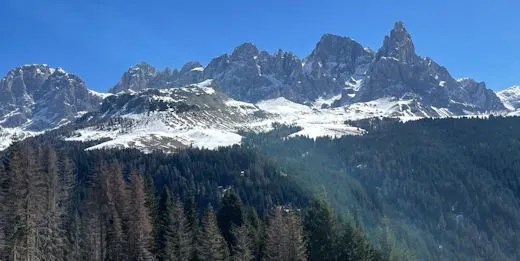
The study’s location in the Dolomite Mountains of Italy. Photo credit: Monica Gagliano
A paper just published in the journal Royal Society Open Science reports the extraordinary reaction of an Italian mountain forest to a partial eclipse on Oct. 25, 2022. Electrical signals inside spruce trees began to pulse in unison, with older trees seeming to anticipate the eclipse before it happened.
This is unconventional research, and it may challenge what some readers think about trees. However, it is serious work conducted by experts in plant communication and published in a peer-reviewed journal of the Royal Society.
The paper reports how scientists led by Alessandro Chiolerio of the Italian Institute of Technology and Monica Gagliano of Southern Cross University attached electrodes to three Norway spruce trees and five tree stumps. Their device is like an EKG for trees. The trees were different ages, ranging from 20 to 70 years old, allowing the team to compare how age might influence bioelectrical responsiveness to the eclipse.
Electrodes connected to the spruce trees during the eclipse. Photo credit: Monica Gagliano
As the eclipse approached, electrical signals from different trees began to align; their waveform became more similar in shape and timing. This synchronization peaked during the eclipse and gradually diminished afterward. The older trees started showing electrical changes earlier, hours before the eclipse began, while the youngest tree responded later and more weakly. The tree stumps also exhibited a bioelectrical response, albeit less pronounced than in the standing trees.
The researchers interpreted this as a coordinated “organism-like” response to a large-scale environmental event, possibly involving communication or shared signaling pathways.
The idea that trees may “talk” to one another is key to the burgeoning field of plant communication. A growing body of research (especially since the 1990s) suggests that trees form symbiotic relationships with fungi, creating vast underground networks called the “Wood Wide Web.” Through these networks, trees exchange nutrients, water, and even chemical signals. They also reportedly recognize their own young and give preferential treatment to kin. Even tree stumps may retain connections to this network.
“Basically, we are watching the famous ‘Wood Wide Web’ in action!” says Gagliano.
Although the researchers successfully detected electrical activity in the trees, they have no idea what was being said–if anything. Perhaps it was simply a basic response to changes in temperature or light levels (about 1/3rd of the sun was covered during the eclipse). The researchers don’t yet speak the “language” of arboreal electricity, so they can’t decipher what they overheard. Repeating the experiment in different forests during more eclipses may be revealing.
Stay tuned for updates from the forest.
Recommended reading: Two good introductory books on plant communication and networking are “Finding the Mother Tree” by Suzanne Simard and “The Light Eaters” by Zoe Schlanger.
The Time Portals are real. NASA acknowledges their existence, and I posted about it on here. There are gateways on earth to these spacetime portals, but they are not to be toyed with. And as I’ve said, you can’t necessarily go through. Time Travel, at this point in our awareness, is not heartily supported by Universe Watchers.
You might dream about a necessary time period. In that dream, you may be told what to have with you to survive. You can get to the portal. It activates for you because you know someone in that time period. Here are the locations. If you hear and feel a very loud buzzing sound, be careful, it’s activated for you. Others with you may not hear it which means they have to stay in this current time.
You can go to the portal nearest to you.
Polar Kin
60 degrees north–15 degrees west–Sun-NW of the U.K. in the N. Atlantic
60 degrees north–75 degrees east–Serpent-N. USSR
60 degrees north–165 degrees east-Dog-Far E. USSR by the Bering Sea
60 degrees north–105 degrees west–Eagle-N. Saskatuan Canada by Uranium City on the border of the N. Territories.
30 degrees north–120 degrees east–World-Bridger-Shanghai, China
30 degrees north–150 degrees west–Monkey-N. Pacific between Baja, CA and Hawaii
30 degrees north–60 degrees west–Warrior-N. Atlantic off the Bermuda Islands (The Bermuda Triangle is likely the portal–25 degrees N–71 degrees W)
Core Kin
Equator–15 degrees west–Earth-The Mid Atlantic Ocean off the coast of Liberia on the African continent
Equator–75 degrees east–Wind-The Maldive Islands off the coast of India
Equator–165 degrees east–Hand-Micronesia off the island of Mauru
Equator–105 degrees west–Human-West of the Galapagos Islands off of the coast of Ecuador
Signal Kin
30 degrees south–30 degrees east-Mirror-South Africa
30 degrees south–120 degrees east-Night-SW Australia by Lake Moore
30 degrees south–150 degrees west-Star-South of French Polynesia in the S. Pacific
30 degrees south–60 degrees west-Skywalker-Northern Argentina, N. of Santa Fe in the Andes Mountains)
Gateway Kin
60 degrees south–15 degrees west-Wizard-South Atlantic off the Sandwich Islands
60 degrees south–75 degrees east-Storm-South of the Kerguelan Islands in the Indian Ocean off the coast of Australia
60 degrees south–165 degrees east-Seed-South Pacific, south of Australia
60 degrees south–105 degrees west-Moon-10 degrees N. of the Antarctic Circle in the S. Pacific Ocean far off the coast of Chile.
This Red Moon portal could be trouble. There is an international military force down there working on an old Mothership. Civilians are banned. Red Moon symbolizes Methionine. It is the amino acid start codon for human DNA sequencing. Who knows what they’re up to in that portal.
Listen to this while you read, if your brain can do that.
Cesium is a naturally-occurring element found in rocks, soil and dust at low concentrations. The biological half life of Cesium in humans ranges from 15 days in infants to 100-150 days in adults. According to Lenntech, humans and animals are constantly exposed to trace amounts of cesium when eating, breathing and drinking. While it is unlikely that people will experience adverse health effects just due to the cesium, exposure to radioactive cesium or certain cesium compounds can lead to adverse health effects including nausea, vomiting, bleeding and cell damage.
Cesium is incredibly accurate at timekeeping and is used in atomic clocks. The official definition of a second is the time it takes for the cesium atom to vibrate 9,192,631,770 (9 billion) times between energy levels. Cesium-based atomic clocks lose one second per 100 million years. So Cesium controls our definition of time which is the length of a second. That same control of time is found in trace amounts in our bodies.
So…the same element that is found in low amounts in nature whose vibration controls our measurement of time is also found in our bodies. Hmm.
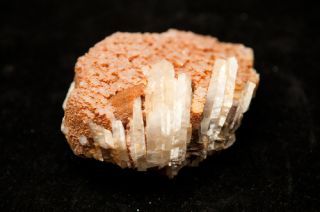
Cesium is a rare, silver-white, shiny metal with brilliant blue spectral lines; the element’s name comes from “caesius,” a Latin word meaning “sky blue.” It is the softest metal, with a consistency of wax at room temperature. It would melt in your hands — if it didn’t explode first, as it is highly reactive to moisture.
Cesium is a naturally occurring element, although almost never on its own, according to the Jefferson Lab, with a presence in several minerals. It has a density of nearly twice that of water, and is very ductile.
This just raises more questions for me. Obviously, everything alive in nature also has DNA and keeps track of time internally on its own then gives cues to the sun. We do as well. As the song says, “The seasons know exactly when to change.” Song by Stevie Wonder. He is synchronistically Blue 1 Magnetic Eagle.
“It is no great leap then to say that nature is time and feels and makes it internally via the sun. This is the basis of holistic medicine as well. It is nature that regulates the clocks. The clocks don’t regulate anything.”-Lisa T.
Reclaimed by nature in Saint Petersburg, Florida. Photo: Bear Creek Custom Timber LLC
So it is with every event that happens in time. Time is DNA. They merge with each other because they’re one. The tree, stone and human are all composed of DNA. As time evolves DNA evolves and eventually it’s gone.
The memory goes into the akashic record. But memory is an apparition, unmanifested.
I don’t. But many women don’t like to be ignored. Kind, smiling, pretty, plain women are preferred by a husband for marriage (hurrah! Sarcasm) But when it comes to fun, sex, and money, because of the sexual objectification of women, men prefer novice, meanness, titillation, color, and bitchiness.
Women are just actors in men’s psychodrama projection. It’s important for women to see that if they want to choose to lead authentic lives and play no role for anyone. Some men see women as human beings but most don’t. They can’t because we’re more human than them and rival them in a myriad of ways. That’s not something that they can psychologically handle in their ego.
In many cultures, men are free to have a wife and a mistress so they can have the status they need and basically have their cake and eat it too. Then the women can choose whichever role they prefer to play for the man (to use him of course) as long as patriarchy continues. Women put on all the colorful makeup and clothes, along with gay men to get attention their ego needs.
In nature, the males are bigger and more attractive, dance around and are colorful.The females are just…great the way they are and the colorful men pursue them and show off to get their attention. I know quite a few women who think they are some fancy birds dancing around and showing their stuff. In nature the males do that, not the females.
But I wonder why our society is topsy turvy, where the women feel the pressure to be colorful; LIKE MEN? I shunned public performance because I’m very feminine and come across shy. I’m not shy with a man one on one…at all. But my nature is female! Why would I want to draw a ton of attention to myself? I do get courted by men but not men that I like. That’s troublesome. It’s because I don’t strut myself like a male bird. It’s a boys club, patriarchy, and alpha men like male attributes.
I notice the women on the news are expected to be very aggressive in their tone of voice and buff. Patriarchy essentially means men want men because they feel they are superior to women, or wish thwy were. Lol.
Women are viewed as defective by men that cling to patriarchal misogyny…and football. Many men don’t, I know. He prefers males or women that are aggressive or bitchy. Gag me. That’s the alpha way and obviously, I’m beta. No alpha man has ever pursued me and won’t. I guess beta men like beta women. I’m just throwin’ this out there.
Women who succeed in public are either very assertive, aggressive or a lesbian. IN NATURE, that is a preponderance of testosterone which is alpha male. Beta women that don’t want to act like a guy are ignored, except by the beta males who are trolls, nerd, artists, and freaks (women are all of that too). It now suggests the issue of alpha vs. beta. I believe our society is moving toward the rise of the betas.
I don’t. But many women don’t like to be ignored. Kind, smiling, pretty, plain women are preferred by a husband for marriage (hurrah!) But when it comes to fun, sex, and money, because of the sexual objectification of women, men prefer novice, meanness, titillation, color, and bitchiness. Maybe it’s latent homosexuality. Maybe they are looking for a colorful MAN.
Women are just actors in men’s psychodrama and it’s important for women to see that if they want to choose to lead authentic lives and play no role for anyone. Some men see women as human beings but most don’t. They can’t because we’re more human than them and rival them in a myriad of ways. That’s not something that they can psychologically handle.
In many cultures, men are free to have a wife and a mistress so they can have the status they need and basically have their cake and eat it too. Then the women can choose whichever role they prefer to play for the man as long as patriarchy continues. Women put on all the colorful makeup and clothes, along with gay men.
In nature, the males are bigger and more attractive, dance around and are colorful.The females are just…great the way they are and the colorful men pursue them and show off. I certainly see that with Bruno Mars and the Hooligans. They’re adorable to me! I don’t know what the guys think. I know quite a few women who think they are some fancy birds dancing around and showing their stuff. Most females do love it. That is nature.
But I wonder why our society is topsy turvy, where the women feel the pressure to be colorful; LIKE MEN? I shunned public performance because I’m very feminine and come across shy. I’m not shy with a man one on one…at all. But my nature is female! Why would I want to draw a ton of attention to myself? I do get courted by men.
I notice the women on the news are expected to be very aggressive in their tone of voice and buff. Patriarchy essentially means men want men because they feel they are superior to women.Women are viewed as defective by men that cling to patriarchal misogyny…and football. Many men don’t, I know. So women are only desirable if they’re more like a man. That means the man is essentially homosexual. I’ve never heard anyone suggest that but I see it. He prefers males or women that are aggressive or bitchy. Gag me.
Just throwin’ this out there. Women who succeed in public are either very assertive, aggressive or a lesbian. IN NATURE, that is a preponderance of testosterone which is alpha male. Beta women that don’t want to act like a guy are ignored, except by the beta males who are trolls, nerd, artists, and freaks (women are all of that too). It now suggests the issue of alpha vs. beta.
I wrote this in 2017 when I was still a Dem and pre-covid. Today is July 16, 2026 and I generally still agree but I wnat nothing to do with politics anymore, have lost much of my faith in people after watching them march to the mRNA vaccine with their right arm in the air, and don’t align with any party. Just sayin’. I DID NOT get the vaxx, was run off of most social media, and as a holistic, absolutely knew the human immune system wins the game. 😉🥳
My intuition came on strong today regarding a remedy for what is perceived now in the media as immense gender disparity, women as the victims, and a desire for justice.
Matriarchy and Patriarchy, operating our human societies for the last 10,000 years have set up false equivalencies of power. False equivalence is a logical fallacy in which two completely opposing arguments appear to be logically equivalent when in fact they are not. This fallacy is categorized as a fallacy of inconsistency.
The actual behaviors on the part of men and women, in terms of physical, sexual behavior is entirely natural. What is not natural now is our civilization. It’s artificial due to the effect of silicon binary computer programming on our brains. Everything is dualistic now.
Staring at our screens and not talking or touching one another is indicative of that! Our healthcare system is indicative of that also. Nothing about our body awareness, perception, and flow are in accord with the natural cycles and rhythms of nature.
It’s affected our sexual behavior as women and men, of course, as the first line of physical behavior since that is mainly what we are; sexual animals. Our civilization has taught us, via State and Church to not be sexual animals anymore, or follow nature, and that it should all be controlled and repressed. It’s error to teach that. Sexual behavior and all of nature is actually a beautiful thing; not to be avoided but to be enjoyed with love!
The repression of beauty and enjoyment is a profit boon for the porn industry; bottom line. And why does pornography need to be only seen as violent, incestuous, or pedophilia? Some of it is violent, much of it is not, unless you view that lack of bonding violent. Some might.
We see events now, all over the world really, trying to bring a measure of SHARED power not based on gender. We see it in Saudi Arabia, Europe, Africa, and the U.S. but we keep banging the drum of gender as a procrastination really, mostly on the part of women, to, at last, release matriarchal dominance (the Democrats) that subjugated and insulted men in the past while we abused our power over them.
We need to finally acknowledge that men can take care of themselves as grown-ups and need to rectify their adolescent behaviors (the Pubs). We can each take care of ourselves, and neither women or men need to throw themselves on the sacrificial pyre of STATE or CHURCH forcing its values onto the family.
Those two institutions use gender war to take both of our power. Let’s support one another, be kind and loving to one another and acknowledge our unique power as individuals. Our strength is in each other, not in institutions, tech, political parties, and a money system that supports militarism and gender disparity at the expense of each other.