Significant efforts have been made in the past decades to understand how mental and cognitive processes are underpinned by neural mechanisms in the brain. This paper argues that a promising way forward in understanding the nature of human cognition is to zoom out from the prevailing picture focusing on its neural basis. It considers instead how neurons work in tandem with other type of cells (e.g., immune) to subserve biological self-organization and adaptive behavior of the human organism as a whole. We focus specifically on the immune cellular processing as key actor in complementing neuronal processing in achieving successful self-organization and adaptation of the human body in an ever-changing environment. We overview theoretical work and empirical evidence on “basal cognition” challenging the idea that only the neuronal cells in the brain have the exclusive ability to “learn” or “cognate.”
The focus on cellular rather than neural, brain processing underscores the idea that flexible responses to fluctuations in the environment require a carefully crafted orchestration of multiple cellular and bodily systems at multiple organizational levels of the biological organism.
Hence cognition can be seen as a multiscale web of dynamic information processing distributed across a vast array of complex cellular (e.g., neuronal, immune, and others) and network systems, operating across the entire body, and not just in the brain. Ultimately, this paper builds up toward the radical claim that cognition should not be confined to one system alone, namely, the neural system in the brain, no matter how sophisticated the latter notoriously is.
Starting with human minds invokes a bias that awards our human form of consciousness a special, distinct, and superior status; one that is different in fundamental ways from the mental experiences of other species.
The authors declare that the research was conducted in the absence of any commercial or financial relationships that could be construed as a potential conflict of interest.
A new study hints that humans have magnetoreception abilities, similar to some other animals.
ANIMAL MAGNETISM Like birds, bacteria and other creatures with an ability known as magnetoreception, humans can sense Earth’s magnetic field (illustrated), a new study suggests. vchal/Shutterstock
A new analysis of people’s brain waves when surrounded by different magnetic fields suggests that people have a “sixth sense” for magnetism.
Birds, fish and some other creatures can sense Earth’s magnetic field and use it for navigation (SN: 6/14/14, p. 10). Scientists have long wondered whether humans, too, boast this kind of magnetoreception. Now, by exposing people to an Earth-strength magnetic field pointed in different directions in the lab, researchers from the United States and Japan have discovered distinct brain wave patterns that occur in response to rotating the field in a certain way.
These findings, reported in a study published online March 18 in eNeuro, offer evidence that people do subconsciously respond to Earth’s magnetic field — although it’s not yet clear exactly why or how our brains use this information.
“The first impression when I read the [study] was like, ‘Wow, I cannot believe it!’” says Can Xie, a biophysicist at Peking University in Beijing. Previous tests of human magnetoreception have yielded inconclusive results. This new evidence “is one step forward for the magnetoreception field and probably a big step for the human magnetic sense,” he says. “I do hope we can see replications and further investigations in the near future.”
The best of Science News – direct to your inbox
Headlines and summaries of the latest Science News articles, delivered to your email inbox every Thursday.
During the experiment, 26 participants each sat with their eyes closed in a dark, quiet chamber lined with electrical coils. These coils manipulated the magnetic field inside the chamber such that it remained the same strength as Earth’s natural field but could be pointed in any direction. Participants wore an EEG cap that recorded the electrical activity of their brains while the surrounding magnetic field rotated in various directions.
This setup simulated the effect of someone turning in different directions in Earth’s natural, unchanging field without requiring a participant to actually move. (Complete stillness prevented motor-control thoughts from tainting brain waves due to the magnetic field.) The researchers compared these EEG readouts with those from control trials where the magnetic field inside the chamber didn’t move.
Joseph Kirschvink, a neurobiologist and geophysicist at Caltech, and colleagues studied alpha waves to determine whether the brain reacts to changes in magnetic field direction. Alpha waves generally dominate EEG readings while a person is sitting idle but fade when someone receives sensory input, like a sound or touch.
Sure enough, changes in the magnetic field triggered changes in people’s alpha waves. Specifically, when the magnetic field pointed toward the floor in front of a participant facing north — the direction that Earth’s magnetic field points in the Northern Hemisphere — swiveling the field counterclockwise from northeast to northwest triggered an average 25 percent dip in the amplitude of alpha waves. That change was about three times as strong as natural alpha wave fluctuations seen in control trials.
ROTATION REACTION When downward-pointing magnetic fields were rotated counterclockwise, from northeast to northwest, researchers saw a significant dip in participants’ alpha brain waves (left). Alpha waves are similarly dampened when someone receives sensory input like a sound or smell. This response was not seen when downward fields rotated clockwise (center) or were held steady (right).
Curiously, people’s brains showed no responses to a rotating magnetic field pointed toward the ceiling — the direction of Earth’s field in the Southern Hemisphere. Four participants were retested weeks or months later and showed the same responses.
“It’s kind of intriguing to think that we have a sense of which we’re not consciously aware,” says Peter Hore, a chemist at the University of Oxford who has studied birds’ internal compasses. But “extraordinary claims need extraordinary proof, and in this case, that includes being able to reproduce it in a different lab.”
Questions raised
If these findings are able to be replicated, they pose several questions — such as why people seem to respond to downward- but not upward-pointing fields. Kirschvink and colleagues think they have an answer: “The brain is taking [magnetic] data, pulling it out and only using it if it makes sense,” Kirschvink says.
Participants in this study, who all hailed from the Northern Hemisphere, should perceive downward-pointing magnetic fields as natural, whereas upward fields would constitute an anomaly, the researchers argue. Magnetoreceptive animals are known to shut off their internal compasses when encountering weird fields, such as those caused by lightning, which might lead the animals astray. Northern-born humans may similarly take their magnetic sense “offline” when faced with strange, upward-pointing fields.
This explanation “seems plausible,” Hore says, but would need to be tested in an experiment with participants from the Southern Hemisphere.
The brain’s attention to counterclockwise but not clockwise rotations “is something surprising that we don’t really have a good explanation for,” says coauthor Connie Wang, who studies magnetoperception at Caltech. Some people may respond to clockwise rotations, just like some people are left-handed rather than right-handed, or clockwise rotations generate brain activity not captured in the alpha wave signal, she says.
Even accounting for which magnetic changes the brain picks up, researchers still don’t know what our minds might use that information for, Kirschvink says. Another lingering mystery is how, exactly, our brains detect Earth’s magnetic field. According to the researchers, the brain wave patterns uncovered in this study may be explained by sensory cells containing a magnetic mineral called magnetite, which has been found in magnetoreceptive trout as well as in the human brain (SN: 8/11/12, p. 13). Future experiments could confirm or eliminate that possibility.
With this first compelling evidence that humans are subconsciously processing magnetic signals, “we can [try to] identify the brain region it originates from and try to identify the nature of the cells” responsible, says Michael Winklhofer, a magnetoreception researcher at the University of Oldenburg in Germany. “This is really the first step.”
Previously the staff writer for physical sciences at Science News, Maria Temming is the assistant managing editor at Science News Explores. She has bachelor’s degrees in physics and English, and a master’s in science writing.
We are at a critical time and supporting climate journalism is more important than ever. Science News and our parent organization, the Society for Science, need your help to strengthen environmental literacy and ensure that our response to climate change is informed by science.
Science News was founded in 1921 as an independent, nonprofit source of accurate information on the latest news of science, medicine and technology. Today, our mission remains the same: to empower people to evaluate the news and the world around them. It is published by the Society for Science, a nonprofit 501(c)(3) membership organization dedicated to public engagement in scientific research and education (EIN 53-0196483).
Use up and down arrow keys to explore.Use right arrow key to move into the list.Use left arrow key to move back to the parent list.Use tab key to enter the current list item.Use escape to exit the menu.
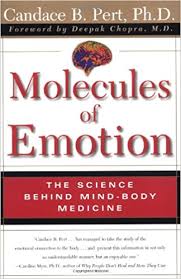
She’s in Southern California now hanging out with the progressive, spiritual folks.
“Here in California there seems to be room for a consideration of the spiritual dimension of health, which can encompass such elements as prayer, energy flow, distant healing, and psychic phenomena, to name but a few.”
The time period was post-NIH when she felt unsupported and maligned, so her friend Nancy taught her a type of protective mantra that focuses the mind and the Qi. I do this with my own patient’s as well who are going through very difficult circumstances with work or divorce. When your habitual thought and emotions go negative, it goes right into your cells. Which cells it goes into depends on which thoughts and feelings you’re running. None of it is good for you or your body. I get rid of the rocks in my patient’s shoulders and they return with them again if they don’t stop the mental/emotional habit. Holistic medicine is about real change; not pills. We have scads of scientific evidence backing it up. It’s important to set your boundaries and protect yourself between treatments. We call that mindfulness or self-care.
She felt good about doing it on an intuitive level and called it, “extracorporeal peptide reaching, a form of emotional resonance that happens when receptors are vibrating together in seemingly separate systems. This was before the term subtle energy had been introduced to describe a still mysterious fifth force beyond the four conventional forces of physics; electromagnetic energy, gravity, and weak and strong nuclear forces.”
She then gets into a conversation about how the information has changed our concepts.
“We have to make a distinction between the metaphor of matter and energy and that of information”, her friend Gottesman said. “The older metaphor deals with matter, force, energy, and is expressed in Einstein’s famous formula connecting those elements E=mc2. While these terms are useful for building locomotives and bridges, even atomic bombs, they are not so useful for understanding the human body. Physical processes aren’t things, they are dynamic and take place in an open fluid system, and therefore fit better with the metaphor of information than that of matter and force.”
I absolutely see this as well in my office. My patients don’t hesitate one bit when I suggest that what they’ve been through and continue to hold to as far as a mental and emotional habit is causing the problem in the tissue that I’m holding in my hand. Once they realize it, they can let it go. How do I know what the energy is? Part of it is listening, part of my work is intuition. When dealing with the body, intuition is vital.
He goes on; “Today, the concept of information is replacing energy and matter as the common denominator for understanding all biological life and even environmental processes.” Dr. Pert says, “Yes, and the neuropeptides and receptors are the biochemicals we call information molecules, they are using a coded language to communicate via a mind-body network. They are in the process of information exchange, having a two-way conversation-very different from what happens when there is a one-way push from behind, the way force works.”
Well, our modern healthcare system hasn’t caught up with all of this science one bit, which came out in the late nineties. And here it is 2017. Why should we believe anything they recommend. They’re not updated.





 Synchronicity is the Source of Consciousness
You must be logged in to post a comment.