Just imagine what it is now in 2025. It’s in the trillions of taxpayer dollars.
Content type; Open Source
Date: Jan. 3, 2012
Go to CIA.gov
FOIA
Secondary Navigation
Freedom of Information Act Electronic Reading Room
Requestor Portal
Historical Collections
Browse the Collections | Advanced Search | Search Help
Search form
Search Query for FOIA ERR:
Document Number (FOIA) /ESDN (CREST):
CIA-RDP90-00965R000504560001-4
Release Decision:
RIPPUB
Original Classification: K
Document Page Count: 7
Document Creation Date: December 22, 2016
Document Release Date: January 3, 2012
Sequence Number: 1
Case Number:
Publication Date: March 1, 1986
Content Type: OPEN SOURCE
File: Attachment Size-PDF icon CIA-RDP90-00965R000504560001-4.pdf 741.96 KB
Body: ST Declassified in Part – Sanitized Copy Approved for Release 2012/01/03: CIA-RDP90-00965R000504560001-4
ARTICLE NATIONAL JOURNAL ON PAGE 1 March 1986 Pentagon’s Top Secret `Black’ Budget Has Skyrocketed During Reagan Years a National Journal review of Defense Department budget reports shows an indisputable surge-to more than $22 billion in fiscal 1987-in secret spending. The United States, most observers would agree, maintains one of the most open defense establishments in the world, even if only by comparison with its major foreign counterparts. Just one manifestation-and guarantor of this remarkable degree of military disclosure is the small army of Pentagon officials who parade each year before the 19 congressional subcommittees with direct oversight responsibility for defense matters to explain and justify, often in nitpicking detail, their weapons programs and operating plans. The 40-odd volumes of printed testimony these hearings produce each budget season, even though carefully sanitized to remove what the services regard as sensitive data, divulge a wealth of information about current U.S. military affairs to anyone dogged enough to plow through thousands of pages of fine print.
The Defense Department itself consumes uncounted reams of paper every year churning out reports on its budgets and activities. Members of Congress, outside analysts and a small handful of Pentagon insiders complain, however, that this generally observed tradition of military openness is being undermined by an unsettling new budgetary trend. Since the Reagan Administration arrived in Washington five years ago, a steadily growing proportion of the Pentagon’s budget has been funneled into highly classified programs-the so-called black budget. Defense policy analysts may disagree on the exact size and rate of increase of the “black” defense budget, but few dispute that it has grown significantly over the past half-decade. A review of the Defense Department budget reports by National Journal confirms the surge in secret defense spending-to more than $22 billion in the fiscal 1987 budget request-a 300 per cent increase over the $5.5 billion in 1981. The amount of classified funds ear- marked for research and development (R&D) and procurement projects that the Pentagon declines to enumerate in specific budgetary line items has jumped from $891.9 million in fiscal 1981 to $8,6 billion in the fiscal 1987 request, a ten-fold increase. (See box, pp. 494-95.) That $8.6 billion-a lot of money by most yardsticks, but only 3 per cent of the Defense Department’s $311.6 billion re- quest for fiscal 1987-nevertheless constitutes only one piece of the Pentagon’s classified budget puzzle.
The 1987 defense budget also contains almost $14 billion worth of another kind of black money: programs for which the department enumerates the budget request in specific line items generally Armed Services chairman Les Aspin worth billions of dollars each and bearing either codeword nicknames or vague, nondescriptive titles-and for which it does not publicly reveal the purpose. The dollar value of five such large line items in the Air Force procurement bud- get has jumped from $3.8 billion in fiscal 1981 to $11.5 billion in the request for 1987; that’s an increase of more than 200 percent or double the percentage increase in the Pentagon’s total procurement budget over the same period.
Additional pockets of black dollars are reportedly tucked away in the operations and maintenance and military personnel budgets, although the amounts of those funds are difficult to gauge. The Defense Department, not surprisingly, maintains an official stance of strict silence on the growth in black budgeting and the reasons for its growth. “Nobody here ever discusses that aspect of the budget,” said a Pentagon spokesman. “That’s an area we cannot talk about.” Other players in the Washington budget game, however, are more vocal in commenting on the black hole that is rapidly widening in the Pentagon budget. “You are talking about 20 per cent of the [defense R&D] budget being hidden and, of that 20 per cent, I would say most of it is on the basis of national security, but a lot of it doesn’t belong there,” Anthony R. Battista, the staff director of the House Armed Services Research and Development Subcommittee, warned members in a briefing last March. “That is the kind of stuff you have got to pay close attention to this year, because the number and scope of the black programs is growing at a phenomenal rate.”
Defense reporter Richard C. Barnard has written on several occasions about the Pentagon’s black budget, first for Defense Week and more recently as editor of a new weekly, Defense News. Cf t natl Declassified in Part – Sanitized Copy Approved for Release 2012/01/03: CIA-RDP90-00965R000504560001-4 Declassified in Part – Sanitized Copy Approved for Release 2012/01/03: CIA-RDP90-00965R000504560001-4
Rep. John D. Dingell (left) says “black” programs lack sufficient scrutiny; Sen. Barry Goldwater disagrees. “The problem was first pointed out to activities to include such big-ticket statement in 1982 by a deputy assistant secret strategic nuclear weapons as the radar-evading Secretary of Defense,” Barnard said. “We were discussing other matters and he also called stealth, Advanced Technology Bomber (ATB), and even tactical said, ‘By the way, if you want to see a cruise missile.
“I would prefer to see more of it [black take a look at the black programs.’ His money] moved into the public domain,” main objection was that at least a third of Les Aspin, D-Wis., chairman of this stuff was black to make it easy [to House Armed Services Committee, said manage] or to cover somebody’s ass.” in an interview.
Pentagon-bashers in recent years. The National Reconnaissance Office, “In part,” said Gordon Adams, director which manages satellite and aircraft reactor of the Defense Budget Project, a reconnaissance for a variety of user agency Washington-based research organization, cities, has yet to be acknowledged even “this whole problem of enormous growth though its existence has been known ever of black programs has to do with a larger since its name was inadvertently men- issue, which is the extent to which [they requisitioned in a 1973 congressional report. The Defense Department] does not trust Congress and the public. The office reportedly has an annual budget of – $3 billion-$4 billion. There’s a tremendous paranoia these days about what the public will think about it.” Almost as secretive is the National Congress will do with your program and Security Agency. Charged with overseeing all U.S. signals intelligence-gathering. These concerns become especially activities, the agency functions as a sort of global electronic vacuum cleaner, intercepting a wide range of communications acute as the roster of secret projects expands beyond spy satellites and other – – traditionally black intelligence-gathering operations, radar and weapons test telemetry signals.
Estimates of its annual budget range from $5 billion-$10 billion. Funds for the agency and for the reconnaissance office, as well as for the CIA, are reportedly tucked away somewhere in the Defense Department’s black coffers. The budgetary pockets many analysts believe are likely repositories for these intelligence-related dollars are four big Air Force procurement line items labeled special programs, special update programs, selected activities and special update pro- gram-and another line item in that service’s R&D budget called special activities. All told, those five items account for $9.6 billion in the fiscal 1987 Air Force budget request.
John E. Pike, a defense analyst for the Federation of American Scientists who spends much of his time studying obscure Defense Department documents, contends that the $4.1 billion selected activities line item holds operating funds for the intelligence agencies. “The Air Force Cost and Planning Factors Manual gives you outlay rates for the various procurement categories, and they break it down by chocolate [classified] and vanilla [unclassified],” Pike said. “The outlay rate for ‘classified Air Force other procurement’ is like 85 per cent in the first year. An outlay rate like that screams ‘agency operating budget.’ “ The average outlay rate-the pace at which new defense appropriations are spent-for the first year of an actual procurement program is 13 per cent. Funds for personnel and operations are spent much more quickly, lending support to Pike’s thesis that the Air Force’s selected activities include a lot more than miscellaneous procurement. Most experts interviewed believe that intelligence and reconnaissance programs continued Declassified in Part – Sanitized Copy Approved for Release 2012/01/03: CIA-RDP90-00965R000504560001-4 Declassified in Part – Sanitized Copy Approved for Release 2012/01/03: CIA-RDP90-00965R000504560001-4 were quite properly conducted under the cloak of secrecy, although some felt the extreme degree of secrecy-the National Reconnaissance Office classifying its letterhead, for instance often bordered on the absurd.
Those same sources, however, were generally less tolerant of the thick veil of secrecy that has been drawn over the budgetary details of the stealth fighter, bomber and cruise missile programs. (See NJ. 1/11/86, p. 66.) “The way we piss away money, how do the budget numbers mean anything?” asked Paul Hoven, a research associate at the Project on Military Procurement, a Washington public-interest group. “If we buy a $7,000 coffee pot, how can anyone tell anything just by looking at the bud- get?” Combing defense budget documents looking for telltale traces of stealth money has become a popular sport in Washington and on Wall Street. The heavy betting this year on where advance procurement money for the stealthy ATB might be cached rides on a line item in the Air Force’s aircraft procurement category, entitled other production charges. The $3.7 billion request for that line item is a $1.5 billion increase over this year’s allocation and a $2.9 billion jump over fiscal 1981 funds-a good sign that it is a catchall for black money. Research funds for the ATB have long been rumored to reside in a classified Air Force R&D line item called advanced concepts. But the program element number-the six-character alphanumeric code appended to all R&D programs indicates that advanced concepts involve some sort of black missile program. A more likely candidate for ATB funds is a line item called special improvement projects.
Both of those unhelpfully titled programs are found in the Air Force’s strategic R&D budget listings, which contain eight black line items worth a total of $2.6 billion for fiscal 1987. Among them are two, called Bernie and Leo, the unknown purpose of which has been driving finding the Pentagon’s Black Numbers Deriving the numbers that chart the dramatic tenfold increase in the dollar value of classified “offline item” defense programs from fiscal 1981-87 call for little more than a reliable pocket calculator and a high tedium threshold.
Add up the more than 2,600 individual line items listed in the Defense Department’s research and development and procurement budget books-called the R-1 and the P-1- subtract the various subtotals from those published by the Pentagon and any resulting discrepancy is part of the “black” budget. The bureaucrats who assemble the military construction budget document-called the C-1-simplify the task by listing funds destined for work at “classified locations” as a separate line item. The funds shown in the table are those earmarked for specific programs for which the Defense Department lists a line item but will not say how much is being spent. Not included are funds for code-named projects for which the Pentagon discloses the budget, but not the purpose. More than $500 million is allotted to 15 such projects in the Navy’s fiscal 1987 R&D budget alone, and more than $13 billion is contained in six big Air Force line items with such nondescriptive titles as “selected activities.” Further black defense dollars are reportedly contained in the Pentagon’s operations and maintenance and personnel budgets-for which $163.2 billion is requested for fiscal 1987-but which are not as amenable to “reverse engineering” as the other defense budget components.
Thus, the Defense Department’s actual black budget could be more than three times as large as the numbers below suggest. In the table, the defense agencies listed as receiving black money are the Defense Intelligence Agency and the National Security Agency, with the latter getting the lion’s share (in millions of dollars, by fiscal year). 1981 1983 % growth, 1985 % growth R&D Actual, Actual 1981-83, Actual 1983-85
- Army $3.7 $58.3 1,476% $230.4 295%
- Navy 24.2 156.6 547 270.9 73
- Air Force 181.1 325.0 79 1,993.5 513
- Defense agencies 417.3 755.7 81 1,040.0 38
- Black R & D $626.3 $1,295.6 107% $3,534.8 173% T
- Total defense R & D $16,633.5 $22,824.8 $30,869.5
- Black percentage 3.8% 5.7% 11.5%
- Procurement Army $0.0 $0.0 – $0.0 – Navy 0.0 0.0 – 0.0 –
- Air Force 0.0 0.0 – 38.9 –
- Defense agencies 261.0 706.8 171% 713.8 0.9%
- Black procurement $261.0 $706.8 171% $752.7 6.0%
- Total procurement $47,767.5 $79,659.6 $93,423.1
- Black percentage 0.5% 0.8% 0.8%
- Construction Black construction $4.6 $44.0 $58.6
- Total construction $5,467.8 $7,230.7 $8,424.2
- Black percentage 0.08% 0.6% 0.7%
- Total black budget $891.9 $2,046.4
Continued Declassified in Part – Sanitized Copy Approved for Release 2012/01/03: CIA-RDP90-00965R000504560001-4 Declassified in Part – Sanitized Copy Approved for Release 2012/01/03: CIA-RDP90-00965R000504560001-4 outside analysts mad with curiosity.
Cute code names are nothing new; in the mid- 1970s, Air Force stealth aircraft research was called Harvey, after the invisible rabbit in the play of that title. The procurement line item for the secret Advanced Cruise Missile is clearly labeled, although the Air Force declines to say how much it plans to spend in fiscal 1987. Since there are only two black projects in that budget category-the other, called tactical drones, is generally thought to be the Pave Tiger, a small, unpiloted attack aircraft-it is easy to subtract out the black funds, $841.6 million, most of which can be assumed to be for the stealthy new cruise missile.
1987 % growth Request
1985-87 $926.1 302% 548.8 103 3,868.7 94 1,275.8 23 $6,619.4 87% $41,929.9 15.8% $351.0 – 0.0 841.6 2,063% 742.4 4.0 $1,935.0 157% $95,776.8 2.0% $57.5 $10,157.2 0.6%
Also stashed away somewhere in the defense budget is research and production money for the secret F-I9 stealth fighter and the Army-Air Force Joint Tactical Cruise Missile, designed to attack Soviet targets far behind the lines in a European war. (See NJ, 1/4/86, p. 22.) Along with $548.8 million for black intelligence and communications projects, the Navy R&D budget contains another half-billion dollars for 15 research projects with such code names as Chalk Banyan, Link Hazel and Retract Maple, all thought to involve secret submarine silencing and detection efforts. The Army procurement budget contains $251 million for black electronics programs such as Trojan, which 1984 congressional testimony identified as a signals intelligence collection effort. Another $100 million worth of M-1 tank cannon shells and 155-millimeter howitzer nerve gas shells have, for some reason, been blacked out. Zeroing in on black funds concealed in the $86.4 billion operations and maintenance budget for 1987 is a more difficult undertaking. But a congressional reporting document, Justification of Estimates for Operations and Maintenance, reveals at least one black item: $158.7 million this year for something elliptically (enigmatically?) termed the Special Tactical Unit Detachment.
Those millions, apparently, finance operations at “Dreamland,” a restricted site on the enormous expanse of Nellis Air Force Base near Las Vegas, Nev., where the Air Force tests secret aircraft. Lt. Gen. Robert M. Bond, vice commander of the Air Force Systems Command, died two years ago in a mysterious, highly publicized crash at Dreamland. Finding the black in the proposed $10.2 billion military construction budget is much less arduous because the Pentagon set out the $57.5 million for secret construction in identifiable line items. Among the black projects are $2.9 million for housing at “Base Thirty,” a TR-1 spy plane base at a classified overseas location, and $5.5 million for a satellite control facility at “Base Forty-Three,” a secret site in the United States. It is difficult to discern how much black money is in the Pentagon s personnel budget. $76.8 billion in the fiscal 1987 request. “The number of people who work for the [National Security Agency is classified, and the same thing goes for the CIA.” said Jeffrey T. Richelson. a professor of government at the American University and author of Intelligence Community (Ballinger, 1985). “So, I suppose that there probably are black activities included in the personnel budget.” There is a great deal, obviously, that outsiders can never hope to learn about the Pentagon’s black budget by deciphering open documents. “If they don’t want you to find it, it’s hard to find; these people are not fools,” cautioned Joseph F. Campbell, an aerospace analyst for Paine Webber Group Inc. in New York. “They screw around with those numbers,” said David J. Smith, a senior analyst with Sanford C. Bernstein & Co., a New York-based broker. “Now that people are chasing it [black financing], they’re putting things in there to throw them off track.”
ACCOUNTABILITY Sources, even those with inside knowledge, disagree on the extent to which black programs are subjected to adequate oversight. “In my experience, some of the black programs have a much more attentive level of oversight than some of the regular programs,” said William J. Perry, a former Defense undersecretary for research and engineering. “There are three reasons to have black programs,” asserted Thomas S. Amlie, who works with gadfly A. Ernest Fitzgerald in the office of the Air Force assistant secretary for financial management. “One, it deserves to be black. There may be five of those, and Stealth isn’t one of them. Two, you’re doing something so dumb you don’t want anyone to know about it. Or, three, you want to rip open the money bag at both ends and get out a big scoop shovel, because there’s no accountability whatsoever.”
On several recent occasions, officials have publicly aired the possibility that some black programs are established precisely to elude oversight. Such a note of caution found its way into the report issued last November by the Commission to Review Department of Defense Security Policies and Practices, chartered in the wake of the Walker family Navy spy scandal. “The possibility exists that such programs could be established for other than security reasons,” suggested the Stillwell Commission, so named after its chairman, retired Army Gen. Richard G. Stillwell; “in other words, to avoid competitive procurement processes, normal inspections and oversight or to expedite procurement actions.” Battista of the House Armed Services Committee staff lent flesh to the commission’s suggestion in his briefing last spring, describing “a jamming system one year that was funded in the black world, not because of national security [because] it was developed as a white world program. It turns out they funded the losing contractor in a competition [and made the program black] so Congress wouldn’t be aware of that.”
Conduced Declassified in Part – Sanitized Copy Approved for Release 2012/01/03: CIA-RDP90-00965R000504560001-4 Declassified in Part – Sanitized Copy Approved for Release 2012/01/03: CIA-RDP90-00965R000504560001-4 5 Rat’s Maze or Tool of Efficiency Last September, Defense News editor Richard C. Barnard published a commentary decrying the growth of highly classified “black” programs. “It is a matter of time before the public gets a peek inside the rats’ maze and is repelled by what is there,” he wrote. “A huge systems failure? Another crash of a black plane? A billion dollars squandered. Where is the $650 hammer of the black system? It is there. And it will be put to the same purpose as was the scandal over spare parts pricing: to damage public faith in the Pentagon and in the defense industry.”
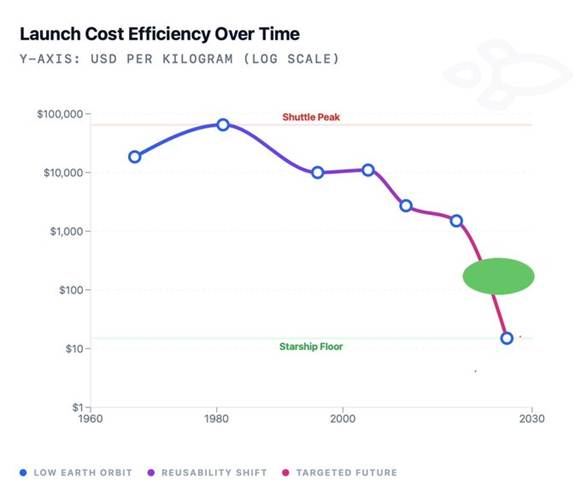
The editorial drew a generally approving response, including letters from several Members of Congress. But, Barnard said, “a lot of people called me from industry and said: ‘You’re dead wrong, it’s not a problem. I can build [black] aircraft for 60 per cent of the cost because I don’t have all these agencies coming down on me every time I draw a breath.’ “ (Just what Elon Musk says about regulations on him. They want and feel they deserve no accountability and anything they ask for with no boundaries because they believe themselves to be superior to everyone else.)
The argument that black programming fosters efficiency because it is burdened with fewer bureaucratic gatekeepers is often bolstered by references to Lockheed-California’s secret “Skunk Works.” Under the guidance of the legend’s designer Clarence L. (Ken Davidson, the Skunk or cheaply and efficiently turned out to be the remarkable U-2 and SK-7 spy planes, the former covertly in the Mid-1950s from the CIA ‘s contingency account. “I think there’s validity in the view that the procurement process for black programs is better than for the white,” said House Armed Services Committee Chairman Les Aspin, D-Wis. “Because you keep a lot of people out, you don’t have everyone wanting to be briefed. You can also avoid big design bureaus.”
The question has received some attention from the President’s Blue-Ribbon Commission on Defense Management, whose interim report was scheduled for release on Feb. 28. William J. Perry, a former Defense undersecretary for research and engineering who heads the procurement reform panel, said it examined such successful commercial aerospace programs as Boeing 737. “We discovered,” he said, “that they had certain management characteristics: short lines of communication, clear responsibility and accelerated schedules.” The commission found similarities between the management of model commercial programs and some high-priority classified programs. “We think it is quite possible to apply those techniques” to the range of defense acquisition programs, Perry said. “But we don’t believe that it requires eliminating the over- sight function. What it does require is eliminating many of the [bureaucratic] layers in between.” Laurence B. White of Rockwell International Corp.’s Autonetics Marine Systems Division in Anaheim, Calif., agreed that black programs might be better because “you don’t have as many staff of people scrutinizing everything.” But “there’s a downside to that, too. Without scrutiny, you can have programs getting away from you.” Another downside is the fiscal levy imposed by the intense security measures surrounding such projects. While some programs may have been put in the black expressly because the contracts were not competitively bid, the process also works the other way around. For security reasons, requests for contractor bids on black projects are not publicly issued.
The resulting lack of competition limits the government’s chance of getting the best possible price. Moreover, once a corporation receives a black contract, tight compartmentalization of information reduces the likelihood of creative brainstorming on engineering problems by technicians and managers, who are generally given only a discrete piece of the puzzle to work on. Black work is also conducted in specially constructed secure facilities, using techniques borrowed from the stringent safeguards that have long been used in secret intelligence-related programs. These secure construction measures include thicker walls, no resonant window glass and electronic shielding-all designed to prevent data leakage and eavesdropping. The additional costs, said the Pentagon’s director for information security, L. Britt Snider, “could be significant if you’re talking about vaulted areas and equipment that’s specially shielded.” A further financial penalty is imposed by deep background investigations and polygraph examinations required before workers can be issued clearances to participate in black projects. In testimony to the Senate Armed Services Committee last June, Snider said that 145,000 people were cleared for access to one type or another of black program and that a further 8,000 must be cleared every year. Deep background investigations of the past 15 years of a potential employee’s life cost an average of $1,500-$2,000 each.
The General Accounting Office told the Senate Governmental Affairs Committee last May that an investigations backlog is costing the Pentagon about $1 billion a year in lost productivity for workers awaiting security clearances. Some black programs entail extraordinary security precautions. In 1982, the Air Force initiated Seven Screens, a counterintelligence polygraph operation aimed at all people going to work on a particular black program. The operation entails video-taped polygraphs of at least 2,500 individuals annually. Because the exams are performed at Palmdale, Calif., and Las Vegas, NV, they are generally assumed to involve the stealth bomber program.
The House Post Office and Civil Service Subcommittee on Civil Service has taken a recent interest in Seven Screens because the Air Force has sought to exclude the program from the current quota limit imposed on Pentagon polygraphing. The office of the Defense undersecretary for policy “talked to us about Seven Screens,” said sub- committee chief counsel Andrew A. Feinstein. “They couldn’t find any reason to classify it. But the program people in the Air Force are furious, they don’t want anyone at all to know the existence of this. The fact that we know anything at all about it freaks them out.”
Continued Declassified in Part – Sanitized Copy Approved for Release 2012/01/03: CIA-RDP90-00965R000504560001-4 Declassified in Part – Sanitized Copy Approved for Release 2012/01/03: CIA-RDP90-00965R000504560001-4
A March 1983 General Accounting Office (GAO) report also uncovered cases of inappropriate program classification. The report was a review of Pentagon oversight of “carve-out” contracts written for classified programs that are supposedly of such great sensitivity that the Defense Investigative Service is relieved of its usual security inspection responsibility, which devolves instead to the Pentagon office managing the program. The information restrictions on such programs are sweeping. According to a 1984 Pentagon memorandum, “mere knowledge of the existence of a [carve- out] contract or of its affiliation with the [black] Special Access Program is classified information.” L. Brit Snider, director for information security in the office of the deputy Defense undersecretary for policy, said most black programs involve carve-out contracts. The GAO told of a service carving out a contract only to “preclude someone from identifying the military service involved and the amount of money being spent.” Several contractors and Pentagon officials, the GAO said, “told us that they thought that carve-out contracts were being used to expedite procurement’s and facilitate sole-source [noncompetitive contract] awards.” Hoven of the Project on Military Procurement, which acts as a conduit to the news media for Pentagon whistle blowers, maintained that “black almost tends to be synonymous with a major boner. There must be some programs that are crest-of-the-wave kind of technology that you don’t want the Russians to read about in The Washington Post. But from the [Pentagon] underground, we keep getting words that more and more problems get shifted into the black programs.” In response to concerns ex- pressed by members of the House Appropriations Subcommittee on Defense last spring, Defense Secretary Caspar W. Weinberger assured the panel that the Air Force “has always maintained both stringent management controls and independent audits of these (black] programs.”
Appropriations Subcommittee, who is conducting a long-running investigation into defense contractor ethics, also has grave concerns about accountability for black projects. On Jan. 16, Dingell wrote to Weinberger that “the subcommittee is aware of an increasing number of abuses by the contractors involved in these ‘black’ programs. We have documented evidence that abuses are occurring. Secrecy is being used by the contractors as a device to cloak mischarging, overcharging and, in some cases, engaging in outright illegal activities.” The most glaring example Dingell cited was the Brousseau case. Ronald E. Brousseau Sr., a purchasing agent for Northrop Corp.’s stealth bomber program, pled guilty to fraud and bribery in 1984 after being snared in an FBI sting operation while hustling subcontractors for kickbacks. Transcripts of conversations taped by a wired informant and quoted in the U.S. Attorney’s sentencing memorandum suggest that Brousseau, at Air Force is-house critic Thomas S. Amlie least, was not impressed by the oversight of black programs. “We don’t have any heads, we don’t have any supervisory people,” Brousseau bragged during a May 1984 meeting. “Nobody questions dollars or anything like that as long as I can show competition, whether it’s true competition or courtesy [fraudulent] competition or bullshit competition.” A Northrop spokesman, queried about Amlie, however, after reciting a litany of contracting abuses prevalent in “white” programs, stated that “the black programs are worse, much worse, because nobody’s looking over their shoulder. The few that I know something about are abominably run.” (See box, p. 496.)
John D. Dingell, D-Mich., chairman of the House Energy and Commerce Committee and its Oversight and Investigations, Brousseau, said, “We turned him in; that was our controls that got him.” But the U.S. Attorney’s memorandum states that Brousseau was fingered by an executive from RH Manufacturing, one of the southern California subcontractors to whom he had offered kickbacks. Dingell said in an interview that he has been getting “generally good cooperation from Northrop folks” in his subcommittee investigation. His biggest problem, he said, lay in judging the adequacy of the disclosure filings that Northrop and other contractors working on black projects made to the Securities and Exchange Commission. In his letter to Weinberger, therefore, Dingell requested a list of all black Air Force programs worth more than $10 million and information on the auditing procedures for such contracts. Dingell’s request triggered a heated Jan. 29 letter to Weinberger from Senate Armed Services Committee chairman Barry Goldwater, R-Ariz. “The increasing number of claims that the so-called ‘black’ programs are growing out of control and are subjected to too little oversight is a matter that I take strong exception to,” Goldwater wrote. His committee, he asserted, “has subjected these programs to far more scrutiny and review than ‘white’ programs with comparable budgets.” Citing the success of black program procedures in “keeping information of unprecedented military value from the pages of our newspapers and the halls of the various rumor mills in town,” Goldwater told Weinberger, “I think you ought to resist any stretching of jurisdictional boundaries that expands access to these critically sensitive national security programs.” Peter D. H. Stockton, an investigator for Dingell’s subcommittee, took exception to the Senator’s argument. “Goldwater mischaracterizes the hell out of what Dingell is after,” said Stockton. “No one’s raised any question about our jurisdiction to look into how defense contractors do their business. When he says we’re asking for broad access to these programs, you can see from our letter that it’s really quite limited.” Concerning security, Stockton pointed to a recent lapse committed by Goldwater, who last June, after viewing the stealth prototype, disclosed to reporters that the ATB has a flying-wing configuration similar to Northrop’s experimental YB-49 aircraft of the late 1940s.
Further, a Senate Armed Services Committee press release last April let slip the fiscal Declassified in Part – Sanitized Copy Approved for Release 2012/01/03: CIA-RDP90-00965R000504560001-4 Declassified in Part – Sanitized Copy Approved for Release 2012/01/03: CIA-RDP90-00965R000504560001-4
1986 Pershing II missile production run, which, for reasons best known to the Army, remains a classified number. (See NJ. 1/4/86, p. 55.) “We’ve been dealing very responsibly with the most sensitive information in the government-vulnerabilities in nuclear weapons production plants-and no in- formation on that has leaked out of here,” Stockton asserted. “So, it’s bullshit that we can’t handle that stuff.” Gerry Smith, a Goldwater defense aide, declined to address recent committee security lapses but reasserted the Senator’s position. “There’s already too many people with their fingers in the pie,” Smith said, “and it just doesn’t do any good to increase that.” As to the adequacy of congressional oversight of black procurement, Arnold L. Punaro, staff director for Senate Armed Services Committee Democrats, agreed with Goldwater that black programs receive as much oversight as their unclassified counterparts. “Some people’s definition of doing proper oversight is that if they don’t agree with what was done, then there is no oversight,” he complained.
Black programs largely fall outside of the many reporting requirements that Congress has imposed on the Pentagon. Every quarter, for example, Congress receives Selected Acquisition Reports detailing the cost growth of about 100 major weapon programs. The Defense Department, however, informed the House Appropriations Subcommittee on Defense two years ago that “the Secretary of Defense has determined that certain programs, because of their highly sensitive classification, are exempt from [the reporting] procedures.” In the House Armed Services Commit- tee, according to chairman Aspin, black procurement is scrutinized by the Procurement and Military Nuclear Systems Subcommittee and black R&D by the Research and Development Subcommittee. Later in the authorization process, a panel that includes members of those subcommittees and members of the Permanent Select Committee on Intelligence looks at all of the black programs. The Pentagon, Aspin said, “is pretty forth- coming. There’s always a concern about whether you’re getting the full story, but that’s true about any program.” One Member who has found the Pentagon less than forthcoming is Rep. Mike Synar, D-Okla. He was instrumental in attaching to the fiscal 1986 defense authorization bill an amendment requiring a Defense Department report detailing costs for the Advanced Technology Bomber. Synar was displeased with the Air Force report that arrived on Feb. 1. “Although the report is top secret and I can’t discuss its contents,” he said in a press release, “I can tell you that the essence of the report is only three sentences long. This is an obvious affront to Congress.” The ATB cost estimate, a Synar aide said, was expressed in unadjusted fiscal 1981 dollars and was not supported by requested reliability assessment. Synar has asked the GAO to conduct an independent audit of the bomber’s costs. “I think this is typical of the attitude of the Pentagon,”.”- Defense expert William J. Perry he charged in an interview, “and has triggered some new [congressional] interest in looking deeper into these black programs.”
The Synar case and the Dingell-Goldwater tussle highlight the jurisdictional problems that can arise when Members who lack formal defense oversight responsibility seek wider access to information about projects on the Pentagon’s lengthening list of black projects. “There isn’t any general rule, and that’s awkward,” said Russell Murray, special counselor to the House Armed Services Committee. “All Members have to vote on appropriations, and so they have a right to know what they’re voting about. But at the same time, you have very properly classified development programs that you don’t want bruised about by 535 Members.” Punaro of the Senate Armed Services Committee said that any Senators who want information on black programs can get it, (no they can’t.) The only issue being whether or not they have the time and interest to pursue the matter. “The same situation exists on bills that come out of other committees,” he said. Aspin said it is more difficult for House Members to get fuller disclosure on black programs. “If a member wants to know about it because he votes on it, he should be allowed to do so,” Aspin said. “We’re in a tug-of-war with the Pentagon over Mike Synar on that right now.” TWO-EDGED SWORD.
Whatever the merits of black programming in promoting procurement efficiency or outfoxing the Soviets, the Pentagon may find, as programs hidden in its black box continue to burgeon in size and number, that secrecy, like the truth, can be a two-edged sword. Hiding budget projections does stifle unwanted debate. But, as is happening now with the ATB program, the very fact that the numbers are hidden becomes an unwanted controversy. In the process, the rumored costs conceivably become vastly more inflated than the actual costs. The Pentagon, its lips firmly zipped, is powerless to decisively dispel rising speculation about a stealthy flying pork barrel. Withholding even the most general technical information can also defuse some of the contentious wrangling about military requirements that has beset such weapons as the MX missile and the BI-B bomber while allowing officials to make almost mystical claims for performance.
In his fiscal 1987 report to Congress, for instance, Weinberger dangled the tantalizing prospect of stealth aircraft enabling the United States “to reach into the Soviet Union and destroy selectively highly valued targets.” While the specifics of stealth technology are “appropriately classified,” he continued, “publicly available evidence should suggest that these possibilities are not fanciful.” But persistent rumors percolating in both the liberal and conservative wings of the defense analysis community hold that the ATB might well prove an under- powered and overfinanced turkey. The Pentagon is now confronted by what promises to become a heated bomber debate with little meaningful that it can say publicly in its own defense. In a gloomy assessment last September of the Air Force’s budgetary and hardware prospects for the rest of the century, Armed Forces Journal International editor Benjamin F. Schemmer took that service to task for its “self-defeating secrecy.” Noting that one out of every five procurement dollars in the Air Force budget, and two out of every five of its R&D dollars, were slated for black programs, Schemmer worried that “so much secrecy doesn’t bode well for future Air Force budgets…. It’s hard to win public support-and thus congressional votes- for programs [the Air Force] can’t even name, much less brag about.”
Declassified in Part – Sanitized Copy Approved for Release 2012/01/03: CIA-RDP90-00965R000504560001-4 Printer-friendly version Printer-friendly version Agency About CIA Organization Director of the CIA CIA Museum News & Stories Careers Working at CIA How We Hire Student Programs Browse CIA Jobs Resources Freedom of Information Act (FOIA) Center for the Study of Intelligence (CSI) The World Factbook Spy Kids Connect with CIA Search CIA.gov Site Policies Privacy No FEAR Act Inspector General USA.gov
Site Map back to top
Share this: Synchronicity 13:20, DNA is Time

















 Synchronicity is the Source of Consciousness
You must be logged in to post a comment.