The Sun is regularly X-flaring


X flare is as big as they get.

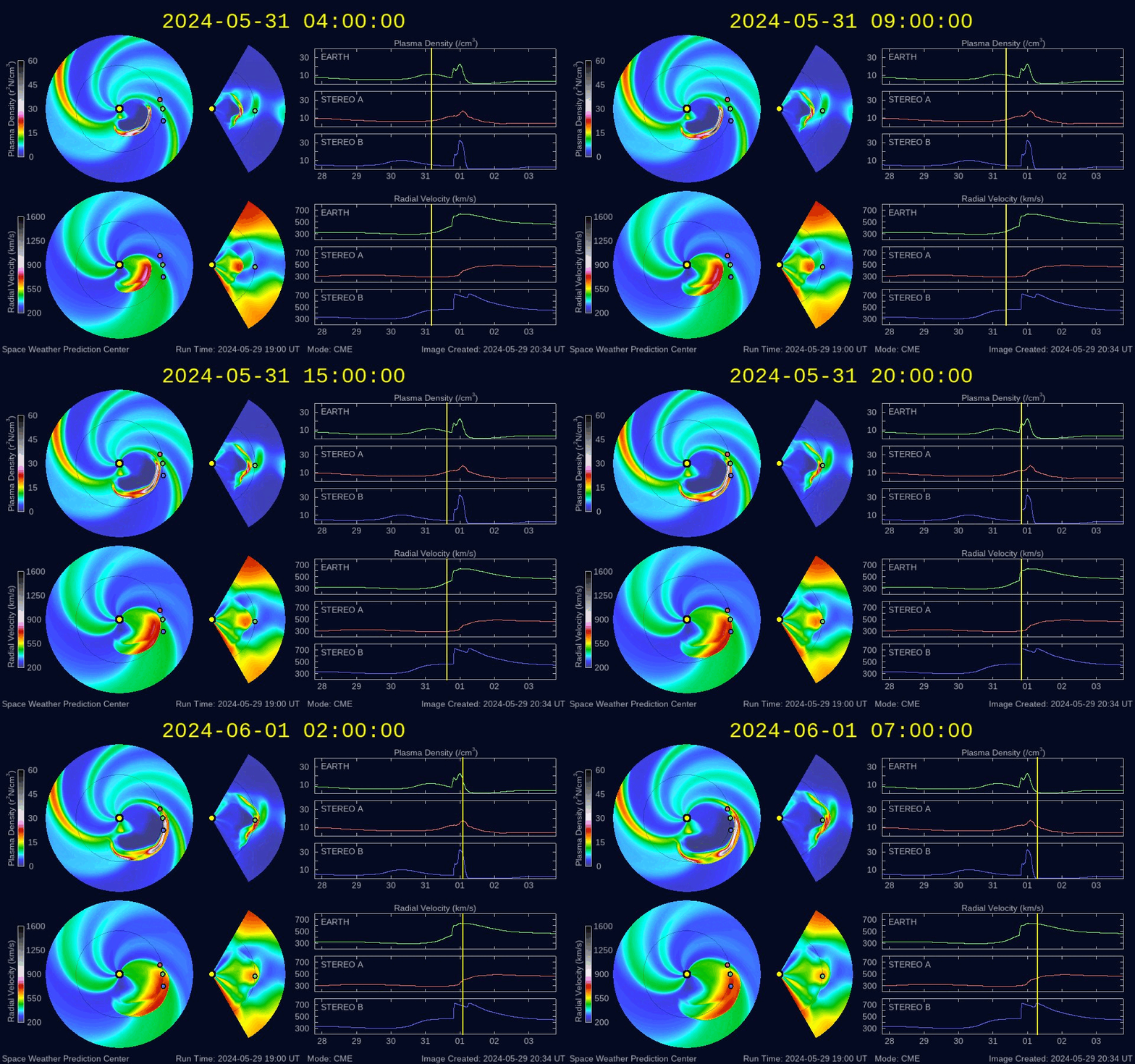
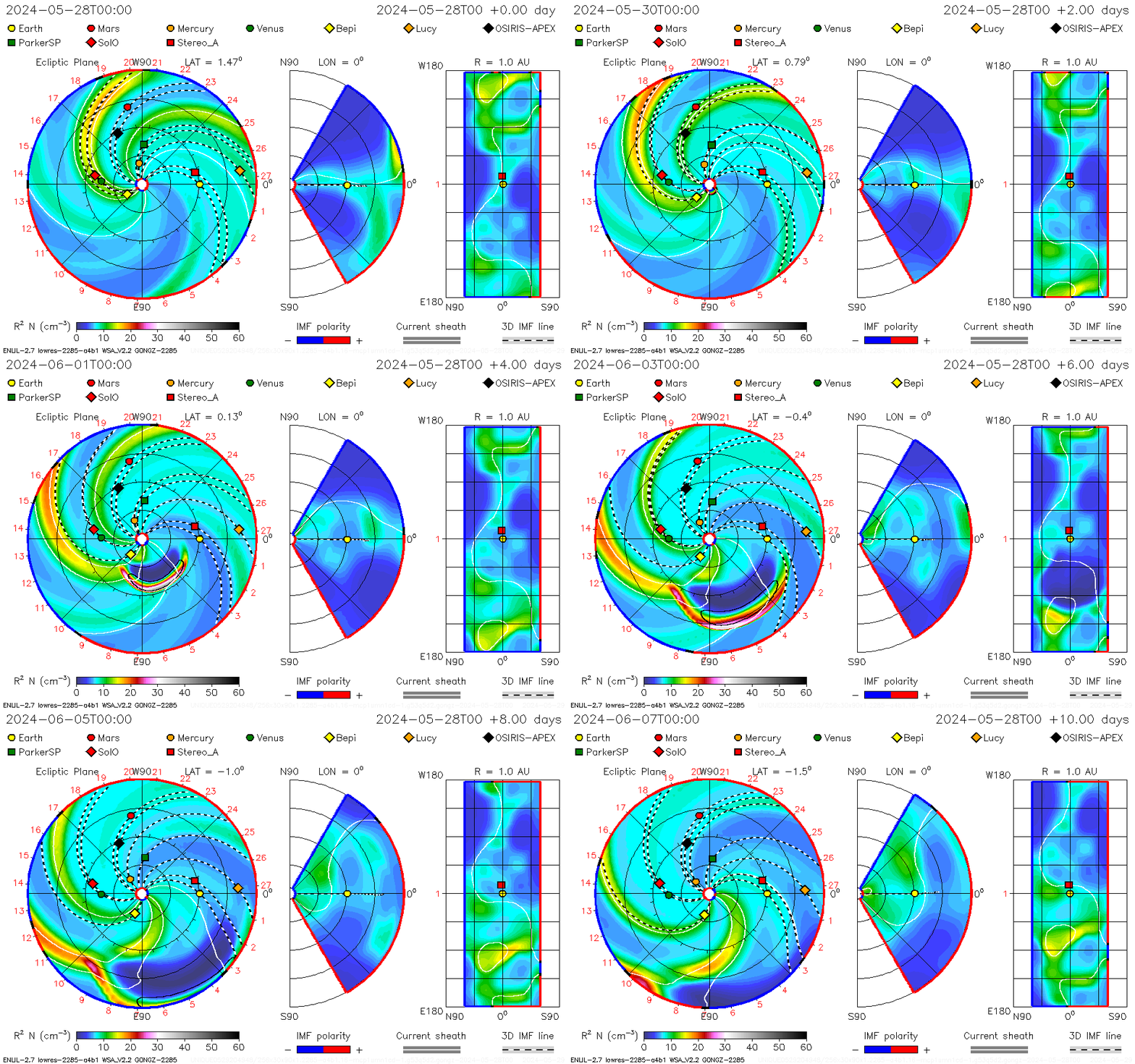
GEOMAGNETIC STORM WATCH (G2): NOAA forecasters say that G2-class geomagnetic storms are possible on May 31st when a CME hurled into space by yesterday’s X-flare grazes Earth’s magnetic field. This forecast is uncertain. NOAA’s model predicts a stiff glancing blow, while NASA’s model suggets a near miss. If an impact does occur, the resulting storm could extend into June 1st. Aurora alerts: SMS Text

EARTH-DIRECTED X-FLARE AND CME: Old sunspot AR3664 isn’t as big as it used to be, but it is still very active. On May 29th (1437 UT), it produced an X1.4-class solar flare:
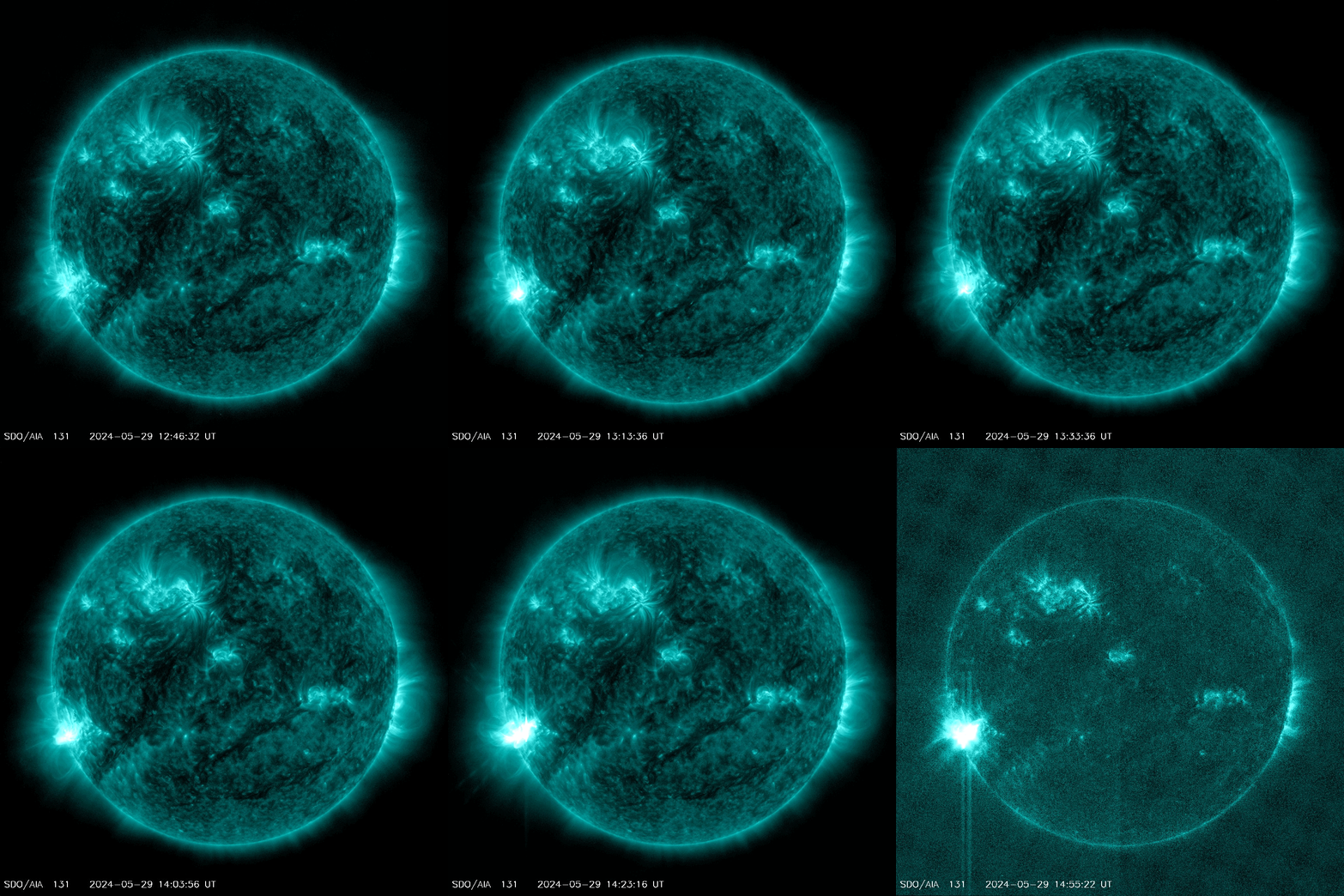

Note: The jiggling of the sun in this movie is not caused by the X-flare. Calibration offsets were underway during the flare. Credit: NASA/Solar Dynamics Observatory.

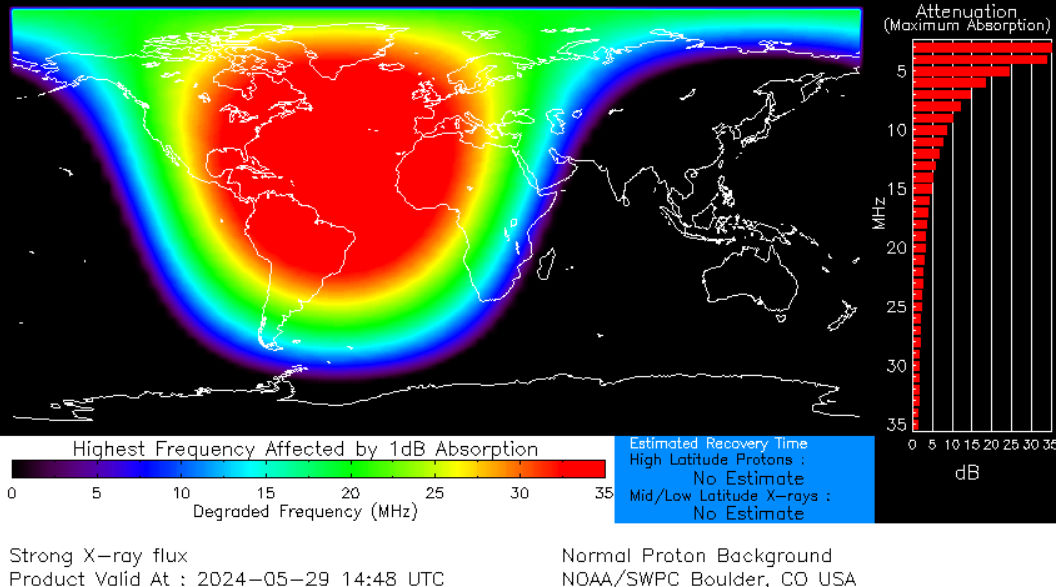
A pulse of extreme ultraviolet radiation produced a deep shortwave radio blackout over the Americas. Ham radio operators may have noticed loss of signal at all frequencies below 30 MHz for 60 to 90 minutes following the onset of the flare.

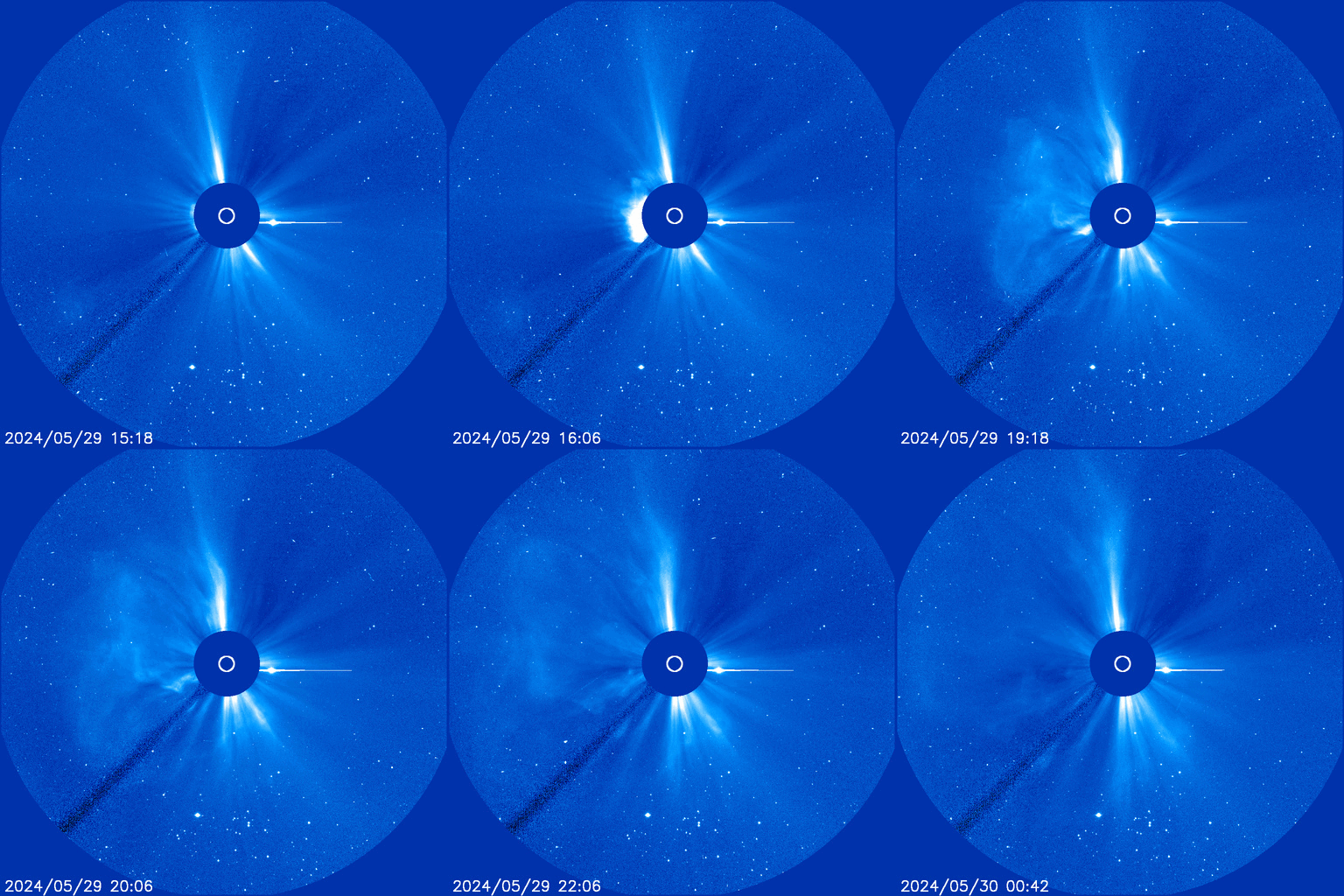
This explosion was remarkable for its duration. The X-class phase alone lasted more than an hour–plenty of time to lift a CME out of the sun’s atmosphere. Indeed, SOHO coronagraphs have detected a bright CME emerging from the blast site. NOAA models suggest it will reach Earth during the late hours of May 31st (around 2200 UT), delivering a glancing blow strong enough to spark a G2-class geomagnetic storm. Solar flare alerts: SMS Text

Realtime Space Weather Photo Gallery
Free:
Spaceweather.com Newsletter
Spaceweather.com from NOAA


We can officially say that astronomical events affect DNA life on the surface. Straight from a federal agency. See below, “Animal behavior during the solar eclipse.” Humans are animals along with the other creatures.

The position of the sun and moon affects us. They can not be separated from all of the other movements of celestial bodies. That would be irrational.

ANIMAL BEHAVIOR DURING THE SOLAR ECLIPSE: Humans aren’t the only animals who respond to solar eclipses. Baboons, bees, spiders, giraffes and many other species have surprised researchers with their reactions to the Moon covering the sun. Would you like to help investigate? Solar Eclipse Safari, a citizen science project, is asking people in the path of totality of the April 8th solar eclipse to report their observations of wildlife. Watch their training video and get involved!

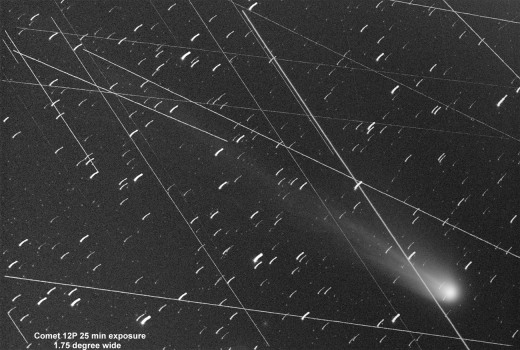
STARLINK VS. COMET 12P: This is a great week to photograph Comet 12P/Pons-Brooks in the evening sky. The comet is almost 4th magnitude, an easy target for small telescopes and cameras, and there is no Moon to interfere with a long exposure. Just one problem: Starlink. “I tried to image the comet on March 28th,” reports Richard Schrantz of Nicholasville, KY. “Even though the field of view is just 1.75 degrees wide, I was carpet-bombed by satellites!”

“This represents only 25 minutes of exposure,” says Schrantz. “Thanks, Starlink (and/or other satellites).”

Comet 12P is especially vulnerable to this kind of “carpet-bombing.” The reason has to do with the comet’s location and time of day. The best time to see 12P is just after sunset when the comet may be found hanging low in the western sky. This is also the best time to see satellites, which shine in high altitude sunlight after night falls on the ground below.

If you do photograph 12P, try taking a series of short exposures, then discard the ones (if any) criss-crossed by satellites. Combining the “clean” shots can produce an image like this:

“This is a 32 min exposure in 15 sec single shots,” says Fritz Helmut Hemmerich, who observed the comet from Tenerife in the Canary Islands on March 31st. “The comet looked great as it passed near the yellow-orange star Hamal (mutton in Arabic) in the constellation Aries. I’m very happy to get this shot with such modest equipment.”

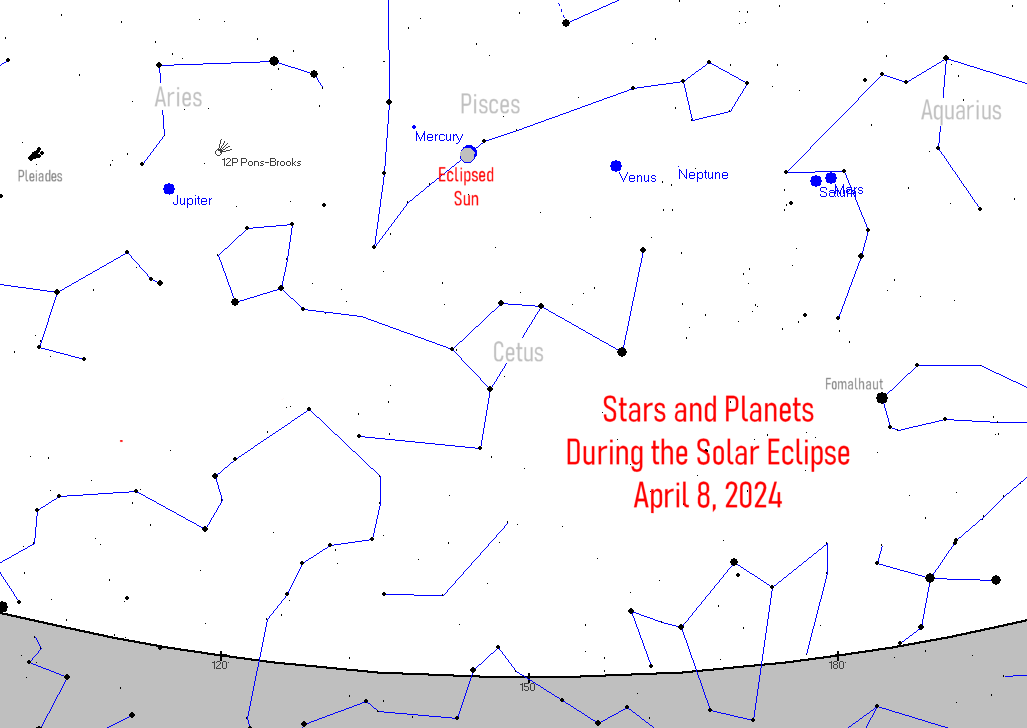
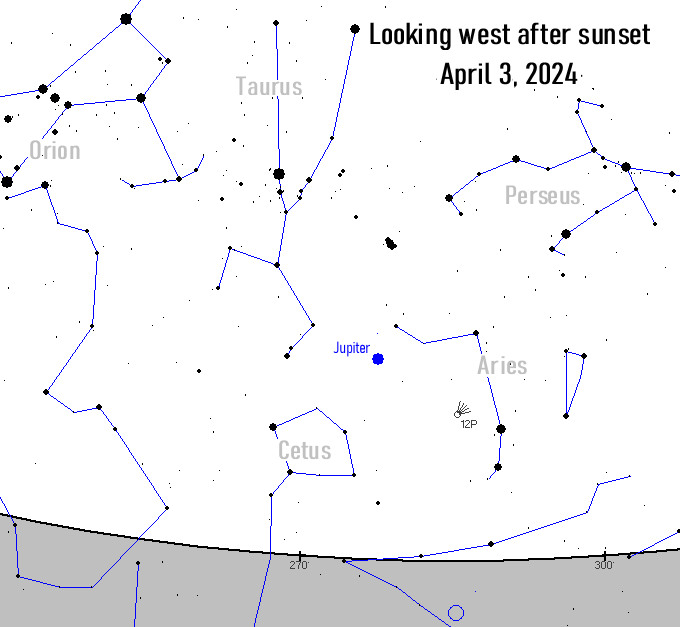
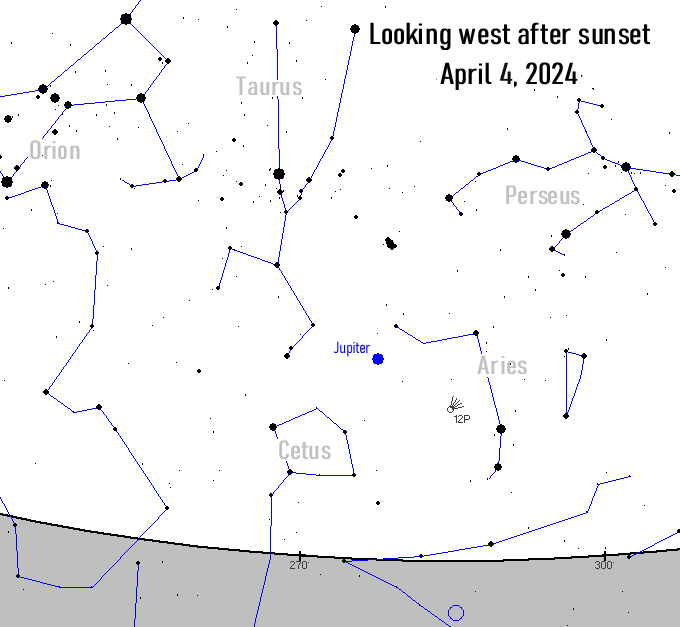
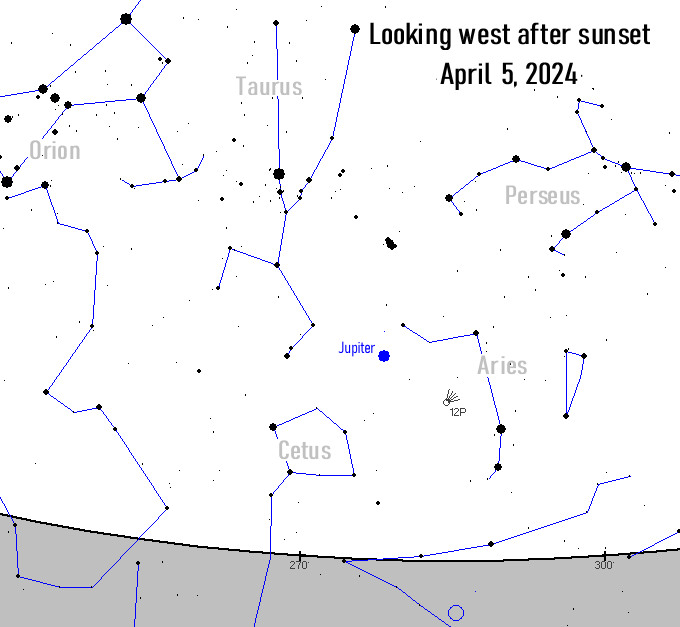
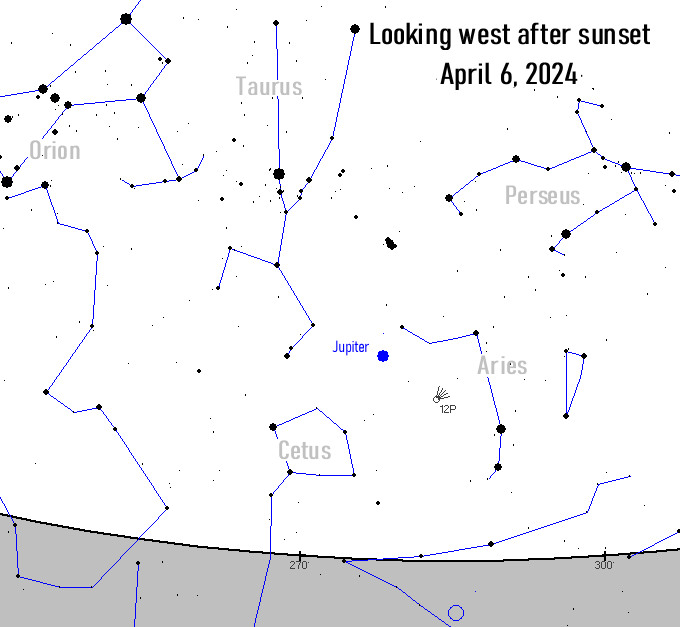
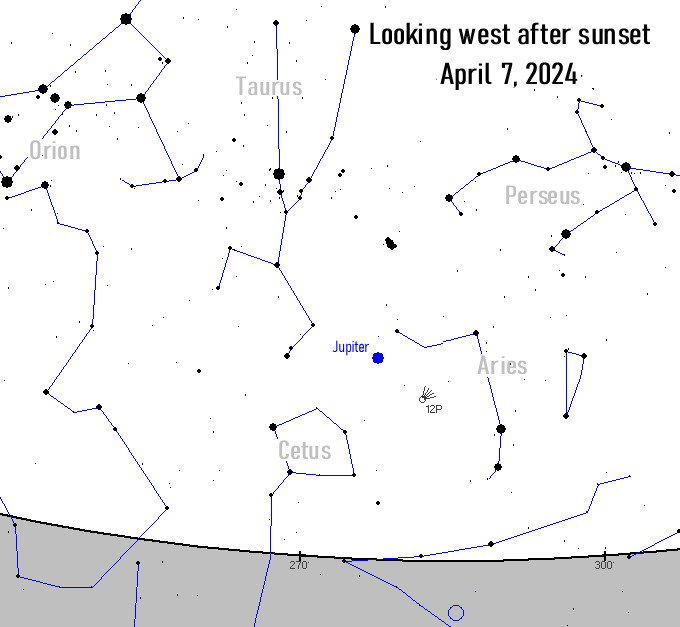
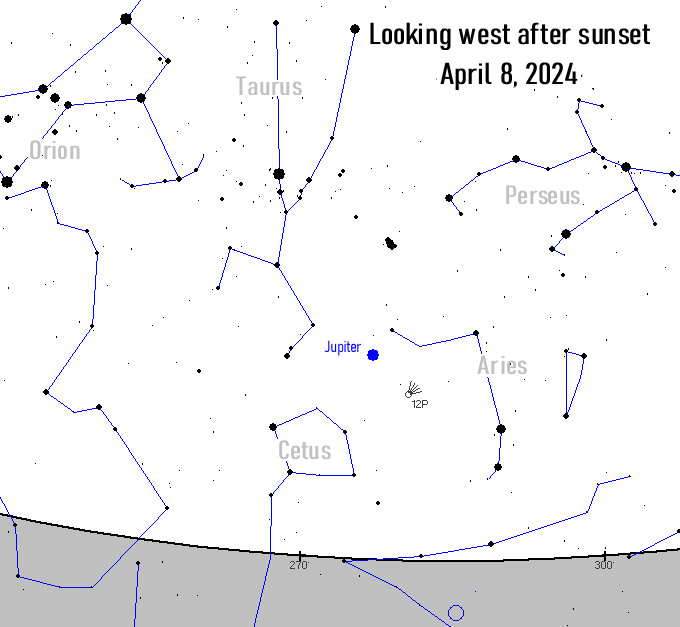
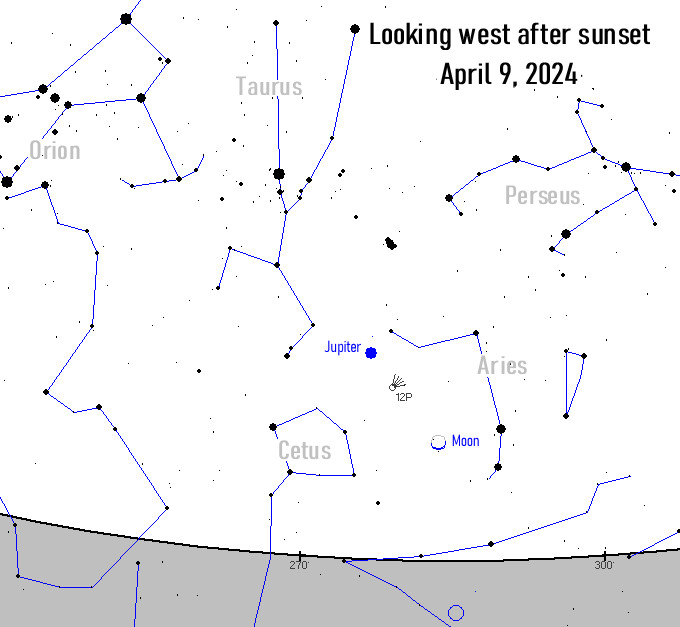
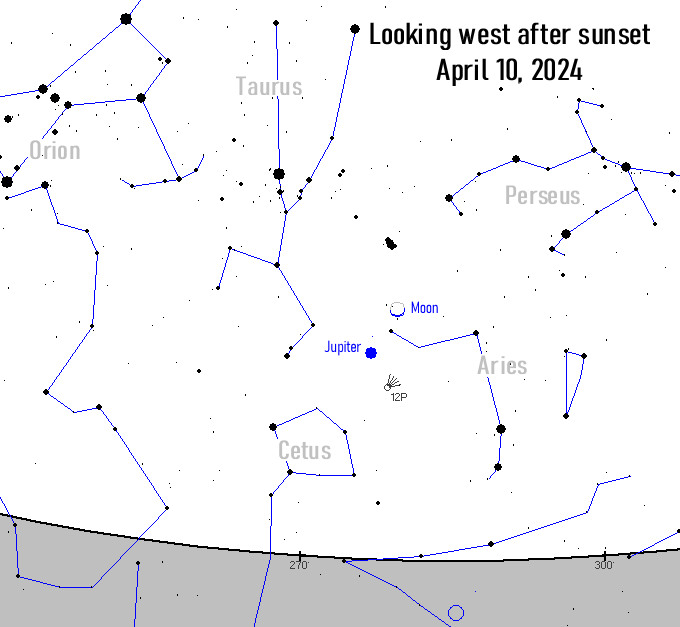
Satelites aside, Comet 12P is a great target for amateur astrophotographers. It will be in the evening sky all week long, and might even be visible during the April 8th solar eclipse. Point your optics here, or find it using one of these sky maps: April 3, 4, 5, 6, 7, 8, 9, 10

more images: from Michael Jaeger of Aicha, Bavaria; from Jeremy Perez of Flagstaff, Arizona; from Danilo Pivato of Maremma Toscana, Italy

Realtime Space Weather Photo Gallery
Free:
Spaceweather.com Newsletter

Spaceweather.com for 10/11/23


CO-ROTATING INTERACTION REGION: NOAA forecasters say that a co-rotating interaction region (CIR) could hit Earth later today. CIRs are shock-like transition zones between fast- and slow-moving streams of solar wind. Think of them as mini-CMEs. If this one arrives as predicted, Arctic sky watchers might witness an outburst of lights tonight. Aurora alerts: SMS Text.

‘DELTA SUNSPOT’ FACES EARTH: Sunspots are giant islands of magnetism floating on the surface of the sun. Usually their magnetic poles are well separated, plus (+) and minus (-) far apart. However, there is a sunspot now facing Earth with multiple poles mixed up and jostling together:


The magnetic classification of AR3460 is ‘beta-gamma-delta.’

This magnetic map from NASA’s Solar Dynamics Observatory shows the magnetic architecture of sunspot AR3460. It has many magnetic poles with + and – pressed together in close proximity. This could lead to magnetic reconnection and a strong, Earth-directed solar flare. Solar flare alerts: SMS Text

Realtime Space Weather Photo Gallery
Free:
Spaceweather.com Newsletter
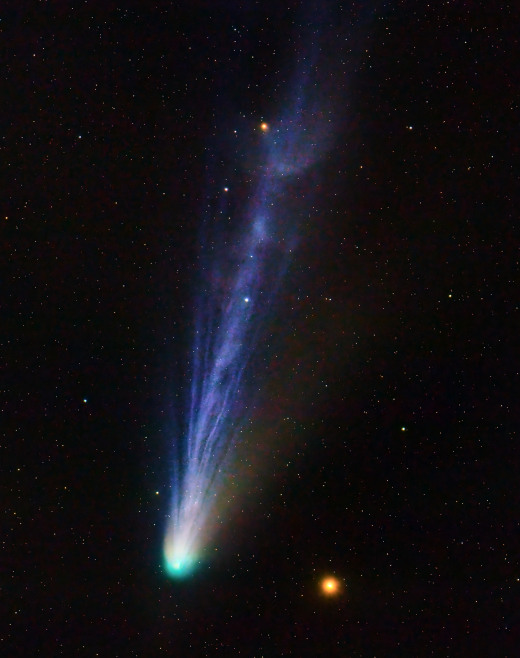
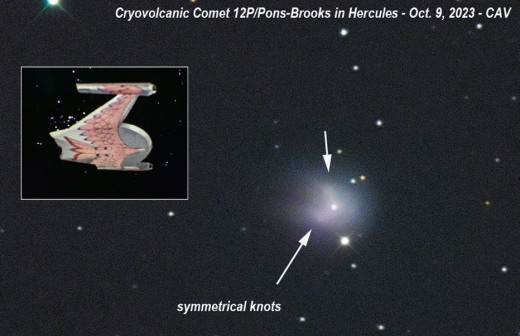
CRYOVOLCANIC COMET 12P: Some people look at this week’s outburst of cryovolcanic comet 12P/Pons-Brooks and see the Millennium Falcon. Bill Williams of Florida’s Chiefland Astro Village sees a different spaceship. “The Romulan Warbird flies again!” he says. The classic Star Trek vessel is inset in this picture Williams took on Oct 9th:

“It is fascinating to see Comet 12P/Pons-Brooks ‘come alive’ again, sporting peculiar horns and symmetrical knots around the comet coma,” he says.

This is the second time in 2023 that Comet 12P has erupted and–bafflingly–produced a spaceship-like silhouette. The first time in July was nearly identical. According to Richard Miles of the British Astronomical Association, “the two ‘horns’ may be caused by a peculiarly-shaped cryovolcanic vent with some sort of blockage causing material to be expelled with a weird flow pattern.”

This comet could cause a sensation next year. It is falling toward the sun and expected to become a naked-eye object only a few days before the total solar eclipse on April 8, 2024. Sky watchers in the path of totality could look up and see a spaceship-shaped outburst for themselves.

Spaceweather.com on 4Mirror


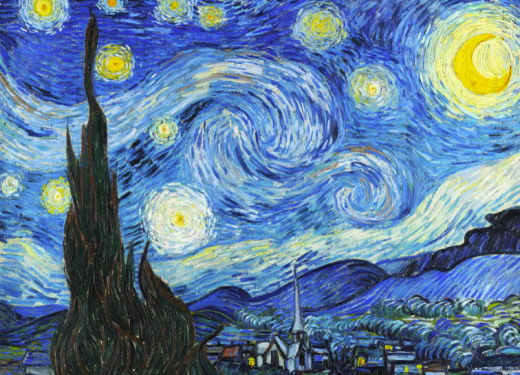
VAN GOGH WAVES IN THE MAGNETOSPHERE: When Vincent van Gogh painted “The Starry Night” in 1889, little did he know he was working at the forefront of 21st century astrophysics. A paper recently published in Nature Communications reveals that the same kind of waves pictured in the famous painting can cause geomagnetic storms on Earth.


Above: Vincent van Gogh’s ‘Starry Night’, which he painted in 1889: more

Physicists call them “Kelvin Helmholtz waves.” They ripple into existence when streams of gas flow past each other at different velocities. Van Gogh saw them in high clouds outside the window of his asylum in Saint-Rémy, France. They also form in space where the solar wind flows around Earth’s magnetic field.

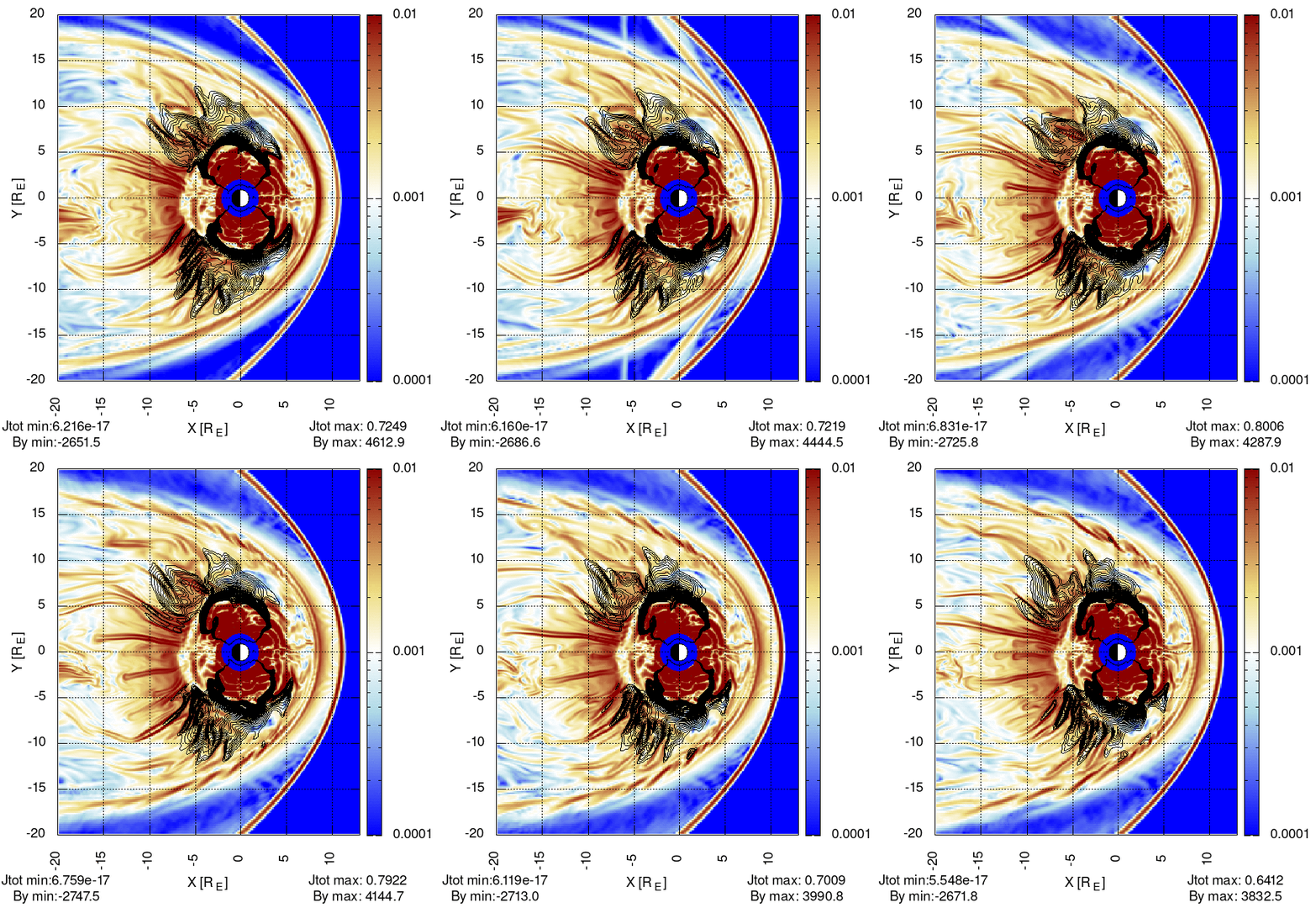
“We have found Kelvin-Helmholtz waves rippling down the flanks of Earth’s magnetosphere,” says Shiva Kavosi of Embry–Riddle Aeronautical University, lead author of the Nature paper. “NASA spacecraft are surfing the waves, and directly measuring their properties.”

This was first suspected in the 1950s by theoreticians who made mathematical models of solar wind hitting Earth’s magnetic field. However, until recently it was just an idea; there was no proof the waves existed. When Kavosi’s team looked at data collected by NASA’s THEMIS and MMS spacecraft since 2007, they saw clear evidence of Kelvin Helmholtz instabilities.

The waves are huge,” says Kavosi. “They are 2 to 6 Earth radii in wavelength and as much as 4 Earth radii in amplitude.”


This computer model shows van Gogh waves moving down the flank of Earth’s magnetosphere. Credit: Shiva Kasovi. [full-sized animation]

Imagine a wave taller than Earth curling over and breaking. That’s exactly what happens. Kelvin-Helmholtz waves naturally break onto Earth’s magnetic field, propelling energetic particles deep into the magnetosphere. This revs up Earth’s radiation belts, triggering geomagnetic storms and auroras.

A key finding of Kavosi’s paper is that the waves prefer equinoxes. They appear 3 times more frequently around the start of spring and fall than summer and winter. Researchers have long known that geomagnetic activity is highest around equinoxes. Kelvin-Helmholtz wave activity could be one reason why.

Our planet’s seasonal dependence of geomagnetic activity has always been a bit of a puzzle. After all, the sun doesn’t know when it’s autumn on Earth. (Insult and indolence toward the sentience of the sun) One idea holds that, around the time of the equinoxes, Earth’s magnetic field links to the sun’s because of the tilt of Earth’s magnetic poles. This is called the Russell-McPherron effect after the researchers who first described it in 1973. Kavosi’s research shows that Kelvin-Helmholtz waves might be important, too.

We just passed the autumnal.equinox. Earth’s time cycles are set by the Psi Bank Harmonic for our evolution.

Northern autumn has just begun, which means Kelvin Helmholtz waves are rippling around our planet, stirring up “Starry Night” auroras. Happy autumn!

Spaceweather.com Red Auroras on Red 11 Skywalker…of course. That’s our show.


GEOMAGNETIC STORM WATCH (G1): A geomagnetic storm watch is in effect for Sept 26th when another CME is expected to hit Earth’s magnetic field. NOAA forecasters expect it to be a glancing blow producing only a minor G1-class storm. Aurora alerts: SMS Text

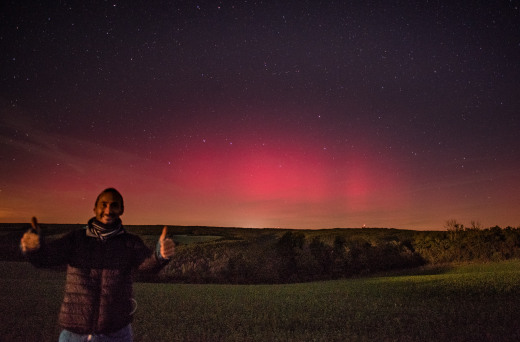
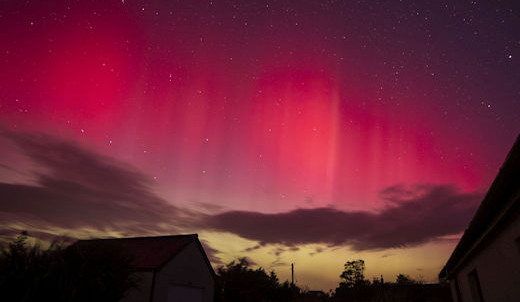
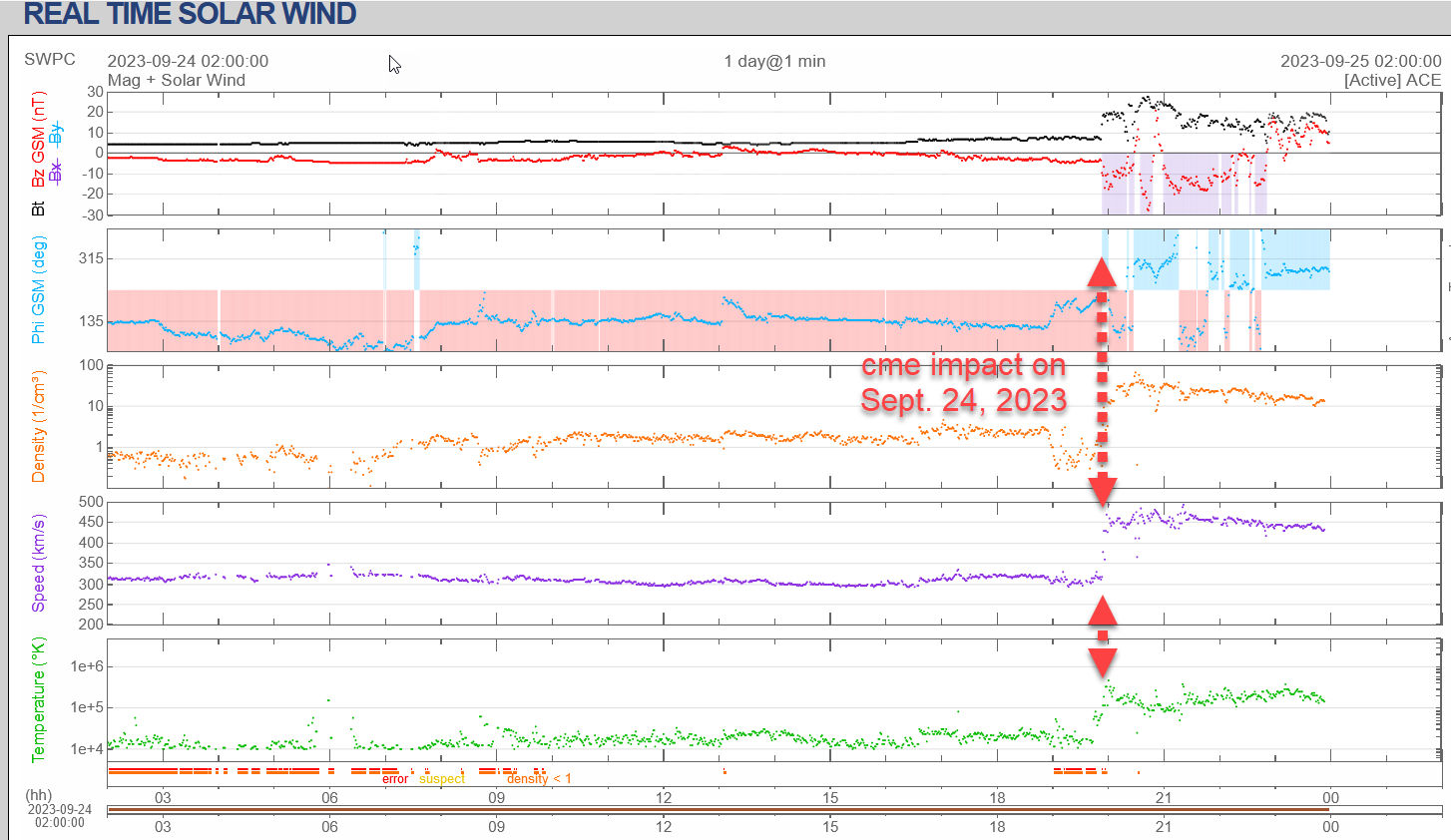
RARE RED AURORAS: As predicted, a CME hit Earth’s magnetic field on Sept. 24th (2043 UT). The impact was much stronger than expected. Magnetometer needles in Canada jerked by as much as 129 nT, and a G2-class geomagnetic storm began almost immediately after the CME arrived. Observers in Europe saw rare red auroras as far south as France:

“What a wonderful red aurora we had last night night in France!” says photographer Nicolas Drouhin of Burgundy. “It did not last long (about 5 minutes), but it was intense, even to the naked eye!”

Naked-eye sightings of red auroras are unusual because human eyes are notoriously insensitive to the 6300 Å wavelength of their red light. Yet multiple observers in, e.g., Scotland and Iceland confirmed that they saw the scarlet glow. Some displays were stunningly red:

“These were some of the reddest auroras I’ve ever seen,” says photographer Chris Walker of the Mull of Galloway, Scotland.

Red auroras persisted as night fell over North America. However, except in Alaska they were not naked-eye; the storm was ebbing. The farthest south they were photographed was Curtis, Nebraska, at latitude +40.6N.

What makes red auroras rare? Partly it’s just that we have trouble seeing them, so they go unreported by sky watchers. Mainly, though, it’s because they are the most delicate auroras. Red auroras come from atomic oxygen near the top of Earth’s atmosphere. Oxygen atoms excited by solar wind or a CME spit out their red photons very slowly. The radiative lifetime of the transition is 110 seconds–an eternity in the quantum realm. The atoms must remain undisturbed that long to produce their eerie red light.

Realtime Aurora Photo Gallery
Free:
Spaceweather.com Newsletter