Who is Larry Page?


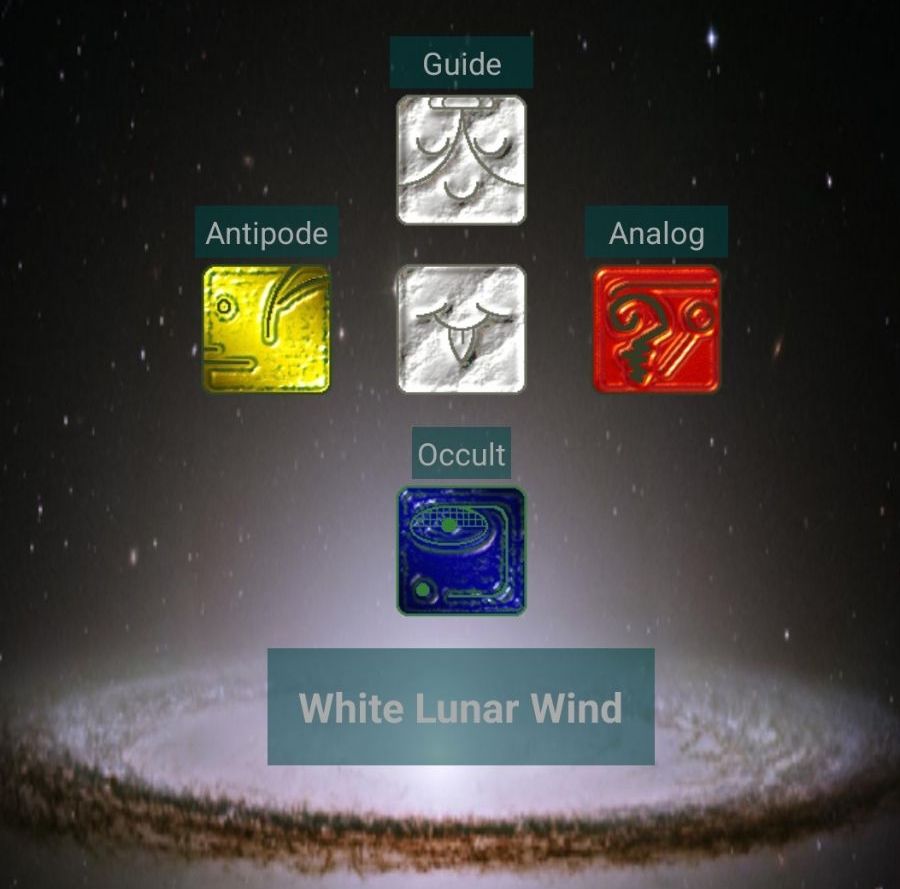
He’s from East Lansing , MI, one hour from me where my son lives now, and went to MSU. His destiny oracle is below. Tone 2 is polarizing. Elon likes the attributes of that tone: conflict opposition, politics, polarization, and duality.

Lawrence Edward “Larry” Page (born March 26, 1973) is an American computer scientist, entrepreneur, and billionaire best known as the co-founder of Google (with Sergey Brin) and a co-founder/controlling shareholder of its parent company, Alphabet Inc.

He was born in East Lansing, Michigan, to parents who both worked in computer science (his father, Carl Victor Page Sr., was a professor at Michigan State University). Page earned a bachelor’s degree in computer engineering from the University of Michigan in 1995, then pursued graduate studies at Stanford University, where he completed a master’s in computer science and began (but did not finish) a PhD.

At Stanford in 1995 he met fellow graduate student Sergey Brin. The pair developed a search algorithm called PageRank (initially part of a project called BackRub) that ranked web pages based on the quality and quantity of links pointing to them. This formed the core of Google, which they founded as a company in September 1998, with Page serving as the first CEO.

Page was Google’s CEO from 1998 to 2001 and again from 2011 to 2015. In 2015 he created Alphabet as a holding company (with Google as its largest subsidiary) and became its CEO, a role he held until December 2019, when he and Brin stepped back from day-to-day management.

Sundar Pichai became CEO of both Google and Alphabet. Page remains on Alphabet’s board of directors and, with Brin, is one of its controlling shareholders through their substantial equity stakes (primarily Class B shares that carry extra voting power).

He is consistently ranked among the world’s richest people; recent estimates of his net worth have been in the range of roughly $230–245 billion, largely tied to Alphabet stock. He has also been an early investor in companies such as Tesla and has backed longer-term projects related to AI, clean energy, and longevity research (including Alphabet’s Calico).

Page is known for a relatively low public profile compared with many other tech founders.
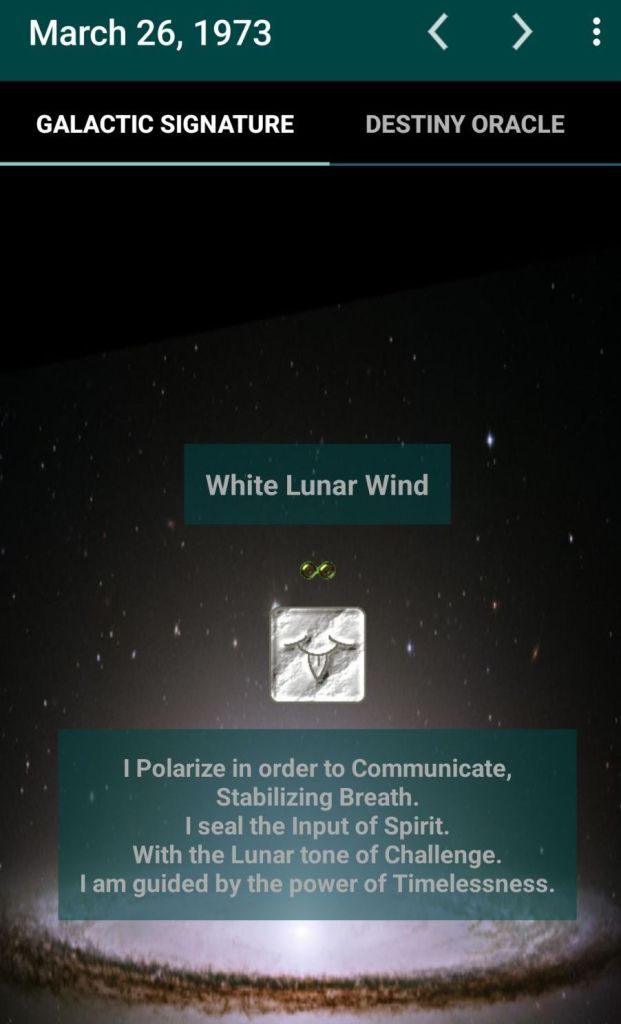
He is an Aries ruled by Mars but is mediated by URANUS.
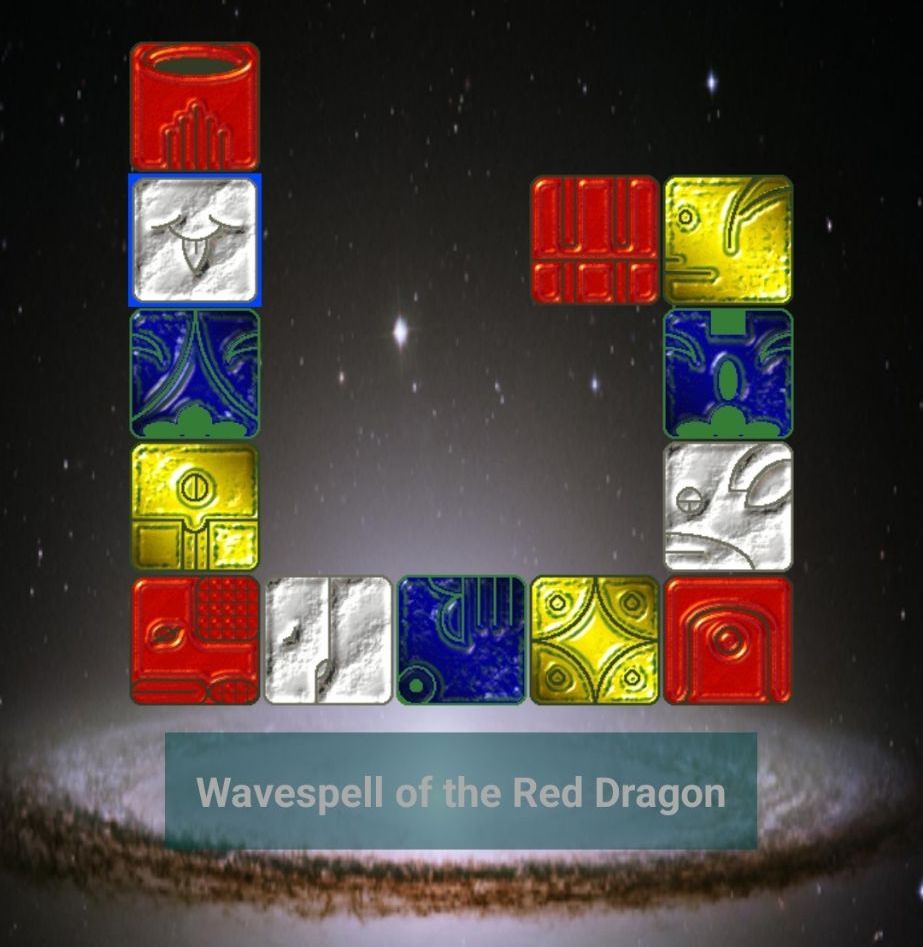
Maye Musk is above him as 1 Dragon, he is next as 2 Wind, Claire Grimz is Yellow 8 Star and I finish up the waveapell as 13 Skywalker and don’t commiserate with any of them.

TIME INNOVATION: The Road to Scalable Quantum Computing: Challenges Ahead


We have to apply the binary-TRIPLET configuration with the binary crossover. O’s and 1’s are quanta as is all DNA/RNA. Time is composed of MANIFESTED quanta in this dimension. Ultimately, it isn’t on the highest levels, but in manifestation, it is. It is all engineered into my RI13 chip.

I asked GROK

Quantum supercomputers—meaning universal, fault-tolerant machines with millions of physical qubits that can run arbitrary algorithms at massive scale—don’t exist yet. The gap between today’s ~100–1,000-qubits noisy prototypes and that goal is still 10–20 years for most experts. Here are the core bottlenecks ranked by impact:

Bottleneck-Why it blocks scaling -Current status (2025)

#BottleneckWhy it blocks scalingCurrent Status (2025)
1Qubit fidelity & error ratesUseful computation requires error rates below 10⁻⁶ per gate (surface code threshold). Current physical two-qubit gates are stuck around 99.9% fidelity.~100× too noisy for million-qubit fault tolerance. Google (2023): 99.91%. IBM (2024): 99.93%.
2Error-corrected logical qubitsRequires roughly 1,000 physical qubits to create 1 logical qubit at acceptable error rates.Google (2023): 1 logical qubit from 105 physical. IBM (2025): 12 logical qubits from 1,428 physical. Still ~10,000× short of 1 million logical qubits.
3Cryogenic scalingSuperconducting qubits require temperatures below 20 mK. Current dilution refrigerators are limited to ~1 m² chip size and ~1,000 control lines.Rigetti/IBM “large-scale” systems top out at ~1,500 qubits. Adding more lines creates heat load that destroys coherence.
4Control electronics bottleneckEach qubit typically needs 5–10 RF/flux control lines. Scaling to 1 million qubits would require ~10 million lines with extremely precise timing.Current classical control systems (including cryo-CMOS) can only handle ~100 qubits effectively.
5Qubit connectivity & architectureMost superconducting chips are limited to nearest-neighbor connections in 2D grids, which restricts algorithm depth. Long-range couplers tend to reduce fidelity.IonQ and AQT offer all-to-all connectivity (but slower gates). Superconducting systems are usually limited to 4–6 neighbors.
6Manufacturing uniformitySuperconducting Josephson junctions vary by 1–2% across a wafer. Trapped-ion systems also suffer from drift.Yield for 100+ identical, high-quality qubits is typically under 10% in most fabrication processes.
7Algorithmic & software gapThere is still no clear “killer application” that delivers meaningful advantage at current noise levels (~10⁻³ error) and qubit counts (~1,000).NISQ algorithms (VQE, QAOA) show only small advantages. True fault-tolerant algorithms (Shor, Grover) require millions of physical qubits.
YearMilestoneNotes
2023Google claims “beyond-classical”70-qubit random circuit sampling (still debated)
2025IBM Condor (1,121 physical qubits)Runs ~100-qubit depth circuits with error mitigation
2030 (Goal)IBM target: 1 million physical qubitsLogical qubits still expected to be well under 1,000
2035–2045Fault-tolerant systems with ~1 million logical qubitsMost conservative industry estimates
TechnologyCompanyPotential AdvantageCurrent Limitation (2025)Status
Topological qubitsMicrosoftExtremely low error rates (~10⁻¹⁰)No conclusive Majorana zero mode demonstrated yetEarly stage
Photonic chipsPsiQuantum, XanaduRoom-temperature operationVery high photon loss (need ~10⁶ photons in for 1 out)Challenging
Neutral atomsQuEra, Pasqal1,000+ reconfigurable qubitsSlow gate speeds (~microseconds)Promising but slow

TL;DR Summary

Noise is the #1 bottleneck. Until the field achieves physical gate errors below 0.01% and develops cryogenic control systems capable of handling millions of lines, we remain stuck in the NISQ (Noisy Intermediate-Scale Quantum) era. The fundamental physics works — the engineering challenge of scaling has not been solved yet.

Of course the physics work. But why do you think you can quantum compute with binary engineering, meaning binary computer chips?

Lisa T.

You are going to need my RI13 Hybrid Carbon Ternary Chip with a silicon substrate. It goes quantum daily because our evolving RNA does.

TIME INNOVATION: The Road to Scalable Quantum Computing: Challenges Ahead


Subscribe to continue reading

Become a paid subscriber to get access to the rest of this post and other exclusive content.