Safe or Unsafe Nanotechnology?


There is not enough research to show it’s safe or unsafe for humans. The military experiments with it extensively but they don’t allow any sign of it in humans into their facilities.

https://grok.com/share/c2hhcmQtNA_e061077e-7cc0-4ace-b4fc-d066e8a19247

Nanotechnology itself isn’t inherently toxic, but certain nanomaterials (especially nanoparticles, typically 1–100 nm in size) can pose health risks to humans under specific conditions. The toxicity depends heavily on factors like:

  • Size: (smaller particles often penetrate deeper and are more reactive)
  • Shape (e.g., fiber-like structures like some carbon nanotubes behave like asbestos)
  • Chemical composition (e.g., metal-based like silver, zinc oxide, or titanium dioxide vs. carbon-based)
  • Surface properties (charge, coatings, reactivity)
  • Dose and exposure route (inhalation is often the most concerning, followed by ingestion or skin contact)
  • Duration of exposure.
  • Many nanoparticles are safe or even beneficial (e.g., in approved medical uses like certain drug-delivery systems or sunscreens), but others show toxicity in lab/animal studies, and real-world human data remains limited for most engineered nanomaterials.

Key Mechanisms of Toxicity

The primary way many nanoparticles harm cells and tissues is through oxidative stress — they generate excessive reactive oxygen species (ROS)and free radicals. This overwhelms the body’s antioxidant defenses and leads to cascading damage:

  • Damage to proteins, cell membranes, lipids, and DNA
  • Inflammation (via cytokine release and immune cell activation)
  • Mitochondrial dysfunction (impaired energy production, further ROS production)
  • Cell death pathways like apoptosis (programmed cell death) or **necrosis**
  • Genotoxicity (DNA mutations or breaks, potentially raising cancer risk over time)

Other mechanisms include:

  • Direct physical interference (e.g., disrupting cell membranes or protein folding)
  • Lysosomal destabilization
  • Activation of inflammatory pathways (e.g., NLRP3 inflammasome)
  • Accumulation in organs (due to poor clearance, especially for insoluble particles)

These effects are often more pronounced than with larger particles of the same material because nanoparticles have a much higher surface area-to-volume ratio, increasing reactivity.

Potential Health Effects by Exposure Route and Target

  • Inhalation (most studied and concerning route, e.g., workplace exposure or airborne pollution): 
  • Nanoparticles can reach deep into the lungs (alveoli), cross into the bloodstream, or even travel to the brain via the olfactory nerve. Effects include lung inflammation, fibrosis, oxidative stress, asthma exacerbation, and possible cardiovascular impacts (e.g., via systemic inflammation). Some carbon nanotubes have shown asbestos-like behavior in animal studies, raising concerns for mesothelioma-like diseases.
  • Ingestion: Particles can affect the gastrointestinal tract, liver, or other organs if they cross barriers.
  • Skin contact: Most intact skin blocks nanoparticles, but damaged skin or certain formulations allow penetration.
  • Systemic/organ effects: Accumulation in liver, spleen, kidneys, brain, or reproductive organs; potential endocrine disruption, immunotoxicity, neurotoxicity, or reproductive harm in high-exposure animal models.

Certain types stand out:

  • Carbon nanotubes (especially multi-walled, fiber-shaped): High toxicity in lungs, possible carcinogenicity.
  • Metal/metal oxide nanoparticles (e.g., ZnO, TiO₂, silver): Often induce strong ROS and inflammation.
  • Some show genotoxicity or promote cancer in long-term animal studies.

Current Scientific Consensus. Toxicity is not universal it varies by nanomaterial type and context. Many everyday uses (e.g., TiO₂ in sunscreens, silica in cosmetics) are considered low risk at typical exposures after regulatory review. However, high-dose or chronic exposure (especially inhalation of unbound engineered nanoparticles) carries plausible risks, particularly for workers in manufacturing/research or in polluted environments. Human epidemiological data is still limited (mostly from air pollution ultrafine particles rather than specific engineered nanomaterials), so most evidence comes from cell/animal studies. Regulatory bodies emphasize case-by-case risk assessment, and research continues to focus on safer design (e.g., coatings that reduce reactivity). In summary, while nanotechnology offers huge benefits, certain nanoparticles can be toxic primarily via oxidative stress, inflammation, and cellular damage — but risks are highly dependent on the specific material, exposure level, and conditions. Ongoing research aims to better quantify real-world human risks and develop safer nanomaterials. If you’re concerned about a particular type (e.g., in a product or workplace), more details would allow a more targeted assessment.

Essay; SYNCHRONICITY First Principles


Subscribe to continue reading

Become a paid subscriber to get access to the rest of this post and other exclusive content.

Time Innovation; Microbiology-Earth’s most predominant DNA/RNA lifeform: microorganisms


I never read any articles like this as I was doing my own research on the Time Harmonic, yet I found this out, and my book is titled “Time is DNA, Sound, and Light”. They leave out the issue of time, probably because we are in a time warp, and it is affecting all life on earth. We are atrophying. The scientists would not equate time and solar cycles with the changes in microorganisms. That’s like not connecting God to the existence of humans, which of course people do all the time. Hence, the deterioration of human brains.

Examining Sound, Light, and Vibrations as Tools to Manage Microbes and Support Holobionts, Ecosystems, and Technologies


Rodney R Dietert 1,*, Janice M Dietert 2
Editor: Peter Neubauer
PMCID: PMC11123986  PMID: 38792734
Abstract

The vast array of interconnected microorganisms across Earth’s ecosystems and within holobionts has been called the “Internet of Microbes.” Bacteria and archaea are masters of energy and information collection, storage, transformation, and dissemination using both “wired” and wireless (at a distance) functions.

Specific tools affecting microbial energy and information functions offer effective strategies for managing microbial populations within, between, and beyond holobionts. This narrative review focuses on microbial management using a subset of physical modifiers of microbes: sound and light (as well as related vibrations).

These are examined as follows:

(1) as tools for managing microbial populations,

(2) as tools to support new technologies,

(3) as tools for healing humans and other holobionts, and

(4) as potential safety dangers for microbial populations and their holobionts.

Given microbial sensitivity to sound, light, and vibrations, it is critical that we assign a higher priority to the effects of these physical factors on microbial populations and microbe-laden holobionts.

We conclude that specific sound, light, and/or vibrational conditions are significant therapeutic tools that can help support useful microbial populations and help to address the ongoing challenges of holobiont disease. We also caution that inappropriate sound, light, and/or vibration exposure can represent significant hazards that require greater recognition.

Here is the full article.

https://pmc.ncbi.nlm.nih.gov/articles/PMC11123986/

Mastering Your Brainwaves


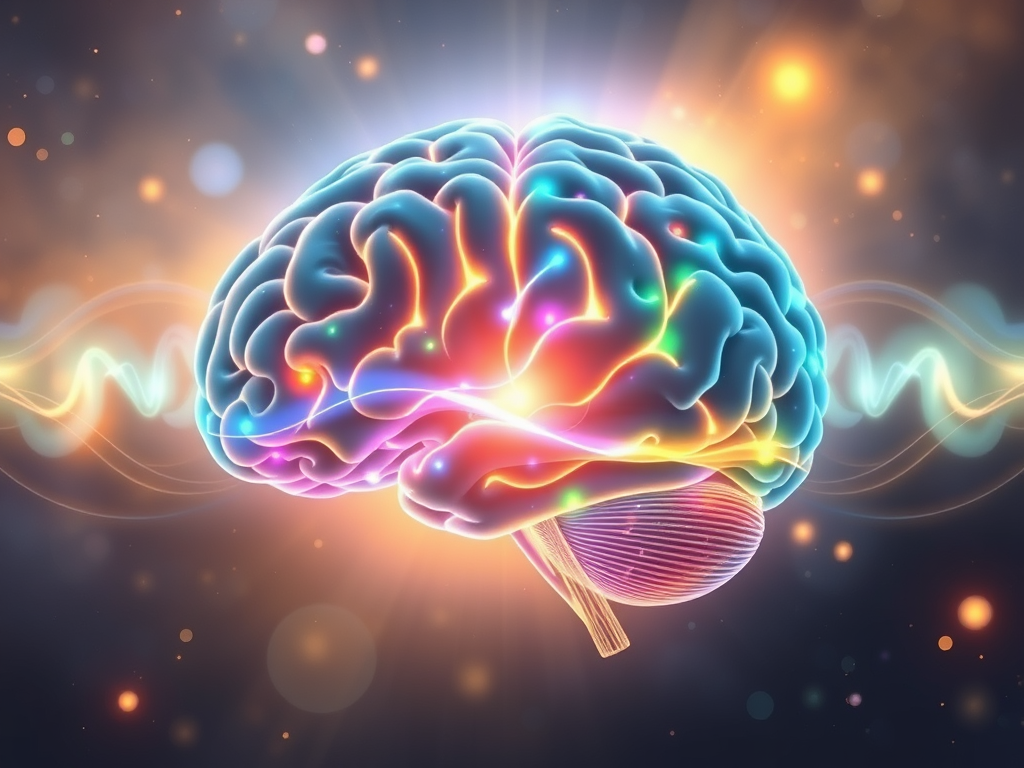
Our brain pulses and vibrates like everything in this Universe. Brainwaves can be categorized according to their frequency. The brain pulse is measured like sound in cycles per second or Hertz. It is not about spending our entire life in an awakened mind pattern, but to attain mastery of our brainwaves. Mastery means, we want to be able to be in the state of consciousness (the brainwave pattern) of our choice at any given time, and to achieve what we want to do with it. So flexibility and mastery is what we are looking for.


Delta | 0.5 – 4 cycles per second | .05 – 4 HZ-or D Waves


The lowest frequencies are delta. These are less than 4 Hz and occur in deep sleep and in some abnormal processes. It is the dominant rhythm in infants up to one year of age and it is present in stages 3 and 4 of sleep. It tends to be the highest in amplitude and the slowest waves. Delta is associated with deep sleep, this pattern is very slow. However, this brain waves pattern is important for the explorer of consciousness. If you work to merge with the mass consciousness of our planet you need to work in delta, the first step will be to learn to be conscious in your dreams, you can do that, you can go further in the exploration. Astral projection or Out of Body experience occurs in Delta.  We increase Delta waves in order to decrease our awareness of the physical world. We also access information in our unconscious mind through Delta. Peak performers decrease Delta waves when high focus and peak performance are required. However, most individuals diagnosed with Attention Deficit Disorder, naturally increase rather than decrease Delta activity when trying to focus. 

Theta | 4-8 cycles per second | 4 – 8 HZ-or T Waves


Associated with creativity and Extra-sensory perception, the theta state is something to learn to go into at will. It is seen in connection with creativity, intuition, daydreaming, and fantasizing and is a repository for memories, emotions, sensation. Theta waves are strong during internal focus, meditation, prayer, and spiritual awareness.  There are countless ways to reach theta, and is the state where your ESP can operate, if you do the proper work you can learn to enter theta at will and perform most of the psychic activities. It reflects the state between wakefulness and sleep and relates to the subconscious mind. Viewed as abnormal in awake adults but perfectly normal in children up to 13 years old. It is also normal during sleep. Theta is believed to reflect activity from the limbic system and hippocampus regions. Theta is observed in anxiety, behavioral activation and behavioral inhibition. When the theta rhythm appears to function normally it mediates and/or promotes adaptive, complex behaviors such as learning and memory. 

Alpha | 8-13 cycles per second | 8 – 13 HZ-or A Waves

The first pattern discovered in 1908 by an Austrian Psychiatrist named Hans Berger. Alpha pattern appears when in wakefulness where there is a relaxed and effortless alertness. It is recommended to practice your creative visualization and auto-suggestion technique in alpha state. Good healthy alpha production promotes mental resourcefulness, aids in the ability to mentally coordinate, enhance overall sense of relaxation and fatigue. In this state you can move quickly and efficiently to accomplish whatever task is at hand. When Alpha predominates most people feel at ease and calm. It is the major rhythm seen in most adults. The right brain initiates it.

Beta | 13- 33 cycles per second | 13 – 33 HZ –or B waves


Beta is associated with our waking activity. During a day we experience all the brainwave patterns with a predominance of Beta. It is generally regarded as a normal rhythm and is the dominant rhythm in those who are alert or anxious or who have their eyes open. It is the state that most of the brain is in when we have our eyes open and are listening and thinking during analytical problem solving, judgment, decision making, processing information about the world around us. The beta band has a relatively large range, and has been divided into low, midrange and high. The left brain initiates it.

Gamma | over 33 cycles per second | 33 + HZ- or G Waves


This range is the most recently discovered and is the fastest frequency at above 33Hz. While little is known in the mainstream about this state of mind, initial research shows Gamma waves are associated with bursts of insight and high-level information processing. When the brain needs to simultaneously process information from different areas, it is hypothesized that the gamma state consolidates the required areas for simultaneous processing. Note that there’s a LOT of disagreement over where Beta range ends & Gamma range begins. Gamma rhythms appear to be involved in higher mental activity, including perception and consciousness. 

The Regions of the brain that originates each wave;

Delta-The Thalumus or Cortex (the top middle of the brain)

Theta-The Hippocampal Region-(the middle low part of the brain near the brain stem that C1 hooks into) This must be the subconscious mind.

Alpha-The Right Brain –right side of the head

Beta-The Left Brain-left side of the head

Gamma-these waves originate in the Thalamus (where Delta does) and are then observed to sweep from the frontal lobe throughout the entire brain bringing it into synchronization.  Tibetan Buddhist Monks have been observed to run Gamma waves-the fastest wave humans can produce, that we know of.

The neo-cortex and the lobes are the site of the conscious brain.  It’s located at the top and sides of the brain. It’s been around for 300,000 years or 1/3 of our species existence. It controls voluntary thought awareness, self-control, and planning.

The subconscious mind is located in the limbic system and the brain stem. It’s the lower brain.  This is the old brain and the original human brain. It is responsible for autonomic nervous system, control of internal organs, forges and manages all habits, insight and creativity, and emotions.  It’s much faster and efficient than the new brain and has multi-tasking abilities.

Some scientists believe the vagus nerve or spindle neurons that connect the pre-frontal cortex to the insula may be the link to the new brain.  Everything initiated in the subconscious now goes into the conscious mind if we let it.