GEOMAGNETIC STORM WATCH (G1): A geomagnetic storm watch is in effect for Sept 26th when another CME is expected to hit Earth’s magnetic field. NOAA forecasters expect it to be a glancing blow producing only a minor G1-class storm. Aurora alerts: SMS Text
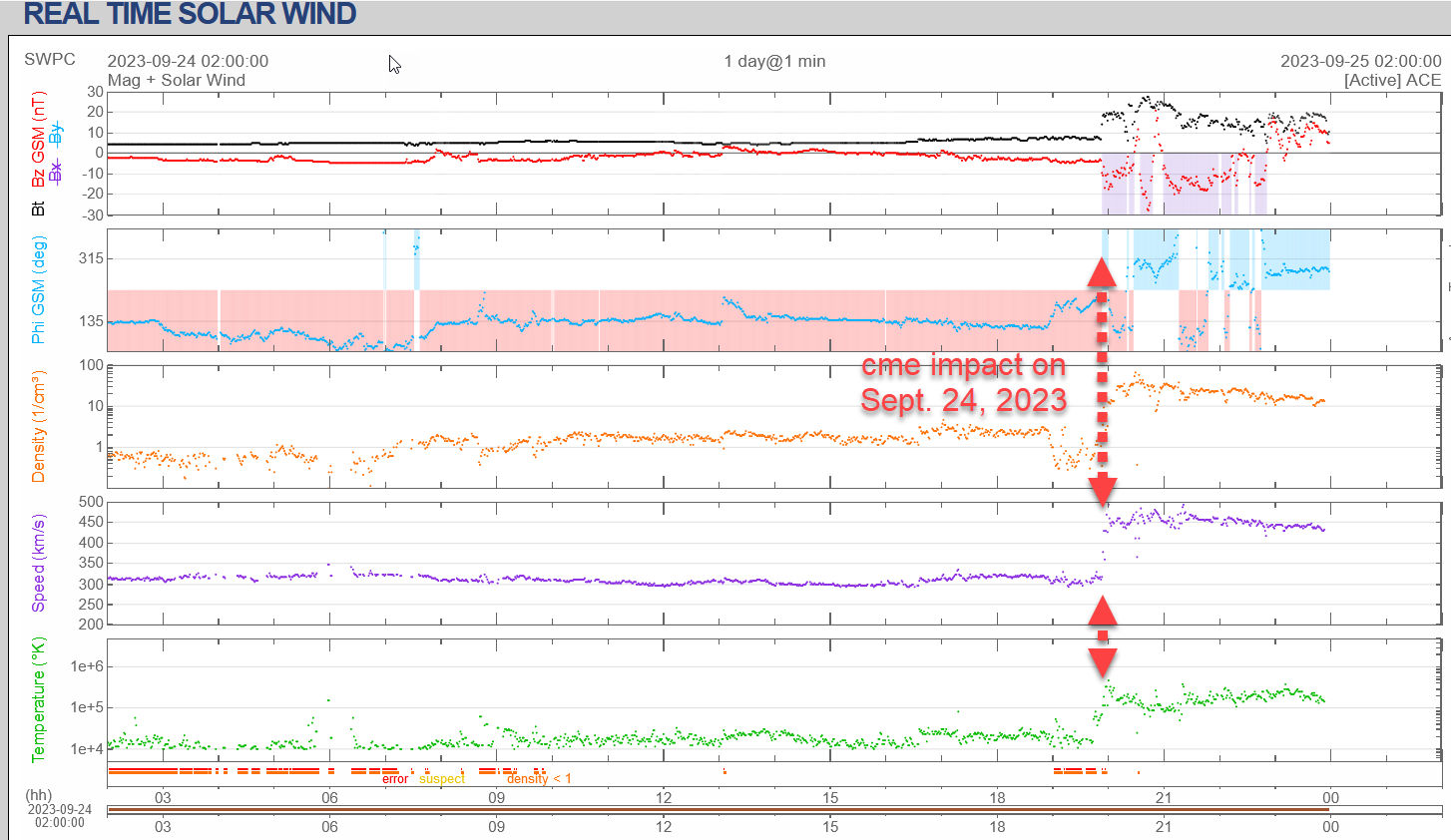
RARE RED AURORAS: As predicted, a CME hit Earth’s magnetic field on Sept. 24th (2043 UT). The impact was much stronger than expected. Magnetometer needles in Canada jerked by as much as 129 nT, and a G2-class geomagnetic storm began almost immediately after the CME arrived. Observers in Europe saw rare red auroras as far south as France:
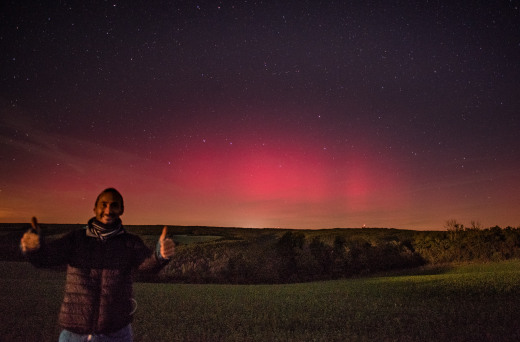
“What a wonderful red aurora we had last night night in France!” says photographer Nicolas Drouhin of Burgundy. “It did not last long (about 5 minutes), but it was intense, even to the naked eye!”
Naked-eye sightings of red auroras are unusual because human eyes are notoriously insensitive to the 6300 Å wavelength of their red light. Yet multiple observers in, e.g., Scotland and Iceland confirmed that they saw the scarlet glow. Some displays were stunningly red:
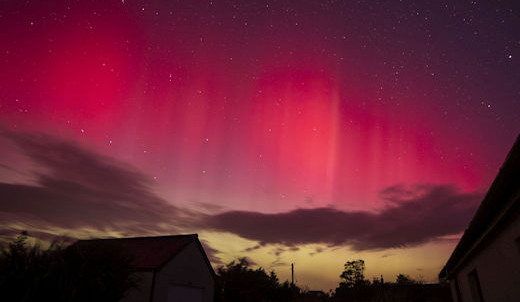
“These were some of the reddest auroras I’ve ever seen,” says photographer Chris Walker of the Mull of Galloway, Scotland.
Red auroras persisted as night fell over North America. However, except in Alaska they were not naked-eye; the storm was ebbing. The farthest south they were photographed was Curtis, Nebraska, at latitude +40.6N.
What makes red auroras rare? Partly it’s just that we have trouble seeing them, so they go unreported by sky watchers. Mainly, though, it’s because they are the most delicate auroras. Red auroras come from atomic oxygen near the top of Earth’s atmosphere. Oxygen atoms excited by solar wind or a CME spit out their red photons very slowly. The radiative lifetime of the transition is 110 seconds–an eternity in the quantum realm. The atoms must remain undisturbed that long to produce their eerie red light.
Realtime Aurora Photo Gallery
Free: Spaceweather.com Newsletter
 Synchronicity is the Source of Consciousness