I can’t keep my eyes open. It feels like a tractor beam on your brain.

And This Spaceweather
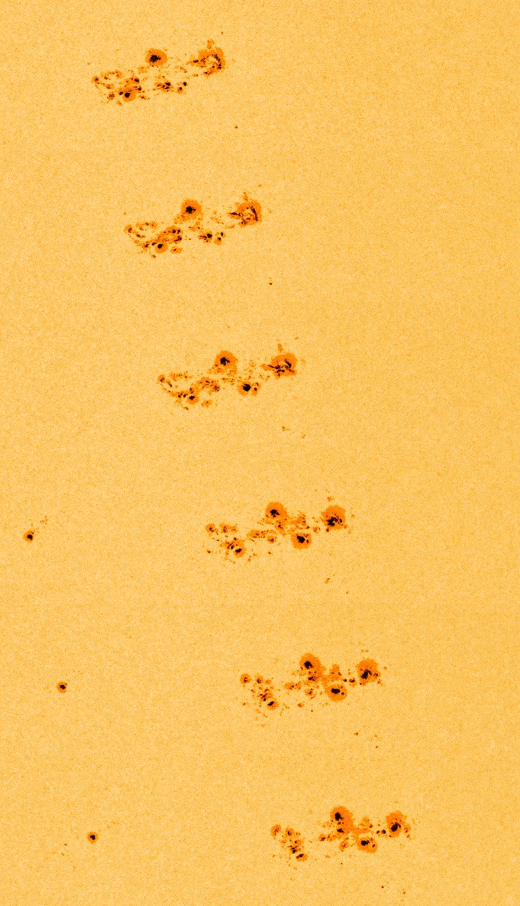
THE DANGER HAS NOT PASSED: Yesterday’s severe geomagnetic storm is over, but the calm might not last. Giant shape-shifting sunspot AR3615 poses a continued threat for Earth-directed solar flares. NOAA forecasters say there is a 25% chance of X-flares today, tomorrow, and Wednesday. If the sunspot blows, it would give sky watchers in Europe and the USA a second chance at auroras this week. Solar flare alerts: SMS Text
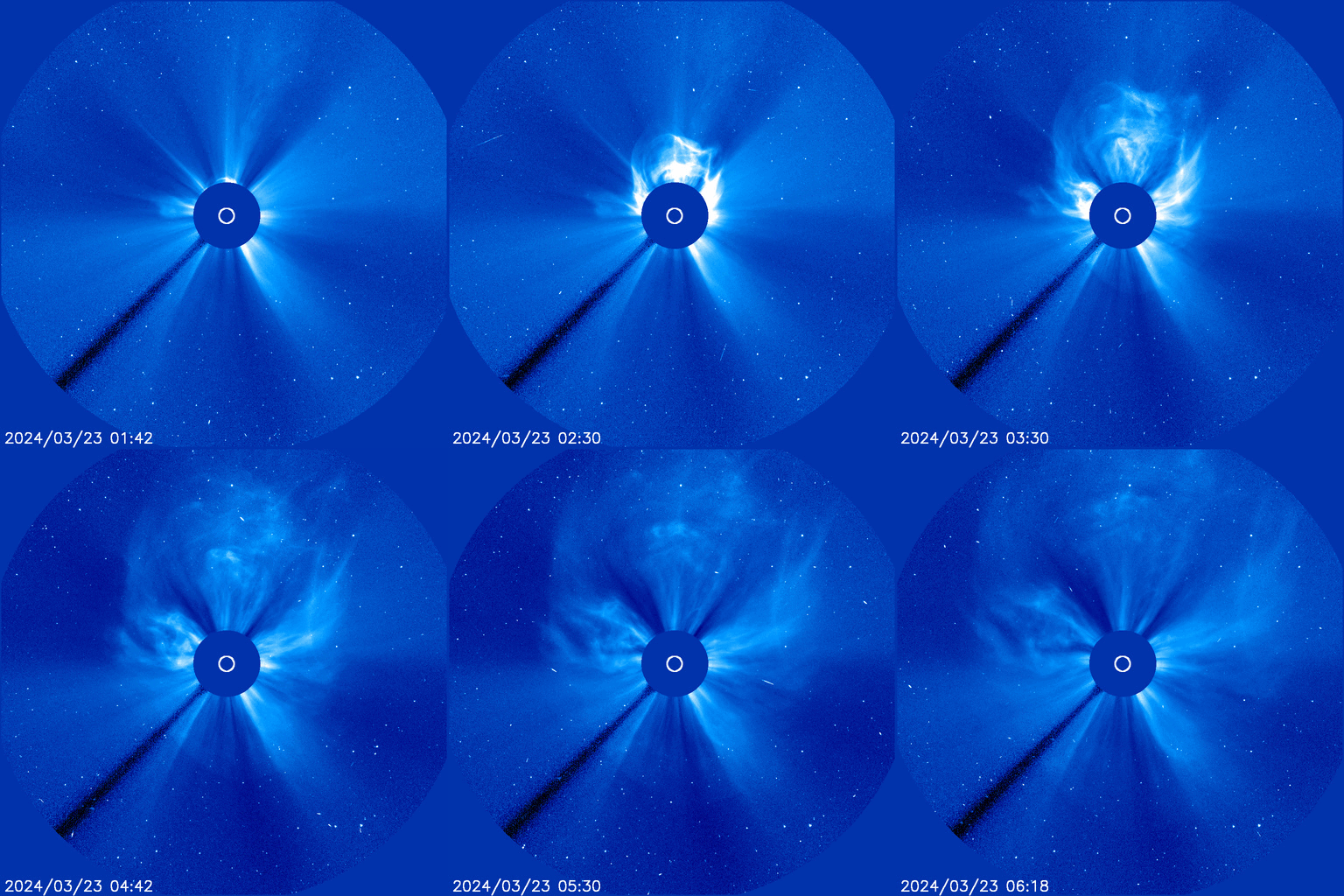
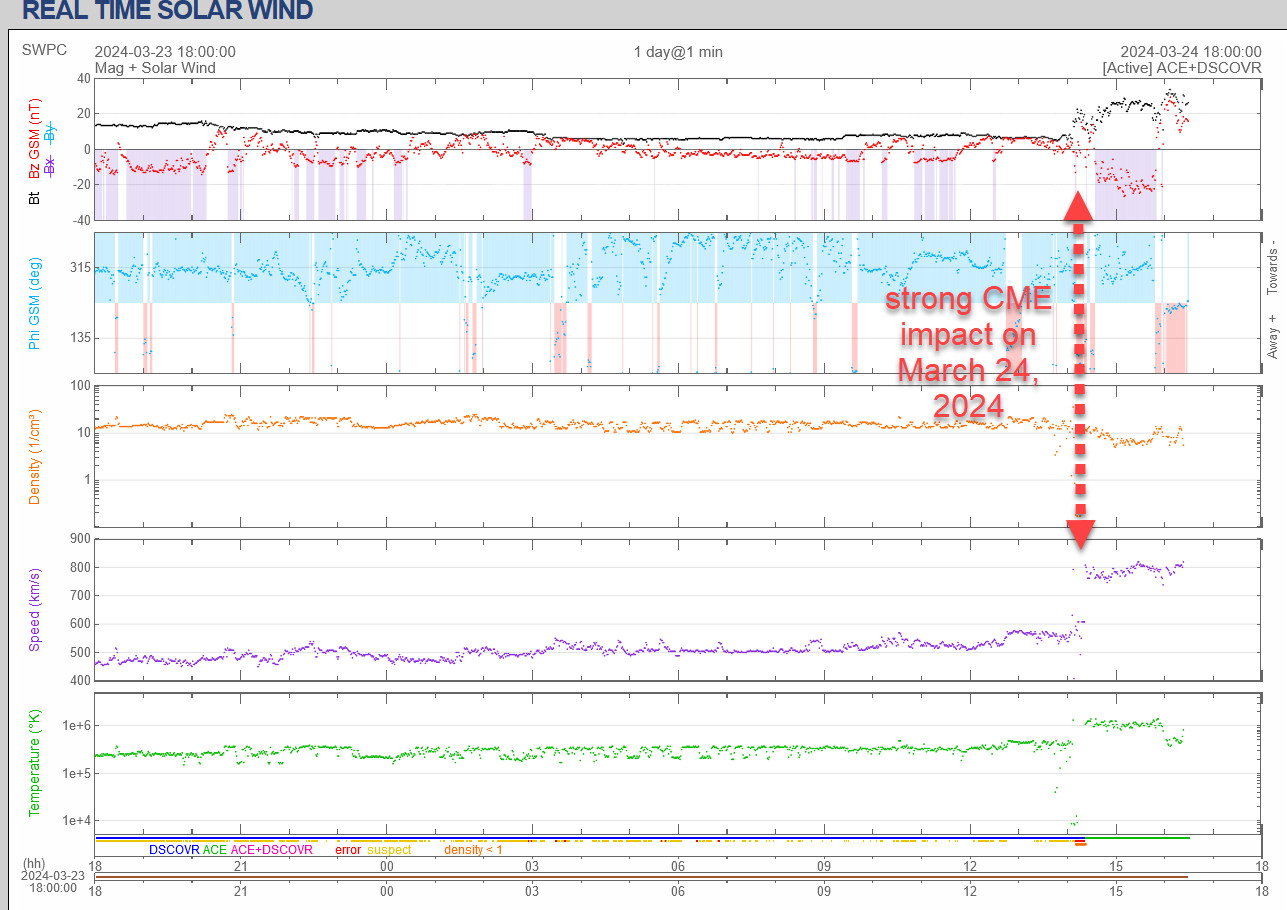
SEVERE GEOMAGNETIC STORM–THE STRONGEST IN YEARS: As predicted, a CME struck Earth’s magnetic field on March 24th (1437 UT). The impact opened a crack in our planet’s magnetosphere and sparked a severe G4-class geomagnetic storm–the strongest geomagnetic storm since Sept. 2017.
The timing of the CME did *not* favor observers in Europe or the United States. Instead, New Zealand got the light show:
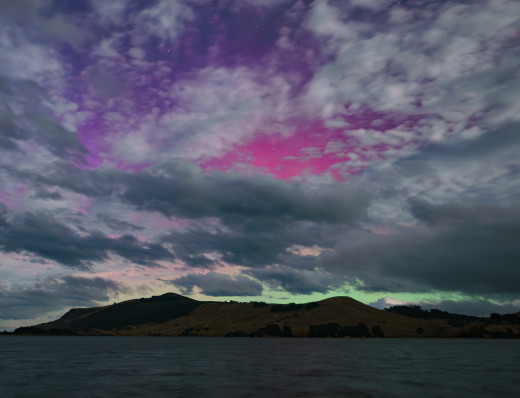
“I woke up early and, when I saw that a storm was underway, jumped out of bed and raced to my favourite viewing spot at Hoopers Inlet (latitude +46 S),” says photographer Ian Griffin. “The beautiful aurora australis was easily visible despite clouds and bright moonlight.”
In England, it was broad daylight when the CME struck. Auroras could not be seen. Nevertheless, Stuart Green of Preston, England detected the storm using his backyard magnetometer:
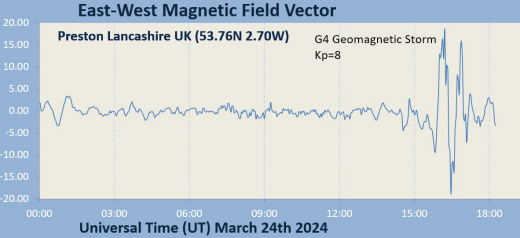
“My magnetometer kicked into life mid-afternoon here in the UK,” says Green. “The arrival of the CME created a severe disturbance.”
The squiggles in Green’s chart represent changes in ground-level magnetic fields caused by the CME. “The sensor is buried in my garden about 0.5 meters below the surface in an East/West orientation,” he explains. “This allows very sensitive (sub nanotesla) measurements of magnetic declination during geomagnetic storms.”
Green built his own magnetometer from scratch. Would you like to do the same? Here’s how.
 Synchronicity is the Source of Consciousness