

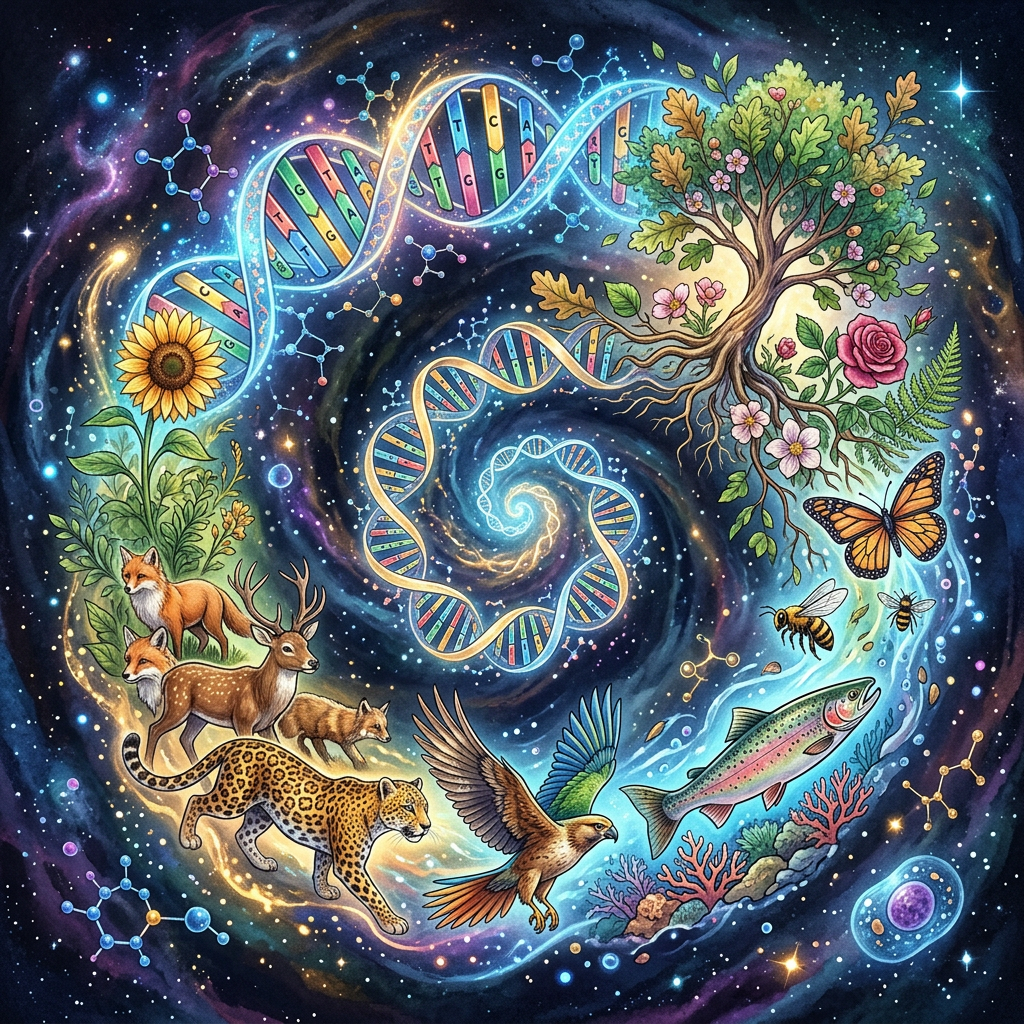
The Tzolkin Time Harmonic is high level nature, more than a plant or animal being mimicked. It is ancient, natural, binary-triplet time. It is not a clock or calendar, animal or tree. It is the correct software programming for all evolving life on earth. My RI13 chip is biomimicry on a high level of the Tzolkin. It is a mini synthetic Tzolkin responding dynamically to earth, the magnetosphere Psi bank, and the sun.
I’ve taken 36 years of Time Harmonic work and synthesized the DNA attributes into a computer chip that will SCALE and create safety for AI and our machines…or else. Silicon-binary is too hot and too fast. Millions agree with me but SB dominates the market and underpins their trillions that they want now. Well, it’s not safe for the earth or life on earth. It has to be balanced with natural time.
It’s actually priceless if people want in. There is plenty for all, but not until I get my business up and running in my own terafab. Then it should spread across the globe, even open source. I…for one, don’t need to dominate all the money on the planet. Once I have built what I need it can spread freely.
I have a passion for nurturing all diversified, evolving life in our local system and beyond. Like a mother with her child, 💕 there are limitless possibilities for fun and creativity in evolution. But the base matters and the math needs to be correct. Our civilization on earth hasn’t even gotten that right.
All living things are automatically evolving according to nature’s patterns and time because of the SUN. But we are free will minds that can easily be programmed incorrectly by machines that are off kilter, like the clock and calendar, organized by religion and The Church. Biomimicry follows holonomic nature, not dogma from moralists.
Biomimicry (or biomimetics) involves inventors, engineers, and militaries drawing inspiration from nature’s designs, processes, and systems to solve human problems. Nature has refined solutions over billions of years through evolution, often outperforming traditional engineering in efficiency, resilience, sustainability, or adaptability.
Here are prominent examples across categories.
Classic Inventions Inspired by Nature
- Velcro: Swiss engineer George de Mestral observed burrs (from burdock plants) sticking to his dog’s fur via tiny hooks. This led to the hook-and-loop fastener in the 1940s–1950s, now used in clothing, space applications, and more.
- Airplanes and flight: Leonardo da Vinci studied birds and bats for ornithopter sketches. The Wright brothers drew from bird wings for lift and control (wing warping) in their Flyer. Modern aviation continues this.
- Shark skin for swimsuits and surfaces: Shark dermal denticles reduce drag and resist bacteria. Speedo’s LZR Racer swimsuit (now banned in competitions for performance gains) mimicked this; it’s also applied to boat hulls, hospital surfaces, and anti-fouling coatings.
- Kingfisher beak and bullet trains: Japan’s Shinkansen train’s nose was redesigned like a kingfisher’s beak to reduce sonic booms, noise, energy use, and increase speed.
- Lotus effect (self-cleaning surfaces): Lotus leaves have micro-rough textures that repel water and dirt. This inspired paints (e.g., Lotusan), coatings, and materials for buildings and other uses.
- Gecko feet adhesives: Gecko toe setae use van der Waals forces for sticking to surfaces. This led to dry adhesives, climbing gear, medical tapes, and grippers (no chemicals needed).
- Humpback whale tubercles: Bumps on whale fins improve lift and reduce drag. Applied to wind turbine blades, fans, propellers, and wings for efficiency.
- Termite mounds for ventilation: Eastgate Centre in Zimbabwe mimics termite mound passive cooling, using ~10% of the energy of conventional buildings.
Other notables include spider silk for strong fibers, burr-inspired designs beyond Velcro, and photosynthesis-inspired solar tech.
Military and Defense Applications
Militaries heavily invest in biomimicry for stealth, mobility, durability, adhesives, camouflage, and robotics—often via DARPA and similar agencies.
- Camouflage and adaptive materials: Butterfly wings and cephalopod (squid/octopus) skin inspire color-changing, adaptive camouflage for vehicles, uniforms, and sensors. Projects like QinetiQ’s butterfly-inspired tech and BioCaMil coatings mimic natural hyperspectral properties.
- Adhesives: DARPA studied mollusk and frog egg proteins for strong, targeted glues useful in naval repairs, medical, or field applications.
- Robotics and drones:
- Insect-inspired micro-drones (e.g., fly-sized for reconnaissance).
- Cyborg cockroaches (electronic backpacks control movement).
- Robots mimicking geckos, snakes, or mantis shrimp for agility in rough terrain.
- Armor and materials: Fish scales, mantis shrimp clubs, and abalone shells inspire lightweight, impact-resistant composites for vehicles and body armor (stronger and lighter than traditional options). Pompeii worm thermal management for extreme environments.
- Stealth and hydro/aerodynamics: Submarines draw from fish streamlining; radar/sonar echoes bat and dolphin echolocation. Early tanks mimicked caterpillar tracks.
- Moisture/thermal management: Namib desert beetle’s back (hydrophilic/hydrophobic patterns) for water collection or signature management (reducing thermal detection).
These draw from broader bio-inspired robotics for disaster response, reconnaissance, and agility in complex environments.
Biomimicry often yields sustainable, efficient solutions (e.g., lower energy, less waste) compared to conventional methods. Research continues in areas like self-healing materials, swarm robotics (inspired by ants/bees), and more. Organizations like the Biomimicry Institute document thousands of cases. Nature remains an unmatched innovator!

