

| MYSTIC MAMMA PO BOX 262 TOPANGA, CA 90290 |

Synchronicity is the Source of Consciousness
Time is the strands of past and future in our DNA, not the hands of time on a clock
| MYSTIC MAMMA PO BOX 262 TOPANGA, CA 90290 |
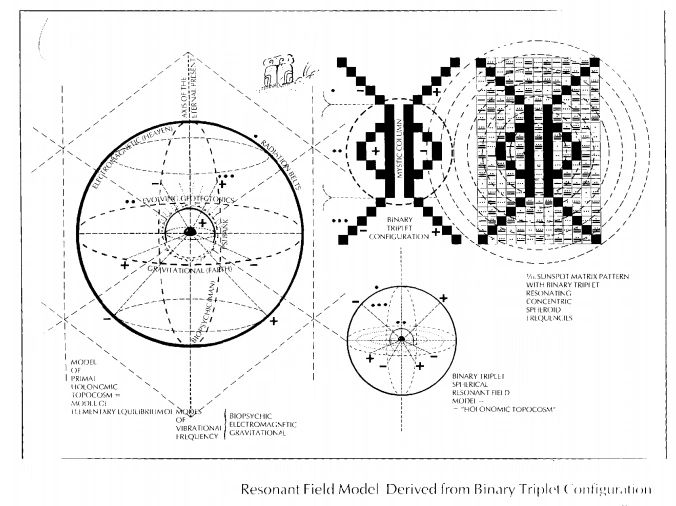
Tzolkin is literally translated as “count of days” and it is a Mayan word.
Definition of tzolkin
: a period of 260 days constituting a complete cycle of all the permutations of 20-day names with the numbers 1 to 13 that constitutes the Maya sacred year.
It sprockets exactly with Earth’s 365-day solar year and the 64 Hexagram I Ching. The IChing and the 65 Harmonic Tzolkin also sprocket exactly and can be seen in my book “Time is DNA”
Since the Tzolkin is the count of days and the count of kin, kin has two meanings that are equivalent. A kin is a person and a 24-hour day that is governed by one Mayan Tribe that is an archetype for an amino acid glycoprotein. Since a person is made of trillions of DNA molecules, it follows that for humans, “Time is DNA.” We are time itself. Because we can control our own minds and bodies we can control our time.
Lisa T.
I just made a podcast of this article also. Just thought I’d try it. Here it is. I have to keep warming my voice up.
November 9, 20215:45 AM ET Heard on Morning Edition

This new perspective of Jupiter from the south makes the Great Red Spot appear as though it is in northern territory. This view is unique to Juno.
NASA/JPL-Caltech/SwRI/MSSS/Gerald Eichstäd/Seán Doran © CC NC SA
Jupiter is well-known for being the biggest planet in our solar system, and it’s also home to the biggest storm. It’s called the Great Red Spot, an enormous vortex that has been swirling for centuries. It’s bigger than our own planet, and yet we don’t know much about it. Until now, scientists could only observe the spot from afar. But thanks to a NASA spacecraft launched a decade ago, we’re finally getting a look inside Jupiter’s storm.
The Great Red Spot is like a storm here on Earth, but supersized. “It’s basically clouds,” says Paul Byrne, a planetary scientist at Washington University in St. Louis. Really, “it’s not all that dissimilar to the kinds of things we know as cyclones or hurricanes or typhoons on Earth.”
At 10,000 miles across, the Great Red Spot is the largest storm in our solar system and has been continually observed for around 200 years, but it’s been around for much longer. (Compare that with big storms on Earth, which generally last a few days or weeks at most.)
“We believe this thing is really old,” says Scott Bolton, principal investigator of NASA’s Juno mission. “How it lasts that long is a mystery.”
Before Juno, scientists could only observe the storm from afar. Even from a distance, they noticed it was changing shape and actually shrinking.

NASA
NASA’s Juno mission launched from Cape Canaveral Space Force Station in Florida back in 2011 and arrived at Jupiter in 2016. In 2019, the spacecraft changed course slightly and passed over the Great Red Spot twice.
Bolton and his team used microwave sensors to slice into the depths of the storm, getting the first 3D model of the Great Red Spot. “It’s a pancake because it’s so wide at the top. But the depth of that pancake is much thicker than what we would have anticipated.”
The microwave observations show these storms on Jupiter, called vortices, extend below the cloud deck of the planet. In the case of the Great Red Spot, it extends at least 200 miles into the clouds of Jupiter, beyond the depths of where clouds form and water condenses.
“That’s very different than the way we think Earth’s atmosphere works, which is largely driven by water, clouds, condensation, and sunlight,” says Bolton. “How that works is going to require new models and new ideas to explain.”
During its 2019 pass over the Great Red Spot, the Juno spacecraft buzzed the planet at a blistering 130,000 miles per hour. The storm is so massive that its gravity field actually jostled the spacecraft during its flyby.
“The local gravity tends to pull and push away the spacecraft as it flies over the vortex, and this creates a sort of bump in the road for Juno,” says Marzia Parisi, a Juno scientist from NASA’s Jet Propulsion Laboratory in Southern California and lead author of a paper in the journal Science on gravity overflights of the Great Red Spot.
Scientists here on Earth could see the effect of these gravitational “bumps.” That’s because every time they jostled Juno, they nudged the spacecraft closer to or farther from Earth. That changing distance caused the radio waves sent back to Earth some 400 million miles away to be subtly squeezed and stretched, a phenomenon known as a Doppler shift. Using this effect, the spacecraft could pick up tiny jostles as small as 0.01 millimeters per second.
“The precision required to get the Great Red Spot’s gravity during the July 2019 flyby is staggering,” says Parisi. The findings from the gravity observations complemented Bolton’s earlier microwave measures, concluding the storm penetrates some 300 miles into Jupiter’s atmosphere.
Observations of the Great Red Spot show that it’s shrinking. For nearly a century and a half, the iconic spot has been getting smaller and it’s unclear just how long it will last.
Juno is taking a closer look at this phenomenon. “What we’re doing is seeing up close what’s happening while that shrinking has happened,” says Bolton.
The spacecraft is observing flecks of the storm getting caught up in neighboring clouds. The storm itself also appears to be trapped by powerful conveyor belts of wind on the planet that is stabilizing the storm.
“I don’t think the theory is very far advanced to the sense where we can connect all of that to the changes in the size,” said Bolton.
Data from Juno will help scientists predict what could possibly happen to the Great Red Spot.
“Understanding what’s happening with the storm now allows scientists to make much more sophisticated models to simulate what we see and then make predictions for what will happen in the future, including up to perhaps when the Great Red Spot may eventually go away,” says planetary scientist Paul Byrne.
The findings from the Juno spacecraft are shedding light on the early formation of giant planets like Saturn, Uranus, and Neptune — and even planets beyond our own solar system.
“When we get up close, and this is the first planet we’ve actually been able to open up and look inside, this is going to tell us a lot about how giant planets work throughout the galaxy,” says Bolton.

The JunoCam imager aboard NASA’s Juno spacecraft captures a Jovian cyclone known as a barge type in a polar jet stream called “Jet N4.”
NASA/JPL-Caltech/SwRI/MSSS. Image processing: Gerald Eichstädt CC BY
To date, astronomers have identified thousands of exoplanets — planets that orbit a star other than our sun. These planets are far away, with the closest one around 10.5 light-years from Earth. That makes observing what’s happening on the surface difficult.
Around 1,400 of these exoplanet candidates are thought to be gas giants, much like Jupiter. Understanding what happens on Jupiter can help scientists get a better sense of what’s happening beyond our solar system.
“By understanding the physics and the processes that go into shaping Jupiter,” says Byrne, “we’ll get a better understanding of not just Jupiter, but of these kinds of worlds.”
This gives background to the Draco and The Reptilians (Neptune next to the Kuiper Belt) and our asteroid belt (Tiamat blown up). This also flows over to Mars (Red Skywalker∞White W.B.) because part of it was blown off during the Tiamat Breakup. All the tribes in this drama are the red tribes.
A perfect, gigantic pyramid that dwarfs the ones in Egypt. I’m pretty sure this was built by The Ancient Builder Race of E.T. If not them then some other ancient alien ancestors.
Here is something.
I saw the word marsquake and it hit me that I’ve never thought of other planets as having a version of our earth…quake. We become so myopic on our own planet.
I wonder if scientists from the other local planets analyze us the way we do them? But we assume there are no other scientists in our system. That is also myopic ethnocentrism. 😋
https://nypost.com/2022/04/05/scientists-discover-rumbling-noise-on-mars/amp/
WOOHOO!!Another support for my new book on Amazon, “Everyday Intuition” See the article link at the bottom.
Everyday Intuition and the Science Validating It https://www.amazon.com/dp/B09WCMJJTX/ref=cm_sw_r_apan_i_0Z2K48JP6Y2AG9TE946C
I just saw this from a fellow blogger. I said yes to all of it as I was reading but he goes on a bit too long. I thought I talked alot! Still, it’s helpful.
We were born to a planet locked in death and darkness, imo. I count 20 human errors a day which rubs salt in the wound. My son says, “Mom! Everything is getting better!” and is very happy with his friends. A good example for me.
I need to pivot on this issue but sometimes I can’t help but think, “Come on people. We can do better.” I know I can always do better and I hold myself to that so I really should not expect it of others. But when their error makes more work for me…argggg.
The S.R.’s being very high is hard to tolerate so rest and go easy on yourself. We are being hit with Gamma rays which can be serious.
I’m noticing the young people thriving. Their brains are primed and ready for this shift. There is no way they will be slaves on this prison planet. Our old brains are still wired the old way. I have a tight eye on my 23-year-old and the millennial vibe is so different. If we want to stay on the planet we probably need to be as pliable as them. I’m 59 in 3D years but I think I can reverse things.
Have a great weekend.
Ben posted this tonight. I think he seems ill. Nevertheless this is an Interesting video. Ground lightning is nothing new though.
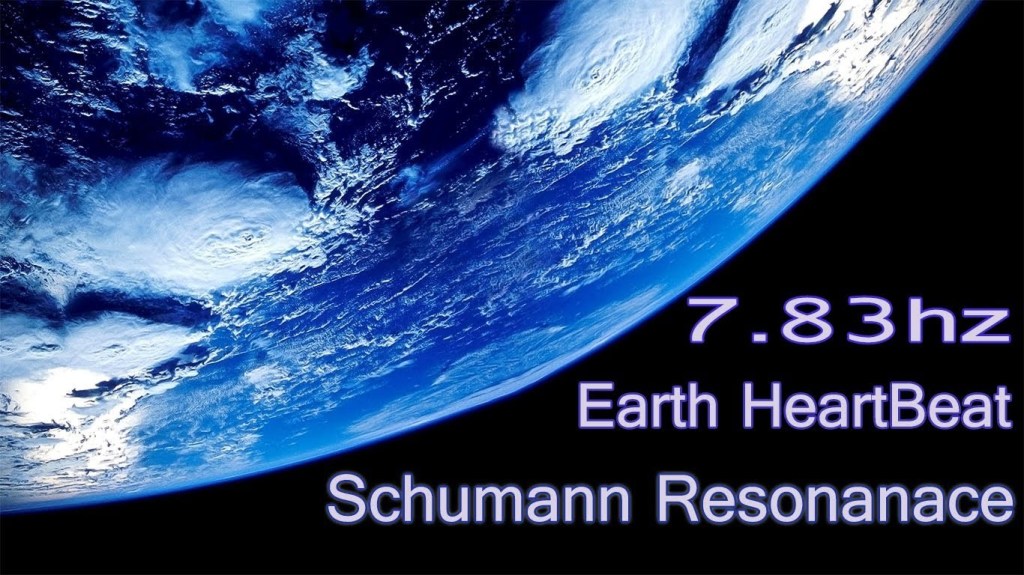
Lightning is what is measured by the Schumann Resonance which is the Psi Bank so it is super important to listen to what I am suggesting. The DNA on earth and in the whole local system is doing this to the Sun. I don’t believe the Sun initiated this cycle. I believe Life did.
Remember the 0-19 code and Blue Storm is tribe 19. I will post on this tomorrow. BUT LET IT SINK IN that YELLOW SUN AND BLUE STORM ARE DIRECT ANALOGS AND LIVE AS ONE TOGETHER. This video and his focus is in direct synchronicity with today’s gateway.
So followers, which tribe is dominant with the archetype of lightning? Blue Storm. Self-generation, excess Tryptophan which directly affects the brain. Excess levels will make you sleepy or throw you off center.
“The body uses tryptophan to help make melatonin and serotonin. Melatonin helps regulate the sleep-wake cycle, and serotonin is thought to help regulate appetite, sleep, mood, and pain. The liver can also use tryptophan to produce niacin (vitamin B3), which is needed for energy metabolism and DNA production”. Jan 7, 2020
Blue Storm is the analog today so this is in direct synchronicity. 💙 I’m posting this at 10:30pm bc I had an Intuition that he was posting.
Be careful if you’re going out tonight. People are being hit with double level Gamma rays. Wild stuff.


You may physically feel this today and people around you may be cuckoo. I feel very tired and I’m drinking extra water.
https://weather.com/en-IN/india/space/news/2022-04-08-eruptions-from-sun-could-cause-storms-on-earth
“Scientists Have Finished Sequencing the Human Genome. Again. – ExtremeTech” https://www.extremetech.com/extreme/333647-scientists-have-finished-sequencing-the-human-genome-again
No, they haven’t. They’ve hardly begun.
They say “again”…because they keep making the same mistakes over and over because of their dogma and ego and never change their premise. It’s insane which is why sickcare is insane. Of course, they would lose their funding if they departed from their unimaginative narrative.
They don’t understand the body. They treat us like a side of beef, a car, or a robot. They wish we were robots which is totally creepy. No thanks.
The genome is sequenced by the Tzolkin and it is precise. They use nucleotide AAA in the article as an example which is pretty straightforward in the harmonic because it’s HF1 and HF65 as the inverse, it’s not a G.A.P. kin and doesn’t function in the binary triplet configuration nor is it an omega or alpha point.
AAA is Lysine-White Wizard timelessness. The harmonic consists of:
But you have to figure in the inverse harmonic also because of polarity, positive and negative movement of the electrons and proton. So add in HF65 which is TTT-Phenylalanine and you have 100 more molecules. That’s 200 amino acid molecules to analyze and that’s not even all the patterns!
I haven’t fully figured out their relevance yet but there are far more cosmic patterns to be found because WE are cosmic. And, given that TIME is DNA we need the physicists to chime in. But the microbiologists are very far from where I am. We’re barely in the same neighborhood, except for Dr. Chavez. He totally understood what I was doing and complimented me on it. It would be amazing if even posthumously they figure out what I am doing because they are 3D clenched. I’ll probably be dead before they get it. Fine.
By Brandon Specktor published 1 day ago
1,500 pages of UFO-related research were just declassified as part of a FOIA request.
The reported effects of UFO encounters include nightmares, perceptions of levitation, and “unaccounted for pregnancy.” (Image credit: David Wall/Getty Images)
https://www.livescience.com/ufo-report-human-biological-injuries

This is from Paper 57 at urantia.org. I just gave you tidbits.
You can go to urantia.org and hit “Read the Book” and scroll down to Paper 57 if you want to know details about how our earth, solar system, and sun were born.
57:1.1 (651.3) Urantia (EARTH) is of origin in your sun, and your sun is one of the multifarious offspring of the Andronover nebula, which was onetime organized as a component part of the physical power and material matter of the local universe of Nebadon. And this great nebula itself took origin in the universal force-charge of space in the superuniverse of Orvonton, long, long ago.
57:1.2 (651.4) At the time of the beginning of this recital, the Primary Master Force Organizers of Paradise had long been in full control of the space energies which were later organized as the Andronover nebula.
57:1.3 (651.5) 987,000,000,000 (Billion) years ago associate force organizer and then acting inspector number 811,307 of the Orvonton series, traveling out from Uversa, reported to the Ancients of Days that space conditions were favorable for the initiation of materialization phenomena in a certain sector of the, then, easterly segment of Orvonton.
57:1.4 (651.6) 900,000,000,000 years ago, the Uversa archives testify, there was recorded a permit issued by the Uversa Council of Equilibrium to the superuniverse government authorizing the dispatch of a force organizer and staff to the region previously designated by inspector number 811,307. The Orvonton authorities commissioned the original discoverer of this potential universe to execute the mandate of the Ancients of Days calling for the organization of new material creation.
57:1.5 (652.1) The recording of this permit signifies that the force organizer and staff had already departed from Uversa on the long journey to that easterly space sector where they were subsequently to engage in those protracted activities which would terminate in the emergence of the new physical creation in Orvonton.
57:5.1 (655.6) 5,000,000,000 (billion) years ago your sun was a comparatively isolated blazing orb, having gathered to itself most of the nearby circulating matter of space, remnants of the recent upheaval which attended its own birth.
57:5.2 (655.7) Today, your sun has achieved relative stability, but its eleven and one-half year sunspot cycles betray that it was a variable star in its youth. In the early days of your sun, the continued contraction and consequent gradual increase of temperature initiated tremendous convulsions on its surface. These titanic heaves required three and one-half days to complete a cycle of varying brightness. This variable state, this periodic pulsation, rendered your sun highly responsive to certain outside influences which were to be shortly encountered.
57:5.3 (655.8) Thus was the stage of local space set for the unique origin of Monmatia, that being the name of your sun’s planetary family, the solar system to which your world belongs. Less than one percent of the planetary systems of Orvonton have had a similar origin.
57:5.4 (655.9) 4,500,000,000 years ago the enormous Angona system began its approach to the neighborhood of this solitary sun. The center of this great system was a dark giant of space, solid, highly charged, and possessing tremendous gravity pull.
57:5.5 (656.1) As Angona more closely approached the sun, at moments of maximum expansion during solar pulsations, streams of gaseous material were shot out into space as gigantic solar tongues. At first, these flaming gas tongues would invariably fall back into the sun, but as Angona drew nearer and nearer, the gravity pull of the gigantic visitor became so great that these tongues of gas would break off at certain points, the roots falling back into the sun while the outer sections would become detached to form independent bodies of matter, solar meteorites, which immediately started to revolve about the sun in elliptical orbits of their own.
57:5.6 (656.2) As the Angona system drew nearer, the solar extrusions grew larger and larger; more and more matter was drawn from the sun to become independent circulating bodies in surrounding space. This situation developed for about five hundred thousand years until Angona made its closest approach to the sun; whereupon the sun, in conjunction with one of its periodic internal convulsions, experienced a partial disruption; from opposite sides and simultaneously, enormous volumes of matter were disgorged. From the Angona side there was drawn out a vast column of solar gases, rather pointed at both ends and markedly bulging at the center, which became permanently detached from the immediate gravity control of the sun.
57:5.7 (656.3) This great column of solar gases which was thus separated from the sun subsequently evolved into the twelve planets of the solar system. The repercussion ejection of gas from the opposite side of the sun in tidal sympathy with the extrusion of this gigantic solar system ancestor has since condensed into the meteors and space dust of the solar system, although much, very much, of this matter was subsequently recaptured by solar gravity as the Angona system receded into remote space.
57:5.8 (656.4) Although Angona succeeded in drawing away from the ancestral material of the solar system planets and the enormous volume of matter now circulating about the sun as asteroids and meteors, it did not secure for itself any of this solar matter. The visiting system did not come quite close enough to actually steal any of the sun’s substance, but it did swing sufficiently close to draw off into the intervening space all of the material comprising the present-day solar system.
57:5.9 (656.5) The five inner and five outer planets soon formed in miniature from the cooling and condensing nuclei in the less massive and tapering ends of the gigantic gravity bulge which Angona had succeeded in detaching from the sun, while Saturn and Jupiter were formed from the more massive and bulging central portions. The powerful gravity pull of Jupiter and Saturn early captured most of the material stolen from Angona as the retrograde motion of certain of their satellites bears witness.
57:5.10 (656.6) Jupiter and Saturn, being derived from the very center of the enormous column of superheated solar gases, contained so much highly heated sun material that they shone with a brilliant light and emitted enormous volumes of heat; they were in reality secondary suns for a short period after their formation as separate space bodies. These two largest of the solar system planets have remained largely gaseous to this day, not even yet having cooled off to the point of complete condensation or solidification.
57:5.11 (656.7) The gas-contraction nuclei of the other ten planets soon reached the stage of solidification and so began to draw to themselves increasing quantities of the meteoric matter circulating in nearby space. The worlds of the solar system thus had a double origin: nuclei of gas condensation later on augmented by the capture of enormous quantities of meteors. Indeed they still continue to capture meteors but in greatly lessened numbers.
57:5.12 (657.1) The planets do not swing around the sun in the equatorial plane of their solar mother, which they would do if they had been thrown off by the solar revolution. Rather, they travel in the plane of the Angona solar extrusion, which existed at a considerable angle to the plane of the sun’s equator.
57:5.13 (657.2) While Angona was unable to capture any of the solar mass, your sun did add to its metamorphosing planetary family some of the circulating space material of the visiting system. Due to the intense gravity field of Angona, its tributary planetary family pursued orbits of considerable distance from the dark giant; and shortly after the extrusion of the solar system ancestral mass and while Angona was yet in the vicinity of the sun, three of the major planets of the Angona system swung so near to the massive solar system ancestor that its gravitational pull, augmented by that of the sun, was sufficient to overbalance the gravity grasp of Angona and to permanently detach these three tributaries of the celestial wanderer.
57:5.14 (657.3) All of the solar system material derived from the sun was originally endowed with a homogeneous direction of orbital swing and had it not been for the intrusion of these three foreign space bodies, all solar system material would still maintain the same direction of orbital movement. As it was, the impact of the three Angona tributaries injected new and foreign directional forces into the emerging solar system with the resultant appearance of retrograde motion. Retrograde motion in any astronomic system is always accidental and always appears as a result of the collisional impact of foreign space bodies. Such collisions may not always produce retrograde motion, but no retrograde ever appears except in a system containing masses that have diverse origins.
57:6.5 (658.2) Shooting stars occur in swarms because they are the fragments of larger bodies of matter which have been disrupted by tidal gravity exerted by nearby and still larger space bodies. Saturn’s rings are the fragments of a disrupted satellite. One of the moons of Jupiter is now approaching dangerously near the critical zone of tidal disruption and, within a few million years, will either be claimed by the planet or will undergo gravity-tidal disruption. The fifth planet of the solar system of long, long ago traversed an irregular orbit, periodically making a closer and closer approach to Jupiter until it entered the critical zone of gravity-tidal disruption, was swiftly fragmentized, and became the present-day cluster of asteroids.
1,500,000,000 years ago the earth was two-thirds its present size, while the moon was nearing its present mass. Earth’s rapid gain over the moon in size enabled it to begin the slow robbery of the little atmosphere that its satellite originally had.
57:7.5 (659.4) Volcanic action is now at its height. The whole earth is a veritable fiery inferno, the surface resembling its earlier molten state before the heavier metals gravitated toward the center. This is the volcanic age. Nevertheless, a crust, consisting chiefly of the comparatively lighter granite, is gradually forming. The stage is being set for a planet that can someday support life.
57:7.6 (659.5) The primitive planetary atmosphere is slowly evolving, now containing some water vapor, carbon monoxide, carbon dioxide, and hydrogen chloride, but there is little or no free nitrogen or free oxygen. The atmosphere of a world in the volcanic age presents a queer spectacle. In addition to the gases enumerated it is heavily charged with numerous volcanic gases and, as the air belt matures, with the combustion products of the heavy meteoric showers which are constantly hurtling in upon the planetary surface. Such meteoric combustion keeps the atmospheric oxygen very nearly exhausted, and the rate of meteoric bombardment is still tremendous.
57:7.7 (659.6) Presently, the atmosphere became more settled and cooled sufficiently to start precipitation of rain on the hot rocky surface of the planet. For thousands of years, Urantia was enveloped in one vast and continuous blanket of steam. And during these ages, the sun never shone upon the earth’s surface.
57:7.8 (659.7) Much of the carbon of the atmosphere was abstracted to form the carbonates of the various metals which abounded in the superficial layers of the planet. Later on, much greater quantities of these carbon gases were consumed by the early and prolific plant life.
57:7.9 (660.1) Even in the later periods the continuing lava flows and the incoming meteors kept the oxygen of the air almost completely used up. Even the early deposits of the soon appearing primitive ocean contain no colored stones or shales. And for a long time after this ocean appeared, there was virtually no free oxygen in the atmosphere; and it did not appear in significant quantities until it was later generated by the seaweeds and other forms of vegetable life.
57:7.10 (660.2) The primitive planetary atmosphere of the volcanic age affords little protection against the collisional impacts of the meteoric swarms. Millions upon millions of meteors are able to penetrate such an air belt to smash against the planetary crust as solid bodies. But as time passes, fewer and fewer prove large enough to resist the ever-stronger friction shield of the oxygen-enriching atmosphere of the later eras.
Corey has my book, “Time is DNA”. But as you see, he is busy with his, so he probably hasn’t seen it yet. I’m hoping the SSP or some other arm of the white hats in the military can use it. I have my doubts about academia and science as they have stuck to the incorrect narrative required by the government for their agenda for decades. And it is probably over their heads. ? We’ll see.
 Synchronicity is the Source of Consciousness
You must be logged in to post a comment.