From GROK4…
China’s progress in semiconductor (computer chip) innovation is a tale of rapid catch-up driven by massive state investments, export controls from the US and allies, and a focus on self-reliance. As of late 2025, China remains behind the US in overall innovation, particularly in cutting-edge design, advanced manufacturing nodes (e.g., below 5nm), and the ecosystem of tools/equipment needed for high-end production. Now, in 2026 they are ahead probably because they are carbon chip based, not silicon, which is hitting an energy use and pain points wall that Americans do not support. However, China is closing the gap faster than expected, leading in legacy/mature-node chips, research output, and applications like AI deployment. This has been accelerated by US restrictions, which have spurred domestic breakthroughs but also highlighted China’s vulnerabilities in high-performance computing.
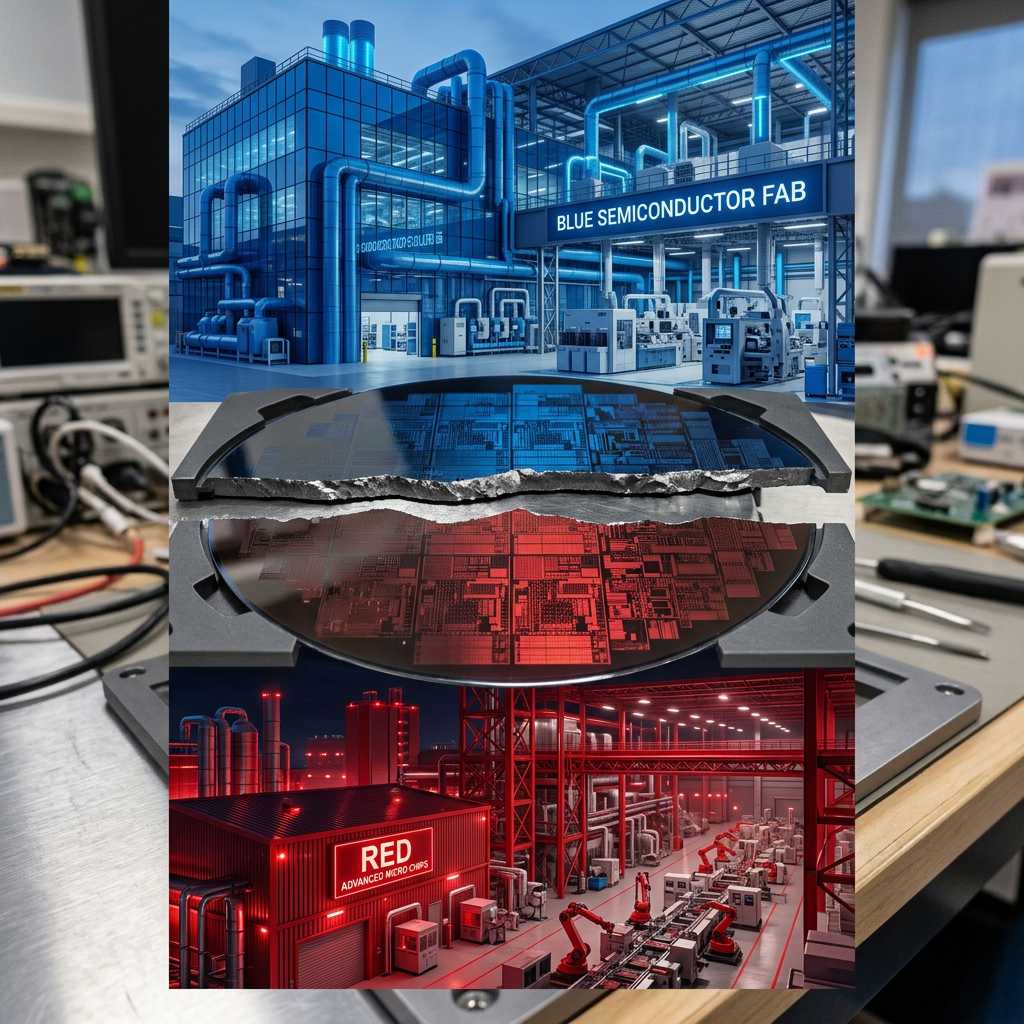
The US maintains a lead through companies like NVIDIA (AI chips), Intel/AMD (design), and alliances with TSMC (Taiwan) for fabrication, controlling ~56% of global device market share in 2024 (projected to hold in 2025). China, via firms like SMIC (manufacturing) and Huawei’s HiSilicon (design), is projected to reach ~10% global share by 2030, with strengths in volume production and alternative innovations (e.g., efficient algorithms despite hardware limits).
Key Comparison Areas
Area US Position China Position Who Leads? Key Evidence/Substantiation
Advanced Manufacturing (Nodes Leads with 3nm/2nm processes via TSMC/Samsung; controls EUV lithography tools (ASML). High yields, low costs. At 5-7nm using older DUV tools (no EUV access); lower yields (~30-40% vs. US ~80%), higher costs. SMIC’s 5nm for Huawei’s Kirin chips is a milestone but not scaled. US (Ahead by 2-3 years) US export controls since 2022 blocked EUV; SMIC’s progress uses workarounds but lags TSMC’s 3nm. China’s self-sufficiency goal (70% by 2025) missed, at ~40%.
Chip Design & AI Innovation Dominates fabless design (NVIDIA, AMD); leads in high-performance AI chips (e.g., H100). Attracts global talent. Strong in custom AI chips (Huawei Ascend 910C rivals Nvidia H100 in tests); efficient models like DeepSeek use 10x fewer chips for similar results. US (Slight edge; China closing) US firms set pace for largest LLMs; China publishes 2x more chip research papers, innovating around limits (e.g., 2D transistors 40% faster than TSMC’s 3nm).
Legacy/Mature Nodes (28nm+) ~12% global capacity; relies on allies for volume. CHIPS Act ($52B) aims to expand. ~30% global capacity; dominates production for EVs, appliances. Oversupply risks price drops. China (Ahead) China leads in foundational chips; US/alliances control 73% advanced fab but only 60% non-China/Taiwan total.
Research & Talent Leads in applied innovation; top universities draw global experts. 2x US output in basic chip research; produces 250K+ engineering grads/year. Talent gap: short 200K specialists by 2027. China (Volume); US (Quality) Peking Univ. breakthroughs in materials; US excels in ecosystem (e.g., $1T+ in planned fabs).
Market Share & Investment $743B global market in 2025; US firms ~50% revenue. $90B+ in design sales (2024); $50B+ subsidies via “Big Fund.” Imports still >50% of needs. US (Overall); China (Growth) China: 11.9% design sales growth; US: Double-digit sales rise but decoupling risks 20-30% revenue loss.
Geopolitical/Supply Chain Controls chokepoints (e.g., design software); allies (Japan/Netherlands) align on controls. “Delete America” push; stockpiles, but reliant on foreign HBM/IP. Export controls catalyzed innovation. US Controls slowed China but boosted resolve; Huawei’s 2025 AI chips surprise despite bans.
Broader Implications
- US Strengths & Risks: Innovation ecosystem and standards-setting keep the US ahead, but over-reliance on Taiwan (TSMC) and potential decoupling costs (e.g., lost China market) could erode leads. The CHIPS Act is rebuilding domestic fabs, but full effects take 3-5 years.
- China’s Momentum: Sanctions have “mobilized” China, per Nvidia’s CEO, fostering “innovation under pressure” (e.g., Huawei’s Ascend series). By 2026, expect surprises in AI chip design/manufacturing, per The Economist. However, state-driven R&D risks inefficiency vs. US market dynamics.
- Global Outlook: The “chip war” fragments supply chains—US/alliances vs. China—potentially slowing overall progress. Interoperability suffers, but competition drives efficiency (e.g., China’s low-chip AI models). Watch for escalations: US tariffs or new controls could further accelerate China’s self-reliance.
In summary, in 2025, the US was ahead in high-end innovation, but China is not far behind and leads in scale/practical deployment. The gap is narrowing to 2-3 years in key areas, making sustained US investment critical.
This market has markedly changed from 12/25 to 7/26 and will continue to.
Share this: Synchronicity 13:20, DNA is Time