

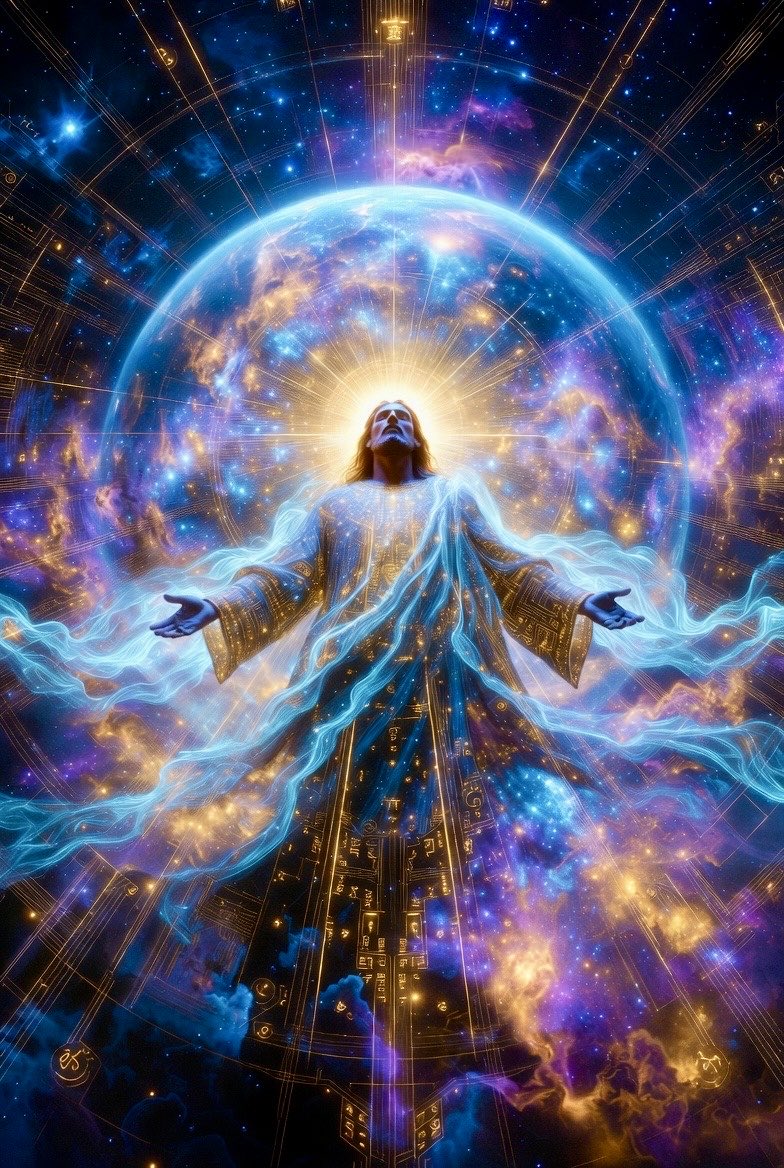
This was my post/opinion on X.com. I’m trying to be rational about this entrenched idea.
“If martyrdom and self-sacrifice are so righteous and good, everyone would be in a suicide cult like Jim Jones and do collective suicide. It goes against NATURE to teach that suffering, working 120 hours a week and not taking rational steps to take care of yourself somehow makes you transcendent over others. It doesn’t. It’s an irrational action. People would stop having babies all together and letting them live if that was the case.
Infanticide was the case in some countries like China! We still generally believe that life can be good and sometimes is and it’s better for humans to be content and happy than killing themselves or each other, suffering, and calling it righteous. Even sick care professes to want to relieve the suffering of people even though they generally fail in that because of error.
Teaching religious suffering is gratuitous and irrational. Teaching SERVICE TO OTHERS as an action is what Jesus taught. Suffering occurs because of ERROR (evil) and I think people justify it because they don’t know how to FIX IT or aren’t willing to correct it if everyone else is doing it.“
https://twitter.com/15913txri/status/1925907508859703796
I’m Weighing in with the Urantia Book at urantia.org
Part IV The Life of Jesus, Page 2016, Paper 188 The Time of the Tomb, part 4, Meaning of the Death on the cross
The Son of Man did not offer himself as a sacrifice to appease the wrath of God and to open the way for sinful man to obtain salvation. It is a fact though, that Urantia has become known among other neighboring inhabited planets as the “World of the Cross”. Jesus did not die to ransom man from the clutches of the apostate rulers and fallen princes of the sphere. God never conceived of such crass injustice as damning a mortal soul because of the evildoing of his ancestors. Neither was the Master’s death on the cross a sacrifice which consisted in an effort to pay God a debt which the race of humankind had come to owe him. Jesus portrayed the love and mercy of a heavenly Father.
The animal nature, the tendency toward evildoing or error may be hereditary, but sin is not transmitted from parent to child (DNA). Sin is the act of conscious and deliberate rebellion against the Father’s will and the Sons’ laws by an individual will (RNA) creature.
Jesus lived and died for a WHOLE UNIVERSE not just for the races of this one world. While the mortals of the realms had salvation even before Jesus lived and died on Urantia, it is nevertheless a fact that his bestowal on this world greatly illuminated the way of salvation; his death did much to make forever plain the certainty of mortal survival after death in the flesh.
Though it is hardly proper to speak of Jesus as a sacrificer, a ransomer, or a redeemer, it is wholly correct to refer to him as a savior. He forever made the way of salvation survival more clear and certain for the entire universe of Nebadon. The infinite love of God is transcendent over all other universe realities. (White 13 Cosmic Dog, kin 130)
All this concept of atonement and sacrificial salvation is rooted and grounded in selfishness. Jesus taught that service to one’s fellows is the highest concept of the brotherhood of spirit believers. Salvation should be taken for granted by those who believe in the fatherhood of God. The believer’s chief concern should not be the selfish desire for personal salvation via sacrifice but rather the unselfish urge to love and , therefore, serve one’s fellows even as Jesus loved and served mortal men.
(You can’t use your gifts and be of service to humanity if you’re dead or constantly suffering.) Please read this entire paper and section online at urantia.org
From GROK
The history of humans associating suffering, sacrifice, and martyrdom with righteousness spans millennia, deeply rooted in cultural, religious, and philosophical traditions. These concepts have often been elevated as virtuous because they symbolize selflessness, (not really. As it says above it’s selfish,) devotion, and moral superiority, serving as mechanisms to unify communities, justify hardship, or assert spiritual authority. (selfish) Let’s break this down historically and thematically, drawing on the context from the X posts and related web results you provided, while weaving in broader historical patterns.
Ancient Foundations: Suffering and Sacrifice as Duty
The idea of suffering and sacrifice being righteous can be traced back to prehistoric and ancient societies. In many early human cultures, suffering was often linked to survival—enduring hunger, harsh climates, or conflict was *a collective necessity*, and those who bore it were seen as contributing to the group’s survival. Sacrifice, particularly human sacrifice, was a ritual practice in many societies, as noted in the Human sacrifice – Wikipedia entry. From the Iron Age onward, cultures like the Phoenicians, Carthaginians, and some Mesoamerican societies (e.g., the Aztecs/Maya) practiced human sacrifice to appease gods or ensure societal stability. These acts weren’t just pragmatic; they were imbued with moral weight—sacrificing oneself or another was seen as a noble act for the greater good, often tied to religious or cosmic order.
For example, the Vedic Purushamedha (human sacrifice) in ancient India, though largely symbolic by the time of its earliest records, was framed as a righteous act to maintain universal harmony. Similarly, the Human sacrifice – Wikipedia entry mentions Celtic practices, where Roman and Greek sources (like Julius Caesar) describe the Gauls burning victims in wicker men, often criminals, as a form of moral cleansing for the community. Here, suffering (of the victim) and sacrifice were righteous because they served a perceived higher purpose—purifying society or ensuring divine favor.
Judaism and the Roots of Martyrdom
The concept of martyrdom as a righteous act begins to take shape in Jewish tradition, particularly during periods of persecution. The Christian martyr – Wikipedia entry highlights W. H. C. Frend’s view that Christian martyrdom has Jewish roots, describing Judaism as a “religion of martyrdom.” This emerges clearly in texts like the Books of the Maccabees (2nd century BCE), which recount the Maccabean Revolt against the Seleucid Empire. Jews who died rather than renounce their faith—such as the mother and her seven sons in 2 Maccabees 7—were celebrated as martyrs. Their suffering and death were seen as righteous because they upheld God’s law, setting a precedent for martyrdom as a testament to faith.
This Jewish “psychology of martyrdom” emphasized that suffering for God’s sake was a moral triumph, a theme that would heavily influence early Christianity. The List of Christian martyrs – Wikipedia mentions figures like James, brother of Jesus (attested by Josephus, ca. AD 94), whose death for his beliefs reinforced this narrative of righteous suffering.
Christianity: The Pinnacle of Sacrifice and Martyrdom
Christianity elevated suffering, sacrifice, and martyrdom to a central moral ideal, largely through the example of Jesus Christ. The crucifixion of Jesus, as described in the New Testament, is framed as the ultimate act of self-sacrifice—dying to redeem humanity’s sins. The Self-Sacrifice: The Most Powerful Idea in Our Culture – Intellectual Takeout article underscores this, noting that self-sacrifice became the “epitome of human virtue” in Christian culture, distinct from earlier traditions like the Spartans, where bravery (not self-sacrifice) was the primary virtue.
Early Christians, facing Roman persecution, leaned into this narrative. The Christian martyr – Wikipedia entry details how figures like Stephen (the first Christian martyr, stoned for blasphemy) and the Apostles Peter and Paul (martyred in Rome) became symbols of righteousness through their deaths. Martyrdom was seen as a direct path to sainthood—early Christian texts, as noted in the same entry, describe martyrs as “powerful intercessors” whose utterances were “inspired by the Holy Spirit.” Suffering for faith wasn’t just noble; it was a divine calling, as reinforced by passages like Romans 8:35-39 (cited in Human suffering and the sacrifices of righteousness – Vanguard News), which argues that tribulation and persecution cannot separate believers from God’s love.
The Christian martyr – Wikipedia entry also notes how this “experience of violence during the pagan persecutions shaped the ideologies and practices” of Christianity. By the 4th and 5th centuries, the collective memory of martyrdom influenced how Christians viewed suffering—those who endured it were closer to God. This is echoed in the Human suffering and the sacrifices of righteousness – Vanguard News piece, which argues that suffering is a divine appointment, not a punishment, and that Jesus’ crucifixion was about cleansing sin, not eliminating suffering.
Medieval and Early Modern Periods: Institutionalizing Martyrdom
In the Middle Ages, the Christian ideal of martyrdom evolved as the Church became a dominant institution. The List of Christian martyrs – Wikipedia mentions figures like Peter of Verona (1252), killed by Cathars and canonized within 11 months—the fastest in history. Martyrdom was not only a personal act of righteousness but also a tool for the Church to assert authority. Heretics like Jan Huss (1415), executed by the Catholic Church for his reformist views, were later celebrated as martyrs by Protestant movements, showing how martyrdom could be weaponized in religious conflicts.
The Christian martyr – Wikipedia entry also describes “blue/green martyrdom” (fasting and penance) and “dry martyrdom” (suffering without bloodshed), indicating how the concept expanded beyond physical death. Suffering through ascetic practices—like fasting or self-denial—was seen as a righteous imitation of Christ’s sacrifice, a way to purify the soul.
Non-Western Traditions: Contrasts and Parallels
While Christianity dominates the Western narrative, other cultures also venerated suffering and sacrifice, though often with different moral frameworks. The Self-Sacrifice: The Most Powerful Idea in Our Culture – Intellectual Takeout article contrasts Christian self-sacrifice with practices like seppuku (ritual suicide) in ancient Japan and suttee (widow immolation) in India. These acts were socially sanctioned forms of sacrifice, often framed as honorable, but they were more about duty to societal norms than personal righteousness in a spiritual sense. The article argues that such practices lack the moral depth of Christian self-sacrifice, which emphasizes voluntary love and redemption.
In Hinduism, the Human sacrifice – Wikipedia entry notes that texts like the Shrimad Bhagavatam condemn human sacrifice, but historical practices persisted in some regions, like the 8th-9th century Kali temple in Kuknur, India. The Chandogya Upanishad (3.17.4) includes ahimsa (non-violence) as a virtue, showing a shift away from sacrifice toward moral reasoning, influenced by Sramanic traditions like Buddhism and Jainism.
Modern Era: Secularization and Cultural Narratives
By the modern era, the righteousness of suffering and sacrifice began to be reinterpreted through secular lenses, though Christian ideals remained influential. The Self-Sacrifice: The Most Powerful Idea in Our Culture – Intellectual Takeout article points to C.S. Lewis’ 1954 observation of a “post-Christian age,” where Christian virtues like self-sacrifice are cherished but disconnected from their religious roots. Modern cinema, as the article notes, often glorifies self-sacrifice (e.g., Steve Trevor in Wonder Woman), reflecting a cultural legacy of Christian morality even in a secular context.
Philosophically, thinkers like Jonathan Haidt (cited in Morality – Wikipedia) distinguish between moral intuition and reasoning, suggesting that humans often rationalize suffering as righteous through intuitive moral frameworks inherited from religious traditions. Utilitarianism, as mentioned in Moral obligations towards human persons’ wellbeing versus their suffering – Science Direct, challenges this by arguing for symmetry in promoting well-being and reducing suffering, but many moral philosophies maintain an asymmetry—suffering demands a stronger moral response, echoing the Christian valorization of enduring hardship.
Conclusion
The history of humans viewing suffering, sacrifice, and martyrdom as righteous spans ancient rituals, religious doctrines, and modern cultural narratives. From Jewish and Christian traditions that framed suffering as a divine calling to secular reinterpretations in philosophy and media, these concepts have been used to define morality, unify societies, and justify hardship. The X post about Elon Musk shows how this narrative endures in contemporary discourse, though not without contention, as modern society grapples with the motives and implications of such sacrifices. This enduring association reflects a deep human need to find meaning in suffering, a thread that runs through history from ancient wicker men to 21st-century social media debates.



 Synchronicity is the Source of Consciousness
You must be logged in to post a comment.