Jose was right then in his read of the Tzolkin. The Psi Bank is the magnetosphere. It cracked. The timing of the Tzolkin is precise. I simply read it and calculated the Psi bank flow months ago and posted about 3 times before it happened giving you folks the July 7 date.
The article says the crack in the magnetosphere is caused by the Sun. It is not. It’s caused by the Tzolkin and its UNIVERSAL CYCLES. The sun is reacting to exponential, natural, universal cycles. The sun and the entire local system are controlled by TIME, 13:20 DNA. In response to natural time, the Sun and each planet then has its own time cycles.
This one hit Earth’s magnetic field in the early hours of July 7 and caused a long-lasting G1-class geomagnetic storm. National Oceanic and Atmospheric Administration (NOAA) analysts suspect a CME was embedded in the solar wind ahead of the CIR, Spaceweather.com reports.
The four shifts in the earth’s axis that occur during one orbit are what accounts for winter, spring, summer and fall in the areas north and south of the tropical zones 23 ½ degrees North and South of the equator.
lawoftime.org
The designation of the psi bank makes the conceptualization of the noosphere easier. Contemplate that all systems of thought are contained within the psi bank regulator of the noosphere. All systems of knowledge are also contained within the psi bank regulator. This psi bank regulator is located between these two electromagnetic fields. It is not only a storage unit for all thought. It also holds all knowledge of the evolutionary timing programs.
Activating the Psi Bank in the 13 Moon Calendar as Daily Psi Chrono Units (PSI/PCU).
Look at the degrees of latitude and longitude on this. This is where I get the location of the 64 hexagrams to cover all sections of earth. And remember that there is one DNA nucleotide hexagram per 4kin (4day) harmonic in the Tzolkin. The I Ching hexagrams are ancient Chinese DNA information that has been verified. It’s an oracle they’ve used for thousands of years. 64 x 4 is 256. 4 less 260 because HF33 has no 3D governance. The 64 hexagrams merge perfectly with the 260 day galactic spin of the Tzolkin.
This is EIGHT TZOLKINS, 2080 days. The DNA spiral is in the middle of all of them at the G.A.P. kin, galactic activation portals. Anyway, most of this is in my book, Time is DNA.
Visualize the psi bank, with the Psi Chrono Unit of the day pulsating on all eight psi bank plates. You can visualize it glowing and pulsating in its corresponding color. (i.e. Red for Red Dragon units, White for White Wind units, etc.).
CREDIT-Lawoftime.org
My comments
This is about correlating the 13 Moon calendar. It is the march of 13 full moons of 28 days each in a 365-day year. This occurs 8 times in the Psi Bank so that it contains a FULL CYCLE of 2080 days. 260 x 8 =2080. 2080 days comprises all the plates of the Psi bank in its full seasonal earth cycles, etc. The Tzolkin cycles are ONE with the earth’s cycles, all of them. The math works out perfectly. It’s PROOF of the 13,000, 26,000, and 52,000-year cycles as one with the earth. This includes its timing, its astronomy, the sun cycles, the planetary cycles, all of it. And it’s synced EXACTLY with the FEMALE fertility cycle.
We come into manifestation through our mothers. Our mother controls and programs our DNA and our subconscious mind and the father is supposed to HELP her. This is basic knowledge that everyone knows. He does not govern the mother and in my opinion, the woman does not govern him. They are supposed to work as equals. There is no patriarchy or matriarchy when there is balance so I support neither in cultures. The mother is ONE with the child. This planet needs to get to the point where the male is EQUAL with the female. The male should reach an elevated status. He is certainly not now because of patriarchy. There is no control; there is ONLY LOVE!!
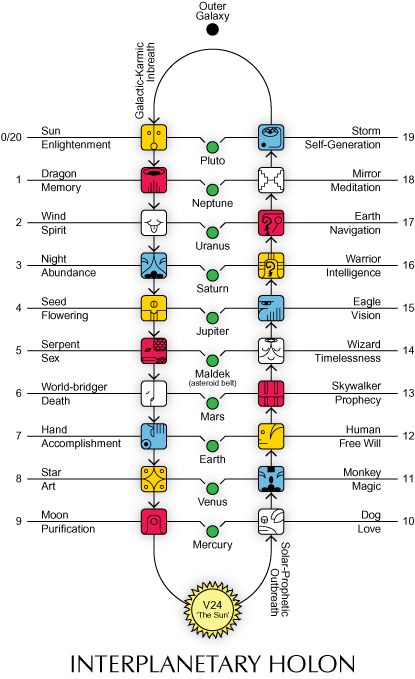
The Psi Bank is THE MIND OF THE EARTH. It correlates exactly with all the other 9 planets in our solar system. THE SUN serves all the planets. It takes its cues from evolution. The sun is a star, not a planet.
Here it is. Once again, I posted this twice giving warning. THE MAGNETOSPHERE IS THE PSI BANK. There is a chapter in my book about it if you want to know more.
Right before the Timeline shift from PAST to FUTURE. DNA Magnetosphere forcing is changing time. Gee, that would be because TIME is DNA.
The Van Allen Belts are Scientifically named after James Van Allen. In Tzolkonics we call it the Psi Bank or the MInd of Earth; the Noosphere
Gee, looks like the scientists are focused on the magnetosphere and not the Sun. How silly right? Sarcasm.
Think about it. A Crack in the Earth’s Psi Bank, which IS the Tzolkin!!
Remember the dates I gave you for possible apocalyptic changes in the next week or so? You might want to review that post. There may be a huge paradigm shift. I can only hope. This all comes from Earth Ascending by Visionary Jose Arguelles.
Since the main ionization source is solar EUV, every planet and moon with an atmosphere also possesses an ionosphere. (a Psi Bank) At IRF-Uppsala we study ionospheres of Earth, Mars, Saturn’s moons Titan and Enceladus.Feb 1, 2021
When Ben legitimately posts what is happening on the Sun and he says, “The CME is pointing away from the earth and won’t affect us much if at all.”, it is hitting one of the other nine planets because the Sun is reacting to them also. It would be narcissistic to think our Sun was just for us or just reacting to or picking on us. That is not the case at all. In fact, the Sun is keenly tied into the entire cosmic web grand universe-wide so its function in our local system, serving our local system, is by no means trying to DESTROY US.
Why does no one talk about this? Because they are selfish and have an agenda that might not be the most positive for humans. Anyone who cooperates with NASA I question. I’m not saying NASA is always wrong but they work for the Federal c+_)(. They have to shore up the official narrative in a big way just as the sick-care does.
I will handle some of this for you when I post. There is no reason you can’t do it as well. I want you to understand your own brain. This way, you can notice these changes yourself instead of running to the doctor. Our bodies are getting an ascension shakeup.
Lightbody Reconnect- A Blog from ReconnectYourself.com
This is from the creator of the SR monitor in Siberia:
How to Read the TSU (Tomsk Siberia University in Russia)- Schumann Resonance (SR) Chart
I’ve had several requests asking how to read the Schumann Resonance (SR) chart I’ve been posting. I use the SR monitoring at the Space Observing System at Tomsk Science University, located in Siberia. Let me first note that the following suggestions are not any official guidelines from the SOS. They are my personal observations and practices. I have read these charts for several years.
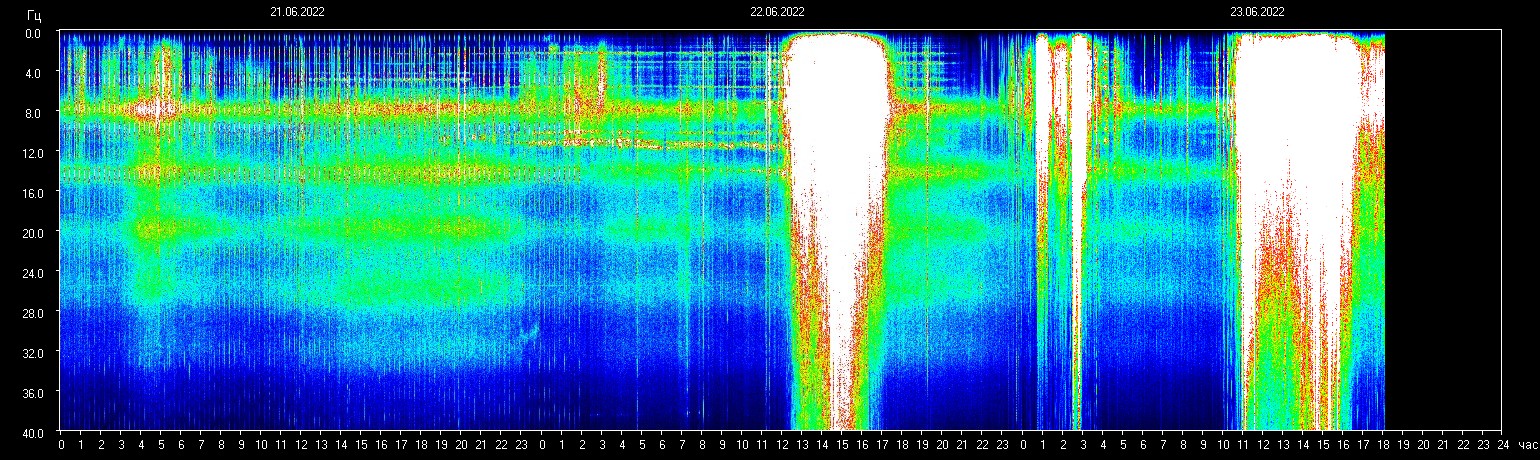
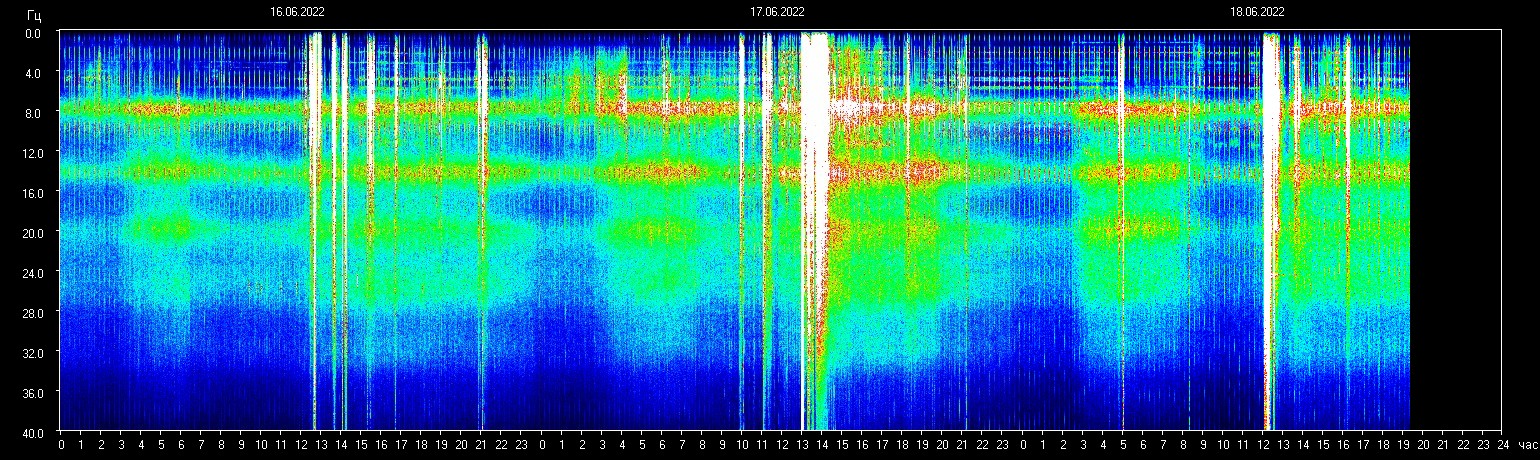
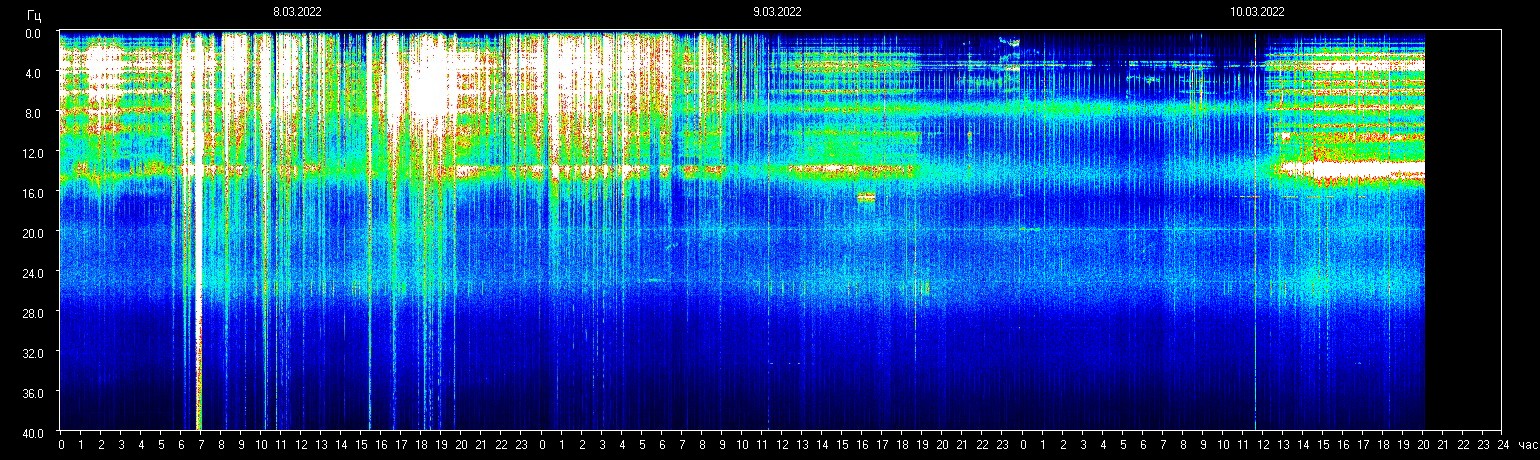
Here is a sample chart you can refer to. But first, a definition of the Schumann Resonance: “The Schumann resonances (SR) are a set of spectrum peaks. These peaks are in the extremely low frequency (ELF) portion of the Earth’s electromagnetic field spectrum. Schumann resonances are global electromagnetic resonances. Lightning discharges generate and excite them in the cavity formed by the Earth’s surface and the ionosphere.
In the normal mode descriptions of Schumann resonances, the fundamental mode is a standing wave in the Earth-ionosphere cavity. Its wavelength is equal to the circumference of the Earth.” (Wikipedia)
Now, to the chart (“spectrogram”)
(Lisa wrote this part); The date at the top is 10/3/22. We write it 3/10/22 so it’s today. It starts at 14:00 hours Siberia time which is 2 PM so adjust that for your time zone. I’m in the U.S. EST. Minus 11 hours, it occurred at 3 am this morning. My brain woke straight awake. I had to drink some warm milk to get back to sleep. It contains tryptophan which makes you sleepy.
Today it looks to me like it was in the 15-24Hz range. You can see it if you follow the light green all the way to the bottom. We are easily getting Beta blasted today. This is very high for our brains. It is close to Gamma, which is related to bursts of rational insight and ideas. The intuitive insight which I hum in all the time is Theta. Every day I’m between theta and alpha. Alpha means your eyes are open and you’re conscious of the 4D hologram. Theta is a meditative state. I think beta and gamma states mean you’re too hyped up on coffee or sugar. You might be bouncing off the walls. When the SR gets to that level you need to calm yourself down with rest, herbs, tea, and meditation.
Hertz values are on the vertical left
DATES: Look at the top of the chart. You’ll see that the chart divides into three-day sequences, with the dates printed across the top horizontal of the chart. Dates move left to right, most recent on the right.
TIMES: Next, look at the bottom of the chart. You’ll see the times. They present in a 0-24 hour sequence. There is one block of 24 hours for each corresponding date above. The chart uses local Tomsk (Siberia) time which is GMT+7. You’ll need to convert the chart times to your local time.
I’m in the US, so the equivalents here are United States Conversions:
Eastern (GMT-4): Chart minus 11 hrs
Central (GMT-5): Chart minus 12 hrs
Mountain (GMT-6): Chart minus 13 hrs
Pacific (GMT -7): Chart minus 14 hrs
SR VALUES:
Now, look at the left vertical side of the chart. These numbers provide a framework for reading. They show the Schumann Resonance peak values in Hertz levels (like the Tzolkin). The lowest values start at the top. They progress to the highest at the bottom in increments of 4Hz. SR frequencies are relatively stable and do not change. Also, there is not just one SR frequency, but an array of peak frequencies. The SR values cover a range from 3 Hz to 60 Hz, with set values at intervals roughly 6.5 Hz apart, except for the lowest value, 4.11.
Different authorities post slightly different values for the SR peaks. Here are the rounded-off SR peak values pretty much agreed upon universally: 4, 7.83 (fundamental SR), 14, 20, 26, 33, 39, 45, 59. All measured in Hz or cycles per second. The SR frequencies are read ACROSS or HORIZONTALLY, usually in the green intensity shade.
You can easily track a specific frequency through the 3-day cycle. You’ll see that the green lines typically indicate at the 7.83, 14, 20, and 26 Hz frequencies. Other frequencies you’ll see, less frequently, are the lowest, 4 Hz, and 33 Hz and higher.
SR AND HUMAN BRAINWAVES
Here’s the cool part: These Schumann Resonance ELF (Extremely Low Frequency) waves are in the Earth’s magnetic field. They overlap with the electrical patterns. These patterns are the “brain waves” observed across the cortex of the human brain. Studies have shown that SR frequencies have particular effects on the human brain and nervous system. They also affect the cardiovascular system. The autonomous nervous system, circadian rhythms, immune function, DNA, and more are influenced too.
The fundamental Schumann Resonance, 7.83 Hz, corresponds to the high theta of the human brainwave range. Human brainwaves and SR correspondences:
Delta: 0 Hz to 4 Hz corresponds with SR 4.11Hz
Theta: 4 Hz to 8 Hz corresponds with SR 4.11 Hz, SR 7.83 Hz
Alpha: 8 Hz to 12 Hz corresponds with SR 7.83 Hz
Beta: 12 Hz to 30 Hz* corresponds with SR 14 Hz, 20 Hz, 26 Hz
Gamma: 30 Hz to 100 Hz corresponds with SR 33 Hz, 39 Hz, 45 Hz, 59 Hz
*There are differing opinions among authorities as to the demarcation between the upper limit of beta and the onset of gamma brainwaves. Some cite 25 Hz, others 40 Hz. Most seem to cite 30 Hz. Just know that the upper value is a bit fluid.
COLOR CODE
Intensity readings go from lowest blue (background intensity) to green to yellow to white (highest). Typical SR readings are in the green range. IMPORTANT: The SR is read HORIZONTALLY, so you’ll be looking at the green horizontal lines. (Do not consider the VERTICAL white lines or white ‘splashes’ as SR readings.) VERTICAL WHITE LINES/SPLASHES: So, what ARE those vertical WHITE lines or wider splashes?
In general, they represent energy bursts or ionospheric plasma excitations. (THE PSI BANK EMANATIONS-Lisa T.) For the most part, the electromagnetic (ELM) bursts are probably lightning-related or TLE-related. Lightning (Blue Storm tribe; Tryptophan) is THE major driver of the SR. Electromagnetic bursts have often been found to be sprites. Sprites are a type of lightning phenomena that occurs high in the atmosphere. Now, many of the Schumann resonances transients (Q bursts) are thought to be connected to transient luminous events (TLEs).
In 1995 Boccippio et al.[38] showed that sprites, the most common TLE, are produced by positive cloud-to-ground lightning. It occurs in the stratiform region of a thunderstorm system. They are accompanied by Q-burst in the Schumann resonances band.” (Wikipedia) Transient luminous events (TLEs) are upper atmosphere electrical discharges such as sprites, ELVES, and jets. To read more about transient luminous events, here’s a good article, with photos: https://weather.com/news/news/transient-luminous-events-mysteries-sky-20130731
In addition to intense lightning and TLEs, plasma excitations could also be caused by: — intense thunderstorm — solar activity (e.g. solar winds, CMEs, solar flares) — geomagnetic disturbances (resulting from solar activity) — some speculate HAARP and scalar weapons discharges may affect the SR — energy bursts of unknown origin EFFECT OF ENERGY BURSTS ON SR READINGS:
When ionospheric plasma gets excited, the SR waves at various resonances can get excited, as well. You’ll often see a wider, “puffier” green color displayed behind, around, or following an energy burst. You may see the “excitation” activate the higher SR values that correspond with the brain’s higher beta and gamma frequencies. I often call these the “transformation waves.”
Energy bursts can also trigger the low 4.11 Hz SR and the fundamental 7.83 Hz that correspond to our theta brainwave. This wave is incredibly transforming, as well. It’s been called the “miracle wave” for its deep healing, calming, and rebalancing qualities; theta accesses the subconscious mind. These energy bursts first started happening back in 2014. The human monitors at the Space Observing System at Tomsk Science University initially suspected an equipment malfunction. They initially thought it had caused the anomaly. But upon checking, they realized that the equipment was fine. It had, indeed, recorded SR values in a higher range not seen before. But as to the origin of the spikes, they had no answers.
A SPECULATIVE OBSERVATION: When these plasma spikes occur, humans might be receiving a double impact. The SR frequencies resonate with our brain waves (theta, alpha, beta, and gamma). We also feel the effects of the ionospheric energy bursts themselves. For those who are energy-sensitive, these plasmic excitation’s or energy disturbances may be felt or sensed. Sensitives can ‘feel’ phenomena like geomagnetic storming, distant earthquakes, or volcanoes. They can also sense the full moon’s magnetic pull or incoming photonic or cosmic energies.
Back to the Schumann Resonance:
“Every second, a multitude of pulses travel around the world in this unique, resonant chamber between Earth and the ionosphere, sending colluding signals to all microorganisms. These signals couple us to the Earth’s magnetic field. Named after their discoverer, these Schumann Resonances (SR) drive the harmonizing pulse for life in our world.”
Imagine the Tzolkin exactly around this with + and -negative ELM polarity in the amino acids creating the double helix in the GAP kin. The 365-day solar year sprockets exactly with the 260-day cycle. The Tzolkin is square around the human in the middle. The upwelling is the North Polar Zone, the center is the Zone of Transformation and the downwelling is the South Polar Zone. The Torus are the Van Allen Belts around the Earth.See Below.
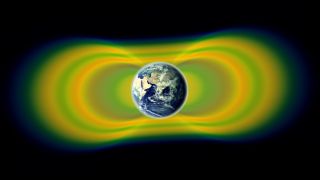
Two giant swaths of radiation, known as the Van Allen Belts, surrounding Earth were discovered in 1958. In 2012, observations from the Van Allen Probes showed that a third belt can sometimes appear. The radiation is shown here in yellow, with green representing the spaces between the belts. (Image credit: NASA/Van Allen Probes/Goddard Space Flight Center)
Giant donut-shaped swaths of magnetically trapped, highly energetic charged particles surround Earth. James Van Allen, a physicist at the University of Iowa, discovered these radiation belts in 1958 after the launch of Explorer 1, the first U.S. satellite. The radiation belts were eventually named after him.
Van Allen’s experiment on Explorer 1, which launched Jan. 31, 1958, had a simple cosmic ray experiment consisting of a Geiger counter (a device that detects radiation) and a tape recorder. Follow-up experiments on three other missions in 1958 — Explorer 3, Explorer 4 and Pioneer 3 — established that there were two belts of radiation circling the Earth.
While observations have continued for decades, our knowledge of the belts became more enhanced when the Van Allen Probes launched in 2012. They found that the belts were more complex than previously imagined. The probes showed that the shape of the belts depends on what particle is being studied. They also uncovered information hinting there is less radiation than imagined in certain parts of the Van Allen belts, which means spacecraft and humans would not need as much radiation protection if they are voyaging in that region.
On the 60th anniversary of Explorer 1, NASA said that studies of the Van Allen belts are even more important today. “Our current technology is ever more susceptible to these accelerated particles because even a single hit from a particle can upset our ever smaller instruments and electronics,” said David Sibeck, Van Allen Probes mission scientist at NASA’s Goddard Space Flight Center in Maryland, in a 2018 statement. “As technology advances, it’s actually becoming even more pressing to understand and predict our space environment.”
Early probe findings
Part of the interest in the Van Allen belts comes from where they are located. It is known that the belts can swell when the sun becomes more active. Before the probes launched, scientists thought the inner belt was relatively stable, but when it did expand, its influence extended over the orbit of the International Space Station and several satellites. The outer belt fluctuated more often. The ISS has been permanently inhabited since 2000, with typical astronauts staying there for six months at a time. In 2015-16, NASA astronaut Scott Kelly and Russian cosmonaut Mikhail Kornienko remained there for almost a year. As astronauts stay in orbit for longer, their radiation exposure may also increase, leading to concerns about long-term habitation for astronauts in space.
So scientists are interested in close study of this region. In 2012, a new set of probes launched. The Van Allen Probes (formerly known as the Radiation Belt Storm probes) have several scientific goals, including discovering how the particles — ions and electrons — in the belts are accelerated and transported, how electrons are lost and how the belts change during geomagnetic storms. The mission was planned to last two years, but as of May 2018 the probes were still operating at more than double the expected mission lifetime. However, fuel reserves are running low and the probes will likely retire in the next couple of years.
Usually, scientists take a few months after launch to calibrate their instruments, but a team with the Relativistic Electron Proton Telescope asked that their instrument be turned on almost immediately (three days after launch); they wanted to compare observations before another mission, SAMPEX (Solar, Anomalous, and Magnetospheric Particle Explorer), de-orbited and entered Earth’s atmosphere.
“It was a lucky decision,” NASA said in February 2013, noting that a solar storm had already caused the radiation belts to swell as soon as the instrument was turned on. “Then something happened no one had ever seen before: the particles settled into a new configuration, showing an extra, third belt extending out into space,” the agency added. “Within mere days of launch, the Van Allen Probes showed scientists something that would require rewriting textbooks.”
Protective shield
Data gathered by the probes also showed that the radiation belts shield Earth from high-energy particles. “The barrier for the ultrafast electrons is a remarkable feature of the belts,” study lead author Dan Baker, of the University of Colorado in Boulder, said in a statement.
“We’re able to study it for the first time, because we never had such accurate measurements of these high-energy electrons before.” [Gallery: NASA’s Van Allen Probes]
This new information helped scientists model the belts’ changes. But there was more information to come. In January 2016, scientists revealed that the shape of the belts depends on what type of electron is being studied. This means the two belts are much more complex; depending on what is being observed, they can be a single belt, two separate belts or just an outer belt (with no inner belt at all.)
“The researchers found that the inner belt — the smaller belt in the classic picture of the belts — is much larger than the outer belt when observing electrons with low energies, while the outer belt is larger when observing electrons at higher energies,” NASA wrote at the time. “At the very highest energies, the inner belt structure is missing completely. So, depending on what one focuses on, the radiation belts can appear to have very different structures simultaneously.”
What is still poorly understood, however, is what happens when particles from the sun hit the belts during a geomagnetic storm. It is known that the number of electrons in the belts changes, either decreasing or increasing depending on the situation. Also, the belts eventually return to their normal shape after the storm passes. NASA said it isn’t clear what kind of storm will cause a specific type of belt configuration. Also, the agency noted, any previous observations were done only with electrons at a few energy levels. More work needs to be done.
Luckily, scientists got the chance to observe a storm up close in March 2015, when one of the Van Allen Probes happened to be situated inside the “right” spot in Earth’s magnetic field to see an interplanetary shock. NASA describes such shocks as similar to when a tsunami is triggered by an earthquake; in this case, a coronal mass ejection of charged particles from the sun creates a shock in specific areas of the belts.
“The spacecraft measured a sudden pulse of electrons energized to extreme speeds — nearly as fast as the speed of light — as the shock slammed the outer radiation belt,” NASA wrote at the time. “This population of electrons was short-lived, and their energy dissipated within minutes. But five days later, long after other processes from the storm had died down, the Van Allen Probes detected an increased number of even higher energy electrons. Such an increase so much later is a testament to the unique energization processes following the storm.”
In 2017, the Washington Post published an article with some of the sounds of space recorded from an instrument on the Van Allen Probes, called Electric and Magnetic Field Instrument Suite and Integrated Science (EMFISIS). Although humans cannot hear these sounds — because there is no medium in which the waves can carry the sound — translating this data was fairly straightforward, the Post wrote. “The electromagnetic waves are in the same frequency range as the part of the sound spectrum that is audible to humans. It was a simple matter to translate those radio waves as MP3s — turning EMFISIS data into a radio broadcast from the heavens.”
Designing better spacecraft
The Van Allen Probes are specially hardened to withstand the intense radioactive environment of the belts. Some spacecraft, however, are more vulnerable — especially when a solar storm hits. At worst, spacecraft can short out due to an electrical overload. Communications can also be disrupted. Fortunately, sometimes instruments can be turned on or off on a spacecraft during a solar storm.
The shape of the Van Allen belts can vary widely depending on how energetic the individual electrons are, and general conditions in the Earth’s magnetic environment. During geomagnetic storms (4), all three regions in the belts can balloon. (Image credit: NASA GODDARD/DUBERSTEIN)
Radiation, of course, also poses a human risk. Astronauts are subject to lifetime radiation limits from their time in space, to reduce any risk of cancer. Since only a few dozen people have spent six months or longer in space, however, it will take decades to understand the long-term effects of radiation on humans.
The astronauts on the ISS do not regularly spend time inside the belts, but from time to time solar storms expand the belts to the orbit of the space station. In the 1960s, several Apollo crews went through the Van Allen belts on their way to and from the moon. Their time in that radiation-intensive region, however, was very short, in part because the trajectory was designed to pass through the thinnest known parts. With more study, astronauts can be better protected for long-term stays in Earth orbit.
“We study radiation belts because they pose a hazard to spacecraft and astronauts,” said David Sibeck, the Van Allen Probes mission scientist at NASA’s Goddard Space Flight Center in Maryland, in an August 2016 NASA statement. “If you knew how bad the radiation could get, you would build a better spacecraft to accommodate that.”
Newer findings from the probes show that radiation in certain zones may be less harsh than scientists thought. In March 2017, the Van Allen Probes made a finding showing there is less radiation in the inner belts that previously theorized, which means less shielding is required for spacecraft and satellites in that region. The most energetic electrons residing in the inner radiation belt are there for less time than scientists thought beforehand.
The following year, the probes discovered that some communications wavelengths (called very low frequency communications) emanating from Earth are sometimes a sort of a shield against high-energy particle radiation in space. This means that human activity has effects even in the near-space environment around Earth.
As of 2018, the Van Allen Probes are running low on fuel and are expected to finish their mission around 2020. Goddard is working on a CubeSat (small spacecraft) mission called GTOSat that will continue studying the Van Allen belts.
“This mission of firsts will serve as a pathfinder for new radiation-tolerant technologies that could help scientists realize a long-sought dream: deploying a constellation of small satellites beyond low-Earth orbit to gather simultaneous, multi-point measurements of Earth’s ever-changing magnetosphere, which protects the planet from the constant assault of charged particles streaming off the sun,” NASA said in May 2018.
Elizabeth Howell is a contributing writer for Space.com who is one of the few Canadian journalists to report regularly on space exploration. She is pursuing a Ph.D. part-time in aerospace sciences (University of North Dakota) after completing an M.Sc. (space studies) at the same institution. She also holds a bachelor of journalism degree from Carleton University. Besides writing, Elizabeth teaches communications at the university and community college level. To see her latest projects, follow Elizabeth on Twitter at @HowellSpace.
Join our Space Forums to keep talking space on the latest missions, night sky and more! And if you have a news tip, correction or comment, let us know at: community@space.com.
On this blog this comes under accurate EARTH HOLON information. I post the reading every day. It has changed quite a bit in two years as we’ve hopped timelines.
A Van Allen radiation belt is a zone of energetic charged particles that are captured by and held around a planet by that planet’s magnetosphere. Earth has two such belts, and sometimes others may be temporarily created. Here it is in Earth Ascending. Definitely click on this to enlarge and see it clearly.
Map 28 of Earth Ascending; Earth’s Magnetic Field-The magnetosphere measured by the Schumann Resonance
This is very complicated. One more thing in this book that I need to ponder.
“Here the four plates and their division into eight seasonal parts are depicted in their actual resonant spherical relation to the earth and its magnetic field. The more detailed map on the left depicts the flow of civilization within the context of the major longitudinal division. The actual psi bank plates are referred to as holonomic recollection plates while the corresponding geographical equivalents are referred to as psi seasonal resonance field memory plates. Also indicated in the left-hand map are the geographical sites corresponding to the temporal or sequential arrangement of the kua of I Ching, starting with the spring equinox, northern hemisphere, along hieratic longitude zero. In the diagram to the right, which shows more fully and simply the relation of earth to the electromagnetic fields and psi bank, the kua are arranged in their earlier or celestial/electromagnetic relation to each other.
As we have seen, what we refer to as history is actually a function of a much larger, integrative global harmonic. The guiding factor of this historic harmonic is the psi bank with its holonomic recollection plates. Each of these plates may be envisioned as carrying and/or simultaneously containing levels of information that connect stages of organic/cyclical seasonal growth; geo-cultural information—-psions—-as well as information concerning successive and cumulative stages of the psycho-cultural process—history itself.
What this points to is the study of history as a geological sub-field in an overall study of psycho-atmospheric harmonics as monitored by the guiding factor, the psi bank. Thus, in order to better understand and evaluate “what happened in history, ” it is best first to understand the guiding function, structure, and nature of the psi bank itself.”-
Earth Ascending by Jose Arguelles
This is mainstream science, truth as far as they are concerned. Tzolkinists call it the Psi Bank and it’s the source of the Tzolkin Harmonic. It is the Earth’s mental field. MSS (mainstream science) calls it The Van Allen Belts for James Van Allen who is credited for their discovery.









 Synchronicity is the Source of Consciousness
You must be logged in to post a comment.