The bot is supposed to offer descriptive ethical advice, but some say it does more harm than good.
By Tony Ho Tran
Updated Oct 22, 2021 12:35 PM EDT

Time is the strands of past and future in our DNA, not the hands of time on a clock
The bot is supposed to offer descriptive ethical advice, but some say it does more harm than good.
By Tony Ho Tran
Updated Oct 22, 2021 12:35 PM EDT
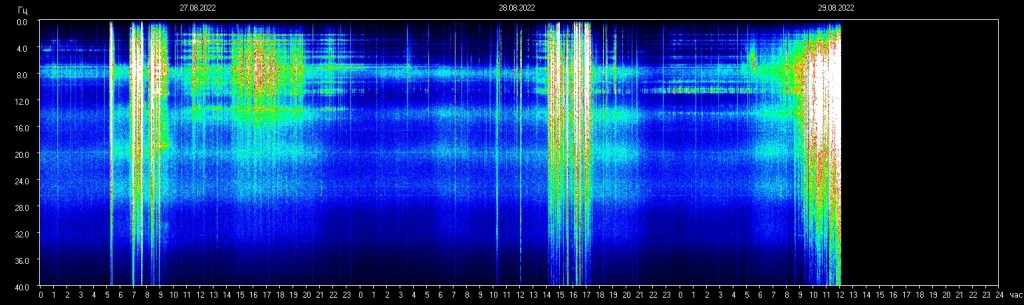
I could barely function with it at 60. I started to feel better so I checked it just now. I wish it would stay there for a few days.


9Valine
The Maldekians were power-hungry and wanted to dominate the local system, likely in cooperation with the Reptilians which are the Red Serpent tribe, the analog today, also Maldekian. They weren’t always bad and in fact are part of our DNA as our limbic brain or Reptilian brain at the bottom back of the skull. We wouldn’t be as strong as we are without them.
The Jaguar Wizard priests tried to bring balance on Tiamat but they did not succeed, thus we are still working out the karma with these two tribes on earth. Earth is our refugee planet from the disaster. We were only allowed to come here by accepting that we will be stopped from blowing up earth and using nuclear weapons. The E.T.’s oversee that. Humans are not allowed to damage the cosmic web which nuclear weapons do. The Skywalkers and White World-bridgers headed up saving a remnant of humanity during this time. Our mediating planet is Mars, Tiamat’s moon at the time. Most Maldekians died and some made it to Mars which was Tiamats’ moon. The others landed on earth in Antarctica. The mothership is deep underground but since the south pole is melting, it’s supposed to be coming to the surface. There is some disclosure that I don’t believe can be hidden.
The asteroid belt, our time in past lives on Tiamat, and Maldek is a teacher. It is karma turned into dharma. All White Wizard kin are teachers, TIMELESSNESS, an attribute of White Wizard is in our DNA evolution via the CNS. Since today is 13 White Wizard it’s a good day to point this out.
Obviously, the Tiamatians failed because their planet was blown up accidentally. They made a timing error by misusing the Sun’s energy to try to destroy their enemy. It backfired and destroyed them. That was the first leg of karma. Earth is the second leg.
This is what my TONES OF CREATION book will be about only it will be the Mayan Tones not just 3D Tones which means the geometric forms or mandala will be QUANTUM or upper density, WHICH IS WHAT WE ARE. Our DNA is quantum.
I seek the end of the error stricken sickcare by boycott and replacing it with true, effective, holistic healthcare. The Mayan Tzolkin is the truth about THE BODY which is ONE with the DNA on Earth and all of the planets. The Sun is the prime SUPPORT, Tribe 1, the StopCodon. Blue Storm, tryptophan is tribe 19 and is a sub-stop codon along with Proline which are the ANALOGS of Yellow Sun. They are mediated by Pluto. So what is going on with Pluto as far as radionics?
When Nassim Haramein days “sounds with technology”, to me that means sound plus US. WE are the technology, not machines. Again, watch out for machine-happy new agers and spiritualist. Nature is the highest technology. Focus your mind in meditation.
Machines can help us but they aren’t better than us and can’t completely replace us.
How a conductive form of ice is formed at several thousand degrees and millions of times atmospheric pressure. — ScienceDaily
https://www.sciencedaily.com/releases/2021/10/211014131203.htm
As strange as it may seem, yes water has been detected on the Sun. Actually what was detected is ‘steam’ over a particularly cool sunspot where the temperatures were only about 1000 K or so.
Ask the Space Scientist All answers are provided by Dr. Sten Odenwald (Raytheon STX) for the
NASA IMAGE/POETRY Education and Public Outreach program
The sun is 92% hydrogen, the main ingredient in water, and 8% helium.
Uranus is made of water, methane, and ammonia fluids above a small rocky center. Its atmosphere is made of hydrogen and helium like Jupiter and Saturn, but it also has methane. The methane makes Uranus blue. Uranus also has faint rings. Aug 4, 2021
If Uranus is mostly hydrogen and helium then it’s mirroring the Sun. Maybe it will become a sun? Same for Jupiter and Saturn.
It’s clear to me that the 5 outer planets are more mature than the 5 little ones right next to the Sun. We’re newbs in the local system. The Sun isn’t going to force Mars, Earth, Venus, and Mercury to do anything except to keep changing and growing which is our destiny.
Aztec society, even with its horrific human sacrifices, was at the time of the Spanish conquest more egalitarian than Mexico 200 years later.
The article
https://thereader.mitpress.mit.edu/the-archaeology-of-inequality/
https://www.sciencealert.com/just-before-our-sun-dies-its-light-will-pulverise-the-asteroid-belt#:~:text=%2FJPL%2DCaltech)-,Just%20Before%20Our%20Sun%20Dies%2C%20Its%20Light%20Will,The%20Asteroid%20Belt%20to%20Dust

After the last post, a few minutes ago, I walked downstairs and I thought, “I bet the sun can turn the asteroid belt to dust.” It was just on my radar and I picked it up. I came upstairs and googled, “Can the sun turn the asteroid belt to dust?” Holy crap. Geez, my radar is freaky. Just to be clear, the coming solar flash is not our sun DYING. It is our Sun changing. It isn’t going to die for billions of years. However, my intuition says that the ELM energy from just the flash could turn our asteroid belt to dust. I could be wrong but a solar flash is super, super strong.
13 FEBRUARY 2020
The light of a dying star is so intense it can reduce asteroids to dust. A new study indicates this will happen to most of the stars currently burning in the Universe, including the Sun, which will shatter itsย asteroidย belt down to boulders in about 5 to 6 billion years.
The sole agent of this mass destruction is electromagnetic radiation, according to modelling, and it has to do with the Yarkovsky-O’Keefe-Radzievskii-Paddack (YORP) effect, named after the four scientists who contributed to understanding it.
The YORP effect occurs when the heat of a star changes the rotation of a small Solar System object – an asteroid, for example.
Light energy from the Sun is absorbed by the asteroid, warming it up. The heat makes its way through the rock until it is emitted again in different directions as thermal radiation. This emission generates a tiny amount of thrust; over short time periods, this doesn’t really change much, but over longer periods, it can cause an asteroid to spin or wobble off-axis.
The phenomenon of tumbling asteroids is one way we can already observe this process today. But as the Sun evolves, the effect is going to become more pronounced.
When main sequence stars like the Sun reach their elderly stages, they enter something called the giant branch stage as they expand out, getting very big and very bright. That stage lasts just a few million years before – whoosh! – they eject their outer material and collapse down into a dense dead star called a white dwarf.
For the Sun, that process will take place in about 5 or 6 billion years (mark it in your calendar).
“When a typical star reaches the giant branch stage, its luminosity reaches a maximum of between 1,000 and 10,000 times the luminosity of our Sun,” explained astrophysicist Dimitri Veras of the University of Warwick.
“Then the star contracts down into an Earth-sized white dwarf very quickly, where its luminosity drops to levels below our Sun’s. Hence, the YORP effect is very important during the giant branch phase, but almost non-existent after the star has become a white dwarf.”
Because of the initially increased luminosity, the YORP effect would also increase. And most asteroids are not dense chunks of rocks; they’re more loosey-goosey, low-density conglomerations riddled with cavities, known as “rubble piles“.
According to the team’s computer modelling, the YORP effect would spin most asteroids larger than 200 metres across (about 660 feet) enough to cause them to fracture and disintegrate.
This disintegration wouldn’t happen to objects with higher structural integrity, such as dwarf planets (so Pluto is safe!). But an asteroid belt has a different fate.
“For one solar-mass giant branch stars – like what our Sun will become โ even exo-asteroid belt analogues will be effectively destroyed,” Veras said.
“The YORP effect in these systems is very violent and acts quickly, on the order of a million years. Not only will our own asteroid belt be destroyed, but it will be done quickly and violently. And due solely to the light from our Sun.”
It’s not just computer modelling that shows evidence of this. Our observations of white dwarfs suggest this, too.
Over a quarter of white dwarf stars have evidence of metals from asteroid guts in their spectra. These asteroid signatures in white dwarf spectra are something of a mystery and are still debated.
The YORP effect could explain how the asteroid metals got there. As the asteroids crumble, they form a disc of asteroid dust around the white dwarf, some of which gets slurped down into the dead star.
“These results help locate debris fields in giant branch and white dwarf planetary systems, which is crucial to determining how white dwarfs are polluted,” Veras said.
“We need to know where the debris is by the time the star becomes a white dwarf to understand how discs are formed. So the YORP effect provides important context for determining where that debris would originate.”
The research has been published in the Monthly Notices of the Royal Astronomical Society.
Do you have your Libra โ scales out? ๐


We pulse physically to Resonant Tone 7 so the boomerang effect is activated in the hologram. Whatever energy you put out is going to go around and come around more quickly. Tone 7 is the C7 vertebrae, the 5th VOICE chakra.
You need a helmet for this post.They call this science at phys.org
Omg…๐ TGIF
Does time exist? The answer to this question may seem obvious: of course it does! Just look at a calendar or a clock.
The article at the link
The last sentence…absolute indolence. I can’t help it. Clocks and calendars are like McDonalds. “Food exists. Just look at McDonald’s!”
It barely passes for real food. It’s just a tool to keep you distracted from eating real food. Clocks and calendars keep you from owning your own time which is YOUR BODY AND MIND. They keep you distracted from Timelessness which IS real in the CNS, the central nervous system. Time is DNA and DNA can jump dimensions and densities which means we can jump densities.
My newest book is now available on Amazon in paperback or ebook.
https://www.amazon.com/dp/B09WCMJJTX/ref=cm_sw_r_apan_i_Y1AE575AS3G4S042X7WE
I believe the evolution of the solar system planets start this and the Sun responds. This is an Intuitive hypothesis because the scientists don’t check the resonant frequencies from the other planets as we do on earth with the S.R. How would they know? We only observe the planets, and what we do know is that all of them are changing like the ๐.
Just because the Sun is ginormous doesn’t mean it controls evolutionary cycles of DNA. It certainly contributes though.


My body hurts. Red flag.

Peak frequency is 12. We are mediated by Blue 4 Eagle right now so people can get snippy and exacting with the S.R. going up. Tone 4 likes to be alone so if you have to be around people have coping coffee handy or what have youโ

| MYSTIC MAMMA PO BOX 262 TOPANGA, CA 90290 |

Tzolkin is literally translated as “count of days” and it is a Mayan word.
Definition of tzolkin
: a period of 260 days constituting a complete cycle of all the permutations of 20-day names with the numbers 1 to 13 that constitutes the Maya sacred year.
It sprockets exactly with Earth’s 365-day solar year and the 64 Hexagram I Ching. The IChing and the 65 Harmonic Tzolkin also sprocket exactly and can be seen in my book “Time is DNA”
Since the Tzolkin is the count of days and the count of kin, kin has two meanings that are equivalent. A kin is a person and a 24-hour day that is governed by one Mayan Tribe that is an archetype for an amino acid glycoprotein. Since a person is made of trillions of DNA molecules, it follows that for humans, “Time is DNA.” We are time itself. Because we can control our own minds and bodies we can control our time.
Lisa T.
I just made a podcast of this article also. Just thought I’d try it. Here it is. I have to keep warming my voice up.
November 9, 20215:45 AM ET Heard on Morning Edition

This new perspective of Jupiter from the south makes the Great Red Spot appear as though it is in northern territory. This view is unique to Juno.
NASA/JPL-Caltech/SwRI/MSSS/Gerald Eichstรคd/Seรกn Doran ยฉ CC NC SA
Jupiter is well-known for being the biggest planet in our solar system, and it’s also home to the biggest storm. It’s called the Great Red Spot, an enormous vortex that has been swirling for centuries. It’s bigger than our own planet, and yet we don’t know much about it. Until now, scientists could only observe the spot from afar. But thanks to a NASA spacecraft launched a decade ago, we’re finally getting a look inside Jupiter’s storm.
The Great Red Spot is like a storm here on Earth, but supersized. “It’s basically clouds,” says Paul Byrne, a planetary scientist at Washington University in St. Louis. Really, “it’s not all that dissimilar to the kinds of things we know as cyclones or hurricanes or typhoons on Earth.”
At 10,000 miles across, the Great Red Spot is the largest storm in our solar system and has been continually observed for around 200 years, but it’s been around for much longer. (Compare that with big storms on Earth, which generally last a few days or weeks at most.)
“We believe this thing is really old,” says Scott Bolton, principal investigator of NASA’s Juno mission. “How it lasts that long is a mystery.”
Before Juno, scientists could only observe the storm from afar. Even from a distance, they noticed it was changing shape and actually shrinking.

NASA
NASA’s Juno mission launched from Cape Canaveral Space Force Station in Florida back in 2011 and arrived at Jupiter in 2016. In 2019, the spacecraft changed course slightly and passed over the Great Red Spot twice.
Bolton and his team used microwave sensors to slice into the depths of the storm, getting the first 3D model of the Great Red Spot. “It’s a pancake because it’s so wide at the top. But the depth of that pancake is much thicker than what we would have anticipated.”
The microwave observations show these storms on Jupiter, called vortices, extend below the cloud deck of the planet. In the case of the Great Red Spot, it extends at least 200 miles into the clouds of Jupiter, beyond the depths of where clouds form and water condenses.
“That’s very different than the way we think Earth’s atmosphere works, which is largely driven by water, clouds, condensation, and sunlight,” says Bolton. “How that works is going to require new models and new ideas to explain.”
During its 2019 pass over the Great Red Spot, the Juno spacecraft buzzed the planet at a blistering 130,000 miles per hour. The storm is so massive that its gravity field actually jostled the spacecraft during its flyby.
“The local gravity tends to pull and push away the spacecraft as it flies over the vortex, and this creates a sort of bump in the road for Juno,” says Marzia Parisi, a Juno scientist from NASA’s Jet Propulsion Laboratory in Southern California and lead author of a paper in the journal Science on gravity overflights of the Great Red Spot.
Scientists here on Earth could see the effect of these gravitational “bumps.” That’s because every time they jostled Juno, they nudged the spacecraft closer to or farther from Earth. That changing distance caused the radio waves sent back to Earth some 400 million miles away to be subtly squeezed and stretched, a phenomenon known as a Doppler shift. Using this effect, the spacecraft could pick up tiny jostles as small as 0.01 millimeters per second.
“The precision required to get the Great Red Spot’s gravity during the July 2019 flyby is staggering,” says Parisi. The findings from the gravity observations complemented Bolton’s earlier microwave measures, concluding the storm penetrates some 300 miles into Jupiter’s atmosphere.
Observations of the Great Red Spot show that it’s shrinking. For nearly a century and a half, the iconic spot has been getting smaller and it’s unclear just how long it will last.
Juno is taking a closer look at this phenomenon. “What we’re doing is seeing up close what’s happening while that shrinking has happened,” says Bolton.
The spacecraft is observing flecks of the storm getting caught up in neighboring clouds. The storm itself also appears to be trapped by powerful conveyor belts of wind on the planet that is stabilizing the storm.
“I don’t think the theory is very far advanced to the sense where we can connect all of that to the changes in the size,” said Bolton.
Data from Juno will help scientists predict what could possibly happen to the Great Red Spot.
“Understanding what’s happening with the storm now allows scientists to make much more sophisticated models to simulate what we see and then make predictions for what will happen in the future, including up to perhaps when the Great Red Spot may eventually go away,” says planetary scientist Paul Byrne.
The findings from the Juno spacecraft are shedding light on the early formation of giant planets like Saturn, Uranus, and Neptune โ and even planets beyond our own solar system.
“When we get up close, and this is the first planet we’ve actually been able to open up and look inside, this is going to tell us a lot about how giant planets work throughout the galaxy,” says Bolton.

The JunoCam imager aboard NASA’s Juno spacecraft captures a Jovian cyclone known as a barge type in a polar jet stream called “Jet N4.”
NASA/JPL-Caltech/SwRI/MSSS. Image processing: Gerald Eichstรคdt CC BY
To date, astronomers have identified thousands of exoplanets โ planets that orbit a star other than our sun. These planets are far away, with the closest one around 10.5 light-years from Earth. That makes observing what’s happening on the surface difficult.
Around 1,400 of these exoplanet candidates are thought to be gas giants, much like Jupiter. Understanding what happens on Jupiter can help scientists get a better sense of what’s happening beyond our solar system.
“By understanding the physics and the processes that go into shaping Jupiter,” says Byrne, “we’ll get a better understanding of not just Jupiter, but of these kinds of worlds.”
You must be logged in to post a comment.