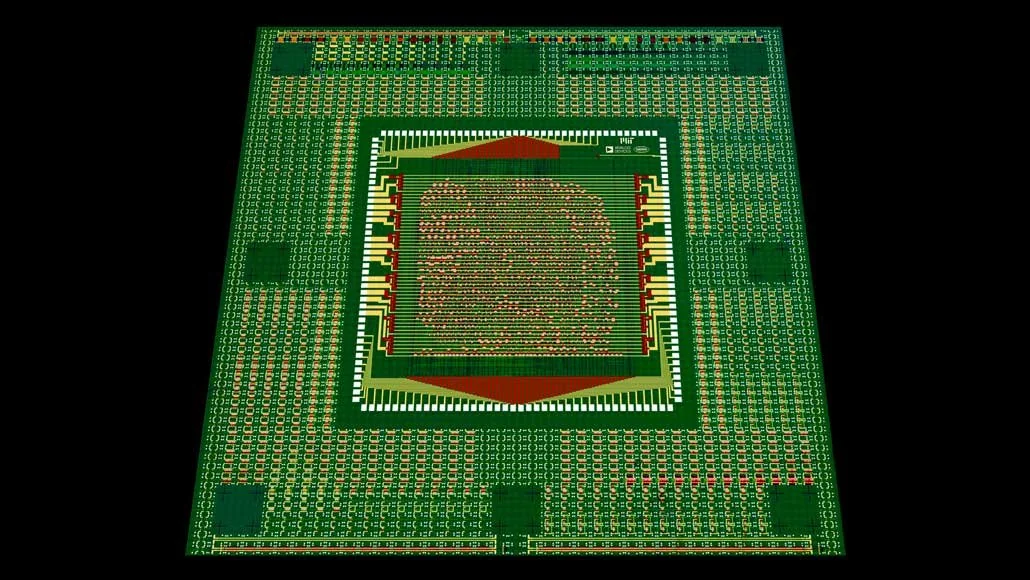
Carbon, carbon, carbon, not silicon. It’s difficult to find any mention of carbon chips on the internet, as though it’s a “soiled” word, as in earth, as in, most of the planet is made of carbon not sand which is the first fundamental crystal used to make silicon chips. That is hitting a wall no one will talk about.
In 2019, researchers focused on carbon nanotubes for the fabrication of computer microchips as they offer major benefits in terms of energy consumption. Carbon nanotubes are nearly as slender as an atom. They also transport electrical charges substantially well. As a result, they produce superior semiconductor transistors as compared to silicon.
More from AZoM: Tackling the Chip Shortage with the Semiconductor Circular Economy
Carbon nanotube electronics might theoretically be three times better than silicon computer chips in terms of processing speed. They would also use around one-third of the energy that silicon processors use.
Nanomagnetic Computer Chips
Nanomagnet-based computer chips are expected to replace silicon-based computer chips shortly. Nanomagnets employ nanomagnetic technology to convey and process data. They do this by utilizing switchable magnetic modes that are photolithographically adhered to the system networks of a circuit.
Nanomagnetic logic functions similarly to silicon-based semiconductors, except instead of turning transistors on and off to generate binary data, magnetization levels are switched. This binary data may be interpreted via dipole-dipole couplings (the connection among each magnet’s north and south poles). Nanomagnetic logic consumes relatively little power since it does not depend on an electrical current. When environmental issues are taken into account, this renders them the appropriate substitute.
Apart from the above-mentioned materials, zeolite thin film micro-chips are also being researched owing to their low dielectric constant and superior efficiency.
Latest Research Advances
The technologies for computer chips integration of 2-D materials have been discussed in the latest research published by David J. Moss. Chip-scale embedded electronics, which have a small footprint, reduced energy requirement, and inexpensive production due to widespread production, have had a significant impact on our modern lifestyles.
Although traditional metal-oxide-semiconductors, such as silicon, have influenced embedded devices, they incur several inherent material restrictions. Other material integrations on-chip has shown to be an appealing method for overcoming these issues.
Since the ground-breaking development of nanoparticles such as graphene, 2D multi-layered materials have piqued the majority’s curiosity, and the material category is fast expanding. When compared to bulk counterparts, 2D alternatives have numerous exceptional qualities, including ultra-high charge transport, layered sensitive bandgaps, significant asymmetry, bandwidth, minimal photonic scattering, and outstanding nonlinear absorption characteristics.
Their inherent thin shape further benefits high-density integration and low-power performance. The use of 2D materials on traditional electronic components such as computer chips combines the perfect combination.
The advantageous 2D materials include graphene, graphene oxide, transition metal dichalcogenides, black phosphorus as well as hexagonal boron nitride, Mxenes, perovskites, and metal-organic frameworks. These materials have been used for thin films, microchips, field-effect transistors, micro-supercapacitors, and energy storage materials.
Future of Computer Chips
The shortage of silicon chips has led to a surge in the price of computer components and electronic gadgets involving computer links. Using a revolutionary silicon computer chip technology, we may be able to create quantum computers cheaply and frequently in the future. The University of Melbourne investigated this approach.
The silicon computer chip approach can generate large-scale configurations of numbered particles that can be manipulated and seen for their quantum states to be changed, linked, and read-out. This will allow engineers to design quantum logic functions amongst vast arrays of subatomic particles while maintaining very precise operations throughout the entire system.


Synchronicity is the Source of Consciousness
Time is the strands of past and future in our DNA, not the hands of time on a clock