

Gee, who would have thought?….The whole planet and planets in the local universe as well as stars are made of carbon, so doesn’t it follow that it conducts the ELM or LIFE? The earth and local universe are not made of sand/silicon but MIRRORS are. Self-reflecting, narcissisistic like the story of Narcissus, like the advent of selfies. The amino acid protein TYROSINE is time pivoting White Mirror in the Time Harmonic. They are also, similar to mirror neurons in our brains except for autistic people. They don’t have them or not as much so they invented silicon based A.I. to have some type of social mirror that their brains don’t contain. I understand and personally don’t judge them at all.
But it is time to move past that into a higher consciousness.
Proteins contain the elements carbon, hydrogen, and oxygen just as carbohydrates and lipids do, but proteins are the only macronutrient that contains nitrogen. In each amino acid the elements are arranged into a specific conformation around a carbon center. TIME IS DNA. DNA is composed of proteins, 20 essential ones. Proteins are what make up our bodies – Defining Protein – Human Nutrition – UH Pressbooks
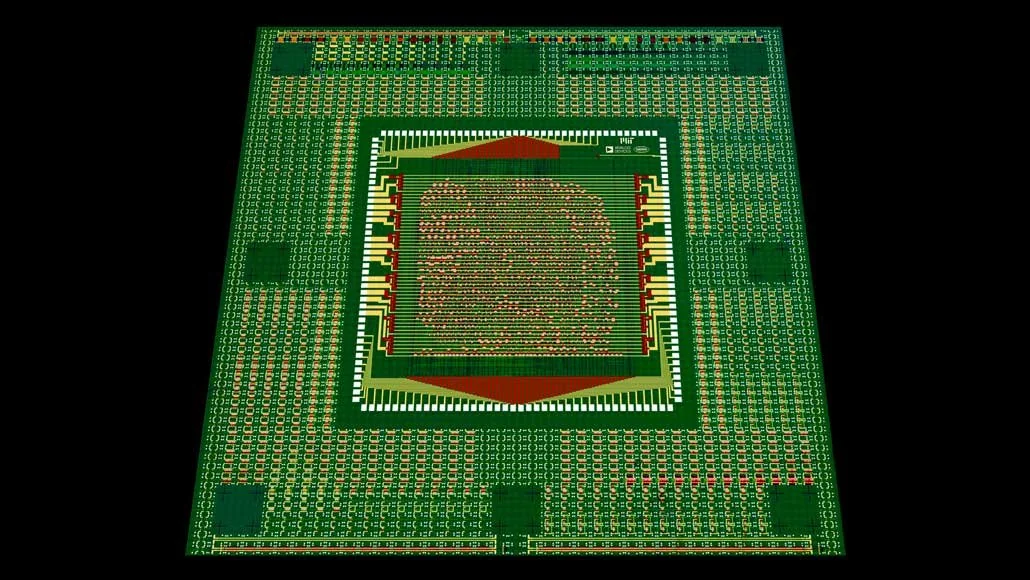
What is the definition of a legacy computer chip?
“A set of microminiaturized electronic circuits that were designed years ago (1972) and still made. Also called a “mature chip,” legacy chips are not constructed using the latest semiconductor manufacturing processes because the products that use them do not require the fastest performance available.”
https://www.pcmag.com
Definition of legacy chip | PCMag
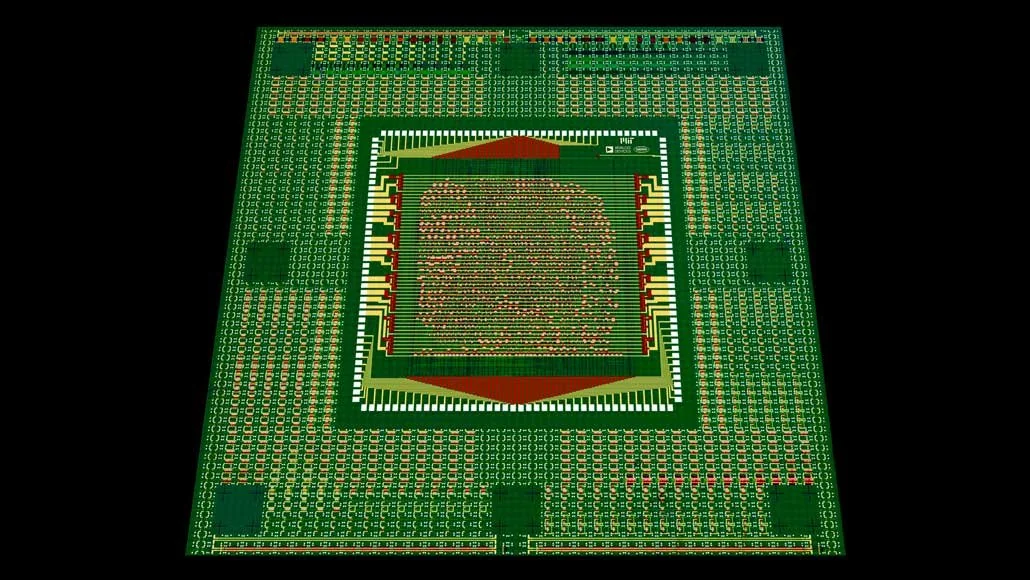
Chinese legacy chipmakers and silicon producers are hitting the global market hard, and Western competitors are struggling to keep up with the intense supply and low prices. Industry speculators are predicting a “China shock” for chipmaking, and some companies already feel the squeeze.
The production of mature process nodes, typically above 20nm, is the lifeblood of chip manufacturers outside the bleeding edge. Legacy nodes largely power consumer electronics and automotive use cases, and the production of these older nodes and the silicon wafers that create them provide valuable profit streams for funding R&D departments across the chip industry.
In 2025, however, it will become increasingly challenging to outbid a growing wave of Chinese fabs pricing their wares far cheaper than Western companies can afford to compete. Due mainly to American sanctions blocking Chinese companies from access to modern process nodes and manufacturing equipment, China’s fast-growing semiconductor sector has pivoted to legacy chips to feed its needs for domestic tech. China’s fabs are expected to account for 28% of global mature chip capacity by the end of 2025.
“Just two years ago, a mainstream 6-inch SiC [silicon carbide] wafer from global leader Wolfspeed was $1,500,” an anonymous sales director for a German chipmaker shared with Nikkei Asia. Today, the same 6-inch wafer is sold for only $500 by Guangzhou Summit Crystal Semiconductor, where dozens of other little-known Chinese fabs price their wafers at similarly impossible undercuts.
The sales director called China’s growth in the sector “a bloody knockout match.” He continues, “We expect many Chinese players as well as foreign players will get hurt. Many of them already have, and eventually many will have to exit these bloody games.”
The aforementioned Wolfspeed, once the world leader in silicon wafer production, is now recovering from laying off 20% of its staff in response to its stock value falling 96% in 3 years. Onsemi, an Arizona-based legacy semiconductor company, announced its layoffs, which affected 9% of staff today. While not all of this downsizing can be blamed on Chinese dominance, the U.S. government has publicly speculated that China’s rapid rise in legacy chip manufacturing would have this effect on the U.S. industry.
China’s new wave of legacy chip companies is powered by heavy government investment at the national and local levels. China’s “Big Fund” for semiconductor production has raised ¥688 billion ($95 billion) over three rounds, with local governments investing in their regional champions.
The sector’s widespread growth across China creates dozens of new players with which Western companies must compete. However, this growth also risks serious oversupply. China’s 28% mature node market share is expected to grow to 39% by 2027.
“There is already oversupply in several types of mature chips, and China’s economy hasn’t fully bounced back yet,” says the IDC’s Galen Zeng. “We expect Chinese players to ramp up more aggressively than their global peers over the next few years, driven by China’s localization push.”
The market flooding of legacy chips coming from China is beginning in full, as predicted when China first announced its ramp-up of mature node production in 2023. The full effect of this new theater of the U.S.-China “Chip War” on both countries and chipmakers, large and small, is yet to be seen. As profit margins disappear in the name of growing market share, the profit motive will not look kindly on either aggressor in this legacy chip melee.
GuruFocus.com
TSMC Thinks The Chip Boom Is Just Getting Started
This article first appeared on GuruFocus.
Taiwan Semiconductor Manufacturing (NYSE:TSM) believes the global chip industry is heading toward a staggering $1.5 trillion market by 2030, underscoring just how massive the AI driven semiconductor boom could become over the rest of the decade.
Warning! GuruFocus has detected 1 Warning Sign with MSFT.
Is TSM fairly valued? Test your thesis with our free DCF calculator.
The forecast, which TSMC reiterated this week after previously discussing it during a U.S. technology symposium, reflects the company’s growing confidence that artificial intelligence and high performance computing will dominate the next era of semiconductor demand. According to TSMC, AI and HPC alone are expected to make up roughly 55% of the projected $1.5 trillion market by 2030, far ahead of smartphones at 20% and automotive chips at 10%.
The company is already racing to keep up with that demand. TSMC said it plans to accelerate capacity expansion through 2025 and 2026, including nine additional phases of wafer fabs and advanced packaging facilities next year. Demand for its most advanced technologies, including 2 nanometer and A16 chips, is expected to grow at a 70% annualized pace between 2026 and 2028.
One of the biggest bottlenecks remains advanced packaging, especially CoWoS technology used to connect Nvidia’s (NVDA) AI accelerators with high bandwidth memory systems. TSMC said CoWoS capacity is expected to grow at more than an 80% compound annual rate between 2022 and 2027, while AI accelerator wafer demand itself is projected to jump 11 fold from 2022 through 2026.
The expansion is happening globally. TSMC continues rapidly building out operations in Arizona, Japan and Germany as countries and companies push to secure semiconductor supply chains closer to home. In Arizona alone, the company expects output to increase 1.8 times year over year by 2026, with yields comparable to Taiwan.
China’s mature chips to make up 28% of world production, creating oversupply — Western companies express concern for their survival

