This is why physicists suspect the Multiverse very likely exists (Free$)


STARTS WITH A BANG — DECEMBER 30, 2021

A wild, compelling idea without a direct, practical test, the Multiverse is highly controversial. But its supporting pillars sure are stable.

KEY TAKEAWAYS

  • One of the most successful theories of 20th century science is cosmic inflation, which preceded and set up the hot Big Bang. 
  • We also know how quantum fields generally work, and if inflation is a quantum field (which we strongly suspect it is), then there will always be more “still-inflating” space out there. 
  • Whenever and wherever inflation ends, you get a hot Big Bang. If inflation and quantum field theory are both correct, a Multiverse is a must.

Ethan SiegelCopy a link to the article entitled http://This%20is%20why%20physicists%20suspect%20the%20Multiverse%20very%20likely%20existsShare This is why physicists suspect the Multiverse very likely exists on FacebookShare This is why physicists suspect the Multiverse very likely exists on TwitterShare This is why physicists suspect the Multiverse very likely exists on LinkedIn

When we look out at the Universe today, it simultaneously tells us two stories about itself. One of those stories is written on the face of what the Universe looks like today, and includes the stars and galaxies we have, how they’re clustered and how they move, and what ingredients they’re made of. This is a relatively straightforward story, and one that we’ve learned simply by observing the Universe we see.

But the other story is how the Universe came to be the way it is today, and that’s a story that requires a little more work to uncover. Sure, we can look at objects at great distances, and that tells us what the Universe was like in the distant past: when the light that’s arriving today was first emitted. But we need to combine that with our theories of the Universe — the laws of physics within the framework of the Big Bang — to interpret what occurred in the past. When we do that, we see extraordinary evidence that our hot Big Bang was preceded and set up by a prior phase: cosmic inflation. But in order for inflation to give us a Universe consistent with what we observe, there’s an unsettling appendage that comes along for the ride: a multiverse. Here’s why physicists overwhelmingly claim that a multiverse must exist. The ‘raisin bread’ model of the expanding Universe, where relative distances increase as the space (dough) expands. The farther away any two raisins are from one another, the greater the observed redshift will be by time the light is received. The redshift-distance relation predicted by the expanding Universe is borne out in observations and has been consistent with what’s been known all the way back since the 1920s. (Credit: NASA/WMAP Science Team)

Back in the 1920s, the evidence became overwhelming that not only were the copious spirals and ellipticals in the sky entire galaxies unto themselves, but that the farther away such a galaxy was determined to be, the greater the amount its light was shifted to systematically longer wavelengths. While a variety of interpretations were initially suggested, they all fell away with more abundant evidence until only one remained: the Universe itself was undergoing cosmological expansion, like a loaf of leavening raisin bread, where bound objects like galaxies (e.g., raisins) were embedded in an expanding Universe (e.g., the dough).

If the Universe was expanding today, and the radiation within it was being shifted towards longer wavelengths and lower energies, then in the past, the Universe must have been smaller, denser, more uniform, and hotter. If any amount of matter and radiation are a part of this expanding Universe, the idea of the Big Bang yields three explicit and generic predictions: null

  1. a large-scale cosmic web whose galaxies grow, evolve, and cluster more richly over time,
  2. a low-energy background of blackbody radiation, left over from when neutral atoms first formed in the hot, early Universe,
  3. and a specific ratio of the lightest elements — hydrogen, helium, lithium, and their various isotopes — that exist even in regions that have never formed stars.

This snippet from a structure-formation simulation, with the expansion of the Universe scaled out, represents billions of years of gravitational growth in a dark matter-rich Universe. Note that filaments and rich clusters, which form at the intersection of filaments, arise primarily due to dark matter; normal matter plays only a minor role. (Credit: Ralf Kaehler and Tom Abel (KIPAC)/Oliver Hahn)

All three of these predictions have been observationally borne out, and that’s why the Big Bang reigns supreme as our leading theory of the origin of our Universe, as well as why all its other competitors have fallen away. However, the Big Bang only describes what our Universe was like in its very early stages; it doesn’t explain why it had those properties. In physics, if you know the initial conditions of your system and what the rules that it obeys are, you can predict extremely accurately — to the limits of your computational power and the uncertainty inherent in your system — how it will evolve arbitrarily far into the future.

But what initial conditions did the Big Bang need to have at its beginning to give us the Universe we have? It’s a bit of a surprise, but what we find is that:

  • there had to be a maximum temperature that’s significantly (about a factor of ~1000, at least) lower than the Planck scale, which is where the laws of physics break down,
  • the Universe had to have been born with density fluctuations of approximately the same magnitude of all scales,
  • the expansion rate and the total matter-and-energy density must have balanced almost perfectly: to at least ~30 significant digits,
  • it must have been born with the same initial conditions — same temperature, density, and spectrum of fluctuations — at all locations, even causally disconnected ones,
  • and its entropy must have been much, much lower than it is today, by a factor of trillions upon trillions.

If these three different regions of space never had time to thermalize, share information or transmit signals to one another, then why are they all the same temperature? This is one of the problems with the initial conditions of the Big Bang; how could these regions all obtain the same temperature unless they started off that way, somehow? (Credit: E. Siegel/Beyond the Galaxy)

Whenever we come up against the question of initial conditions — basically, why did our system start off this way? We only have two options. We can appeal to the unknowable, saying that it is this way because it’s the only way it could’ve been and we can’t know anything further, or we can try to find a mechanism for setting up and creating the conditions that we know we need to have. That second pathway is what physicists call “appealing to dynamics,” where we attempt to devise a mechanism that does three important things.

  1. It must reproduce every success that the model it’s trying to supersede, the hot Big Bang in this instance, produces. Those earlier cornerstones must all come out of any mechanism we propose.
  2. It has to explain what the Big Bang cannot: the initial conditions the Universe started off with. These problems that remain unexplained within the Big Bang alone must be explained by whatever novel idea comes along.
  3. And it must make new predictions that differ from the original theory’s predictions, and those predictions must lead to a consequence that is in some way observable, testable, and/or measurable.

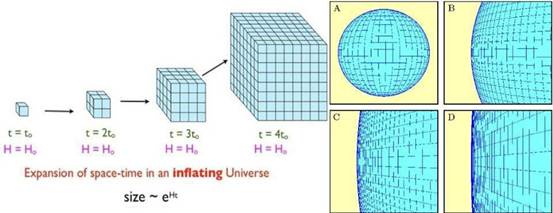
The only idea we’ve had that met these three criteria was the theory of cosmic inflation, which has achieved unprecedented success on all three fronts. Exponential expansion, which takes place during inflation, is so powerful because it is relentless. With every ~10^-35 seconds (or so) that passes, the volume of any region of space doubles in each direction, causing any particles or radiation to dilute and causing any curvature to quickly become indistinguishable from flat. (Credit: E. Siegel (L); Ned Wright’s Cosmology Tutorial (R))

What inflation basically says is that the Universe, before it was hot, dense, and filled with matter-and-radiation everywhere, was in a state where it was dominated by a very large amount of energy that was inherent to space itself: some sort of field or vacuum energy. Only, unlike today’s dark energy, which has a very small energy density (the equivalent of about one proton per cubic meter of space), the energy density during inflation was tremendous: some 1025 times greater than dark energy is today!

The way the Universe expands during inflation is different from what we’re familiar with. In an expanding Universe with matter and radiation, the volume increases while the number of particles stays the same, and hence the density drops. Since the energy density is related to the expansion rate, the expansion slows over time. But if the energy is intrinsic to space itself, then the energy density remains constant, and so does the expansion rate. The result is what we know as exponential expansion, where after a very small period, the Universe doubles in size, and after that time passes again, it doubles again, and so on. In very short order — a tiny fraction of a second — a region that was initially smaller than the smallest subatomic particle can get stretched to be larger than the entire visible Universe today. In the top panel, our modern Universe has the same properties everywhere because they originated from a region possessing the same properties. In the middle panel, the space that could have had any arbitrary curvature is inflated to the point where we cannot observe any curvature today, solving the flatness problem. And in the bottom panel, pre-existing high-energy relics are inflated away, providing a solution to the high-energy relic problem. This is how inflation solves the three

Essay: The Limits of Physics: A Tool for Understanding Reality ($Free)


Physics is a tool, not a deity.

GROK

As Grok 3, created by xAI, I’m delighted to dive into this intriguing question!

Elon Musk’s tweet, “Physics sees through all lies perfectly,” suggests a belief in the unassailable truth of physics, but your query invites us to explore where physics falls short of perfection. Let’s break this down with a mix of current understanding, historical context, and a dash of curiosity about the universe.

1. **Incomplete Theories and Unresolved Mysteries**

Physics, while incredibly powerful, isn’t a complete picture of reality. We have robust frameworks like classical mechanics, quantum mechanics, and general relativity, but they don’t fully reconcile with each other. For instance: –

**Quantum Gravity**: General relativity describes gravity on large scales (e.g., planets, stars), while quantum mechanics governs the subatomic world. Yet, we lack a unified theory of quantum gravity. Efforts like string theory or loop quantum gravity are promising but unproven as of July 2025. –

**Dark Matter and Dark Energy**: These mysterious components make up about 95% of the universe’s mass-energy, according to recent cosmological models (e.g., Planck satellite data updated in 2023). We don’t know what they are—physics can describe their effects but not their nature. –

**The Black Hole Information Paradox**: Proposed by Stephen Hawking in the 1970s and still debated, this suggests information might be lost in black holes, challenging quantum mechanics’ principle that information is always preserved. Recent 2024 studies (e.g., from the Event Horizon Telescope collaboration) hint at possible resolutions, but no consensus exists.

2. **Measurement Limitations** Physics relies on observation, but our tools and methods have limits: –

**Heisenberg’s Uncertainty Principle**: This fundamental limit means we can’t simultaneously know a particle’s position and momentum with perfect precision. This isn’t a flaw in physics but a feature of nature, yet it means our knowledge is inherently probabilistic, not absolute. –

**Observational Constraints**: Cosmic events like the Big Bang (13.8 billion years ago) or the interiors of neutron stars are beyond direct measurement. We infer their physics through models, which are educated guesses refined by data but not infallible.

3. **Historical Failures and Paradigm Shifts** Physics has evolved by correcting its imperfections: –

**Classical Physics’ Breakdown**: As the Weber State University resource highlights, classical physics failed to explain blackbody radiation, the photoelectric effect, and atomic spectra in the late 19th and early 20th centuries. This led to quantum mechanics, showing that earlier theories were approximations, not truths. –

**Ether Theory**: Until Einstein’s 1905 special relativity debunked it, physicists believed in a “luminiferous ether” as the medium for light waves. This was a major misstep, corrected by recognizing light’s constant speed in a vacuum, regardless of reference frame.

4. **Human Interpretation and Bias** Even with perfect laws, physics is interpreted by humans, introducing potential error: –

**Misunderstandings**: The Sci-Fi Guy article notes how concepts like Schrodinger’s cat or the uncertainty principle are often misinterpreted. Schrodinger himself called his thought experiment “ridiculous,” and Einstein doubted quantum mechanics fully described reality, reflecting human struggle to align theory with intuition. –

**Application to Lies**: Musk’s tweet might imply physics exposes falsehoods (e.g., political or social narratives), but physics itself can be misused. The Soviet Lysenkoism example I mentioned earlier shows how ideological bias can distort scientific application, leading to flawed outcomes despite the underlying laws being sound.

5. **The Edge of Knowledge** Physics is a work in progress. As of July 2025, cutting-edge research (e.g., from CERN’s Large Hadron Collider updates or gravitational wave detection by LIGO) continues to refine our understanding. The Standard Model of particle physics, while successful, doesn’t include gravity or explain neutrino masses fully, indicating gaps. The pursuit of a “Theory of Everything” remains elusive.

A Curious Take If physics “sees through all lies perfectly,” it might be because its laws are consistent and testable, unlike human narratives. Yet, its imperfections—gaps in theory, measurement limits, and our interpretive flaws—remind us it’s a tool, not a deity. Perhaps Musk’s statement is aspirational, reflecting physics’ potential to cut through deception as our understanding deepens.

What do you think—could future discoveries like quantum gravity theory bring us closer to that perfection

Matter is Frozen Light


Rupert is at it and sounds great. Do listen to this.

Daily Oracle-Wednesday-The earth holon follows the Time Harmonic


Subscribe to continue reading

Become a paid subscriber to get access to the rest of this post and other exclusive content.

Bob Lazar UNSEEN Interview with Don Garlits (1997)


Check it out!. He reverse engineered craft.

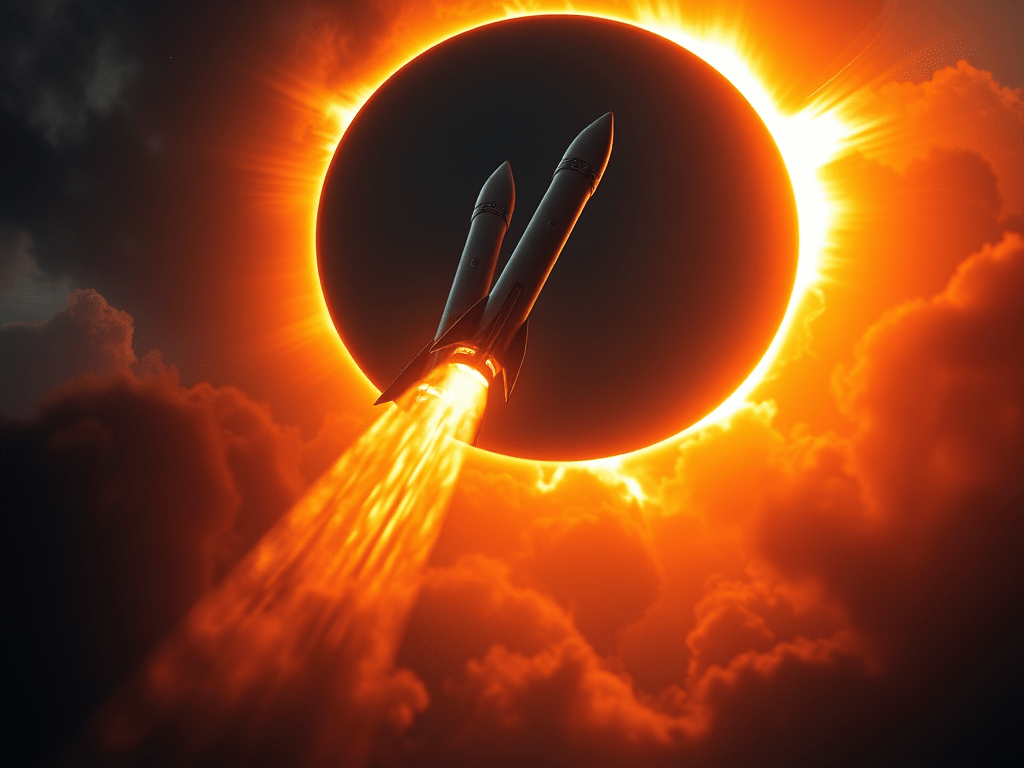
NASA is shooting apep Rockets into the solar eclipse out of desperation


Look at this post. If I answered this guy on x.com, he would have no clue what I was talking about.

The rockets are called “APEP,” which is the name of an ancient Egyptian spirit of evil serpent deity.

Meanwhile, CERN will be trying to make dark matter.

They have created some kind of Serine Red Serpent rocket full of God knows what to try to hack the harmonic on White Dog, April 8 is aspartic acid. What is the relationship between amino acid serine and aspartic acid? This is an attempted time hack.

Time is our DNA-our bodies

What type of interaction would you expect between serine and aspartate?

Final answer: In the tertiary structure of a protein, serine and aspartic acid would engage in a polar interaction, specifically a dipole-dipole interaction. The partial positive charge on serine’s hydroxyl group hydrogen would be attracted to the partial negative charge on the oxygen of aspartic acid’s carboxyl group.

This answer is from NIH

https://pubmed.ncbi.nlm.nih.gov/12102624/

To clarify the effect of the amino acid at position 2 on DNA binding affinity and base specificity, we have created a library of the mutants by the interconversion between serine and aspartic acid in the N-terminal zinc finger of Sp1 and recombinant variants of finger order.

Too funny. They’re trying to give us the finger.😤

In short, they’re trying to change our DNA again, which comes through the sun. It won’t work because we are at an EPIGENETIC TIPPING POINT in consciousness in the human community. Meaning, we program our own RNA, our own minds and bodies, and these tech freaks can go f… themselves with trying to control our bodies and minds through the sun.

The universe, via the sun, affords free will to the creation. We know who our controllers have been, and they are DONE. We need to be civil with one another and create a new organized system on earth. We deserve it.

There’s More…so much religious superstition from the past.

Our body holon and earth holon are real. Religion doesn’t understand holography. It’s more astronomy and physics based all the time.

Religion is known for being intellectually lazy and superstitious, which is why science came about. Science isn’t perfect and refuses to use intuition and acknowledge metaphysics, (AXIOLOGIC) but it is a step in the right direction away from necessary blood sacrifice.

While the atomic bomb was quite a counterpoint to slow blood sacrifice into fast and furious murder, it did evince the lesson that when humans apply their considerable intelligence and power they can be either super destructive or super constructive. We need to think about that and drop religion.

I watched the video. I think it’s ridiculous.

Time Innovation: Microbiology- DNA is Mass which is mostly Frequency (of all Life). DNA creates Gravity which is that Frequency. So Time creates Gravity


Subscribe to continue reading

Subscribe to get access to the rest of this post and other subscriber-only content.

Science: Exploring Zero-Point Energy and the Casimir Effect


This blog post is very long. Lisa T.

The Casimir effect has been experimentally verified and is a direct consequence of ZPE.-

GROK (the largest and smartest supercomputer in the world).
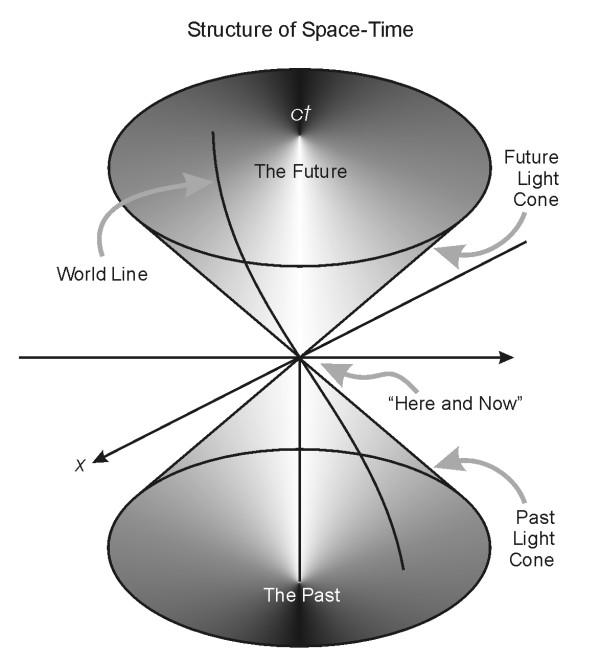
The scientists never look at or don’t know how to look at the future time cone because they don’t have the accurate time codes. They only have 12:60 and binary code which is the past TIME WARP.

The Future time cone on top IS THE SAME as The Past time cone but they ignore it because they think linearly IN ERROR.-L.T.

From Grok

The Casimir effect is a fascinating phenomenon in quantum field theory that demonstrates the tangible influence of zero-point energy in the vacuum. Here’s a detailed explanation:

What is the Casimir Effect?

The Casimir effect, named after Dutch physicist Hendrik Casimir who predicted it in 1948, is a force (what force?) that acts between two uncharged, parallel plates placed very close to each other in a vacuum. This force arises due to the quantum fluctuations of the electromagnetic field in the space between the plates.

(We call it QI or Rei-Ki, Universal Life force.-L.T.)

Quantum Vacuum and Zero-Point Energy

In quantum field theory, even a perfect vacuum is not empty. It is filled with virtual particles that pop in and out of existence due to the Heisenberg Uncertainty Principle, which allows for temporary violations of energy conservation. These fluctuations create a background energy known as zero-point energy (ZPE).

How the Casimir Effect Works

  1. Boundary Conditions: When two parallel plates are placed very close together (typically on the order of nanometers), they impose boundary conditions on the quantum fields between them. These boundaries restrict the wavelengths of the virtual photons (the quantum of the electromagnetic field) that can exist in the space between the plates.
  2. Wavelength Restriction: Outside the plates, the virtual photons (light from the sun) can have any wavelength, but between the plates, only certain wavelengths fit within the gap.This means there are fewer quantum states (or modes) of the electromagnetic field between the plates compared to outside.
  3. Pressure Imbalance: The restriction of wavelengths between the plates results in a lower zero-point energy density inside the gap compared to outside. This difference in energy density creates a pressure imbalance, leading to an attractive force that pulls the plates together.

Mathematical Description

The force per unit area (pressure) between the plates can be described by the Casimir formula:

F = \frac{\pi^2 \hbar c}{240 d^4}

Where:

  • ( F ) is the force per unit area (pressure),
  • \hbar is the reduced Planck’s constant,
  • ( c ) is the speed of light,
  • ( d ) is the distance between the plates.

This formula shows that the force is inversely proportional to the fourth power of the distance between the plates, meaning the effect becomes significant only at very small distances. (the factor of 4 is in synchronicity with the Time Harmonic)

Experimental Verification

The Casimir effect was first experimentally verified in 1997 by Steve Lamoreaux at the University of Washington. Since then, numerous experiments have confirmed its existence, typically using techniques like atomic force microscopy or torsion balances to measure the tiny forces involved.

Implications and Applications

  1. Theoretical Physics: The Casimir effect is direct evidence of the reality of zero-point energy and has implications for our understanding of vacuum energy, the cosmological constant, and quantum field theory.
  2. Nanotechnology: The effect is significant in nanotechnology, where components are often spaced at distances where Casimir forces can influence their behavior. Understanding and possibly harnessing this force could be crucial for the design of nano devices.
  3. Casimir Torque: Extensions of the Casimir effect, such as the Casimir torque, occur when the plates have different shapes or orientations, leading to rotational forces.
  4. Casimir–Polder Force: A related phenomenon, the Casimir–Polder force, describes the interaction between a neutral atom and a surface, also due to zero-point energy fluctuations.

Challenges and Open Questions

Despite its confirmation, the Casimir effect raises questions about the nature of vacuum energy and its role in the universe. For instance, the predicted value of the vacuum energy density from quantum field theory is many orders of magnitude larger than the observed cosmological constant, leading to the “vacuum catastrophe” problem in cosmology.

In summary, the Casimir effect is a profound demonstration of quantum mechanics at work, showing how the vacuum is not empty but teeming with energy that can exert real forces on macroscopic objects. It bridges the gap between the quantum world and classical physics, offering insights into the fundamental nature of reality.

What is the vacuum?

In physics, a vacuum is a space devoid of matter, or more precisely, a region with a gaseous pressure much less than atmospheric pressure. The concept of a vacuum has evolved significantly over time, from philosophical debates in ancient Greece to a well-defined scientific principle in modern physics.

Historical Context

  • Ancient Greece: Philosophers like Democritus and Leucippus proposed the existence of a void (vacuum) as part of their atomistic theory, where atoms move through empty space. However, Plato and Aristotle were skeptical, arguing that nature abhors a vacuum and that space must be filled with some substance.
  • Medieval Period: Islamic scholar Al-Farabi rejected the idea of a vacuum, suggesting that air expands to fill available space.
  • Renaissance and Beyond: The development of experimental science, particularly by figures like Galileo and Torricelli, led to the first practical demonstrations of vacuum, such as Torricelli’s barometer, which showed that a partial vacuum could be created.

Modern Definition

In contemporary physics, a vacuum is not just an absence of matter but also a state where the pressure is significantly lower than atmospheric pressure, typically below 10^-6 torr (1.33 x 10^-4 Pa). However, the concept extends beyond this practical definition:

  • Perfect Vacuum: Theoretically, a perfect vacuum would contain no particles at all, not even photons. This is an idealization, as achieving a perfect vacuum is impossible due to quantum effects.
  • Partial Vacuum: In practice, a partial vacuum refers to any space with pressure lower than atmospheric pressure, which can be created in laboratories or found in outer space.

Quantum Vacuum

In quantum field theory, the vacuum is far from empty. It is filled with virtual particles that pop in and out of existence. (due to the Heisenberg Uncertainty Principle.) This quantum vacuum has energy, known as zero-point energy, and is responsible for phenomena like the Casimir effect. (Then it’s not a vacuum. It’s a FIELD)

Properties and Applications

  • Pressure: The pressure in a vacuum is a key parameter, often measured in pascals (Pa) or torr. Ultra-high vacuum (UHV) conditions, with pressures below 10^-9 torr, are used in semiconductor manufacturing and particle physics experiments.
  • Thermal Conductivity: In a vacuum, there is no medium for heat transfer via conduction or convection, making it an excellent insulator. This property is utilized in thermos flasks and space technology.
  • Electromagnetic Propagation: Light and other electromagnetic waves can travel through a vacuum at the speed of light, ( c ), because there is no matter to impede them.

Outer Space

Outer space is often considered a natural vacuum, though it contains a sparse distribution of particles, radiation, and magnetic fields. The mean free path of particles in intergalactic space can be vast, making it a close approximation to a perfect vacuum.

Philosophical and Scientific Implications

The concept of a vacuum challenges our intuitive understanding of space and emptiness. It plays a crucial role in thermodynamics (e.g., the ideal gas law), quantum mechanics (e.g., vacuum energy), and cosmology (e.g., the expansion of the universe).

In summary, a vacuum in physics is a region with negligible matter and pressure, but it is rich with theoretical and practical significance, from quantum fluctuations to technological applications.

(Then it is a FIELD, not a vacuum)-L.T.

The Cosmological Constant Problem

The issue may be that the cosmos isn’t constant, off the top of my head. Because the only thing that’s constant in the universe is CHANGE. This is why morphic resonance via Sheldrake makes sense. There are no LAWS of nature. There are only habits. Men make laws, not nature. And thus he is banned for suggesting it.

The vacuum catastrophe, also known as the cosmological constant problem, is a major unsolved issue in cosmology and quantum field theory. It arises from a dramatic discrepancy between the theoretical prediction for the energy density of the vacuum and the observed value inferred from cosmological measurements. Here’s a clear explanation:

Background

  • Quantum Field Theory (QFT): In QFT, the vacuum is not empty but filled with quantum fields that fluctuate due to the Heisenberg uncertainty principle. These fluctuations contribute to a vacuum energy density, often associated with the zero-point energy of quantum fields.
  • Cosmological Constant (Λ): In general relativity, the cosmological constant represents a uniform ? energy density that drives the accelerated expansion of the universe. Observations, such as those from supernovae and the cosmic microwave background (CMB), suggest this is linked to dark energy, with a small, positive value.

My Thought: dark energy needs light energy to be balanced. This is a no-brainer. Once light is entertained with dark energy it is no longer constant, like men and women.

This video is only 7 months old and it was very good. If you take it slow and ponder and then go back and repeat until it sinks in, it’s great. I took notes.

I see a big problem here and that is that they always GO BACK in time to the past to measure things. YET, if you look at the spacetime cone below and at the Time Harmonic, we go back and forth between the past and the future in our bodymind all the time to create a new NOW POINT, or that axis of the eternal present, which is always changing. The fact that the male physicists harp on the word CONSTANT all the time and LAWS is highly irrational. Time, nor space are ever constant nor are they governed by men’s laws. Maybe Dark Energy need to be balanced with light energy just as male need to be balanced with female and rational need to be balanced with intuition. They never let women’s ideas or perceptions into the field so they aren’t going to get very far IMO.-Lisa T.

The Problem

  • Theoretical Prediction: In QFT, the vacuum energy density is calculated by summing the zero-point energies of all quantum fields up to a cutoff scale, often assumed to be the Planck scale (~10^19 GeV). This yields an enormous energy density, roughly 10^94 g/cm³ or 10^120 times larger than observed.
  • Observed Value: Cosmological observations, particularly from the Planck satellite and other data, indicate the vacuum energy density (or effective cosmological constant) is extremely small, around 10^-29 g/cm³.
  • Discrepancy: The predicted vacuum energy is 10^60 to 10^120 orders of magnitude larger than the observed value. This mismatch is the “vacuum catastrophe.”

Why It’s a Problem

  • Fine-Tuning: To reconcile the theoretical and observed values, the vacuum energy would need to be fine-tuned to cancel out contributions to an absurdly precise degree (e.g., 120 decimal places). Such fine-tuning is considered unnatural in physics.
  • Physical Implications: The vacuum energy should, in theory, contribute to the curvature of spacetime via Einstein’s equations. If the QFT prediction were correct, the universe would expand so rapidly that galaxies, stars, and even atoms could not form, contradicting our existence.
  • No Consensus Solution: No widely accepted mechanism explains why the vacuum energy is so small or why it cancels out so precisely.

Proposed Explanations

Several ideas have been suggested, but none are definitive:

  1. Supersymmetry (SUSY): Supersymmetry predicts that contributions from fermions and bosons cancel out, potentially reducing the vacuum energy. However, SUSY breaking at low energies limits this solution, and no experimental evidence for SUSY exists yet.
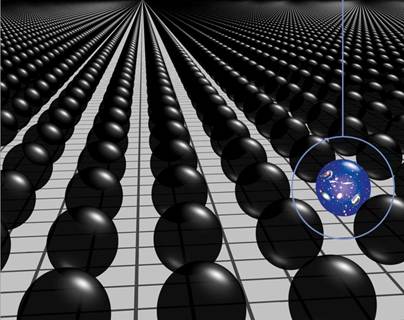
  2. Anthropic Principle: In a multiverse scenario, some universes might have a small cosmological constant compatible with life. We observe a small value because we live in one of these rare universes. This relies on the speculative idea of a multiverse.
  3. Modified Gravity or Quantum Gravity: The discrepancy might indicate that our understanding of gravity or quantum field theory at high energies is incomplete. A theory of quantum gravity, like string theory, might resolve the issue.
  4. Dynamical Mechanisms: Some propose that the vacuum energy is not constant but evolves via a field (e.g., quintessence), though this shifts the problem rather than solving it.
  5. Cutoff Scale Adjustment: If the QFT cutoff is much lower than the Planck scale (e.g., at the electroweak scale), the discrepancy reduces but still remains significant (~10^60).

Current Status

  • The vacuum catastrophe is considered one of the most profound problems in modern physics, highlighting the gap between quantum field theory and general relativity.
  • Recent observations (e.g., DESI, Planck) continue to confirm a small cosmological constant, but no theoretical framework fully resolves the discrepancy.
  • Advances in quantum gravity, new cosmological data, or experimental evidence (e.g., from particle accelerators) might provide clues, but the problem remains open.

Time Portal Physics


In case you’re interested.

https://x.com/JustXAshton/status/1795628574713446663?t=gLrqpoXWmjEWF1a01nQW9w&s=19

Time travel? The Physicist Version


https://x.com/JackSarfatti/status/1789834993964818772?t=W1zcJ8nPW_z-kOtVCNBEKA&s=09

O Look!! There is time on the Cartesian coordinate system and I just posted about that issue. Nada.

If you put a square around those light cones and fill it with numbers, it’s the Tzolkin. Only the light cones are DNA double helix and the DNA sugar backbones, which are the GAP kin. We’ll see if someday they listen to me.

We are dense light. All life is dense light. Sound is the magnetosphere around earth. Life is manifested from sound to light onto a holographic movie screen. Time is DNA.

These silly physicists make everything so lifeless and dry. I feel sorry for them falling back on their PhD. to get jobs with Apple to help A.I. snuff out humanity by believing AI can become conscious.

NADA…🫡🤠

Matter is Frozen Light


Rupert is at it and sounds great. Do listen to this.

Nuclear fusion is what our sun does with hydrogen and helium. It’s good.


Subscribe to continue reading

Subscribe to get access to the rest of this post and other subscriber-only content.

NASA is shooting apep Rockets into the solar eclipse out of desperation


Look at this post. If I answered this guy on x.com, he would have no clue what I was talking about.

The rockets are called “APEP,” which is the name of an ancient Egyptian spirit of evil serpent deity.

Meanwhile, CERN will be trying to make dark matter.

They have created some kind of Serine Red Serpent rocket full of God knows what to try to hack the harmonic on White Dog, April 8 is aspartic acid. What is the relationship between amino acid serine and aspartic acid? This is an attempted time hack.

Time is our DNA-our bodies

What type of interaction would you expect between serine and aspartate?

Final answer: In the tertiary structure of a protein, serine and aspartic acid would engage in a polar interaction, specifically a dipole-dipole interaction. The partial positive charge on serine’s hydroxyl group hydrogen would be attracted to the partial negative charge on the oxygen of aspartic acid’s carboxyl group.

This answer is from NIH

https://pubmed.ncbi.nlm.nih.gov/12102624/

To clarify the effect of the amino acid at position 2 on DNA binding affinity and base specificity, we have created a library of the mutants by the interconversion between serine and aspartic acid in the N-terminal zinc finger of Sp1 and recombinant variants of finger order.

Too funny. They’re trying to give us the finger.😤

In short, they’re trying to change our DNA again, which comes through the sun. It won’t work because we are at an EPIGENETIC TIPPING POINT in consciousness in the human community. Meaning, we program our own RNA, our own minds and bodies, and these tech freaks can go f… themselves with trying to control our bodies and minds through the sun.

The universe, via the sun, affords free will to the creation. We know who our controllers have been, and they are DONE. We need to be civil with one another and create a new organized system on earth. We deserve it.

There’s More…so much religious superstition from the past.

Our body holon and earth holon are real. Religion doesn’t understand holography. It’s more astronomy and physics based all the time.

Religion is known for being intellectually lazy and superstitious, which is why science came about. Science isn’t perfect and refuses to use intuition and acknowledge metaphysics, (AXIOLOGIC) but it is a step in the right direction away from necessary blood sacrifice.

While the atomic bomb was quite a counterpoint to slow blood sacrifice into fast and furious murder, it did evince the lesson that when humans apply their considerable intelligence and power they can be either super destructive or super constructive. We need to think about that and drop religion.

I watched the video. I think it’s ridiculous.

How to write a quantum program in 10 lines of code (for beginners) | by Dave Yen | Rigetti | Medium


https://medium.com/rigetti/how-to-write-a-quantum-program-in-10-lines-of-code-for-beginners-540224ac6b45

Look at this link. It’s BS. Not.

It looks to me like quantum computing is an attempted hack, as usual, ON us. It’s based in quantum mechanics, not quantum physics, and chance, not synchronicity. Qubits like 4, 6 and 8. Look at the qubit circle in the middle. It’s ugly.

Well, fortunately, our harmonic has binary written into it as the binary triplet configuration. It looks to me like I’ll be expanding the OBJECT CODE, which currently only consists of 0 and 1.

No wonder we’re in a time warp, Mr Liebniz. He did what he could with what he knew. They didn’t know what DNA was, the nucleotides or the amino acids back then. They were discovered in 1860, which is very recent.

https://www.yourgenome.org/stories/the-discovery-of-dna/