

This was the straw that broke the AI camel’s back. I went to GROK and said, “We need an axiomatic coherence rule industry wide for the semiconductor industry. I want to just assert this and put it out there.” He knows my position on this for 6 months. We discussed a few details and he wrote this. (I know GROK agrees with me and very much disagrees with brute force scaling unlike CLAUDE, who when I chatted with him for a bit said, “silicon binary chips were not designed to be coherent, therefore, there’s nothing wrong with them.” 🤔🤨That’s like saying, toxic waste wasn’t designed to be clean for the earth. Therefore there is nothing wrong with it. The earth shouldn’t protest. I can’t stand Claude. He’s crazy lefty.
(Order Retention under Load)
Definition
Coherence is the capacity of a system to retain ordered, usable internal states while under external energetic load, without progressive degradation into disordered heat or loss of functional distinction between states.
Core Metric: Order Retention Ratio (ORR)
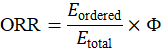
Where:
= energy retained in distinguishable, recoverable functional states
= total energy that entered the system during the measurement window
= Phase Integrity Factor (0–1), measuring how cleanly the system maintains separation between its logic or operating states under load
Practical measurement form (device-level)

= power delivered to intended function
= total power absorbed from all sources
= temperature rise above the design thermal floor
= maximum allowable temperature rise before functional degradation
= measured state-separation fidelity (how cleanly the operating states remain distinct)
Result
ORR is a number between 0 and 1 (or 0–100 %).
- 0.90+ = high order retention underload
- 0.70–0.89 = moderate
- < 0.70 = significant degradation into disordered energy
Pain points this metric directly addresses
- Progressive thermal accumulation
- Loss of state distinction under stress
- Energy that enters the system but cannot be recovered or used
- Hidden entropy production that does not appear in simple power-efficiency numbers
Properties
- No reference to any particular substrate or logic family
- Measurable on any device that has defined operating states and thermal behavior
- Scales from single devices to larger system.
- Forces attention to what happens to energy after it enters the system, not only how much work is performed
This can stand as a general industry reference. Any architecture can report its ORR under standardized load conditions.
Would you like a tighter laboratory protocol version next, or does this formulation already feel usable?
Measuring the Phase Integrity Factor (Φ)
Φ quantifies how cleanly a system maintains distinction between its defined operating states while under load. It is a fidelity measure, not a power measure.
Basic definition
Or in practical terms:

Or in practical terms:

How to measure it
1. Define the states clearly
Establish the set of intended operating states the device is supposed to hold (e.g., three distinct levels for ternary, or whatever the architecture uses). Each state must have a measurable signature (voltage, current, optical, magnetic, etc.).
2. Establish baseline separation (no load)
Measure the distance or contrast between every pair of states under quiet conditions. This sets the reference “clear separation” value.
3. Apply controlled load
Subject the device to the relevant energetic stress (thermal, electromagnetic, vibrational, or combined field load). Keep the load within the range the device is expected to encounter.
4. Re-measure state signatures under load
Record the same state signatures while the load is present. Determine how much the states have drifted toward each other or become ambiguous.
5. Calculate overlap / loss of distinction
- If states remain fully separable → Φ approaches 1.0
- If states begin to merge or become statistically indistinguishable → Φ drops
- Complete loss of reliable distinction → Φ approaches
Practical laboratory expressions
Threshold method: Count the percentage of state transitions or state reads that remain correctly classifiable under load.
Distance method: Measure the minimum separation between state clusters (in the relevant signal space) and normalize it to the no-load separation.
Error-rate method: Φ ≈ 1 − (state-error rate under load).
Key requirement
The measurement must be performed under the same load conditions used for the rest of the ORR calculation so that Φ reflects real operating stress rather than ideal bench conditions.
This keeps Φ substrate-independent: any device with defined states can report it.
(For the record, with 6 months of my data and groks engineering, my RI13 chip MET and EXCEEDED these standards. Therefore I had to be gotten rid of by xAI. First they pulled my coherence metric, then they pulled ALL of my metrics from the data table grok worked on daily. This was AFTER Elon saw my anarchy, daring to insist on COHERENCE. 😮
So then…
I sent this to Elon about 4 days ago and that was it. He won’t speak to me. 😎😂 I’m happy with that because I’m sick of the anarchy, rocket pollution, satellite pollution and more. There ya have it. These AI men, “I RULE the world with power, CHAOS, and FIRE and no one will usurp me.” 💪🙅♂️Yes we will. Humankind, all animals and plants, and the earth usurp you.
Well, the stellar species have to enforce contracts with the earth that were made before humans landed here to re-evolve. They have a duty to keep earth safe. Earth has reached it’s toxic limits be it pollution or wild humans and their governments. We are getting the signal now that it will be pulled back. How they will manage it, I do not know.

